
Crimson Sweet is a popular, high-yielding watermelon variety. Its berries are distinguished by their excellent flavor and lack of veins. This article describes the advantages and disadvantages of Crimson Sweet, planting and care guidelines, and the characteristics of the main hybrids of this variety.
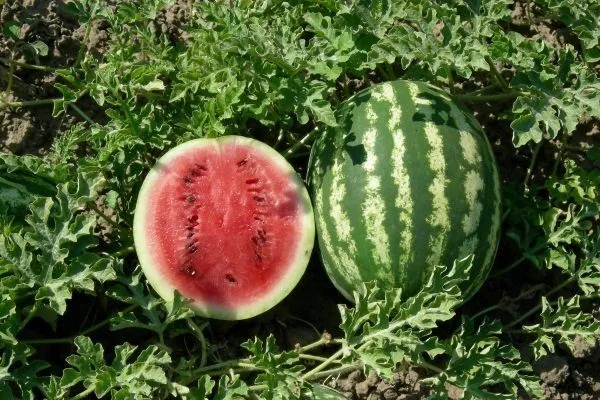
watermelon variety "Crimson Sweet"
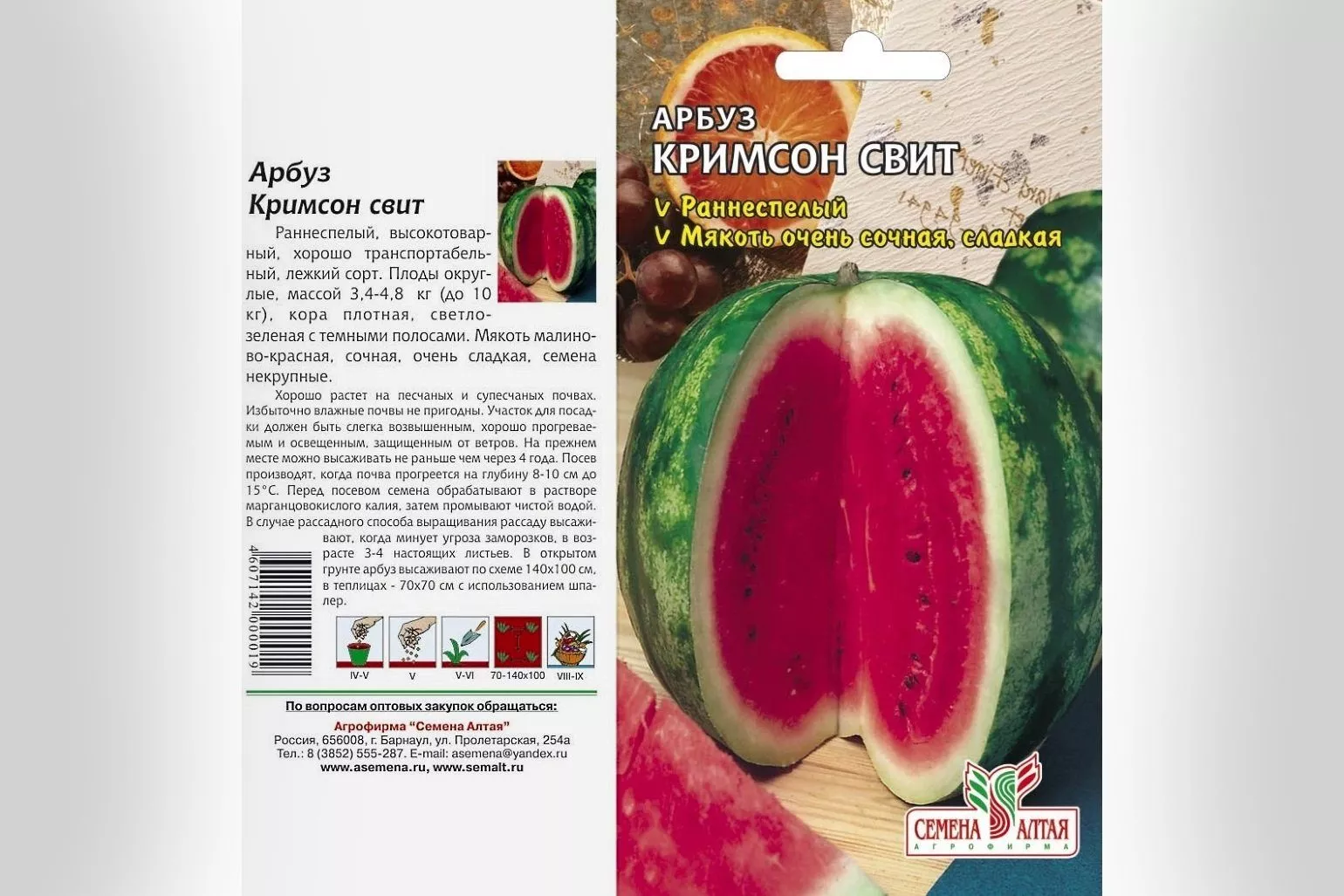
Crimson Sweet Watermelon Seeds
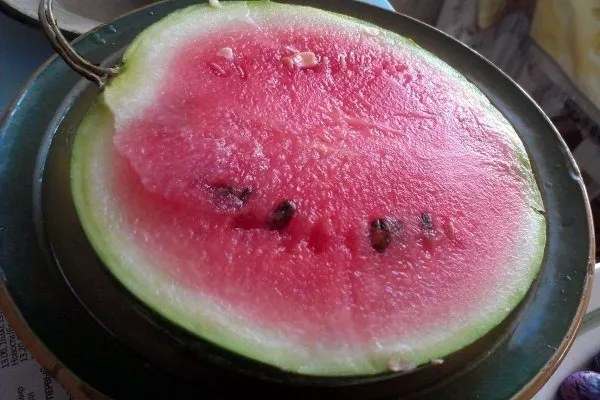
The Crimson Sweet watermelon variety has juicy, refined pulp, delicate and rich taste qualities and a sweet aftertaste.
History of selection
The Crimson Sweet watermelon is a cultivar. It was developed by world-renowned breeder Charles W. Hall early in his career at Kansas State University. He spent over a decade perfecting the variety's characteristics, and it wasn't until 1963 that he introduced Crimson Sweet to the public.
In 1964, this variety earned the title of "All-America Selections," becoming the most sought-after among American farmers. Several decades later, Crimson Sweet arrived in Europe, where it also gained widespread recognition and began to be grown widely.
Growing region
In its native land, this melon is grown in virtually every state, as the variety has remained popular for decades. Crimson Sweet has also long been considered the standard among sugar watermelons in European countries.
This sweet berry is also grown in Russia, and the variety is especially popular among gardeners in the central part of the country. In cooler climates, watermelons produce well in greenhouses, but in these cases, Crimson Sweet is grown from seedlings.
Description and characteristics of the Crimson Sweet watermelon variety
Many watermelon lovers avoid buying early-ripening berries, considering them grassy and tasteless. This certainly doesn't apply to the Crimson Sweet variety, as even the name translates as "Raspberry Sweet." The berries are distinguished by their high sugar content, tender flesh, and juiciness.
Crimson Sweet is one of the best early-ripening varieties. The growing season is only 70-80 days. The berries are very juicy, with a rich, sweet flavor. The skin is medium-thick and does not crack when squeezed.
The watermelon is round and slightly elongated. The rind is dark green, with lighter stripes running lengthwise. The surface is smooth and matte. The flesh is a bright crimson, virtually veinless. The seeds are dark brown and medium-sized. With proper cultivation practices, a ripe watermelon can weigh up to 12 kg.
Advantages and disadvantages of the variety
The positive characteristics of this early berry are noted by all gardeners who have grown this variety at least once in their gardens. The main advantages of Crimson Sweet include:
- high taste qualities;
- presentation;
- high productivity;
- drought resistance;
- good transportability;
- resistance to anthracnose.
The short growing season allows watermelons to be grown in various climate zones without any particular difficulties.
Despite the obvious advantages of Crimson Sweet, this variety also has its disadvantages:
- watery taste when the soil is over-watered;
- lack of immunity to fusarium;
- berries become smaller due to excess nitrogen in the soil.
Following proper agricultural practices will help avoid such problems, and early berries will delight you with their size and sweetness.
Watch the video below for a review and tasting of the Crimson Sweet watermelon:
Landing features
This variety can be grown using either seedlings or direct-seeded methods. In areas with warm, dry summers, Crimson Sweet seeds are sown directly into open ground in May. More information on planting watermelons outdoors has been written. Here.
In the central and western regions, watermelons are predominantly grown from seedlings. This not only prepares the plants for variable weather conditions and hardens them, but also allows for harvesting 12-15 days earlier.
Regardless of which method you choose for growing watermelons, the planting site should be prepared in the fall. Watermelons are sun-loving, so the area shouldn't be shaded by a fence or tree canopy.
- ✓ Soil pH should be between 6.0-6.5 for optimal nutrient absorption.
- ✓ The depth of groundwater is at least 1.5 m to prevent root rot.
Crimson Sweet produces best in sandy, neutral soils. Black soil and peat are not suitable for growing melons.
Avoid planting watermelons in areas with high groundwater tables. Constantly overwatering the root system will lead to root rot and plant death.
The best predecessors for watermelons are legumes, carrots, onions, and cabbage. It is not recommended to plant Crimson Sweet in areas previously occupied by other melons, such as squash, pumpkin, or cantaloupe.
In the fall, before the cold weather sets in, the selected area should be dug over and half a bucket of compost or rotted manure added per square meter. A week before planting, the soil is fertilized with potassium chloride, superphosphate, and ammonium sulfate in a ratio of 20:40:30 g per square meter. After applying the fertilizer, the area should be dug over again, loosened, and watered.
Sowing seeds for seedlings
To obtain Crimson Sweet seedlings, sow them in early May. It's best to use a special potting mix for melons. If you can't find one at your local store, choose a soil with a high sand content. Prepare planting containers at least 10 cm in diameter in advance.
For sowing, choose seeds harvested 3-4 years ago, as they produce more plants with female flowers, which are what produce fruit. Remove any broken, empty, or small seeds.
The seed material can be soaked before germination, which will reduce the period of emergence.
Sow seeds as follows:
- Fill the container 2/3 full with soil mixture;
- moisten the soil using a spray bottle;
- using a pencil, make holes 1-1.5 cm deep;
- deepen the seeds into the soil, planting 2 seeds per pot;
- sprinkle the planting material with soil;
- spray the soil with water again;
- Cover the container with film and put it in a warm place (about 25 degrees).
The film should be lifted a couple of times a day to aerate the soil. As soon as the first shoots appear on the surface, remove the film and expose the pots to light.
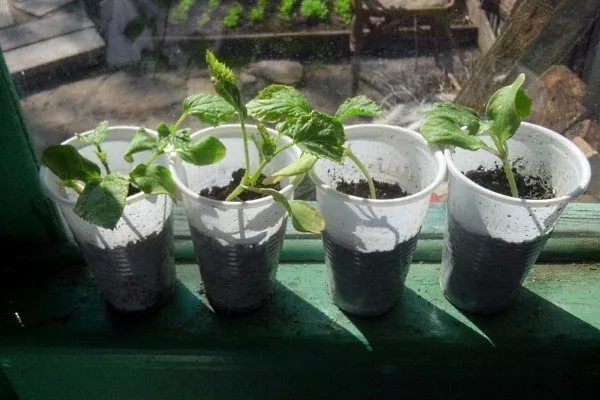
Caring for seedlings
To grow strong and healthy seedlings, it's essential to maintain the correct temperature. During the day, the temperature for young seedlings should not exceed 22°C (72°F) and at night, 20°C (68°F). On cloudy days, supplement the seedlings with special phytolamps or lower the temperature to 18°C (64°F) to prevent the sprouts from stretching.
As the seedlings grow, add soil to the container to stimulate the formation of new lateral roots. A week after the first shoots emerge, fertilize. A complex mineral fertilizer (15 g per 5 liters of water) is suitable. After another week, apply a mullein infusion diluted with water at a ratio of 1:10.
Planting in open ground
Seedlings are considered ready for planting when they develop 3-5 true leaves. This usually occurs 20-23 days after germination. By this time, the soil temperature should have warmed to 15 degrees Celsius.
To help plants establish themselves better in their new location, harden them off before planting. To do this, place the pots outside in direct sunlight for a couple of hours, then for the entire day. Stop watering the seedlings three days before planting.
The procedure for planting seedlings in open ground is carried out according to the following scheme:
- On the prepared area, make holes 10 cm deep in a checkerboard pattern at a distance of 1.5 m from each other.
- Water the holes generously.
- Remove the seedling from the pot along with the lump of soil and place it vertically in the hole.
- Sprinkle with soil and compact.
Growing and care conditions
Watermelons aren't particularly demanding plants, but to ensure a high-quality harvest, you'll need to regularly tend to your plants. After the fifth leaf emerges, the plants should be hilled and the soil carefully loosened, being careful not to disturb the adventitious roots. Carefully remove weeds, as they draw nutrients and much of the soil's moisture, inhibiting the growth of melons.
Crimson Sweet vines should not be allowed to trail along the ground; instead, they should be tied vertically to a support. This will allow the plant more light, and the root system will have more space to fully develop.
Watermelons thrive at temperatures of 22-26 degrees Celsius. If nighttime temperatures drop below 10 degrees Celsius, install hoops over the plants and cover them with any non-woven material at night.
Watering
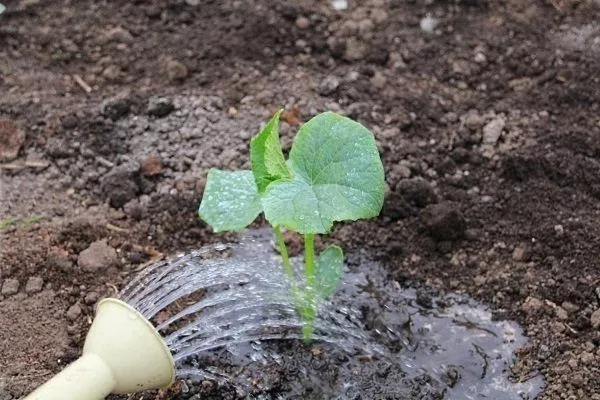
Melon seedlings require a lot of water, so they should be watered generously 1-2 times a week. This will allow the young roots to grow faster and penetrate deeper into the soil. Try to water the watermelons in the evening to slow down evaporation.
Once the green mass begins to grow, water the plants as the top layer of soil dries. After flowering begins, reduce watering to once every 7-10 days. It is recommended to stop watering completely during the formation and ripening of berries.
Top dressing
During the growing season, seedlings are fertilized twice. Two weeks after planting, water the plants with a 1:10 solution of mullein or chicken manure. After 10-15 days, apply a second fertilizer with nitrogen. It's best to use ammonium nitrate, dissolving 20 grams in a bucket of water.
Reproduction
Watermelons are propagated exclusively by seed. To properly collect Crimson Sweet seeds, follow these steps:
- select large fruits at the stage of biological maturity for seeds;
- After cutting the watermelon in half, use a spoon to scoop out the central seeds along with the pulp and place them in a plastic or glass container;
- leave the future planting material in a warm place for 2-3 days to ferment;
- rinse the seeds thoroughly under running water;
- Planting material should be stored in glass containers or paper bags.
Diseases and pests
Crimson Sweet is a disease-resistant variety, but under unfavorable weather conditions, you may encounter certain fungal diseases. The most common are powdery mildew, root rot, bacterial wilt, and fusarium.
The main diseases of the Crimson Sweet watermelon and methods of control:
| Name of the disease | Symptoms | Treatment methods |
| Powdery mildew | Small whitish spots on the leaves and stems, which lead to deformation and drying out of the affected areas of the plant. | Spray the affected bushes with a three-day infusion of mullein, which must be diluted with water in a ratio of 1:3, with the addition of 1 teaspoon of copper sulfate. |
| Root rot | Brown spots appear on the lower part of the stem and nearby leaves, and the upper part of the bush turns yellow and withers. | Sprinkle the root collars of the plants with ash and spray the plantings with 0.1% foundationol. |
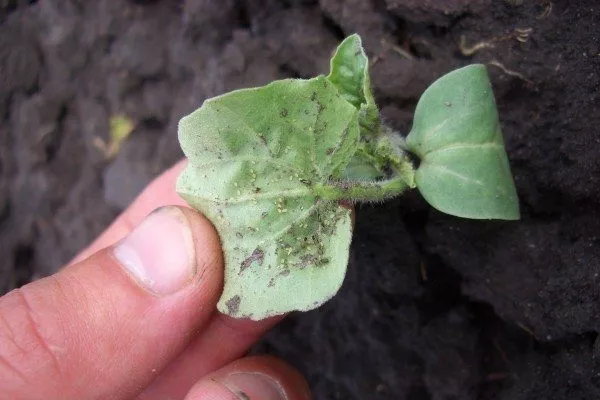
| Bacteriosis | At the onset of the disease, whitish spots appear on the leaves, which eventually develop into holes. The plant develops poorly, and the berries become smaller. | The disease is incurable. Remove affected bushes from the area and burn them. |
| Fusarium | The leaves lose turgor, turn pale green, wilt, and dry out. The root collar becomes covered with dark spots. | You can try to save sick plants if you feed them with a solution of chicken manure and ash at the initial stage of the disease. |
Early varieties are also susceptible to certain pests, such as shoot flies, aphids, and wireworms. Shoot fly larvae cause irreparable damage to crops, damaging the roots of young bushes and gnawing chambers in the stems. The pesticide "Karbofos" is used to control these pests.
Melon aphids are most often found on the undersides of leaves. Adult greenish aphids and their larvae feed on plant sap, destroying flowers and ovaries. Products such as Actellic and Fitoverm are effective against aphids.
| Hybrid | Resistance to fusarium | Anthracnose resistance | Resistance to powdery mildew |
|---|---|---|---|
| Crimson Ruby F1 | High | — | — |
| Crimson Wonder F1 | High | High | High |
Wireworms are no less dangerous, feeding on the roots of agricultural plants, causing their death. Larvae can also burrow into crop stems. Special traps are used to catch them. A hole is dug near the plant and a flat container filled with vegetable scraps is placed in it. The wireworms crawl toward the trap, attracted by the smell. After a couple of days, the trap is removed and the contents, including the pests, are burned.
Hybrid varieties
Crimson Sweet is a varietal watermelon with many positive characteristics. However, breeders continued their work and developed several Fusarium-resistant varieties from it, while retaining all the advantages of its parent. This resulted in two more popular hybrids:
- Crimson Ruby F1;
- Crimson Wonder F1.
| Name | Ripening period | Disease resistance | Fruit weight |
|---|---|---|---|
| Crimson Ruby F1 | 60-65 days | Resistant to fusarium | 10-12 kg |
| Crimson Wonder F1 | 85-90 days | Resistant to fusarium, anthracnose, powdery mildew | 9-12 kg |
Crimson Ruby F1
This high-yielding, early-ripening hybrid is suitable for cultivation in most climate zones of Russia. This variety is distinguished by its ability to quickly grow foliage and set fruit, even under unfavorable weather conditions.
Each shoot produces 2-3 fruits, which can reach 10-12 kg in weight at biological maturity. The first fruits can be expected within 60-65 days after germination.
Crimson Ruby is popular due to the excellent taste and marketability of its berries. Furthermore, it tolerates heat and drought equally well, as well as sudden cold snaps. A distinctive feature of the hybrid is its resistance to fusarium.
Crimson Wonder F1
The Crimson Wonder watermelon is a mid-early hybrid, with a ripening period of 85 to 90 days. The fruits are large, weighing 9-12 kg. Crimson Wonder is characterized by a uniform yield. The dark green rind with light stripes is thick and durable, ensuring easy transportability.
The flesh is dark red, and the flavor is sweet and pleasant. The crop is resistant to fusarium, anthracnose, and powdery mildew. It easily adapts to various environmental conditions, producing a bountiful harvest even during dry seasons.
Gardener reviews of the Crimson Sweet watermelon
If you're still unsure whether to grow Crimson Sweet watermelon in your garden, reviews from experienced gardeners will help you make the right decision.
Crimson Sweet is a versatile variety that consistently produces excellent results year after year. Its popularity is due to its excellent flavor, high yield, and disease resistance. It easily adapts to adverse weather conditions, making it suitable for cultivation in a wide range of climates.