
The early maturity of the Karistan F1 watermelon, good yields in virtually any soil, and excellent flavor characteristics have made this hybrid variety popular in various regions of Russia. Below are descriptions of the Karistan's qualities and growing recommendations.
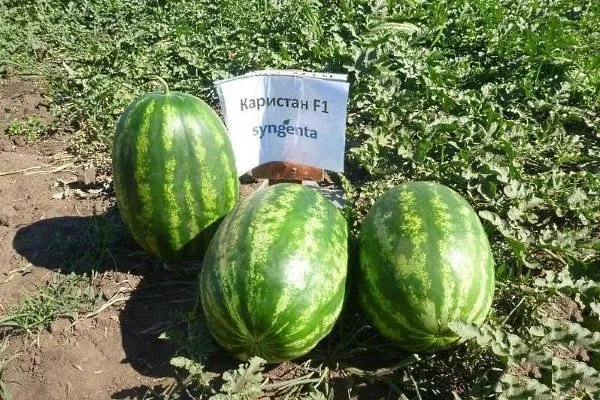
Watermelon variety "Karistan F1"
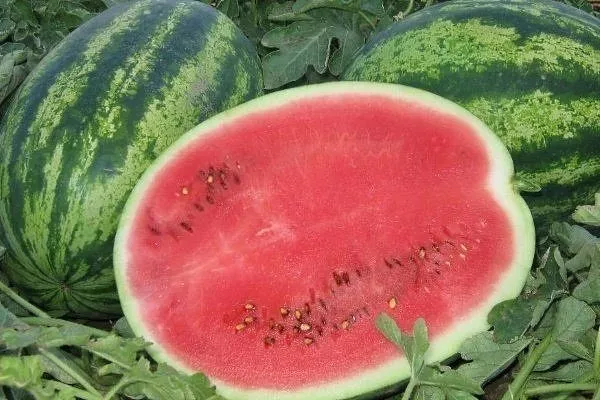
The watermelon "Karistan F1" attracts gardeners with its high taste qualities
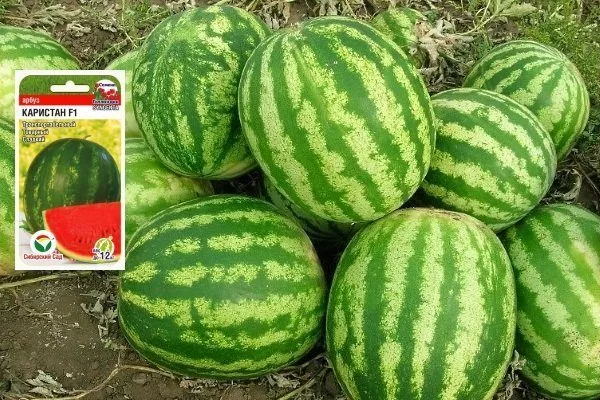
The transportability of the watermelon variety "Karistan F1" does not lose its external qualities, therefore it is convenient for cultivation on an industrial scale
Description of watermelon
The Karistan F1 watermelon is an early-ripening hybrid variety. Fruits average 2.8-5.1 kg in weight. They can reach 8-13 kg in ripening, and according to the cultivar, up to 16 kg. The rind is smooth, shiny, medium-thick, green or light green, with dark green, spiky stripes.
The leaves are medium-sized, weakly dissected, and range in color from light green to green. The plant is vigorous and twining, with a robust root system. The fruit is oval or broadly elliptical.
The flesh is red to dark red, scarlet, and firm. The flavor is juicy, crumbly, and high in sugar. The seeds are small and black.
History of selection and growing regions
The Karistan F1 watermelon was developed by breeders from the Swiss company Syngenta. It first became known in Russia in 2007, and the hybrid gained widespread recognition in 2012, the year it was added to the State Register.
Watermelons of this hybrid variety are grown in virtually all regions of the Russian Federation. The Ural and Lower Volga regions are approved for cultivation, meaning the hybrid is suitable for cultivation even in the Kurgan, Chelyabinsk, and Orenburg regions.
Characteristics of Karistan
The hybrid is distinguished by good fruit set even under less than favorable conditions.
| Characteristics/parameters | Description/Meaning |
| Ripening time | early: from planting seedlings - 62-64 days, with direct sowing from emergence to first harvest of fruits - 80-82 days |
| Plant type | medium-braided |
| Productivity | when grown in drylands 145-250 c/ha, with drip irrigation – up to 70 t/ha |
| Resistance to diseases and pests | the plant is strong, resistant to anthracnose, fusarium wilt and sunburn |
| Growing methods | grown with and without seedlings |
| Transportability, storage | tolerates transportation well (maintains marketable qualities for 14 days after harvesting) |
| Seeding rate | 5-6 thousand plants per 1 hectare |
Advantages and disadvantages
The main advantages of Karistan watermelon:
- high yield with proper agricultural technology;
- early maturity;
- intensive seed germination, rapid plant growth, even ripening of fruits;
- undemanding to soils;
- high taste characteristics;
- resistance to fusarium and anthracnose;
- decent appearance of fruits;
- maintains its commercial qualities during long-term transportation;
- the optimal option for commercial cultivation.
Flaws:
- in cloudy weather, watermelons accumulate an insufficient amount of sugars;
- lack of germination when sowing in soil that has not had time to warm up well.
A brief overview of the Karistan watermelon is presented in the video below:
Landing features
Karistan is grown by direct sowing of seeds into the soil or planting them from seedlings. This hybrid prefers light sandy and sandy loam soils. Cold, heavy clay soils will not produce a rich harvest.
- ✓ Soil pH should be between 6.0-6.5 for optimal nutrient absorption.
- ✓ The depth of the fertile layer is at least 40 cm for the development of a strong root system.
The site should be well-heated and sunny, slightly elevated, and sheltered from the wind. The plant's roots extend 1 m or more deep, so it's important to keep the groundwater level low.
The best predecessors for watermelons are cabbage, onions, root vegetables, and legumes. Watermelons are planted in the same location no sooner than four years later, which helps prevent disease development and a decrease in yield and fruit quality.
Seeds
Seeds are sown in open ground in May, during warm weather, when the soil at a depth of 8-10 cm has warmed to at least 12-15º C. This planting method is used primarily in regions with warm climates.
With a row spacing of 1.4-1.8 m, plants are sown at a distance of 0.6-1 m. In case of dryland cultivation, the seeding depth is 3-6 cm, with drip irrigation - 1-3 cm.
Seedlings
To ensure sufficient sunlight and warmth for watermelons to ripen, they are planted as seedlings. This option is especially suitable for central Russia, where summers are not as hot and long as in the south.
The process of growing seedlings from seed preparation to planting in open or protected soil:
- Select full-weight seeds, treat them in a solution of potassium permanganate, then rinse with clean water and dry.
- Soak the seeds 2-4 days before sowing. To improve seedling quality, add a growth stimulant.
If the purchased seeds are treated with a fungicide, there's no need to soak or germinate them. They can be planted in the soil without any preparation.
- 30-35 days before the planned planting, place the seeds (2-3 pieces) in separate containers with moistened soil, sowing depth – 3 cm.
- The temperature before germination is from +23º C to +30º C. Create a greenhouse effect by covering the containers with a piece of film or glass.
- When seedlings appear, reduce the temperature to +17º C for 3 days, then continue growing the seedlings at the previous temperature.
- Provide high-quality and intense lighting.
- Transplant seedlings into open ground when they have 2-3 true leaves, after the danger of frost has passed. Plant them slightly deeper in the soil than they were growing in the peat pots. It's best to plant them on mulch film; it will retain heat and prevent weeds. The planting pattern is 100 x 140 cm.
- After planting, water the seedlings as quickly as possible and cover with film.
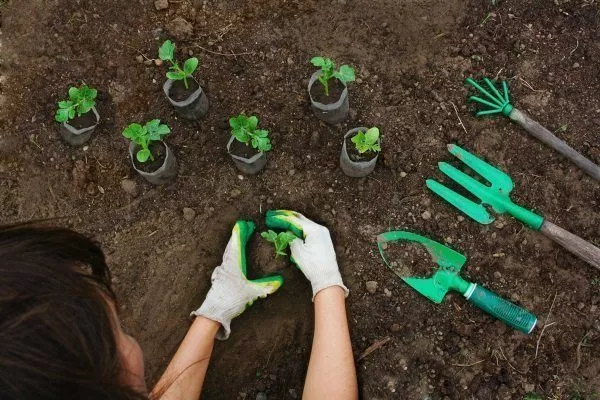
The process of growing watermelon
A watermelon grown outdoors in full sun will be significantly tastier, sweeter, and juicier than one grown in a greenhouse.
To increase the yield, watermelon vines are covered with soil to form additional roots.
Watermelon care includes the following activities:
- Watering. Seedlings require generous watering 1-2 times a week, preferably in the evening. As the foliage grows, water as the topsoil dries. When flowering begins, water less frequently, and stop watering as the fruit forms and ripens.
- Top dressing. During the growing season, apply two additional fertilizers. Two weeks after planting, feed the seedlings with a solution of chicken manure or mullein (1:10). After 15 days, apply nitrogen fertilizer, such as ammonium nitrate (20 g of fertilizer per 10 liters of water).
- Weeding and loosening. Weeds are removed as they appear. The soil around plants with 5-7 leaves is loosened to a depth of 10 cm. It's best not to disturb the bush when laying out the vines.
- Formation. Watermelon fruits form first on the main stem and primary shoots. These are left alone, and any excess shoots are pinched. When 2-3 fruits have formed, the central stem is also pinched. Fruits and ovaries that do not have time to ripen are removed.
- Turning the fruitsIt increases yield, prevents fruit from rotting, and accelerates ripening. The watermelon is turned over so that the side lying on the ground faces the sun.
| Feeding method | Recommended time | Efficiency |
|---|---|---|
| Chicken manure | 2 weeks after planting | High |
| Ammonium nitrate | 15 days after the first feeding | Average |
Turn the fruit only once, as turning it more than once can significantly reduce the yield. Read more about growing watermelons outdoors. here.
Features of growing in a greenhouse
When growing Karistan watermelon in a greenhouse, the planting pattern is 0.7 x 0.7 m. Trellis are used to tie the vines to them, and the fruits, once they reach the size of a large apple, are suspended in nets. This prevents overcrowding and ensures optimal fruit spacing.
Water only with warm water. Feed the plants once a week during watering, adding ammonium nitrate or other nitrogen fertilizers to the water.
The greenhouse must be regularly ventilated to get rid of condensation – watermelons do not tolerate high humidity.
Diseases, pests and their control
The crop is susceptible to fungal diseases. Cooler temperatures, cloudy, and rainy weather favor their development. The fungus attacks the plant's root system, leaves, and fruits.
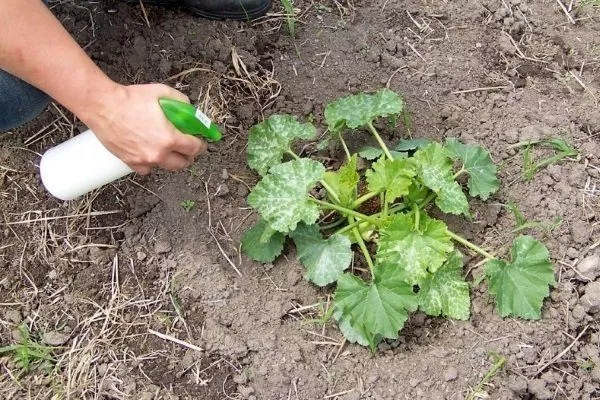
Of particular danger are:
| Disease | Symptoms | Treatment and prevention |
| Powdery mildew | Powdery white spots appear on leaves and fruit buds. They grow in size, forming a continuous white coating. The affected areas then turn yellow and die. Fruit becomes deformed and rots. |
|
| Olive spot | Olive-colored spots of various shapes appear on the leaves. In high humidity, the bloom also appears on the stems. The ovaries dry up. |
|
| Blackleg | The base of the stem turns black and thins, and the seedling breaks and dies. The disease is triggered by overwatering, cold, and excess mineral fertilizers. | As a preventative measure, before planting, seeds are treated for several hours in a solution of the biological product Agat-25K, Planriz, or others.
The seedlings are treated with a fungicide (Fitolavin, Fitosporin, Baktofit). |
Watermelon pests and control measures are listed in the table below:
| Pests | Damage caused | Control measures |
| Aphid | Aphid colonies cover the undersides of leaves and stems, sucking out plant sap. Affected tissues become deformed and dry. | For small infestations, treat with mustard, onion, garlic, and tobacco infusions every 3-5 days. For large infestations, use Mospilan, Iskra-Bio, or Komandor.
|
| Sprout fly (larvae) | They gnaw out roots and stems from the inside. Plants die. | Loosen the soil in spring and dig it up in fall. Apply insecticides: Fury, Komandor, Inta-Vir, etc. |
Proper harvesting
Experienced farmers use the following external indicators to determine ripeness:
- the soil spot is not white, but intensely yellow;
- when compressed, a faint cracking sound is heard;
- waxy coating on the skin or change in its color.
The harvest is carried out in clear, dry weather, at least 4-5 days after rainfall. The watermelon is cut from the stem, not twisted or plucked, while avoiding any impacts or damage to the skin.
Gardeners' reviews of the Karistan hybrid
The Karistan F1 watermelon is recommended for commercial cultivation. It possesses all the necessary qualities, but it can also be grown with equal success in garden plots for personal consumption.