
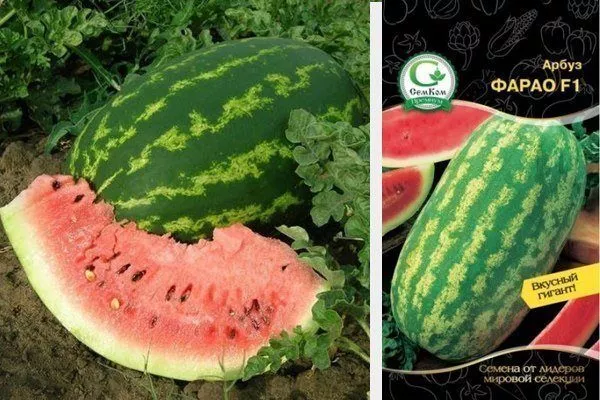
The Pharaoh watermelon has recently begun to gain popularity in Russia. It was developed in the southern region, where it thrives in the hot, dry climate. It is prized for its low maintenance and excellent taste, as well as its ripening time and the long shelf life of its juicy harvest.
Description and characteristics of the Pharaoh watermelon
The Pharaoh watermelon is a mid-early variety. Its lifespan is up to 70 days (including the seed lifespan, which is 90 days). It has the following characteristics:
- a large number of leaves protects it from high temperatures;
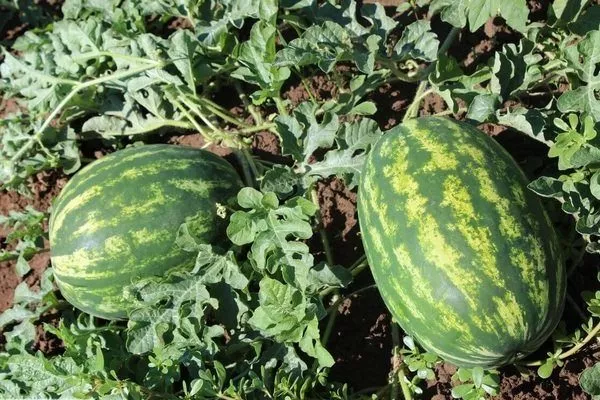
- weight is 15-20 kg, in some cases – 35 kg;
- the fruit is oval in shape;
- the pulp is sweet and juicy, without fibers;
- the rind is hard and thick, making the watermelon suitable for long-distance export;
- the color is abrupt, green, with matte reflections;
- there are almost no black seeds in the pulp;
- The watermelon stem is firm and strong. The leaves have wide, oblong blades.
Watermelon is designed for fresh sale. It can be stored for a long time, although this will cause it to lose its juiciness.
Advantages and disadvantages of the variety
The following advantages of the Farao watermelon should be highlighted:
- unpretentiousness in soil selection and watering;
- early ripening of fruits;
- taste, juiciness and size of fruits;
- amount of harvested crop.
Among the disadvantages of the variety:
- adaptability to cultivation only in the central regions of Russia;
- short shelf life without loss of quality;
- demanding in feeding.
See what a greenhouse-grown Farao watermelon looks like in this video:
Ripening time and yield
With proper care, the Farao watermelon ripens within two months of planting. A hectare of land can yield up to 100 tons of fruit.
Planting the Farao watermelon
When planting the Pharaoh watermelon, it's important to select quality planting material. The right soil is easy to find, and the variety is easy to grow.
Seed culling
Before planting, it's important to find high-quality seedlings. Seeds are distinguished by their integrity, germination vigor, and appearance. They don't store well for long periods of time, so they shouldn't be purchased months before the season begins. The characteristics of the best seeds include:
- large size, black color;
- no crackling;
- correct, oblong shape.
- ✓ Test seeds for germination vigor by placing them in a moist environment for 24 hours before planting.
- ✓ Ensure that seeds are not exposed to temperatures below 10°C during storage.
Avoid direct sunlight and frost. Store in small cloth bags, protecting from excess moisture.
Before planting, soak the seeds in hot water (50 degrees) for 2-3 hours.
Growing seedlings
This variety is fussy; seeds should not be planted too close together, as this will interfere with fruiting. It also requires a lot of sunlight.
Before planting, soak the seeds in hot water and place them in warm sand for a while. The optimal temperature for growth is 20-30 degrees Celsius. Once the first sprouts appear, the temperature is reduced.
The following video explains how to sow watermelon seeds for seedlings:
Planting seedlings in open ground
Watermelons are undemanding in terms of soil, although certain soil types will have a positive effect on growth. Sandy soils are among the best, as they are easily fertilized. Fertilizing will ensure rapid ripening of the fruit and also improve its flavor, as watermelons concentrate their sugars.
The video below shows how to plant watermelon seedlings in open soil without damaging the root system:
Planting of seedlings is usually carried out in May.
Caring for seedlings after planting
Seedlings require careful care. This will impact the plant's development and preservation after harvesting.
Watering
The Pharaoh watermelon doesn't require a lot of moisture. It can get by with rainfall if it's available in the region. Watering is infrequent. Water the roots moderately over several periods. Frequency may also depend on many other factors:
- climate;
- soil composition and type;
- nearby bodies of water.
If the plant does not receive enough moisture:
- the fruits that ripen are small, in small quantities, and their appearance differs from the standards (color);
- The fruits will have pits, cracks and deformations on the skin.
If the plant receives excessive moisture:
- diseases (in particular fungal ones) will begin to attack more often;
- the taste deteriorates significantly, the sugar is not concentrated in the pulp.
In open ground, water less frequently; during rain, water every 4-5 days. Avoid getting the leaves and shoots wet.
Top dressing
Fertilizing is done when the watermelon has 2-3 leaves. In southern regions, fertilizing is almost unnecessary, while in the Kaluga or Vladimir regions, without fertilizer, watermelons will be dull, small, and deformed.
Among the best types of fertilizer are nitrogen-based fertilizers. They will ensure rapid growth of stems and shoots. However, potassium fertilizers will also be needed. They protect the plant from diseases and support vital processes (photosynthesis, division, and moisture evaporation).
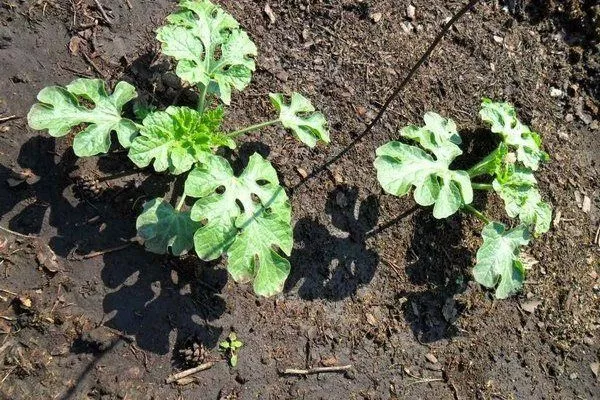
Among the medical preparations for feeding, the following should be highlighted:
- Ammonium nitrate;
- Superphosphate;
- Diammophoska.
There are 5 seasons of feeding:
- Before planting (fertilize the soil).
- During planting (immediately after planting and watering the seeds).
- During the flowering season.
- Before the fruits ripen.
- During fruit ripening.
During the first season, it's best to limit yourself to organic fertilizers. During the second, combine them with medicinal products. During the flowering season, only medicinal products are used, as in the 4th and 5th seasons.
Harvesting and storage
Watermelon harvesting begins no later than August. After checking the ripeness, harvest on a dry, sunny day.
Only ripe fruits are used for storage. Unripe ones remain on the branches. Ripeness can be determined by the color of the skin, the flesh, the seeds, and the size of the fruit. The best fruits accumulate sugar during storage, the flesh becoming softer and juicier. The Pharaoh watermelon is not the best variety for long-term storage.
The humidity level in the storage chamber should be 75-80%. At temperatures below 6-8 degrees Celsius, the watermelon will become flimsy and tasteless. At temperatures above 6-8 degrees Celsius, it will become more susceptible to fungal diseases. 6-8 degrees Celsius is the optimal temperature.
- ✓ Maintain storage temperature between 6-8°C to preserve flavor.
- ✓ Provide ventilation in the storage area to prevent condensation.
If these conditions are met, the watermelon can be stored for 2-4 months, depending on the care during cultivation (in particular, fertilizing).
Gardeners' reviews
The Pharaoh watermelon is one of the best choices for gardeners and homesteaders in Russia's central district. The climate, conditions, and factors are ideal for watermelon. It's undemanding about soil, with simple, sandy soils ideal. Watering is often unnecessary, and fertilizing is only necessary a few times per season. The fruits are sweet and delicious, and have a very good shelf life for a mid-season watermelon variety.