
The Black Prince watermelon is a sweet table variety. It has honey-sweet flesh and a wonderful flavor. This versatile hybrid can be eaten fresh, stored for a long time, and is also suitable for canning.
Breeding history
The Black Prince watermelon is a domestically bred hybrid, added to the State Register in 2009. It was developed from wild African varieties. It is considered a relative of the elite Japanese watermelon Densuke. The cultivar's creators are G.A. Tekhanovich and A.G. Yelatskova.

Growing regions
This hybrid variety is heat-loving and recommended for cultivation in the North Caucasus and the Astrakhan region. It can even be grown in Siberia, if desired. However, the crop will not yield much there, and the flavor will not be as sweet as under the Astrakhan sun.
Description of the variety
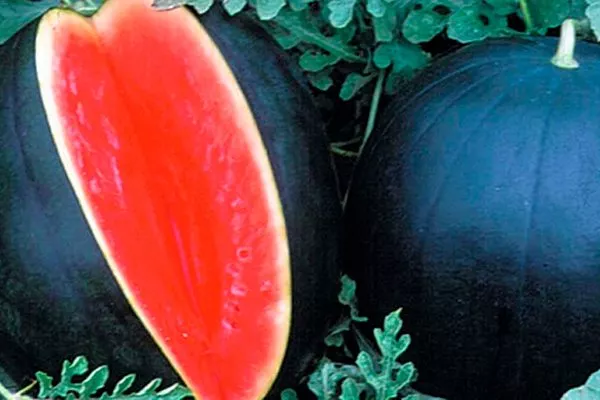
The Black Prince's main distinguishing feature is its very dark rind. This watermelon also attracts consumers with its very sweet, velvety flesh, delicious and aromatic.
Brief description:
- Plant - powerful, with long whips.
- Leaves - large, carved, dark green in color.
- Inflorescences - light yellow.
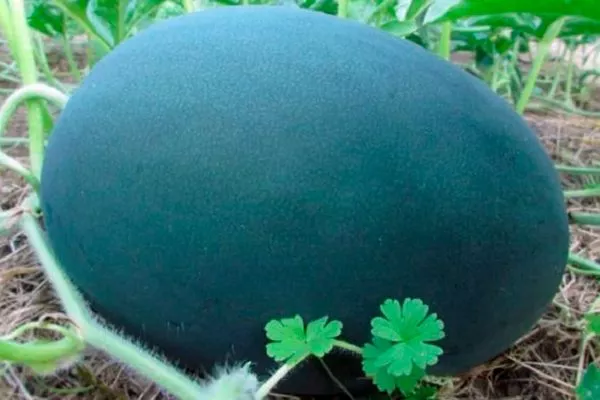
- Fruit — round or oval, medium-sized, dark green, almost black. The pattern consists of even darker, spiny stripes. The bark is medium thick and elastic.
- Pulp — dark red, medium-dense, velvety, with a rich, sweet taste.
- Seeds — medium size. Coloring: brown, speckled.
The amount of seeds in the pulp is average, it cannot be said that there are few of them.
Agrotechnical characteristics
The Black Prince watermelon belongs to the mid-late group of varieties. It takes 70-100 days from germination to harvesting the first fruits.
Characteristics of the Black Prince variety:
- average yield: 160-530 c/ha or 5.3 kg/sq. m;
- sugar content: up to 10.4%;
- transportability: good;
- shelf life: 40-50 days;
- energy value: 25 kcal per 100 g of pulp;
- keeping quality: excellent;
- weight of one watermelon: from 3.2 to 9.6 kg.
- vegetation period: 95 days;
- drought resistance: high;
- resistance to low temperatures: high;
- planting pattern: 70x150 cm.
Advantages and disadvantages
Before deciding whether to grow the Black Prince variety on your plot, it is worth evaluating all its advantages and disadvantages.
This watermelon has no drawbacks for those who grow it. Buyers may be concerned about its price—some say it's too high.
What does a ripe watermelon look like?
To avoid picking an unripe fruit from the garden, it is important to know what the Black Prince watermelon looks like when it reaches the ripe stage.
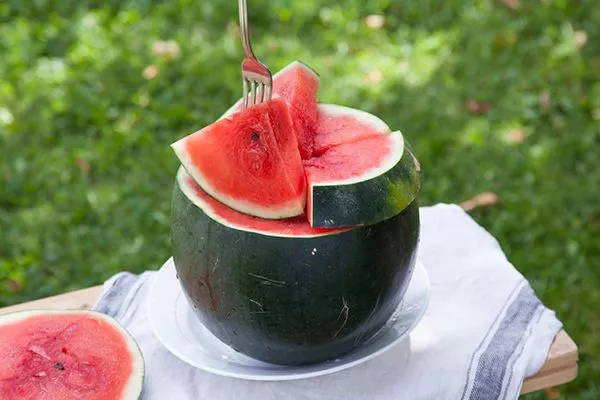
- ✓ The presence of a uniform dark color without light spots, which indicates uniform ripening.
- ✓ A characteristic dull sound when tapped, different from the sound of unripe fruits.
Tips for choosing ripe watermelons:
- The skin should be glossy and very dark. There should be a yellow spot on the side where it touches the ground.
- There should be no cracks or dents.
- The stem should be dry, hard, and grayish. Green stems are a sure sign that the watermelon is unripe.
- When you tap a watermelon, it should produce a ringing sound, not a dull one.
Those buying watermelons should know that the Black Prince variety should not be found at the market until mid-August. Furthermore, they should be purchased from certified retailers to avoid fruits containing nitrates and other harmful chemicals.
Landing features
The Black Prince watermelon can be planted from seeds or seedlings. The former method is popular in southern regions. In areas with short summers, it is recommended to grow watermelons from seedlings.
Planting dates
Seeds are sown in late April, when both the air and the soil have warmed up. In temperate climates, seeds for seedlings are sown at the same time.
Seedlings are planted from late May to early June. The seedlings should be at least a month old by the time of planting.
Germination of seeds
Black Prince watermelon seeds begin sprouting in late April. The room temperature should be 4 degrees higher than for other varieties. The optimal temperature is 28°C to 30°C, with humidity up to 95%.
- ✓ The air temperature should be consistently high, without sudden changes, especially at night.
- ✓ Air humidity must be controlled to avoid both drying out and excessive moisture, which can lead to seed rotting.
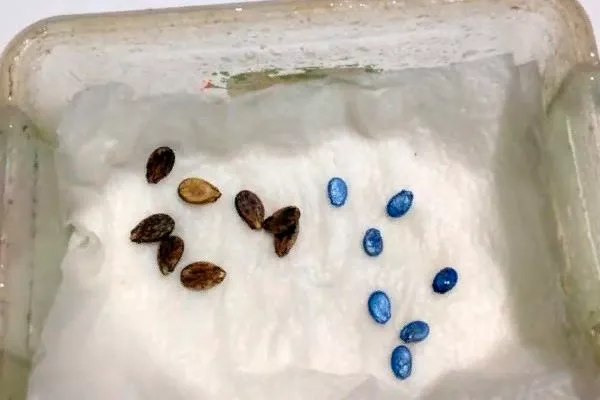
Soaking seeds is not recommended, as there is a high risk of them rotting. Germination should be done in a container filled with peat and sand.
Sowing in open ground
The soil for planting is prepared in the fall, dug deeply, and fertilized. In the spring, the area is leveled and holes or furrows are dug, spaced 1.5 meters apart. The distance between adjacent holes or seeds in furrows is 0.7 meters.
It is recommended to soak the seeds before sowing. Plant them no deeper than 2 cm. Place at least two seeds per hole to increase the chance of 100% germination. If two sprouts appear, keep the stronger, healthier one and carefully remove the other.
Growing seedlings
It's convenient to grow it in 500 ml cups. They're filled with a store-bought universal substrate used for growing vegetables. Plant 1-2 seeds in each cup to ensure the strongest seedlings are selected.
Seedlings require regular care. Before planting watermelons outdoors, they need to be grown in a greenhouse for a month.
Rules for caring for watermelon seedlings:
- the substrate should always be slightly moist, it should not dry out, but there should be no stagnant moisture either;
- During the month of growing, the seedlings are fed twice with complex compositions;
- the optimal length of daylight is 10 hours;
- 10 days before planting, seedlings begin to harden off by taking them out into the fresh air, first for 10 minutes and gradually increasing the time spent outside to 1.5 hours.
Once the seedlings have grown, they are planted in the ground, either open or covered. If planting outdoors, favorable weather conditions must also be achieved.
Planting seedlings in a greenhouse
In regions with short, cool summers, ready-to-plant seedlings are planted in a greenhouse or plastic hotbed. It's important to avoid drafts, as the plant reacts very poorly to them.
The interior of the greenhouse is treated with a copper sulfate solution to prevent fungal growth. Artificial lighting and heat sources are also installed in the greenhouse.
The procedure for planting watermelon seedlings in a greenhouse:
- Dig holes 10 cm deep and 30 cm in diameter. The intervals between adjacent holes should be at least 50 cm.
- Water the holes generously.
- Transfer the seedlings, removed along with the root ball, into the holes, cover with soil, and compact lightly. If you used biodegradable containers, don't shake the seedlings out of them—place them directly into the holes with the cups.
Planting seedlings in the ground
Plant the seedlings in open ground according to the above-mentioned pattern (70 x 150 cm). The seedlings are transferred to the prepared holes along with the root ball. The plants should be planted to the same depth they were in the seedling cup.
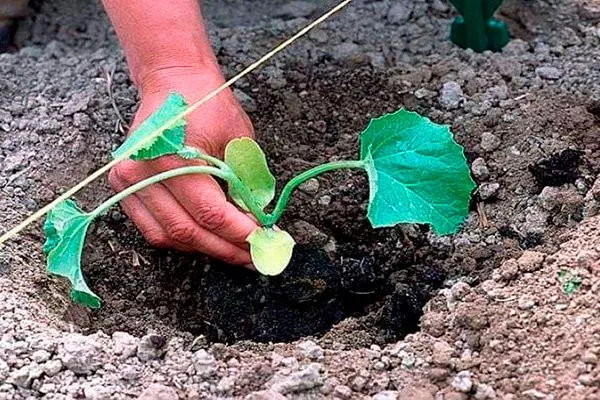
The procedure for transplanting watermelon seedlings into the ground:
- Dig holes 12 cm deep. The diameter should be slightly larger than the container with the seedlings.
- Sprinkle the seedlings transferred to the holes with soil and compact them.
- Water the roots with settled, not cold water.
- Place a layer of sand around the stem.
Caring for watermelons
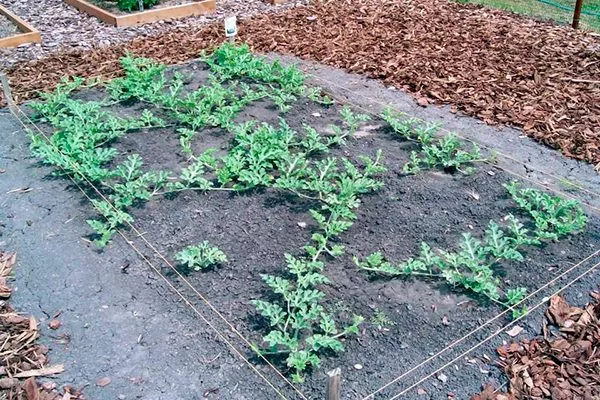
The Black Prince variety is quite demanding and capricious, so getting a good harvest requires some effort. Proper care determines not only the number of watermelons grown, but also their size and taste. It's important to understand that results will depend not only on watering and fertilizing, but also on certain growing conditions, which are very difficult to influence in open ground.
Temperature
The optimal temperature range for growing the Black Prince watermelon is between 26 and 30°C. When planting seedlings and sowing seeds, it's also important to consider the soil temperature—it should warm up to at least 13°C.
Lighting
The Black Prince variety, like all watermelons, thrives in sunny weather. It needs light for the growth and development of its fruit and the entire plant. It doesn't tolerate cloudy weather well, and the watermelons tend to be small and not very sweet. When choosing a planting site, look for the sunniest spot, protected from strong winds.
Humidity
The Black Prince watermelon has well-developed roots that absorb moisture well. This is why the plant can easily withstand drought, both atmospheric and soil-induced. However, despite this, the Black Prince variety requires generous watering. Otherwise, a good harvest is unlikely.
Watering features:
- water norm - 150 liters per 1 sq. m;
- Water consumption depends on the growing season, when the fruits begin to ripen, irrigation ends, otherwise the fruits will not be sweet;
- You should not overuse watering - excessive moisture can slow down the formation of the plant and fruits, reducing the sugar content;
- the greatest need for water is observed at the initial stage of growth and during the period of ovary formation;
- The frequency of watering should take into account the amount of precipitation and the temperature regime - the hotter the summer, the more frequent the watering.
After watering, it is recommended to loosen the soil to avoid the formation of a hard crust that prevents air from reaching the roots.
Fertilizers
The Black Prince watermelon is fertilized 2-3 times during the growing season. The plant has high nutrient requirements; for example, a calcium deficiency can delay the development of female flowers, and consequently, the fruit itself.
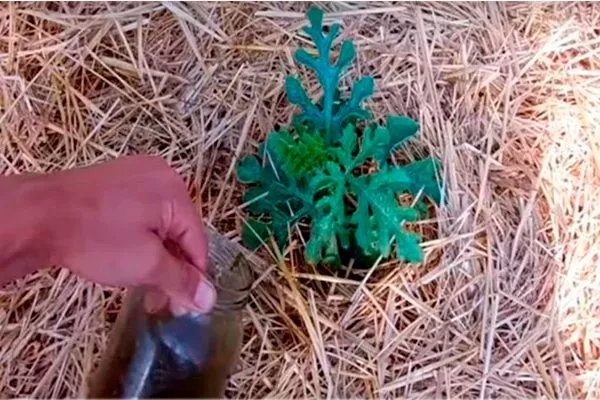
Fertilizer application guidelines:
- The first time the crop is fed is before flowering.
- The second feeding is carried out after the formation of ovaries.
- The third time, fertilizers are applied at the stage of fruit growth.
- Apply all fertilizers according to the instructions. Do not exceed the recommended dosage. Excessive fertilizer doses can harm not only the plant but also anyone who eats the watermelon.
- During periods of rapid growth, organic fertilizers are recommended, such as diluted mullein.
- As soon as the fruits have reached the required size, fertilizing is stopped.
A wide variety of fertilizers can be used—mineral, complex, and organic. Experts recommend using ready-made fertilizers that contain all the micronutrients necessary for watermelon growth.
Formation
Watermelon vines can be laid flat on the ground or supported by supports. Either option requires removing all shoots extending from the lateral stem at a height greater than 0.5 m.
The shoots growing from them are pinched off after the third leaf. No more than four ovaries are left on each bush.
Diseases
If agricultural practices are not followed and growing conditions are unfavorable, the Black Prince variety may be affected by diseases and pests.
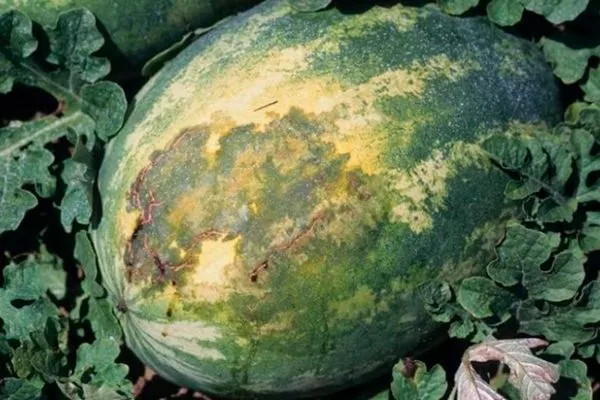
Most often, the variety is affected by the following diseases:
- Mosaic disease. This disease causes light spots to appear on the leaves, and the fruit surface to swell and rot. This condition is incurable, so prevention is essential—preventing overwatering and preventing the spread of pests.
- Gray rot. It causes a grayish, fluffy coating. The fruit becomes soft and watery. The disease is triggered by low temperatures and high humidity. Treatment involves removing the infected parts and treating the plants with a solution of crushed chalk and copper sulfate in a 2:1 ratio.
- Powdery mildew. Accompanied by the appearance of a white, flour-like coating. The causative agent is a fungus that spreads in high humidity and low light. Prevention involves dusting the leaves with sulfur. Treatment involves removing the affected areas and treating with the fungicide Karatan.
Pests
Pests can cause significant damage to watermelons, reducing yields and often causing plant death.
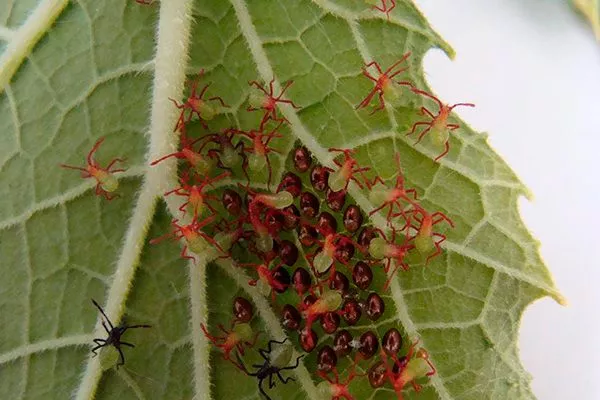
Most often, the Black Prince variety is affected by the following insect pests:
- Sprout fly. It damages young seedlings and seeds, destroying roots. It resembles a common housefly. The insect is 5 mm long. The insecticides Hurricane Forte and Zenkor are effective against it.
- Wireworm. This hard-shelled worm is the larva of the click beetle and lives in the soil, damaging virtually all vegetable crops. Recommended products: Topaz, Tilt, or similar products. For prevention, regular weeding and application of lime and nitrogen fertilizers are recommended.
- Owls. These gray butterflies themselves pose no threat to watermelons. It's their larvae, which feed on the leaves, that cause harm. A wormwood infusion brewed in boiling water (300 g per 10 liters) helps get rid of these pests. Add a cup of wood ash and liquid soap to the solution, and let it steep for several hours.
The Black Prince watermelon is a variety that undoubtedly deserves the attention of gardeners and farmers. Provided with favorable growing conditions, it will produce a bountiful harvest of delicious watermelons with excellent presentation and shelf life.