
Charleston Grey is an ideal choice for those seeking a bountiful harvest of large, tasty fruits. This watermelon not only impresses with its unique appearance and delicious flesh, but also offers a number of other benefits.
Story
According to Cambridge University, the Charleston Grey variety was developed in 1954 by breeder Charles Frederick Andrus. This breeding process included the creation of several watermelon varieties.
Features of the variety
Among the diverse world of watermelon varieties, Charleston Gray stands out for its unique characteristics and appealing features. This mid-early variety delights with a bountiful and delicious harvest.
Appearance
As it grows, the watermelon forms a strong, climbing plant with numerous shoots. The main shoot can reach up to 5 meters in length. The leaves are medium-sized and strongly divided.
- ✓ The fruits of the Charleston Gray variety have increased resistance to cracking due to changes in humidity.
- ✓ The variety demonstrates high resistance to Fusarium wilt, which reduces the need for chemical treatments.
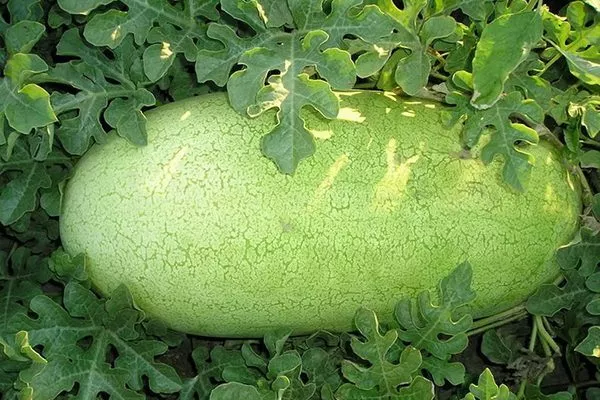
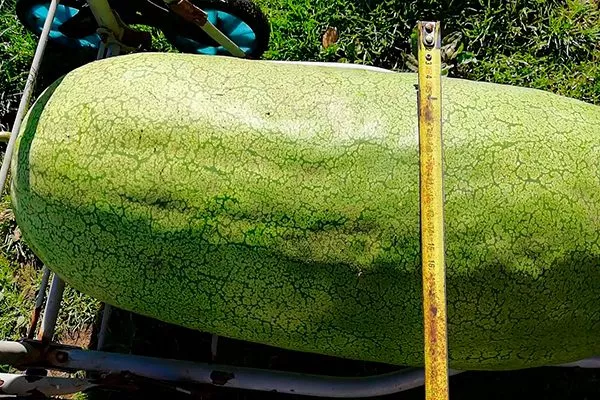
The fruits have an elongated cylindrical shape and a smooth rind. The rind is light green with a characteristic mesh pattern framed by thin dark outlines. Watermelons can weigh up to 18 kg, and their rind is hard and thick, reaching up to 2.5 cm in thickness.
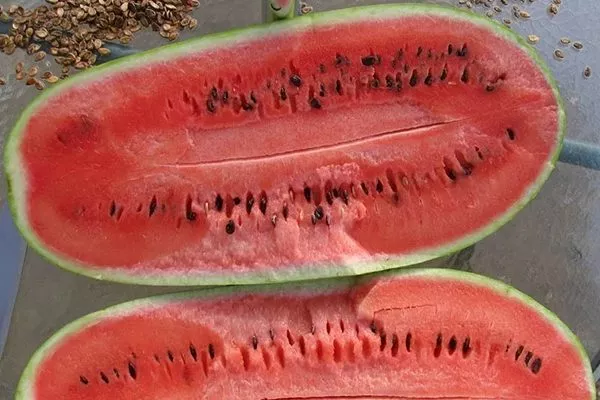
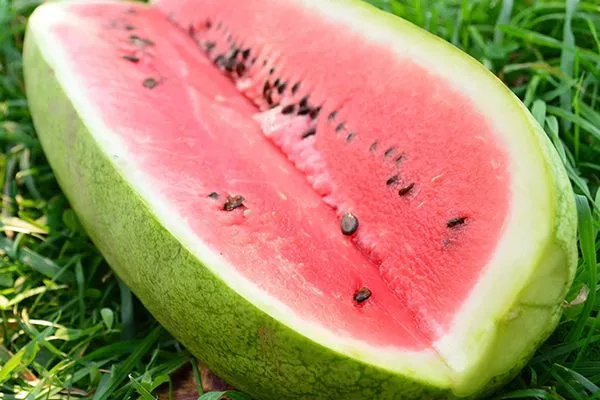
The Charleston Grey watermelon's flesh is red or pink. Its texture is grainy, crunchy, and sweet. The dark brown seeds are medium in size.
Characteristics
The Charleston Gray watermelon boasts numerous positive characteristics, making it a popular choice for many gardeners. The table below provides detailed properties:
| Parameters | Characteristics |
| Ripeness | Mid-season |
| Weight | Varies between 11 and 18 kg |
| Productivity | The expected yield is 100 tons per 1 hectare. |
| Growing season | The variety has a growing season lasting from 75 to 90 days. |
| Planting diagram | The recommended planting pattern is 140x100 cm. |
| Priming | Suitable for both open and closed ground. |
Advantages and disadvantages
Before planting the Charleston Gray watermelon in your garden, it is important to study its positive and negative qualities.
It is important to know the characteristics of a variety to avoid problems.
Growing using seedlings
Growing watermelon seedlings is not difficult at all. Even a novice gardener can handle it.
Germination of seeds
Well-drained sites with light, fertile soils are preferred for growing Charleston Gray watermelons. In cold climates, such as Siberia, the Urals, and central Russia, use the seedling method.
- ✓ Use only fresh seeds, the shelf life of which does not exceed 3 years, to ensure high germination.
- ✓ The optimal water temperature for soaking seeds should not be lower than +25°C to avoid seed stress.
In southern regions, sow seeds in open ground during a period when significant temperature fluctuations between night and day have ceased. Under these conditions, greenhouses can be used for successful watermelon cultivation.
To speed up the germination of watermelon seeds, follow these instructions:
- Soak cotton pads in water with a biostimulant.
- Place them in the bottom of a plastic cup, placing the watermelon seeds on top.
- Cover the glass with cling film and place it near a warm source, such as a radiator.
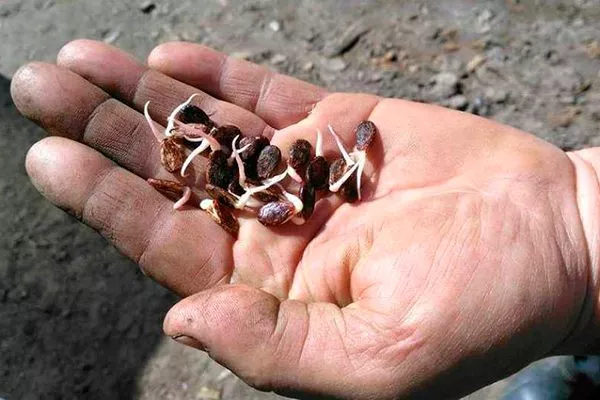
- Wait a few days for the seeds to germinate and form sprouts.
- After this, transplant the sprouted seeds into peat pots, using a ready-made substrate or a self-prepared soil mixture of humus, turf soil, peat and sand.
- Containers for seedlings, including peat pots, should have a diameter of about 10 cm and a height of 10-12 cm.
- Fill the container 2/3 full with the prepared soil, planting 1-2 seeds in each cup, watering thoroughly with warm water. Plant at a depth of 2-3 cm.
- Place the seeds under plastic wrap in a warm place with an air temperature of around 25°C. Remove the plastic wrap regularly to provide the soil with oxygen, and water as needed.
- When the cotyledon leaves appear, remove the film and reduce the air temperature to +18°C.
A month after sowing the seeds, the seedlings will be ready for planting in a permanent location.
Planting seedlings in a greenhouse
To plant in a greenhouse, begin when the watermelon seedlings have three full leaves. A month before planting, dig over the soil in the greenhouse and add river sand. When the soil warms to 15°C and the threat of frost has passed (usually in late May or early June), begin planting.
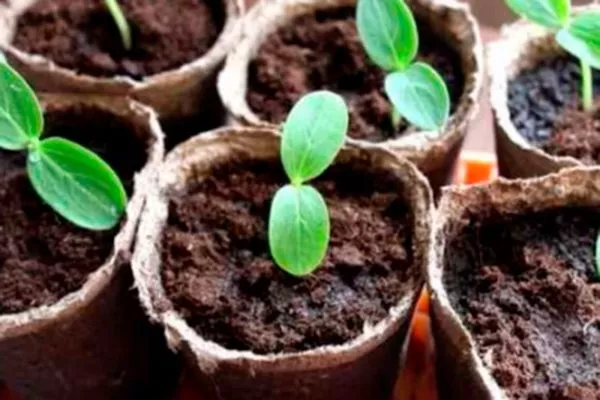
In the prepared area, make holes in a staggered pattern, matching the depth of the seedling containers. Place well-rotted manure in each hole, top with a layer of soil, and water with warm water.
Carefully remove the seedlings from the containers, along with the root ball, and place one seedling in each hole. If using peat pots, plant the watermelons along with the pots. Cover the seedlings with a layer of soil, leaving the cotyledons exposed, and compact the soil lightly.
Transplanting seedlings into the ground
Autumn preparation of the plot for growing watermelons includes plowing the soil and applying mineral fertilizers. When spring arrives and the seedlings are 30-35 days old, begin planting:
- Dig holes 70 cm apart, with a spacing of 140 cm between rows.
- Add half a cup of ash and sand to each hole. Mix it with the soil. Then water.
- Place the seedlings into each hole along with a biodegradable container or root ball.
- Sprinkle the seedlings with soil and compact it lightly.
- Water the plantings at the roots with warm water.
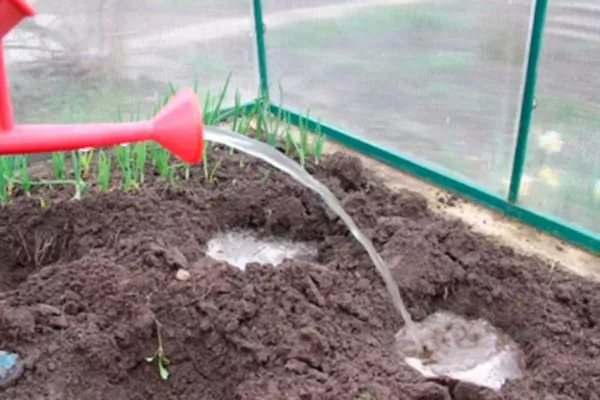
This approach to planting watermelons promotes a successful start for the plants, providing the necessary conditions for their further growth and development.
Technology for growing watermelon in open ground
As soon as the weather warms up and there's no sign of frost, begin sowing watermelon seeds in a pre-prepared plot. Follow proper agricultural practices.
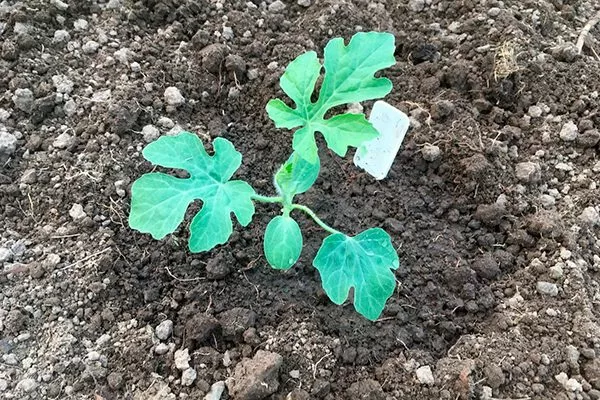
It's preferable to plant watermelons in a square nest pattern, allowing the vines enough space to spread freely. Step-by-step instructions:
- Dig holes 8-10 cm deep with row spacing of up to 1 m and a distance between holes of at least 0.5 m.
- Prepare a mixture of ash, soil, humus and nitroammophoska (1 teaspoon) and pour 1 tablespoon of this mixture into each hole.
- Water the holes and let the moisture soak in.
- Plant 2-3 seeds in each hole at a depth of 6-9 cm, taking into account the soil structure, seed size and soil moisture level.
- Sprinkle humus on top to prevent a crust from forming, which can prevent the sprouts from reaching the surface, which can lead to their death.
- Cover the crops with agrofibre or film to stimulate rapid germination.
- If the optimal temperature and humidity conditions are maintained, friendly watermelon shoots will appear in just 6-10 days.
- After the first leaf appears, mulch the beds with sawdust or straw to suppress weed growth and retain moisture in the soil.
These steps will help you successfully plant watermelons, providing optimal conditions for their growth and development.
Conditions for good growth
For effective growth and fruit formation, sufficient sunlight and warmth are required. In cold climates, to ensure large, juicy watermelons, it is recommended to leave one ovary on each plant.
Fertilizer
To ensure fertile watermelon growth, fertilize at least three times per season. One of the most common fertilizers is a mullein solution.
The preparation process involves creating a concentrate: mix rotted manure in a ratio of 1:5, then cover and leave for two weeks. Then, dilute the concentrate with water (1:10) before use. This method helps reduce nitrate accumulation in fruits.
Recommendations:
- The first feeding, using a mullein solution, should be carried out when two true leaves appear.
- Apply the second feeding two weeks before planting the seedlings, using a solution of wood ash (200 ml per 10 liters of water).
- 15 days after planting, use ammonium nitrate (20 g per 10 liters of water), using 2 liters of solution for each plant.
Watering and humidity
For effective watermelon care, water the plants in the morning or evening, directing the stream of water directly at the roots. Follow these recommendations:
- Before the formation of whips. Water the plants daily until shoots form, using at least 3 liters of water per plant.
- In the presence of inflorescences. After the inflorescences appear, water the holes twice a week, using 10 liters of water per bush.
- After flowering is complete. After flowering, water once every 7 days with 8 liters of water per hole.
- Stop watering. When the fruits stop increasing in size, stop watering.
Humidity:
- Optimal air humidity levels: from 45 to 60%.
- The moisture content of the arable layer required for normal growth and fruiting is from 75 to 80%.
- Minimum permissible soil moisture content: 6%.
Temperature
Ensuring optimal temperature conditions is important for the successful cultivation of watermelons at various stages of their development.
Temperature conditions for growing watermelons:
- Minimum soil temperature when planting in the ground/greenhouse: 12-15°C.
- Air temperature for seed germination: 30°C.
- Temperature for normal growth and ripening of fruits: 25-30°C.
- Water temperature for irrigation: 20-25°C.
These parameters promote healthy growth, the formation of high-quality fruits and ensure effective seed germination.
Pests and diseases
This variety is resistant to melon diseases but can be susceptible to aphids. Colonies of these insects typically settle on the undersides of leaves, feeding on plant sap, causing them to curl and die. An effective control method is watering with a solution of onion peels.
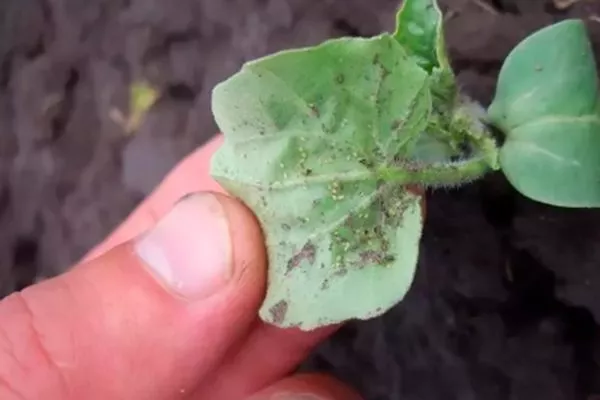
The crop can be attacked by spider mites. To kill this pest, use a solution made from soap shavings (sulfur or tar soap) with 100 g of soap added to 10 liters of water. If folk remedies are ineffective, use chemicals.
Adviсe
Experienced gardeners already know how to grow this crop properly. Follow these recommendations:
- When planting seedlings with a root ball, try to keep the roots intact. Even minor damage can negatively impact yield.
- To attract bees, spray a solution of 1 tablespoon of honey and 1 liter of water on nearby honey plants. This will help ensure pollination and increase yields.
- Pay attention to the plant's leaves when choosing a variety. Watermelons with deeply dissected leaves are generally considered the sweetest.
- Monitor your watering regime, avoiding excess moisture, as this can slow down the ripening process of watermelons.
- Regularly remove weeds from the watermelon growing area. Weeds can interfere with fruit development and lead to malformed fruits.
Charleston Gray is a mid-season watermelon variety with unusual, oblong fruits. This variety is characterized by high yields and excellent flavor, making it popular among gardeners. Proper care will ensure high yields, large sizes, and strong immunity.