
The Astrakhan Watermelon is suitable for cultivation throughout the country. It is characterized by large fruits and juicy flesh. It is easy to care for and drought-resistant. It has a long shelf life and transports well.
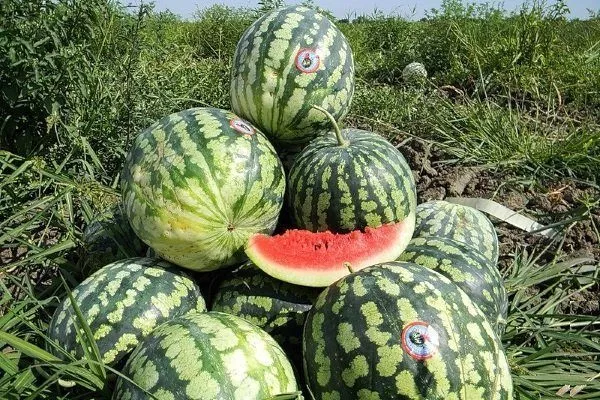
watermelon variety "Astrakhan"
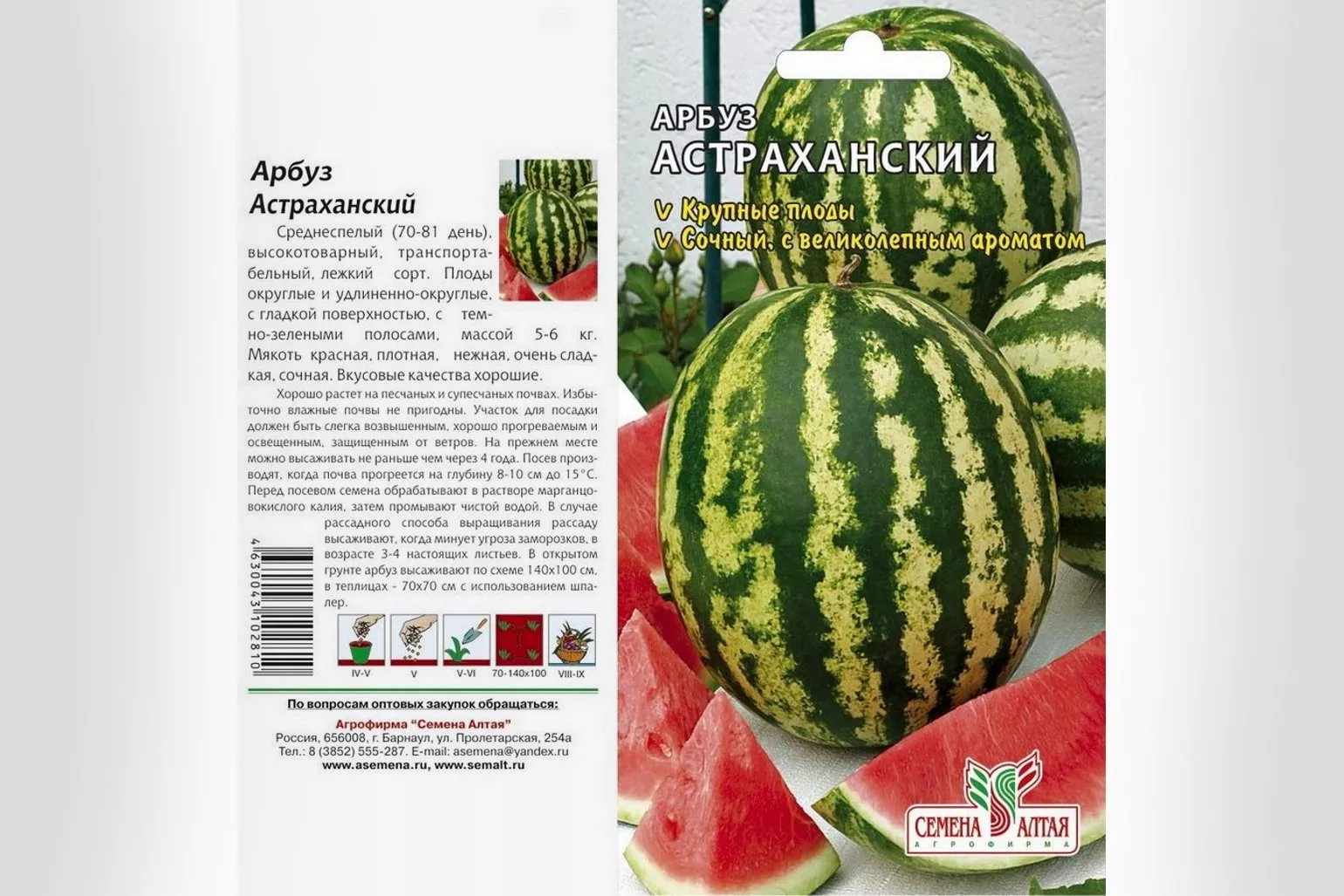
Astrakhan watermelon seeds
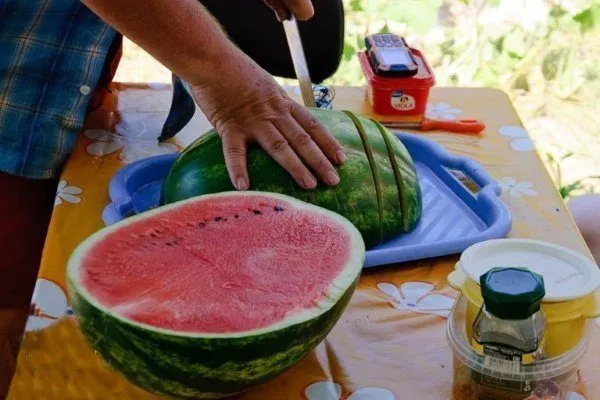
The flesh of a ripe watermelon of the "Astrakhan" variety is very sweet, juicy and aromatic
History of selection
The Astrakhan watermelon is an annual herbaceous plant belonging to the pumpkin family. The predecessor of the Astrakhan watermelon was bred in 1560. In 1660, Tsar Alexei Mikhailovich of the Romanov dynasty took a liking to Astrakhan watermelons. He ordered supplies to be established at the royal court. Entire plantations were established, first in Astrakhan, then in Chuguev, Kharkov Governorate.
In 1772, Peter the Great tasted a watermelon in Astrakhan and was delighted. He ordered its cultivation near Moscow. Initially, the plant failed due to the cold climate. A century later, breeders were able to adapt the watermelon for cultivation in northern regions.
In the early 19th century, Astrakhan watermelons came in two varieties: large and small. The larger ones were sold to residents of other regions.
The first Astrakhan watermelon variety registered was bred at the Institute of Vegetable and Melon Growing in 1977 under the guidance of leading breeder K.E. Dyutin. This variety remains popular to this day. It was originally intended for cultivation in the Volga, Ural, and Central regions.
Characteristics of the Astrakhan watermelon variety
The plant is grown almost everywhere in the country. It thrives both outdoors and indoors. Plenty of sun is essential for full development. If you live in a climate zone with limited sunshine, it's best to plant it in a greenhouse.
This plant is a mid-season variety. Ripening takes 75-85 days. A ripe fruit weighs 7.5-11 kg. A distinctive feature of this variety is its thick rind, up to 2.4 cm thick.
The root system consists of a central taproot extending to a depth of 1 m and numerous lateral shoots located at a depth of 20-30 cm. The stem spreads like a vine and grows up to 4-5 m. It has branched lateral shoots bearing gray-green, dissected leaves. Young leaves are slightly pubescent.
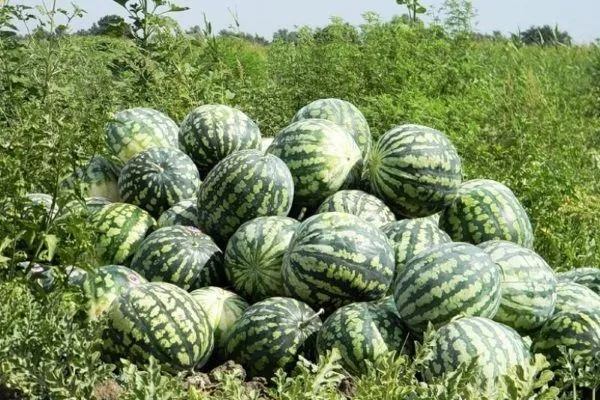
Harvesting occurs in late August or early September. A large yield of up to 120 tons can be obtained from one hectare. The fruit has a long shelf life of about three months, without losing its flavor or nutritional properties. Watermelon tolerates long-distance transportation well.
It's low-maintenance and resistant to diseases common to related crops. During drought, small cavities develop, but the flavor remains unchanged.
External appearance and internal content
The watermelon is round, sometimes slightly elongated. The surface is smooth. The color is a rich green, with wide, light longitudinal lines that blur into spikes. The greater the contrast between them, the more intense the flavor of the fruit.
The flesh is juicy, the flavor is sweet, and the texture is fine-grained. The color is a rich scarlet. The seeds are black or light gray.
Advantages and disadvantages of the variety
This variety is grown by many gardeners. It has many advantages and requires little maintenance.
Advantages of the variety:
- the fruit is large, juicy and sweet;
- It is possible to collect a large amount of harvest from a small area;
- the possibility of growing in open areas and in a greenhouse;
- tolerates dry periods well;
- resists the main diseases common to other varieties;
- can be stored for a long time;
- transports well;
- does not require increased attention during growth;
- It pays for itself well: little investment is required for purchasing seed material and further cultivation.
Cons:
- sometimes additional fertilizing is required;
- additional watering is required during dry periods.
The video below provides an overview of the Astrakhan watermelon variety:
Besides its excellent taste, the fruit is very healthy. It contains a large number of vitamins and microelements. Watermelon is recommended for many ailments and is simply a great thirst quencher.
Where and how to grow Astrakhan watermelon?
It grows in loamy or fertile sandy loam soil. The soil is neutral or slightly alkaline. High acidity can be reduced by adding lime or dolomite, preferably early in the fall.
- ✓ The soil pH level should be strictly within 6.0-6.5 for optimal nutrient absorption.
- ✓ The depth of groundwater is at least 1.5 m to prevent rotting of the root system.
The planting site should be level and not in a low-lying area. Groundwater levels should be avoided.
Depending on the planting region, it is grown in two ways:
- Planting seeds directly into open ground is more suitable for southern regions with long summers. Planting time is mid- to late May.
- Planting seedlings is recommended for the central part of the country and the Moscow region, where the climate is challenging and summers are short. This is done when the temperature has not dropped below 22-28°C for 1-2 weeks.
It's not recommended to plant watermelons in the same spot twice in a row. It's better to take a year off and sow the soil with winter wheat, potatoes, and legumes. Cucumbers, squash, and cabbage are not recommended.
Germination of seeds
For regions in the south of the country, no preliminary seed preparation is required; they are planted directly into the ground. However, for temperate climates, careful consideration should be given to the seeding material. Planting should begin in late April.
Preparation stages:
- dilute a weak solution of potassium permanganate;
- Place the seeds in it overnight - this will disinfect and soften the shell, and also help to develop immunity against pests;
- remove the seeds and rinse under running water;
- spread evenly on gauze and place in a warm place slightly above room temperature;
- Moisten the gauze material daily with warm water and keep it moist until small shoots appear.
The sprouts need time—approximately 4-5 days. The sprouted seeds need to be hardened off: place them in the refrigerator overnight and then in their usual place during the day. Repeat this cycle 2-3 times.
Plant the young seedlings in a cup. Regular plastic pots or specialized peat or coconut coir pots will work. The container should be about 10 cm wide.
The soil for filling the pots is peat. You can buy it or make it yourself.
Take in advance in equal proportions:
- turf soil;
- humus;
- river sand.
Pour a weak solution of potassium permanganate over the resulting mixture and let it dry. After this, it's ready to use.
Technology of planting in a cup:
- make a hole in the poured soil 3-4 cm deep;
- place 1 or 2 seeds strictly on the side;
- pour in water at room temperature;
- cover with a plastic bag;
- Place in a warm room with a constant temperature of 23-25 degrees with access to sunlight.
Sprouts with 3-4 leaves should germinate within 5-7 days. After that, they need 3 weeks to grow.
During the growth period, you need to apply fertilizer twice:
- 10 days after the first shoots appear, dilute the mullein with water in a ratio of 1 to 10;
- 12 days after the first feeding, apply the second one.
- The first feeding should be carried out 10 days after the emergence of seedlings, using a mullein solution in a ratio of 1:10.
- The second feeding should be carried out 12 days after the first, using a complex fertilizer containing nitrogen, phosphorus and potassium.
- The third feeding should be carried out during the flowering period, using fertilizers with a high content of potassium and magnesium.
Preparing the second feeding: add to 1 liter of water:
- 50 g superphosphate;
- 30 g potassium sulfate;
- 15 g ammonium sulfate.
Arrange the pots so that adjacent leaves do not touch each other. A month after the seed begins to germinate, the young seedling is ready for planting in a greenhouse or open ground.
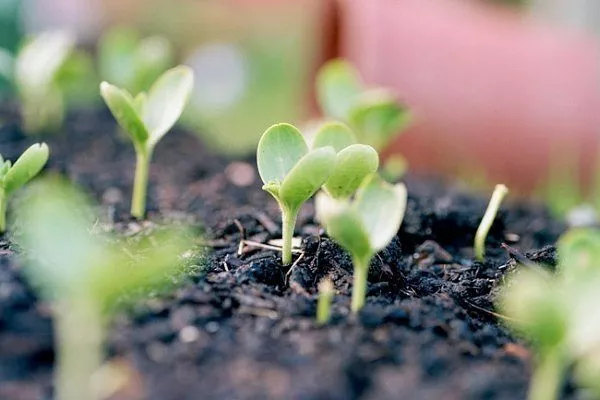
Planting seedlings in a greenhouse
A greenhouse is a permanent location for watermelon growth and harvesting. It must meet the following requirements:
- height 1.7-2 m;
- material polycarbonate;
- there should be vents, but drafts should not be allowed;
- In cold regions, a heating source is required.
Immediately before planting, disinfect the greenhouse walls with Bordeaux mixture or a copper sulfate solution. Prepare the soil in advance in the fall. Soil preparation requires digging to a depth of 1/4 meter and adding fertilizer.
Fertilizer composition per 1 sq.m:
- 2 buckets of manure;
- 3 tablespoons of nitrophoska;
- 1 tablespoon of superphosphate.
Planting in a greenhouse:
- end of May – beginning of June;
- dig a hole, fill it with compost, water it with warm water;
- place the organic cup with the plant or remove the entire lump of soil with the sprout;
- The cup should rise above the soil by 1-2 cm.
Requirements for growing seedlings in a greenhouse:
- daylight hours should not be less than 12 hours; use artificial lighting for additional lighting;
- humidity no more than 60%;
- temperature not higher than +30 degrees;
- Water only with warm, settled water, avoiding contact with the leaves.
Transplanting seedlings into the ground: a step-by-step guide
Seeds or seedlings are planted outdoors. The best time is late May, when temperatures remain constant: 27-29°C during the day and 18-19°C at night. The soil temperature should be at least 15°C.
The seedlings need to be hardened off 3-4 days before planting. To do this, place them in a cool room with a temperature of up to 15 degrees Celsius for several hours. Water the seedlings generously before planting.
Planting is done in rows:
- the distance between them is 1 m;
- between seedlings 0.8 m;
- the depth of the hole is 7-8 cm.
Carry out disembarkation early in the morning.
Step-by-step planting diagram:
- Remove the sprout and the lump of soil from the pot and place it in the prepared hole.
- The root ball should be 1 cm above the soil level.
- After planting, water the hole with the seedling and sprinkle with soil.
- Add mulch of sand or humus.
- If necessary, cover the sprout with film or a plastic cup with holes made in it.
Optimal conditions for good growth
Plant care involves providing favorable conditions for growth.
Humidity and watering
Due to its extensive root system, which extends deep and is close to the surface, the plant has constant access to moisture. However, don't limit its watering, especially during dry periods.
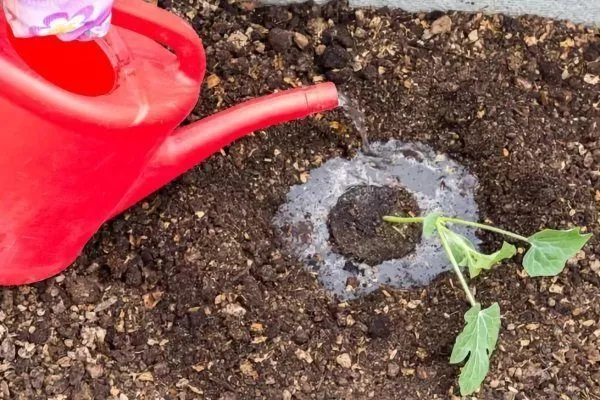
Water daily or every other day. The water should be warm and settled. Water at the roots, avoiding the green parts of the plant.
Soil fertilization
Depending on the location where the watermelon grows and the condition of the soil, you need to adjust the feeding:
- in the southern regions with a predominance of black soil, watermelon almost does not need additional nutrients for growth;
- For the central and eastern regions, fertilizing is essential.
The composition of the feed should include:
- nitrogen for leaf growth and fruit set, as its deficiency leads to the general paleness of the plant, thinning of shoots and slower growth;
- Potassium for normal growth and increased resistance to disease.
Additional feeding is necessary during flowering periods. Ready-made mixtures containing:
- magnesium - its deficiency is manifested by the appearance of spots on the leaves, and the fruits do not set well;
- calcium - a small amount causes wilting of the ovary;
- Potassium - deficiency is reflected in the small number of flowers.
Fertilizing is also recommended after fruit set. If the soil is low in boron, the fruit that has set will die. The deficiency can be detected by the appearance of yellow streaks on the fruit.
Fertilizers are required during fruit ripening. Complex fertilizers or ammonium nitrate are suitable. It is prepared at a rate of 2 g per 1 liter of water. This fertilizer is applied 2-3 times a month. Solutions of chicken manure and rotted manure can also be used.
Temperature and lighting
The plant requires full daylight. The site should be consistently warm, especially in early summer. Avoid shade. Choose a south or southeast facing location. Cloudy weather slows growth. The ideal temperature for growth is 30-40 degrees Celsius. The planting site should be protected from cold winds and drafts.
How to determine the ripeness of a berry?
Watermelons ripen in late August and early September. To determine ripeness, pay attention to the following:
- the surface of the peel has a glossy sheen when exposed to light;
- the perianth has dried out;
- the stalk has become thin and dry, the hairs have fallen off it;
- a dull sound when tapping on the fruit;
- when squeezed hard, a slight crackling sound is heard;
- The side of the watermelon on which it lay was yellow and slightly dented.
A ripe watermelon does not sink in water.
Harvesting and storage
The fruits are cut from the vine along with the stalk. They are harvested carefully to avoid damaging the skin. If long-term storage is planned, harvesting occurs a week before final ripening.
Watermelons should be stored in a cool place at temperatures up to 10°C (50°F) away from direct sunlight. The storage area should be dry, with humidity no higher than 70-75%. Other fruits and vegetables should not be stored nearby.
Watermelons can also be hung in mesh bags or placed on wooden pallets and covered with straw.
Diseases and pests
The Astrakhan watermelon has good immunity to common diseases. Infections are usually due to inadequate care.
Types of diseases and methods of combating them:
- Anthracnose. Dark, round spots are appearing on the green parts of the plant. Cause: Excessive humidity. Reduce the temperature and provide ventilation in the greenhouse.
- Gray rot. A gray layer is visible on the fruit. The flesh becomes watery. Cause: Overwatering allows the pathogen to penetrate the plant from the soil. Cut off all affected parts. Spray the plant with a solution of 2 g of copper sulfate, 10 g of urea, and 1 g of zinc sulfite.
- Fusarium. The fungus attacks the base and roots of seedlings. Cause: penetration from the soil. Destroy affected seedlings.
- Melon aphid. Affects the underside of leaves. Cause: Excessive moisture. Clean the leaves with a damp cloth. Treat with ash mixed with tobacco dust.
Reviews
Astrakhan watermelon is suitable for growing in any region. It's important to choose the right planting location and pay close attention to care throughout all stages of growth. In areas with cool summers, it can be grown in a greenhouse.