
Watermelon is a particularly popular summer dessert, as no other fruit can match its sweetness and refreshing properties. Among the many varieties, Sugar Baby is particularly noteworthy. To successfully grow it and achieve a bountiful harvest, it's important to familiarize yourself with the proper care instructions.
Story
Sugar Baby is one of the oldest and most well-known varieties. It was developed by international breeders in the 1950s.
In 2008, it was included in the State Register for the Central Black Earth Region of Russia, which includes the Belgorod, Kursk, Lipetsk, Oryol, Tambov and Voronezh regions.
Features of the Sugar Baby variety
The Sugar Baby watermelon boasts numerous positive qualities, making it a favorite choice for many gardeners across the country. This variety is noted for its low maintenance and ease of care.
Appearance
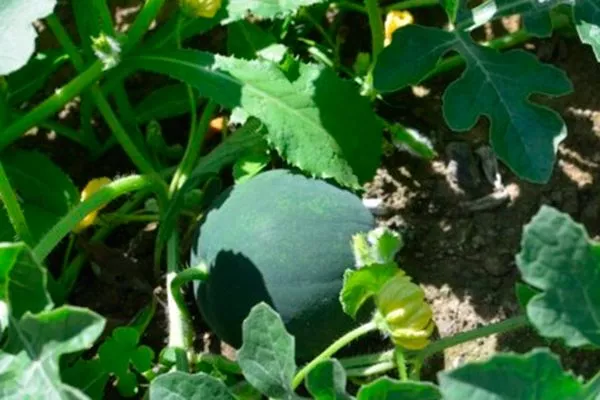
In the early stages of its development, the plant forms fleshy but rather fragile stems. The bush is medium-sized, with the main stem reaching 1.5 to 2 meters in length. The leaf blades are deeply dissected and have a gray-green hue.
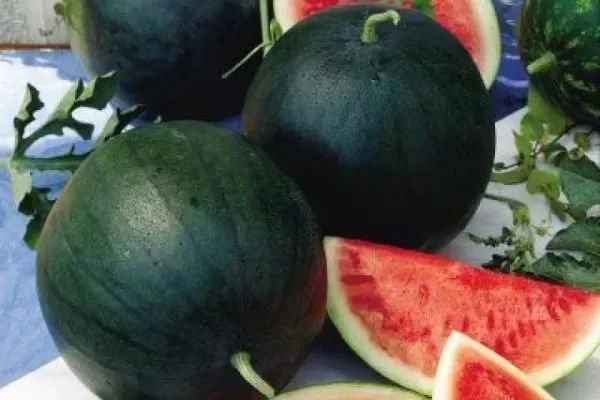
The fruits are small in size, ranging from 2 to 6 kg. The berry takes on a spherical shape. The skin is dark green with barely noticeable stripes. The pattern on the skin remains almost invisible, and at first glance, the watermelon appears uniform in color.
The peel is thin, dense, and smooth. The flesh is a rich, bright red color and has a grainy, juicy texture. The flavor is sweet and sugary. Inside are a small number of dark brown seeds.
Ripening time and yield
The Sugar Baby watermelon is an early-ripening variety with a growing season of 75 to 85 days. This timeframe may vary slightly depending on the climate of a particular region.
This variety is noted for its high yield. With proper care, the average yield per hectare can range from 116 to 169 centners of delicious fruit.
Advantages and disadvantages
Before planting a watermelon in your garden, carefully consider its pros and cons. Sugar Baby has many advantages:
Growing
The plot for growing melons should be sunny and well-protected from the wind. A southern location is ideal. Watermelons prefer loose soil with some sand. Clay and peaty soils are considered unfavorable for planting.
- ✓ Soil pH should be between 6.0-6.8 for optimal growth.
- ✓ The organic matter content in the soil should be at least 2%.
Germination of seeds
Before sprouting watermelon seeds, treat them to protect them from various pathogens. Follow these instructions:
- Soak watermelon seeds in a 2% solution of potassium permanganate (2 g of potassium permanganate per 100 g of water) for one and a half hours.
- Rinse the seeds with clean water, then place them in a container of hot water at 50°C for 24 hours and prepare for germination. This process accelerates the germination process.
- After soaking, the seeds are ready to germinate and can be planted immediately in prepared containers with soil. Prepare the soil yourself using turf, sand, humus, and wood ash.
- To disinfect the soil, microwave it for 20 minutes or pour boiling water over it.
- Choose peat pots for seedlings, approximately 8 cm in height and diameter. Fill them 2/3 full with soil and plant one seed in each container at a depth of 2-3 cm.
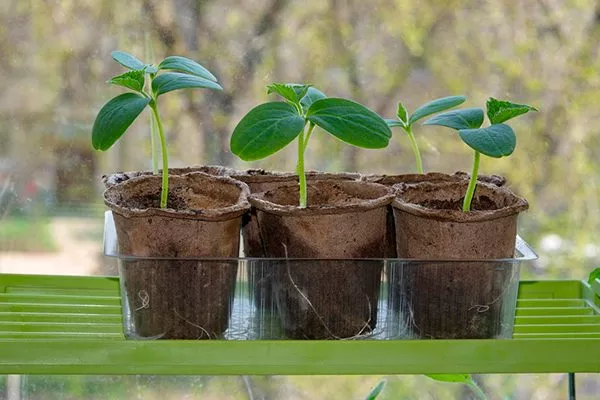
Place the container with the future seedlings in a warm, sunny location. Water the sprouts as the top layer of soil dries. After a week (maximum 10 days), shoots will emerge, and by the time they're planted in their permanent location, the seedlings will be 30 days old.
- A week before planting, begin hardening off the seedlings by taking them outdoors for 1-2 hours a day, gradually increasing the time.
- Reduce watering 2-3 days before planting to stimulate root development.
Planting seedlings in a greenhouse
In southern regions, plant watermelons in greenhouses in the second half of April, while in cooler areas, this process should be carried out in mid-May. The key is to warm the top 10 cm of soil to 15°C. Dig holes 30 cm in diameter and 10 cm deep in the plot.
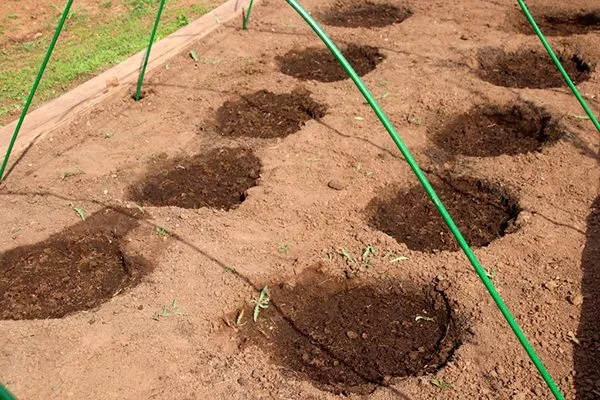
Keep a distance of 70 cm between the holes. Before planting, water the holes with warm water. Then, place one seedling in each hole, either with a lump of soil or in a peat container. Firm the soil down, leaving the cotyledons exposed.
The root ball or peat pot should be slightly raised above the soil level, preventing the seedling's stem from turning black. This approach ensures favorable conditions for successful watermelon planting and subsequent growth.
Transplanting seedlings into the ground
When cleaning the area in the fall, clear away grass residue, dig over the soil, and add compost at a rate of approximately 8 kg per square meter. In the spring, clear the soil again of vegetation, level it with a rake, and water it with hot water and copper sulfate. Add sand if necessary.
Then follow the instructions:
- Form the planting holes in a checkerboard pattern, with a distance of 100 cm between them and 140 cm between rows.
- Add a glass of ash to the bottom of each hole.
- Place the seedlings in the holes with a lump of soil or in a pot. The soil should be at least 1 cm above the soil surface.
After planting, water each bush with warm water at the roots. Provide cover for the first 14 days after planting.
Planting seeds in open ground
This variety is ideal for regions with warm, sunny climates, no recurrent frosts, and long, hot summers. Before sowing, pre-treat the seeds:
- Carefully select and discard any unsuitable seeds. Identifying empty seeds is easy: place them in a glass of salt water. Within 10 minutes, good seeds will sink, while empty ones will float to the surface.
- Place the selected seeds in a light pink solution of potassium permanganate for several hours to disinfect them.
- Pour hot water (50°C) over the seeds and let them soak for 24 hours. This procedure promotes accelerated germination.
- Drain the water and dry the seeds thoroughly with a dry cloth and sow directly into open ground.
Conditions for good growth
Caring for this variety requires following a number of important steps, including proper watering, timely fertilization, and taking into account a few additional considerations. This will reward you with a bountiful harvest and a strong immune system.
Fertilizer
Fertilize watermelons up to four times per season. Apply the first fertilizer when the first three true leaves have formed, and the last when the fruit sets.
Feeding schedule:
- First one. Dissolve 25 g of potassium chloride, 15 g of ammonium nitrate, and 50 g of superphosphate in 10 liters of water. Water the soil with the resulting solution at a rate of 4 liters per square meter.
- Second. Apply after 2 weeks. Water the plants with a chicken manure solution - 4 liters per 1 square meter.
- Third. Carry out the treatment two weeks after planting. Water each bush with 2 liters of ammonium nitrate solution (20 g/10 liters of water).
- The fourth. Start in mid-June. Use a solution of mullein with a cup of ash added. Apply 4 liters of solution per square meter of area.
This feeding schedule helps provide plants with the necessary nutrients at various stages of their development, promoting health and high yields.
Watering and humidity
Water the plants daily until they develop four true leaves. During active growth, water the young seedlings three times a week, using 3 liters of water per hole.
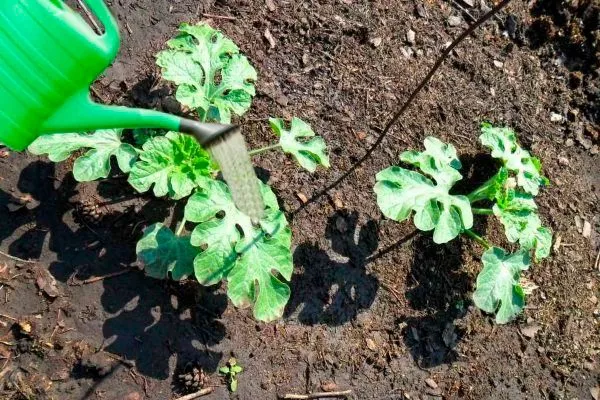
Later, as the plants become stronger, reduce the frequency of watering to once a week, while increasing the volume to 7 liters. Despite the variety's pronounced drought tolerance, carefully monitor the soil, adjusting the watering schedule based on its moisture content.
Additional care
Watermelon care includes not only watering and fertilizing, but also a number of other important activities. Follow these recommendations:
- Carefully remove all weeds around young plants.
- In case of prolonged rainfall, protect ripening fruits by covering them from above and placing them on cardboard, bricks or wooden boxes to prevent possible rotting.
- If you're growing watermelons on a trellis, tie up the ripe fruit with netting. Train the growing shoots in the desired direction, dusting the roots with soil to encourage additional root growth.
- If pests or diseases appear, apply appropriate insecticides and fungicides. Prepare and use solutions according to the manufacturer's instructions.
Although the ideal option would be to do without chemicals, since watermelons can accumulate nitrates and other substances, sometimes their use is necessary to effectively protect plants from harmful factors.
Pests and diseases
Sugar Baby is highly resistant to the main diseases common to melons. However, it is somewhat susceptible to root rot. If this disease occurs, reduce the frequency and amount of watering. A solution of potassium permanganate is effective for soil treatment.
To combat pests, use folk remedies, such as a decoction of wormwood and yarrow (simmer a sprig of wormwood and 2 tablespoons of dried yarrow in hot water for 10 minutes). Use the cooled decoction as a spray, effectively combating melon aphids and sprout flies.
Collection and storage
Determining the exact watermelon harvest date is difficult due to climate variations across different regions. There are a number of external signs that indicate the fruit's ripeness:
- dry tail;
- dull sound when tapped;
- withered leaves and stems;
- the presence of a characteristic crackling sound.
To preserve watermelons, store them in the refrigerator, basement, or cellar at temperatures between 2°C and 5°C. The key is to ensure the rind is free of damage, such as scratches, dents, or cracks. The ideal storage weight is 4-5 kg.
Gardeners' reviews
Sugar Baby watermelon is an attractive choice for gardeners, offering not only excellent flavor but also ease of care. Its short ripening period and adaptability to various climates make it ideal for growing in various regions.