
The Bedouin watermelon was introduced to the world relatively recently, but has already earned well-deserved popularity. This foreign hybrid can be grown in almost all regions of our country, but in different ways—in open ground, under plastic, or in a greenhouse. It is characterized by large fruits and excellent agronomic characteristics.
Description of the variety
Bedouin is a hybrid, designated by the F1 prefix, and possesses distinctive characteristics that allow for quick variety identification. It is considered a healthy product, rich in vitamins and microelements.
Who developed the variety and when?
Thanks to the painstaking work of Dutch breeders, the versatile Bedouin F1 watermelon hybrid was developed in 2016. Bejo Zaden nursery staff set the goal of achieving the highest possible yield, impeccable flavor, and resistance to adverse conditions.
Distinctive features
The Bedouin watermelon is characterized by a very early ripening period—a minimum of 76 days and a maximum of 92—which is rare for watermelons. But the hybrid also has other distinctive features:
- it is very resistant to diseases and pests;
- a small amount of seeds;
- high sugar levels – 13%;
- can adapt to different temperature conditions;
- slight thickening does not affect the yield and fruit weight.
Composition, properties, benefits and caloric content
Bedouin F1 watermelon contains almost 90% water, making it a dietary product. It contains only 25 kcal per 100 g. The juicy berries are rich in nutrients, containing a complex of vitamins—PP, H, E, C, B, and A. They also contain macro- and micronutrients—primarily sodium, phosphorus, iron, magnesium, and calcium.
This watermelon is recommended for:
- lowering blood cholesterol levels;
- removal of excess fluid from the body and kidneys;
- acceleration of metabolism;
- cleansing from toxic and other harmful compounds;
- removal of sand and stones.
However, keep in mind that the high sugar content limits berry consumption for diabetics, so they should be consumed in moderation. The same applies to those with liver failure.
Characteristics of bushes and fruits
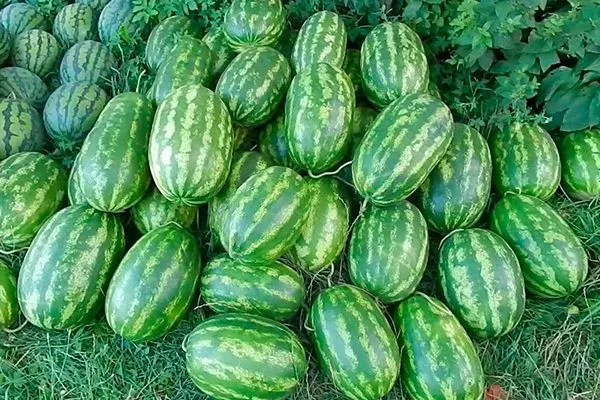
The Bedouin variety is easily identified by the size of its fruits. Standard fruit weights range from 3.7 to 5 kg, but under favorable growing conditions, gardeners can harvest berries weighing up to 8-10 kg.
Other indicators:
- Bushes. They are climbing plants, but the stems are of medium length. The bushes are considered vigorous and fast-growing, so they can become dense. The leaves are medium-sized, slightly wrinkled and dissected, and have a classic green hue. Each stem contains 3-4 berries.

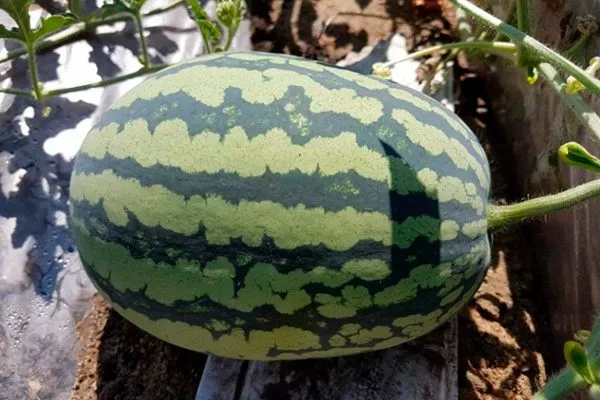
- Fruit. They have a standard elliptical shape and striped coloring. The base color is light green, while the stripes are much darker, with jagged edges. The rind is thin—maximum 1.5 cm. The flesh is slightly firm due to its sugar content, reddish-pink in color, and juicy. When bitten, it has a distinctive watermelon-like crunch.
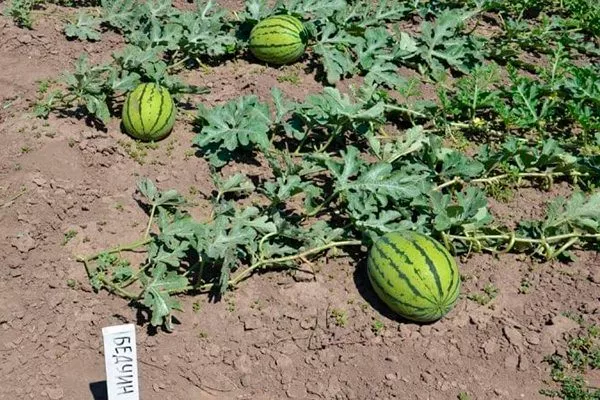
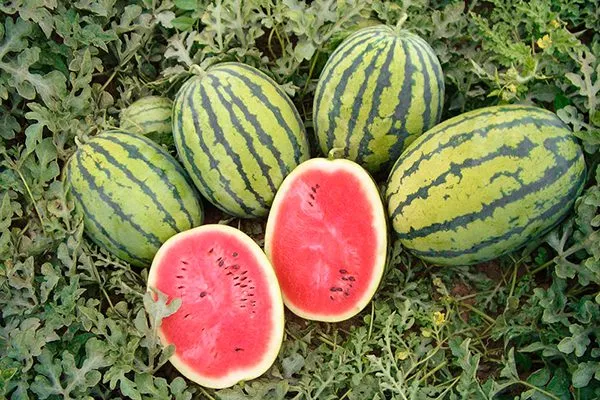
The yield is quite high: approximately 6-8 kg can be harvested from 1 square meter, or from 260 to 330 centners from 1 hectare. The hybrid is universally used – watermelons are eaten fresh, and they are used to make juices, jams, and candied fruits.
Watermelon seeds
Bedouin F1 is characterized by a small amount of planting material. The seeds are reddish-brown and small. However, they are not used for planting because hybrid seeds never retain the characteristics of the mother plant.
How to grow seedlings yourself?
Seedling cultivation methods are recommended for regions with cool and harsh climates. The optimal time for planting seeds indoors is the end of April, as the young plants need to be transplanted outdoors within a month.
- ✓ The optimal soil temperature for seed germination should not be below +15°C.
- ✓ To form large fruits, it is necessary to ensure a distance of at least 150 cm between plants.
Germination of seeds
The Bedouin F1 hybrid requires seed germination when grown from seedlings. This is done in a specific sequence:
- Prepare individual containers. They should be 10-15 cm in diameter. It's not recommended to plant watermelon seeds in a single, solid container, as this complicates the transplanting process and could damage the root system.
- Prepare the planting material. To do this, sort the seeds and soak them in water for 15-30 minutes. Hollow seeds should float to the surface, while those suitable for germination will sink to the bottom. Seeds are most often purchased from the store, so there is no need to stratify, disinfect, or otherwise.
- Prepare a nutrient-rich, loose substrate. It's best to make it yourself. To do this, mix 1 part each of turf soil and sawdust, then add 0.5 parts of compost. Mix thoroughly.
- Fill the containers approximately 3/4 full.
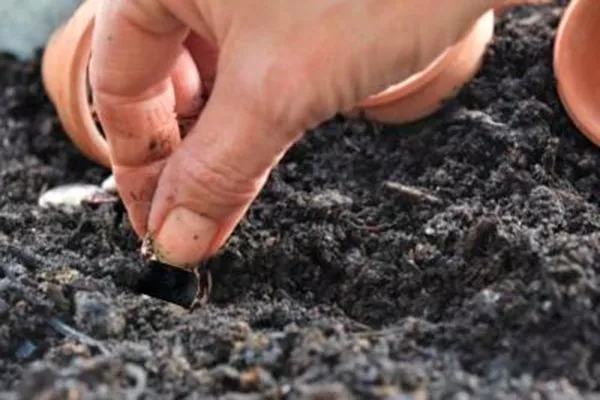
- Plant the seeds 4-5 cm deep.
- Level the soil and compact it lightly with your palm – do not do this with force, otherwise it will be difficult for the seedlings to break through.
- Spray them with water until all layers are saturated. Use warm, settled liquid.
- Cover the plantings with glass or transparent plastic film, move the seedlings to a warm and bright place.
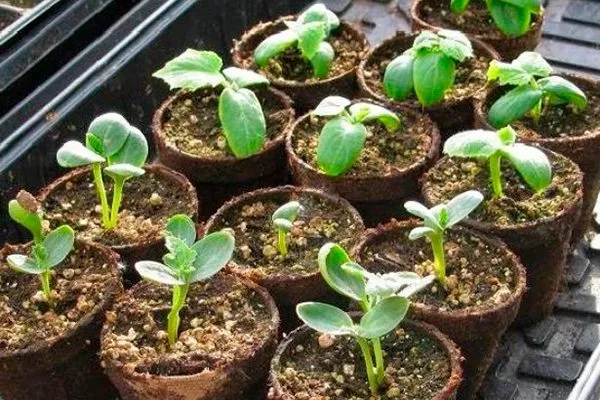
Open the cover twice a day for ventilation and periodically moisten the soil. The film can be completely removed once the sprouts have formed.
Planting seedlings in a greenhouse
The seedlings are moved to the greenhouse after a month. In central Russia, a regular plastic cover can be used, but in the central part of Russia and Siberia, a heated greenhouse is essential. The temperature in it must be at least 15-18-7 degrees Celsius.
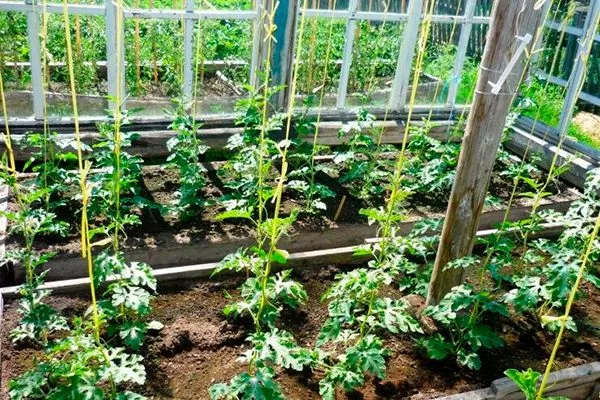
Rules for transplanting seedlings:
- Create raised beds in the greenhouse (15-20 cm high is sufficient).
- Dig holes 80-100 cm apart within a row. There should be at least 150 cm between rows. The planting hole should be 10-15 cm deep and 50-60 cm in diameter.
- Mix the soil taken from the holes with any mineral supplement according to the instructions. Additionally, add 1.5-2 kg of rotted manure or humus.
- Water the seedlings and let them stand for 2-3 hours.
- Carefully cut the cups or remove the seedlings from the containers.
- Shake off the substrate and place the bushes in the holes.
- Fill with prepared soil mixture and compact thoroughly.
- Moisturize.
Once the bushes have grown, form a trellis and tie up the vines. Experts recommend planting watermelons in a staggered pattern, as mature bushes and the Bedouin variety are robust, as are their root systems. Keep in mind that the root collar should be covered with soil. The first watering should be done a week after transplanting.
Transplanting seedlings into open ground
Bedouin F1 watermelon seedlings can be transplanted into open ground after 28-35 days. By this time, cotyledon leaves should have formed. Keep in mind that the soil temperature should already be at least 12 degrees Celsius (55 degrees Fahrenheit) and the air temperature should be at least 15 degrees Celsius (59 degrees Fahrenheit).
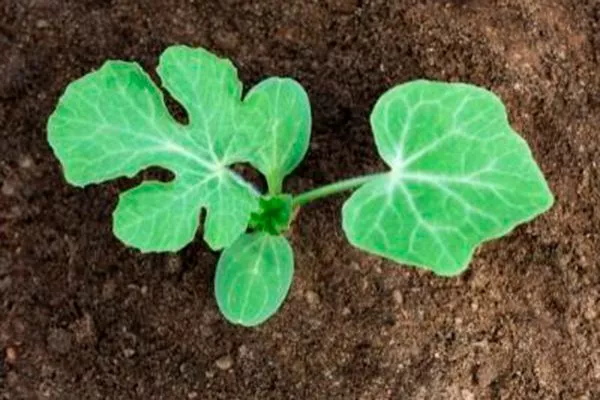
How to do it right:
- Prepare the plot. This should be done at least a month before planting, but early spring or fall is best. To do this, thoroughly dig the beds and add 8-10 kg of manure, compost, or humus to the soil.
- Make holes at a distance of 150-200 cm from each other, and 300 cm between rows.
- Mix the soil with 20 g of potassium salt, 30 g of superphosphate and 30 g of urea.
- Remove the seedlings from the pots and place them in the planting holes.
- Fill with nutrient soil and compact.
- Pour sand onto the surface of the tree trunk area.
- Moisturize.
If the night temperature drops below +12 degrees, be sure to cover the young seedlings and remove the covering in the morning.
Features of sowing in open ground
Bedouin F1 is sown from seeds in garden beds only in the southern parts of the country. This should be done in sunny, dry weather. The planting pattern and instructions are the same as the previous version, but with a few differences:
- plant the seeds to a depth of 7-8 cm;
- After sowing, it is advisable to cover the seeds with plastic film or a cut plastic bottle until the sprouts appear;
- The seeds must first be soaked for 48 hours.
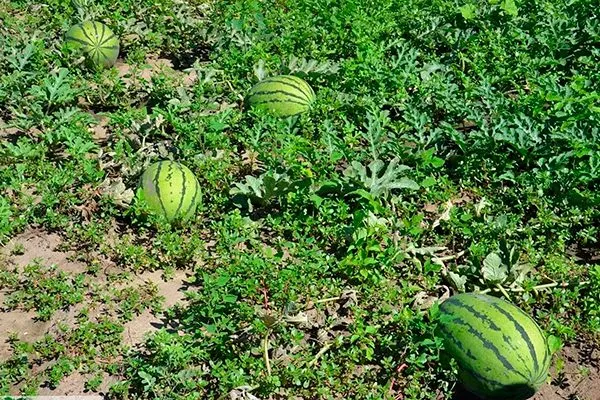
Growing conditions
The Bedouin F1 watermelon doesn't require any special care. It all boils down to the following rules:
- Top dressing. It is carried out twice per season:
- The first fertilizer application is 15 days after transplanting the seedlings or 30 days after sowing the seeds outdoors. To do this, dissolve 20 g of ammonium nitrate in 10 liters of water (2 liters of solution per plant).
Alternatively, you can fertilize with an organic-mineral mixture - for 10 liters of working solution of mullein or bird droppings, you need 30 g of superphosphate and 15 g of calcium chloride. - Fertilizer is needed a second time during budding. You can dilute 80 g of Kaltsinit fertilizer in 10 liters of water. Additionally, to promote more bud formation, make a mixture of 10 liters of water, 10 g of superphosphate, 20 g of ammonium sulfate, and 30 g of potassium chloride. Apply 2 liters per plant.
- The first fertilizer application is 15 days after transplanting the seedlings or 30 days after sowing the seeds outdoors. To do this, dissolve 20 g of ammonium nitrate in 10 liters of water (2 liters of solution per plant).
- Watering. It varies depending on growing conditions:
- In greenhouses, watermelon bushes need to be watered every three days until flowering (3-4 liters per bush) or once a week (then about 7-8 liters). After budding, less water is needed, but watering will be more frequent. Once the fruit has formed, these treatments are discontinued.
- In open ground, before flowering, the soil should be moistened every two days with 3-4 liters, and during budding - twice a week with 7-8 liters.
Comparison of Bedouin Watermelon Irrigation MethodsIrrigation method Frequency Volume of water per bush In the greenhouse before flowering Every three days 3-4 liters In the greenhouse after budding Once a week 7-8 liters In open ground before flowering Every two days 3-4 liters In open ground after budding Twice a week 7-8 liters - Pruning, shaping. The Bedouin watermelon variety is characterized by very rapid growth, so the bushes need to be pruned. This prevents weaker vines from robbing the fruiting stems of moisture and nutrients. Be sure to pinch out the tops after three fruit buds have formed.
Try to completely remove weakened shoots and trim back side shoots. Prevent side shoots from forming.
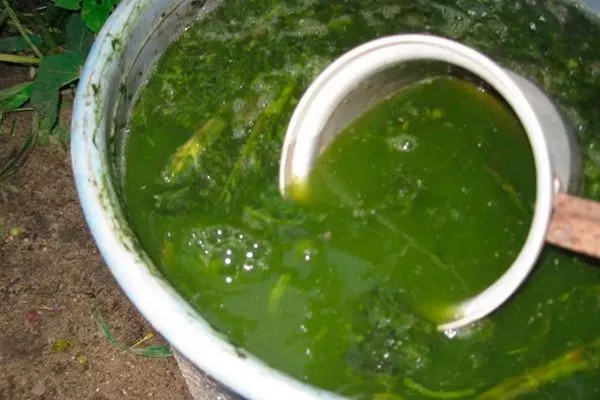
Experienced melon growers recommend additionally fertilizing watermelons with herbal infusions, which require steaming any herb and adding a little yeast.
Resistance to diseases and pests
The Bedouin F1 watermelon is renowned for its good resistance to diseases and pests, thanks to its strong immune system. However, problems can arise under adverse weather conditions or when farming practices are not followed. Here are some of the most common problems gardeners encounter:
| Disease | Symptoms | Solution to the problem |
| Powdery mildew | A whitish coating appears on the leaves, after which the fruits begin to rot. | Spraying with Fitosporin-M. |
| Olive leaf spot | The ovaries dry up, and an olive-colored coating is visible on the leaves. | Chemical fungicides are required. |
| Angular spot | At first, the leaves become covered with slightly grayish spots, then holes form in their place, and the fruits become transparent. | Only Fundazol is required. |
| Anthracnose | The whole bush is covered with brown spots. | It is sufficient to use biological fungicides. |
| Peronosporosis | Berry development stops, yellowish spots appear on the leaves, after which they dry out. | You need Topaz, Bordeaux mixture or urea. |
| Brown rot | The leaves turn yellow, the roots crack, and the fruits become covered with black spots. | Fundazol is used. |
Pests include wireworms, melon aphids, and cutworms. Systemic insecticides are used to control them.
Collection and storage
Bedouin watermelons can be stored for about six weeks in a cool place. This hybrid has excellent transportability, but to ensure this, it's important to harvest the fruit before it's fully ripe.
Advantages and disadvantages
The Bedouin F1 has many positive aspects.
Reviews of the Bedouin watermelon variety
The Bedouin watermelon can be grown both outdoors and in greenhouses, which is especially important for many regions of Russia. It doesn't require any special care, but it does require frequent watering. It is characterized by vigorous growth and early ripening, a rich nutritional profile, and excellent transportability.