
A hedge is a decorative green planting. It serves to protect a property or surrounding area from encroachment and gusts of wind, which can damage young trees and shrubs. Let's consider the main purpose of such plants and their main types.
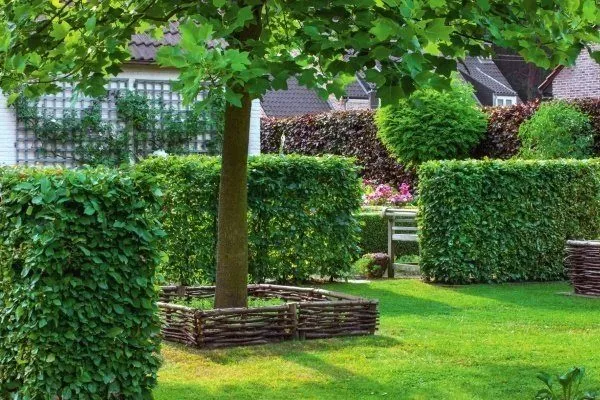
How to choose plants for a hedge
Before planting your property with picturesque greenery, ask yourself: why do you need it? Perhaps you need to create artificial boundaries, mark out garden paths, or simply enclose your home with a green living fence.
- ✓ Consider the type of plant root system to prevent damage to foundations and underground utilities.
- ✓ Pay attention to the compatibility of plants with those already on the site to prevent diseases and pests.
To better understand this issue, let's highlight the main purpose of a shrub fence:
- Dividing the entire plot of land into specific zones, such as a playground, flower beds, or vegetable garden beds.
- Protects the fenced area from strong winds, curious passers-by, and strange animals.
- Using evergreen, climbing plants, you can create a wall that will protect against noise from the outside street and also serve as a decorative feature for the house's façade.
- Dense vegetation in the form of bushes on the site slows down the melting of snow in the spring, which allows the soil to retain more moisture.
- In addition to their decorative function, some shrubs can bear fruit, mainly berry plants (rose hips, currants, hawthorn).
In addition to the above points, when choosing a decorative green fence, consider the following parameters:
- Weather conditions and soil characteristicsin which you will plant the shrub - some plant species will not grow in soil deprived of moisture, while others will feel more comfortable in a dry climate.
- Features of growth and formation of bushes – this refers to how long you're willing to wait for full-fledged shrubs for your hedge to emerge. If you need to improve the area as quickly as possible, planting fast-growing varieties of greenery is a good option.
- Please note the need for regular trimming of bushesIf you want a voluminous, decorative hedge, consider this option. Trimmed shrubs are planted densely enough to allow for later pruning of branches and leaves to create three-dimensional shapes. These varieties require careful and meticulous care.
Unformed vegetation, on the other hand, grows freely, spreading its branches in the direction and length it needs to thrive. Fruit-bearing shrubs such as currants, sea buckthorn, and dogwood are examples of such varieties.
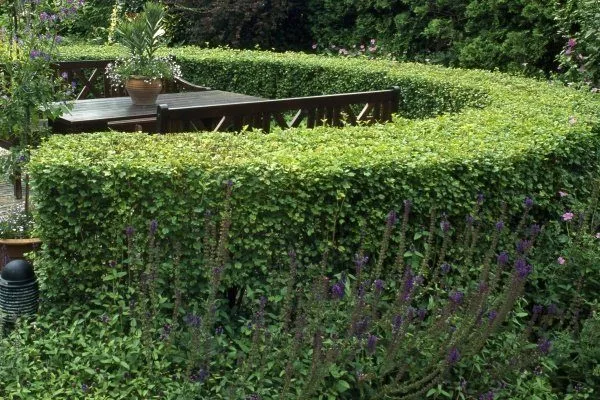
An unformed hedge of currant bushes
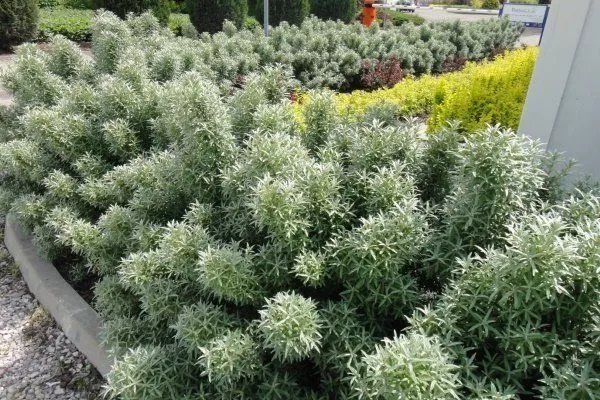
Green fence made of sea buckthorn
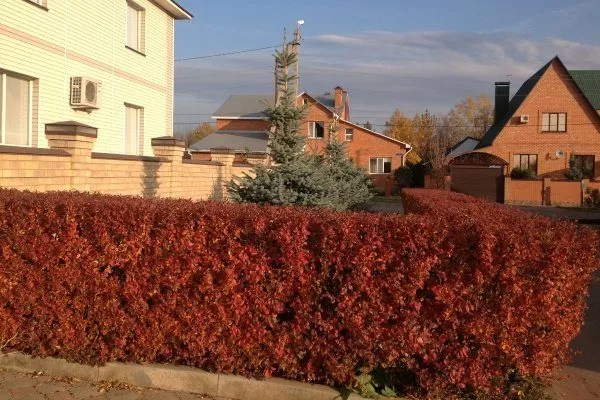
Dogwood hedge
Choose your hedge plant variety carefully to prevent its appearance and condition from deteriorating if left unattended.
Diversity of plant species and their use as ornamental hedges
There are a huge number of varieties and types of living fences. They are presented on the market mainly as tree and shrub seedlings.
Use simple, easy-to-grow and care for plants to create decorative living fences in your yard.
If you want to decorate the area with vegetation, marking a place for relaxation, low-maintenance varieties are suitable; planting fruit-bearing berry bushes is also possible.
Shade-tolerant plants will provide shade for relaxation and decorate a wooden gazebo. Climbing varieties are suitable for creating a wall of living plants – an excellent option for demarcating a plot or using it as a fence between the street and the courtyard.
Below, we'll look at the most popular plant classifications based on their purpose and properties. Based on these characteristics, you can choose the most suitable living fence option for you.
The most common classification of shrubs
Let's look at which groups of plants are suitable for landscaping with a hedge.
Deciduous
| Name | Height (m) | Growth rate | Frost resistance | Water requirement |
|---|---|---|---|---|
| Hawthorn | 8 | Average | High | Moderate |
| Viburnum-leaved bladder-senna | 3 | High | High | Moderate |
| Rose hip | 1.5-2 | High | High | Low |
They are characterized by dense green foliage, which changes color in autumn (from gold to reddish-brown) and falls, leaving bare branches. By early summer, the foliage is renewed. The following deciduous shrubs are common:
- Hawthorn Hawthorn is a genus of semi-evergreen tall shrubs or small trees belonging to the Rosaceae family. The plant adapts to any climate and is resistant to drought and frost. Hawthorn grows up to 8 meters tall and has lush foliage, making it easy to trim. It is also a medicinal plant; its fruits are used to treat cardiovascular diseases. It is recommended to purchase three-year-old seedlings for planting.
- Viburnum-leaved bladder-senna – a flowering shrub with a dense crown from the Rosaceae family, it can grow up to 3 meters in height. This type of shrub requires little maintenance and prefers loose, moist soil. Each plant variety has its own foliage color. In autumn, the leaves turn yellow, and some species can even have purple leaves during this period. Due to its dense foliage, pruning is possible, and the white berries that appear after flowering are non-poisonous.
- Rose hip – easy-to-care-for shrubs, sometimes evergreen, with erect or prostrate stems of varying heights and lengths, from 15-25 cm to 8-10 m. The height of the plant can be adjusted during cultivation, ranging from 1.5 to 2 meters. Some varieties have flowers of various colors: white, pink, and yellow. The thorns of the plant serve as a kind of fence against unwanted visitors.
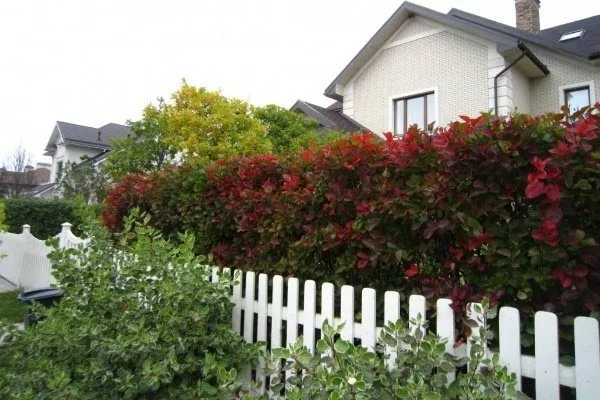
A hedge made of deciduous hawthorn bush
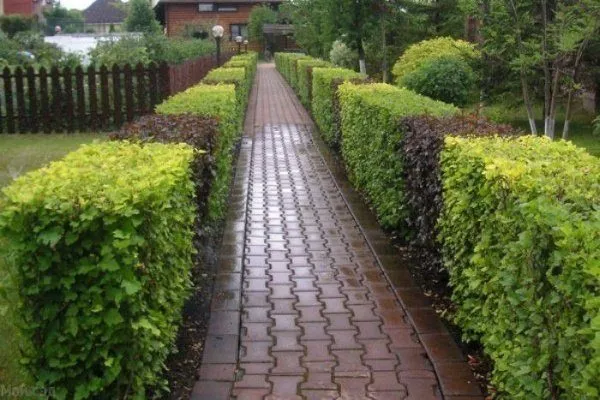
Designing a hedge from the viburnum-leaved physocarpus
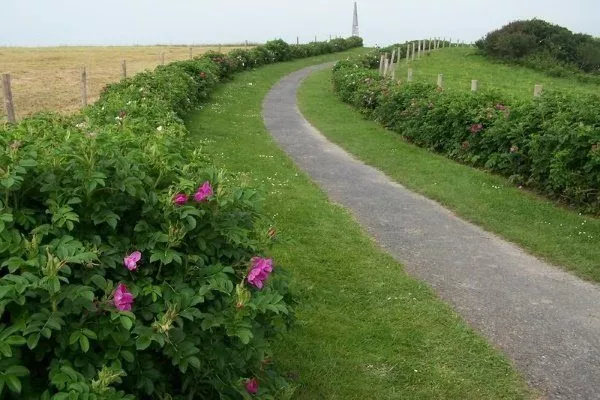
A hedge of deciduous rosehip bushes
Evergreens
| Name | Height (m) | Growth rate | Frost resistance | Water requirement |
|---|---|---|---|---|
| Boxwood | 2-12 | Low | Average | Moderate |
| Barberry | 3 | Average | High | Low |
| Fatsia | 2-4 | Average | Low | High |
| Lavender | 0.5 | Average | Low | Low |
These hedge shrubs are prized for their ability to retain green foliage year-round. Let's highlight the least demanding types:
- Boxwood (Latin: Búxus) Boxwoods are slow-growing evergreen shrubs and trees, reaching heights of 2 to 12 m (rarely 15 m). The plant can live up to 600 years. Boxwoods are characterized by small, oval, succulent leaves that form dense foliage. In March and April, greenish-yellow inflorescences appear, where seed pods will later form. After some time, the pods burst, and the seeds spill into the soil. Boxwoods are propagated by cuttings, seeds, and layering.
- Barberry (lat. Berberis) Barberries are large bushes or small trees with thin, ribbed shoots. The plant can reach a height of 3 meters, making it suitable for forming green fences. Shorter varieties are suitable for borders. These shrubs are easy to grow, decorative, and provide protection. The needles on their trunks will protect your property from unwanted visitors. Barberries bloom profusely, change color in the fall, and bear large red berries. New plants can be grown from seeds, cuttings, saplings, and layering.
- Fatsia – evergreen shrubs or small trees with sparse branches. A distinctive feature of the plant are large leaves with serrated edges, dissected into 7-11 lobes. The trunk is thick and cream-colored. This plant tolerates shade well, so it can be planted in areas protected from the sun. This plant blooms with small flowers, which are collected in panicle-shaped inflorescences.
- Lavender (Latin: Lavandula) Lavender is a genus of evergreen plants comprising approximately 47 species. This plant is widely used medicinally and is known for its delicate fragrance. Lavender grows in bushes, reaching a maximum height of 0.5 meters and a diameter of no more than 1 meter. This plant has small, elongated green or greenish-gray leaves. It blooms in June and July. The flowers are mostly small and lilac, but pink, blue, and white are also found. The plant requires little care and is hardy in cold climates.
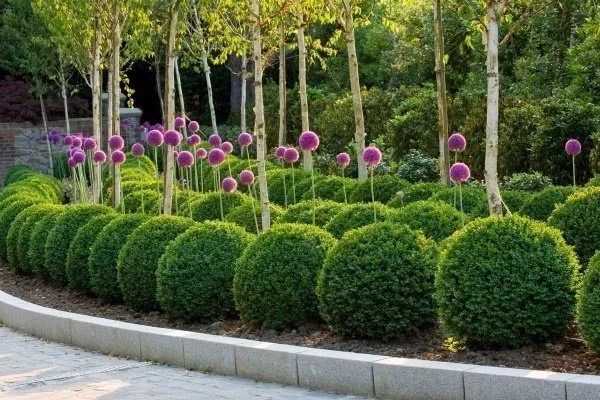
Hedge made of evergreen boxwood
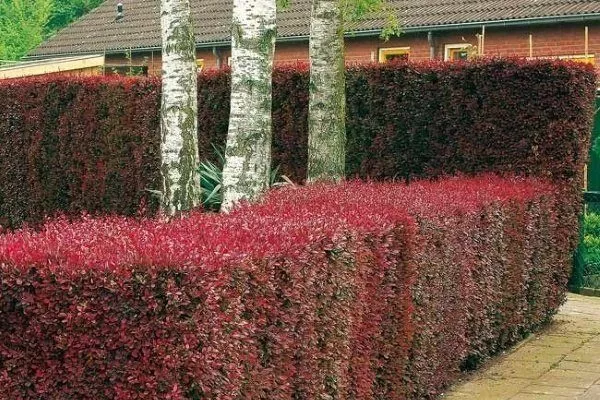
Barberry hedge
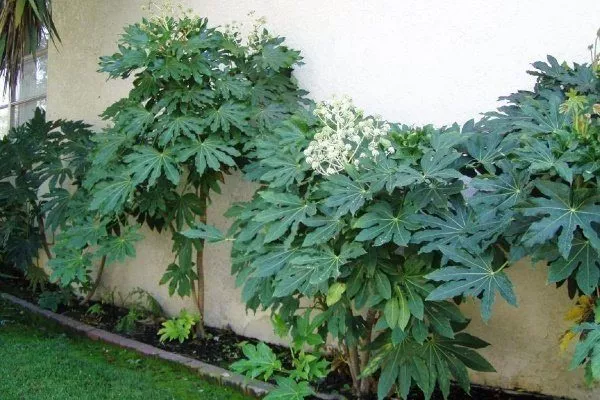
Landscaping with Fatsia plants
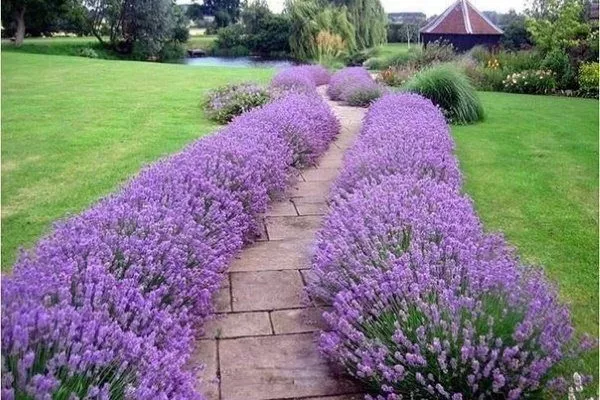
Decorative lavender hedge
Climbing plants
| Name | Height (m) | Growth rate | Frost resistance | Water requirement |
|---|---|---|---|---|
| Clematis | 2-4 | High | Average | Moderate |
| Ivy | 10-20 | High | High | Moderate |
| Climbing rose | 2-5 | High | Average | Moderate |
| Honeysuckle | 6 | High | High | High |
They are ideal for decorating fences and creating a dense green carpet on inconspicuous walls of houses and other buildings. Climbing shrubs often require little special care, only occasional pruning to maintain a pleasing appearance.
- Clematis – a perennial plant with long green shoots bearing small white star-shaped flowers (white, pink, and purple shades are common). The entire fence is covered with small flowers during flowering, lending a delicate, serene feel to the landscape. It requires little care or abundant watering and can grow in dry soil.
- Ivy It appears as a green vine covered with large, carved leaves. Since the plant is considered poisonous, it is necessary to take precautions and wear gloves when handling it (planting and caring for it). It is easy to care for, adapts to cold temperatures, and grows in both shade and sunny areas.
- Climbing rose – a plant blooming with beautiful flowers with a delicate fragrance. This type of shrub should be planted in fertile soil and fed with special fertilizer in the spring. They grow rapidly upward and outward, so an inconspicuous fence will quickly disappear under a carpet of fragrant roses. Plant the plants 1-2 meters apart to prevent the thin, long branches from intertwining.
- Honeysuckle Honeysuckle is a climbing shrub growing up to 6 meters tall. This plant type is easy to care for, grows fairly quickly, and blooms profusely in summer with yellow flowers, which then bear fruit. It is ideal for decorating vertical surfaces of walls and fences. It is recommended to plant three-year-old plants along fences or walls in early fall. When planting, add potassium-containing fertilizer and water with plenty of warm water. Honeysuckle is a moisture-loving plant; it is unlikely to germinate in dry soil.
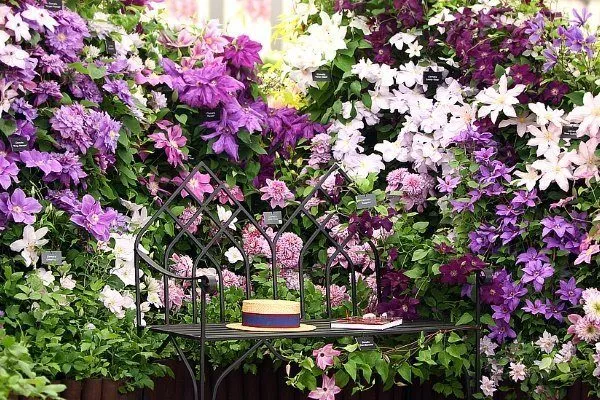
Decorating buildings with the perennial plant clematis
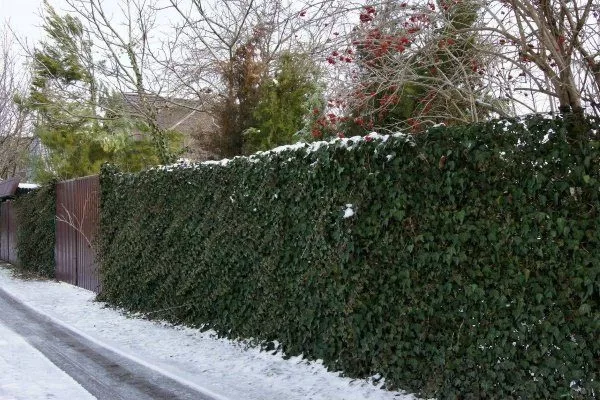
A hedge of climbing evergreen ivy
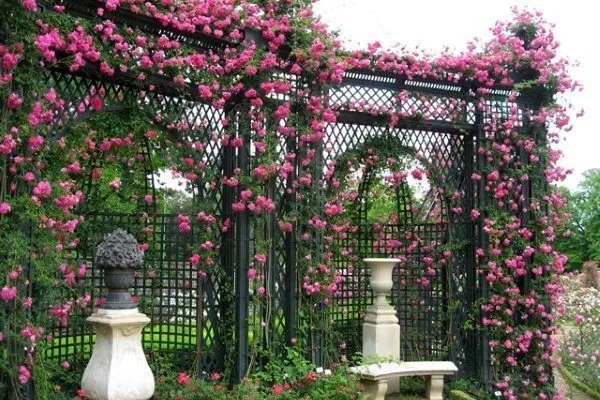
Decorating with climbing roses
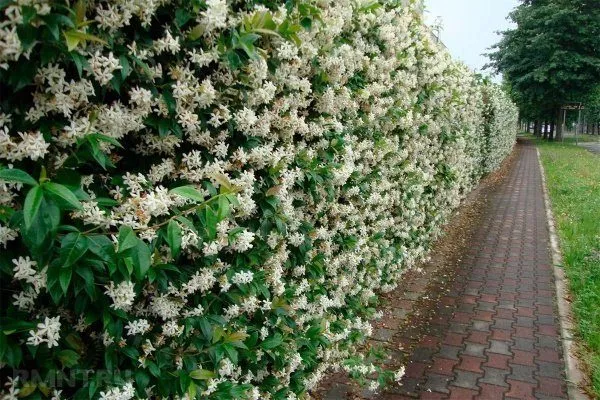
Decorating vertical wall surfaces with honeysuckle
Fast growing
| Name | Height (m) | Growth rate | Frost resistance | Water requirement |
|---|---|---|---|---|
| White dogwood | 3 | High | High | High |
| Spirea | 1-2 | High | High | Moderate |
Suitable for quickly forming dense, free-form bushes. Some of the most striking examples of this type include:
- White dogwood – Bushes that don't require pruning bloom twice a season in the summer. This type of shrub thrives in moisture and drains damp soil. Regularly pruning the lower branches encourages it to grow taller without spreading out. It reaches a height of 3 meters. Dogwood is frost-resistant, adapts to any type of soil, and can grow in shade.
- Spirea Spirea is a genus of deciduous ornamental shrubs in the rose family (Rosaceae). The plant requires little maintenance. Two types of shrubs are available: a free-growing form with drooping flowering branches and a pruned shrub. Green foliage typically appears early, turning yellow in autumn. Most spireas are long-lived, with a shrub's lifespan reaching seven years. Various species of these plants are available, allowing you to grow a hedge of varying heights.
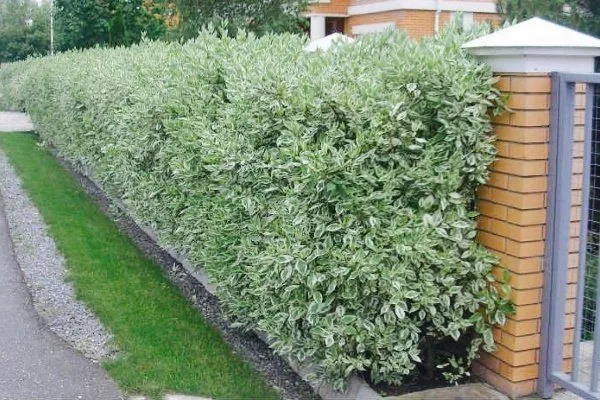
A hedge made from fast-growing turf bush
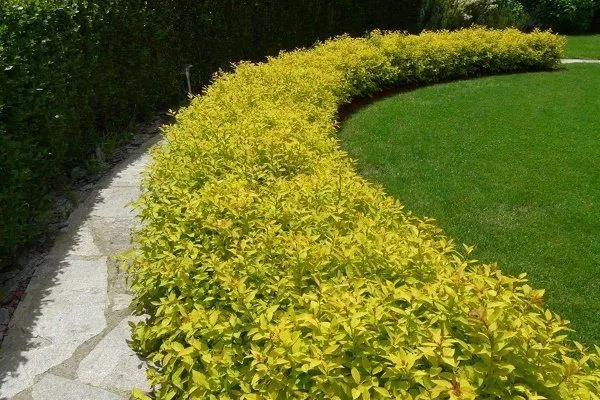
Forming a dense carpet of spirea
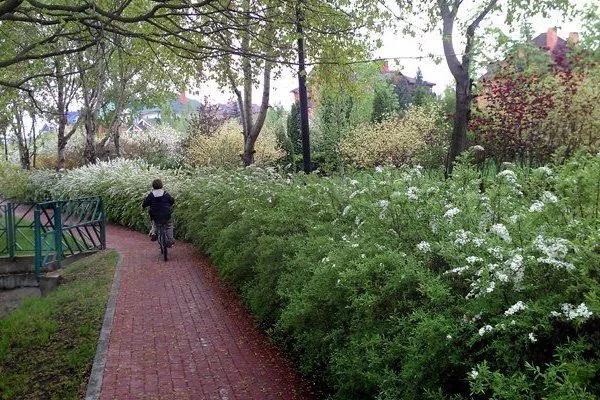
A free-growing variety of spirea for hedges
Thorny bushes
| Name | Height (m) | Growth rate | Frost resistance | Water requirement |
|---|---|---|---|---|
| Thorn | 3.5-4.5 | High | High | Low |
| Princepia chinensis | 2 | High | High | Moderate |
| Barberry | 3 | Average | High | Low |
These plants will provide a serious barrier and protect your property from unwanted visitors. Their dense foliage will provide reliable shade from the sun and eliminate drafts.
- Thorn, or Blackthorn – a small thorny shrub; a species of the genus Prunus in the rose family Rosaceae. The shrub grows 3.5-4.5 m tall, sometimes occurring as low-growing trees no taller than 8 m. Spreading and expanding through its root system, the shrub forms dense, thorny, and impenetrable thickets. The branches are densely covered with thorns. Blackthorn blooms with white inflorescences in the height of spring, and only later do the bright green leaves appear. Round, black-blue fruits ripen in September. It is a fast-growing plant, tolerant of shade and cool climates.
- Princepia chinensis – fast-growing shrubs up to two meters tall with twig-like branches bearing needles up to 2 cm long. In spring, they bloom with yellow flowers, which, by autumn, produce red, cherry-like fruits. Princepia is easy to care for and requires no pruning, except for the removal of old shoots.
- Barberry – a branched, thorny plant up to 3 meters tall, with fleshy leaves 2-3 cm in size and strong roots. It blooms in spring in May with fragrant golden flowers and bears large red berries. In autumn, the foliage changes color and turns purple. The plant is resistant to heat and cold, but does not like high humidity. However, it bears fruit only in open, sunny locations.
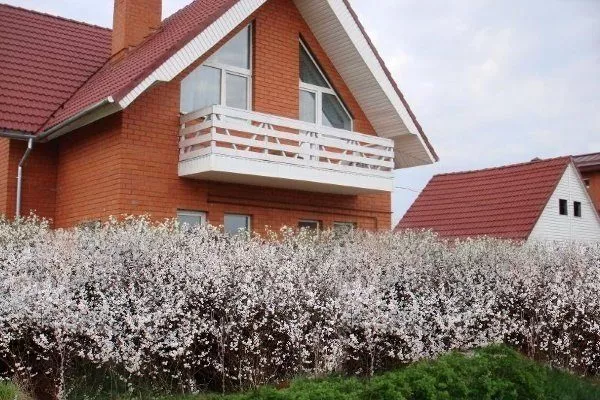
Blackthorn will protect the area from unauthorized visitors.
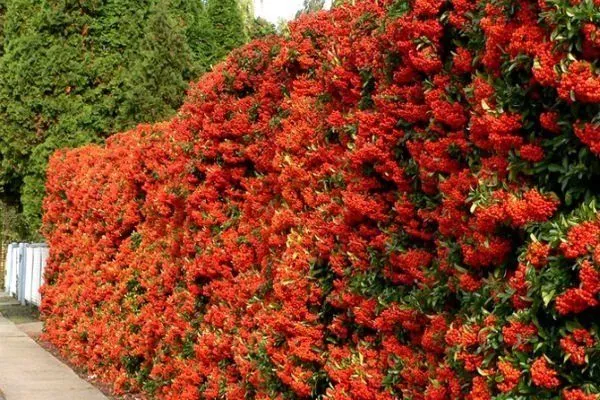
Thick bushes of Princepia chinensis will reliably hide from the sun
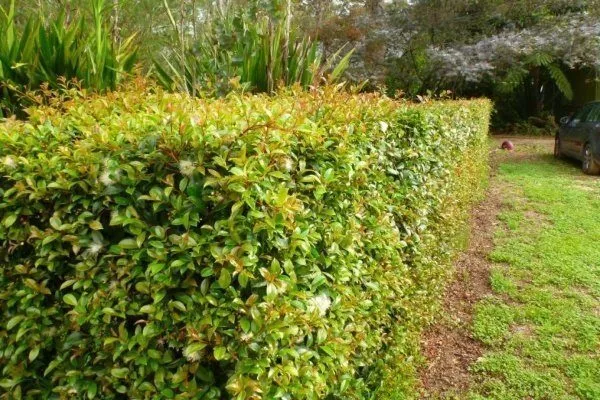
A hedge of thorny barberry
Conifers
| Name | Height (m) | Growth rate | Frost resistance | Water requirement |
|---|---|---|---|---|
| Thuja | 70 | Low | High | Moderate |
| Common juniper | 10 | Average | High | Low |
| Yew | 1-10 | Low | High | Moderate |
Thanks to their dense, spiky foliage, hedges made from these types of plants look elegant and purify the air. These shrubs can often be pruned to achieve the desired decorative shape:
- Thuja – a slow-growing evergreen conifer. It can reach a height of 70 meters. It is undemanding of growing conditions, but prefers marshy, sandy soils. It is wind-resistant and resistant to diseases and pests. After several years of growth, it forms a dense wall of foliage that is easy to trim and shape.
- Common juniper – belongs to a genus of evergreen coniferous shrubs and trees in the Cupressaceae family. It is undemanding of soil conditions, resistant to pests, and can grow in dry and poor soil. A healthy, mature plant reaches a height of 10 meters and lives up to 200 years. Sometimes a white coating can be seen on the coniferous foliage of the juniper, giving the shrub a distinctive character.
- Yew (Latin: Táxus) – Can be classified as a slow-growing coniferous shrub, its height ranges from 1 to 10 meters. The trunk diameter can reach up to 4 meters. The plant does not secrete resin and has no odor. Instead of cones, yew produces large red or blue berries. It is easily pruned, and the foliage can be shaped into specific bushes. It does not require extensive maintenance. It is propagated by seeds or cuttings.
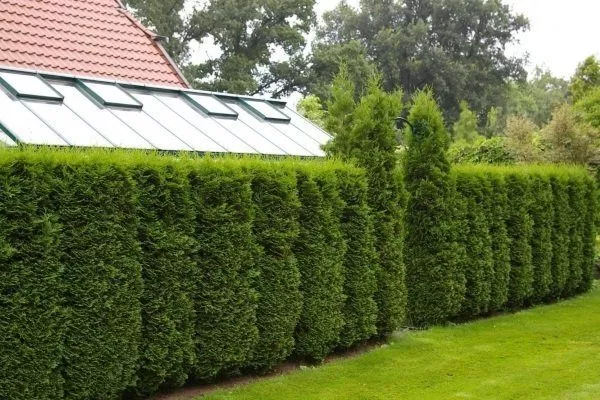
Hedge of evergreen thuja
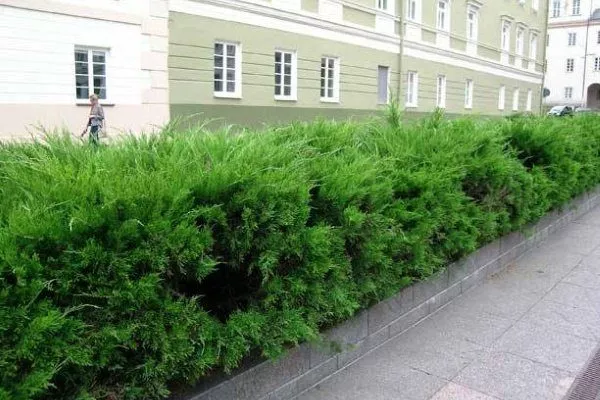
A dense, thorny juniper hedge
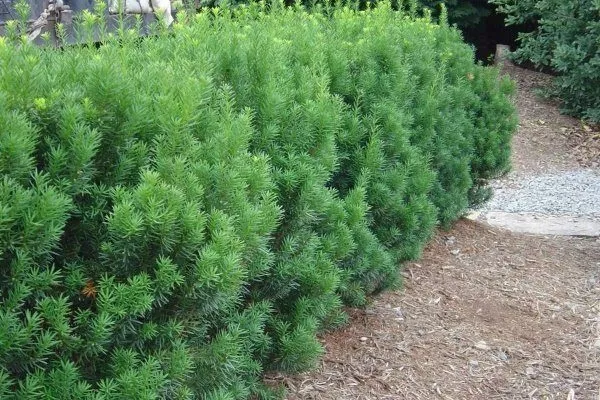
Yew as a hedge
Let's watch a video that will tell you a lot about the different types of yew, and in particular, how to use it as a hedge in landscape design:
Blooming
| Name | Height (m) | Growth rate | Frost resistance | Water requirement |
|---|---|---|---|---|
| Forsythia | 2-3 | Average | Low | Moderate |
| Jasmine | 3 | Average | High | Low |
| Hydrangea | 3 | Average | Low | High |
These shrubs are planted in sunny areas of the plot, as their flowers require warmth. These plants will delight the eye with their unique flowers and inimitable fragrances.
Choose your planting location carefully, otherwise it will negatively impact the lushness of the blooms, the vibrancy of the foliage, and the vigor of the bushes. Plant shade-loving plants in areas with no sun, while heat-loving plants should be placed in a sunny spot.
The following plants can be used:
- Forsythia (forsythia, or forsythia) – shrubs 2-3 m tall with a spreading top, suitable for landscaping small areas. They prefer light and fertile soil but do not tolerate high humidity, cold, or frost. They bloom with yellow flowers long before the green foliage appears. Only after the flowers fall does the first greenery appear. The foliage ranges in shades of light to dark green. The fruits are yellow capsules containing seeds.
- Jasmine (or mock orange) – are luxurious flowering bushes with rich green foliage. This plant will protect your garden from prying eyes and serve as a wonderful decoration. It grows up to three meters tall. Jasmine is undemanding regarding soil composition, is frost- and cold-resistant, loves warmth and sun, and does not tolerate wet soil. Old stems should be pruned annually, and removing faded blooms will lead to improved growth and abundant flowering.
- Hydrangea – is notable for its large caps of fragrant inflorescences of various colors (white, pink, lilac, blue). As the shrub grows and develops, a magnificent crown up to three meters tall forms, consisting of large green leaves and small flowers gathered in spherical inflorescences. Flowering begins in late summer and continues until October. These plants are fussy about growing conditions, preferring high-quality, fertile, permeable soil.
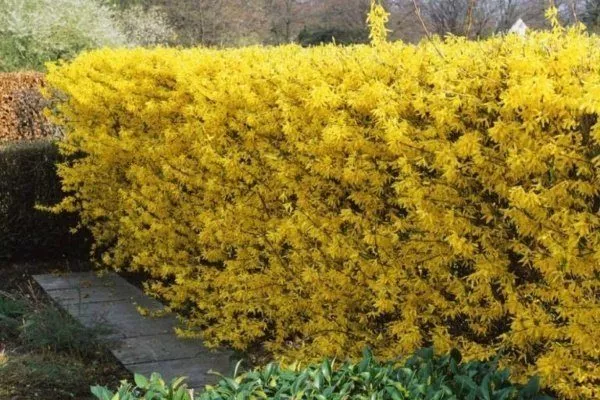
A hedge of flowering forsythia
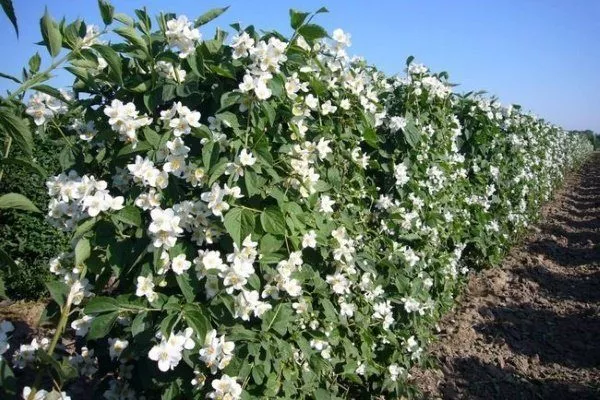
Jasmine will protect the garden from prying eyes
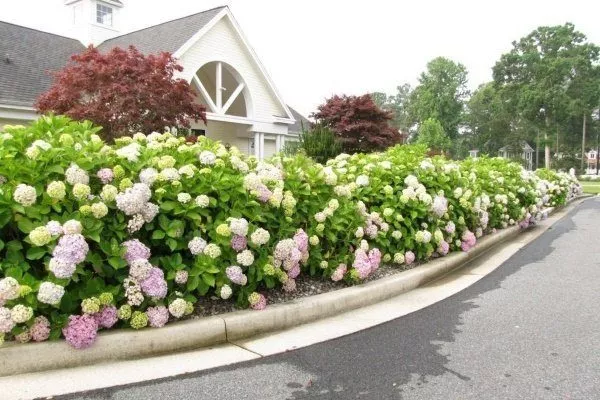
A hedge of assorted hydrangea flowers
| Plant type | soil pH | Drainage |
|---|---|---|
| Deciduous | 6.0-7.5 | Moderate |
| Evergreens | 5.5-6.5 | Good |
| Curly | 6.0-7.0 | Moderate |
The video explains the criteria for selecting plants suitable for creating a hedge and suitable for pruning and shaping:
In addition to the hedge plant species described here, there are many other types of shrubs. Their main purpose is to transform a plot, garden, or vegetable patch into a cozy, fragrant, and beautifully landscaped natural corner, protected from wind, sun, and prying eyes.