
Maned barley is gaining increasing popularity among gardeners every year, and it's no wonder: its tolerance to growing conditions and outstanding aesthetic qualities will leave no one indifferent. But to ensure this grain brings only joy, it's essential to understand the subtleties and nuances of its cultivation and use.
Description
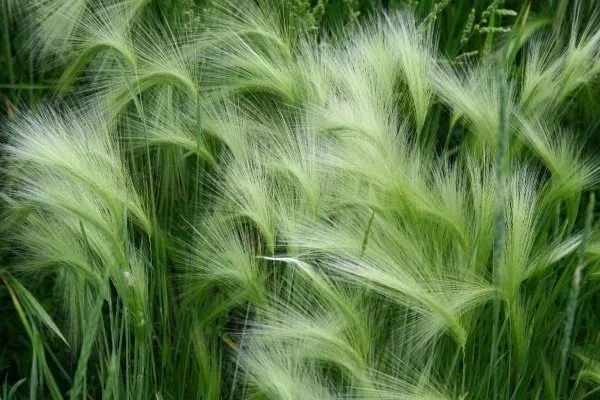
Crested barley is perhaps the most charming representative of the grass family, originally from North America. It is most commonly found in the wild in Eastern Siberia and the Far East, as well as in the steppes of its historical homeland.
This miniature plant, no more than half a meter tall, has a straight stem and a small rhizome. Crested barley blooms in early to mid-summer and produces its first fruits in September.
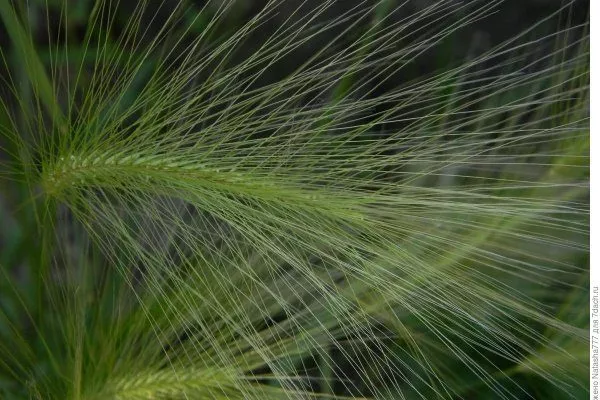
The plant captivates with its silky hairs and lush mane of the finest (about 2 millimeters wide) leaves, which are the hallmark of this amazing herb.
Unlike other cereals, the ears and awns of barley are arranged horizontally, forming luxurious fans of delicate vegetation, reaching about 10 centimeters in diameter.
Over time, a planted plant will cover unsightly soil with a fluffy carpet that can make any garden more attractive and interesting.
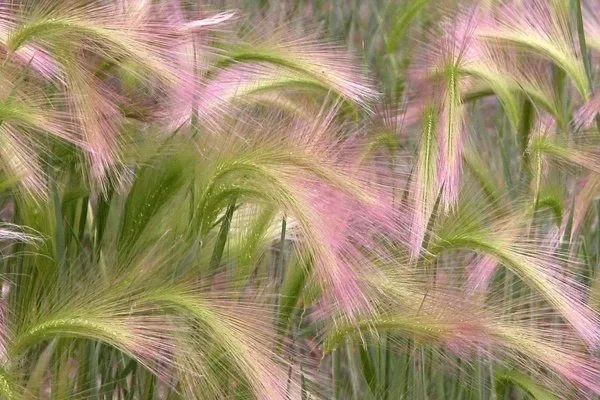
Another interesting characteristic of the ribbed barley is its color, which changes over time. As the plant grows, the color shifts from silvery-emerald to golden-green. Small, slightly purple flower scales break up the greenery and add a touch of color.
- ✓ Optimum soil acidity for ridged barley: pH 6.0-6.5.
- ✓ The distance between plants when planting should be at least 30 cm to ensure sufficient space for growth.
Growing
The plant is highly resistant to any temperature fluctuations (especially frost) and requires little watering: drought won't cause much damage to this grass. However, there are rules and recommendations that gardeners should follow.
Plot
The following requirements apply to the site for planting ridged barley:
- Plenty of sunlight. This plant is a sun-loving plant, so a well-lit location is the best choice. It also grows well in partial shade, but the decorative qualities of the leaves and ears may suffer.
- Moderate moisture. Excess moisture has a very negative impact on the growth and development of crested barley. Therefore, planting in low-lying areas with high water accumulation should be avoided.
If, for any reason, the chosen site changes its properties, barley can be easily transplanted. This plant responds quite well to such manipulations.
- Soil lightness. Soil that is too heavy does not allow air to pass through well but retains moisture fairly well. The combination of these factors leads to wilting and death of crested barley. Therefore, almost any soil composition can be chosen, the main thing is that it is not dense and heavy. If there are no alternatives, the plant can be grown in sand. Alkaline or slightly acidic soil is ideal for growth.
Time
Ribbed barley grows best when planted in consistently warm, but not hot, temperatures. Therefore, planting time may vary by region, but generally, the optimal months are April and late August. In the former case, a fluffy mane of vegetation will appear as early as July; in the latter, as early as June of the following year.
Preparing seeds and seedlings
Stratifying seeds before planting is the key to fast, high-quality germination. To do this, follow these five simple steps:
- Pour a thin layer of peat into the bottom of a small container.
- Place seeds on top.
- Moisten the improvised soil slightly.
- Wrap with cling film, in which make several holes with a needle, thereby providing air access to the planting material.
- Place it on the vegetable shelf in the refrigerator for two months, after which you can begin planting the ribbed barley.
The only way to propagate this plant is by seed. Therefore, if you plan to replant it in the future, it's a good idea to stock up on seeds in advance.
To grow seedlings, plan planting for early September. Sow seeds in boxes or a special seedling plot. When winter sets in, remove the sprouted plants to a warm location.
Soil preparation
Planting ridged barley requires minimal effort. Preparation involves the following three steps:
- thorough digging of the ground;
- thorough weed removal;
- application of compost and organic fertilizers with increased phosphorus and potassium content.
Sowing
There's no ideal sowing pattern for ridged barley. Therefore, sowing can be done in any way: in the desired pattern or as a continuous blanket covering the garden.
To obtain a particularly thick silky mane, it is recommended to plant 2-3 seeds at a time in one place.
If frost strikes suddenly, barley should be insulated. This can be done with film or special agronomic fiber that retains heat and allows oxygen to pass through.
Care
The key to healthy and beautiful barley is proper watering. When watering the soil, it's important to strike a balance between two extremes: preventing the soil from drying out and hardening, while avoiding overwatering at all costs.
This grass can thrive without proper nutrition, but with it, it will reveal its full beauty. Therefore, fertilizing the soil is highly recommended, and it must be done correctly:
- apply fertilizers no more than once per season;
- Before applying substances, thoroughly weed the soil and harrow it.
If a completely barley-covered area was not the original plan, the plant should be thinned periodically, after removing the seeds.
Possible problems
Low susceptibility to diseases is an undeniable advantage of this representative of cereals, however, sometimes the ridged barley is affected by gray mold.
- Inspect plants regularly during the early stages of growth to detect early signs of disease.
- Provide good ventilation for plants, avoiding overcrowding.
- At the first signs of disease, treat the plants with fungicides, such as Fundazol, according to the instructions.
Infected plants should be separated from healthy ones, and their diseased parts should be removed and destroyed. Fungicides such as Fundazol, Topaz, and Horus are also effective in controlling these diseases.
Application
Thanks to its attractive and striking appearance, crested barley thrives in landscape design and flower arrangements. It perfectly complements and enlivens rocky areas of the garden, and looks especially harmonious in a rock garden, either alone or in combination with other plants.
When creating a landscape composition, it is best to include the following plants alongside the crested barley:
- marigold;
- bicolor haretail;
- calendula;
- coreopsis;
- bicolor ragwort;
- lavender;
- pennisetum;
- openwork bentgrass;
- switchgrass;
- rudbeckia (warm colors will look especially harmonious);
- sage.
In floristry, the plant is used to create winter and dried bouquets. For this use, the plant must be prepared in advance—harvested in the first earing phase (early June) and dried in pre-assembled bunches.
If you collect and dry the grass later, the ears may begin to fall off at the most inopportune moment.
Crested barley is a unique plant that amazingly skillfully combines ease of care, a striking appearance, and versatility. It can be combined anywhere and with anything: from a small garden bed to floral arrangements.