
Barley is an annual plant in the grass family with a straight, short stem. This unique plant is rich in nutrients, vitamins, and minerals. It's no wonder that many, aware of its health benefits, strive to grow barley themselves. We'll tell you how to do it right below.
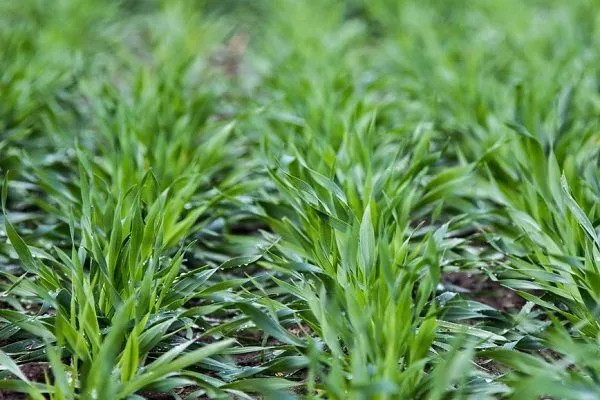
Description of the plant
Barley is an agricultural plant that serves not only food and feed needs but also industrial purposes. The crop is widely cultivated for grain and comprises over 35 species of wild and domesticated forms.
Two-row barley has two forms: spring and winter. The botanical characteristics of this crop are as follows:
- thin erect stem;
- height about half a meter;
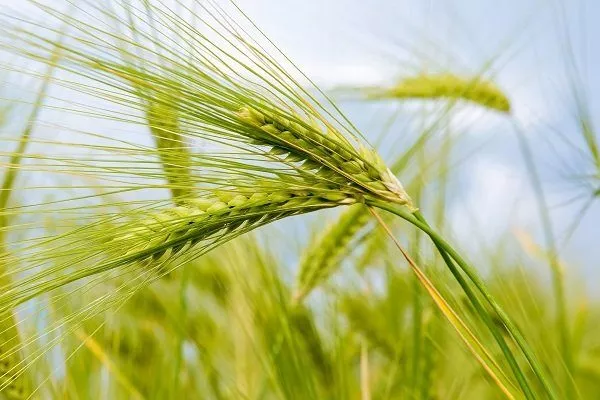
- ears are linear, golden or brown;
- the shape of the ears is flat, with diverging axes;
- the awns are represented by three-horned lobed appendages - a furcate spike;
- the grain is filmy, golden in color;
- the middle spike is single-flowered, bisexual and fertile;
- the plant is early maturing - it ripens in 70-90 days after sowing;
- Barley is undemanding to heat, drought- and frost-resistant;
- soil - neutral loams and deep-ploughed chernozems;
- resistant to fungi and putrefactive infections.
Soak
The steeping methods are chosen depending on the technical equipment, but the main goal is to achieve sufficient saturation of the grain with water in a short time, ensuring normal malting of the barley.
Today, the most common methods of soaking barley are the following:
- air-water;
- air-irrigation.
There are also cold (10 degrees Celsius), normal (10-15 degrees Celsius), and warm (17-25 degrees Celsius) soaking methods. When using any of these methods, the grain must be washed and disinfected beforehand.
- ✓ The temperature of the water for soaking should be strictly within the range of 10-25 degrees, depending on the chosen method.
- ✓ The concentration of the disinfectant (iodine or potassium permanganate) should be 30 drops per 10 liters of water for effective disinfection without harming the grain.
Let's take a closer look at air-water soaking of grain:
- You need to fill the steeping vat with water up to half its volume;
- sort the barley and weigh it on automatic scales, then pour it into the vat in a thin stream;
- To make the grain better wetted and washed, mix it with compressed air;
- after all the grain has been poured in, the layer of water in the vat should rise above the surface of the grain by several centimeters;
- The grain should be in the water intended for washing for 1-2 hours so that light grains and foreign impurities float to the surface and you can remove them;
- After this, rinse the barley again, displacing the dirty water with clean water, feeding it from below;
- Rinse the grain until the water is completely clear, add disinfectants to it (iodine or potassium permanganate will do - add 30 drops of the preparation to 10 liters of water) and leave the grain in this state for several hours.
With this steeping method, the barley is alternately left in and out of water. This process is repeated until the steeped grain reaches the desired moisture content (43-45% for light malt, 44-47% for dark malt).
To ensure the grain's vitality, the barley must be blown with air for 5 minutes every hour. Once per shift, before draining the water, the grain is mixed with compressed air for about 40 minutes, pumping it through a central pipe.
Germination procedure
Few people have sprouted grains, especially at home. Therefore, it's important to keep in mind that this procedure has its own rules and nuances:
- Prepare your material—the barley should be of the highest quality, harvested no more than two months ago, and suitable for human consumption, not just for sowing. Check its germination rate.
- Rinse the barley grain thoroughly under cold water, soak, and leave for 3 days. Change the water every 6-7 hours.
- Place the grains on a pre-prepared gauze cloth (soaked in warm water).
- Place the barley and cheesecloth in the bottom of a glass container and cover with a lid.
- Ensure the correct temperature conditions - the grains should be stored in a cool, dark place with a temperature no higher than 20 degrees.
- Don't forget about natural ventilation - provide access to air once a day - open the lid of the container, remove the top layer of gauze and leave it like that for at least 20-30 minutes in a warm, ventilated room.
If all recommendations are followed correctly, the sprouts should emerge within 3-4 days. They will be approximately 4 mm long. The germination process itself directly depends on the conditions and the type of grain used.
The germination process for making barley malt is slightly different from the previous one - the grains must be selected to be of the same size, after which:
- Soak the barley in water for several days and change the water at least every 8 hours to speed up the necessary processes.
- Let the soaked barley sit for a few days, after which the sprouting process will begin, which takes about a week.
- The sprouts reach twice the length of the whole grain. The finished malt can be stored in the refrigerator, but for no more than three days.
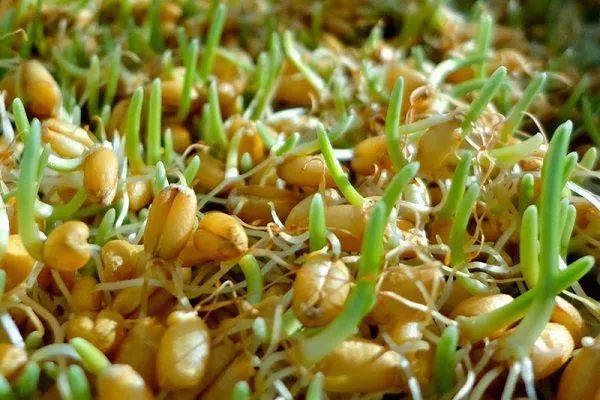
For even longer use, sprouted grains should be dried for 20 hours at a temperature of no more than 55 degrees.
Temperature and humidity
To initiate germination, low humidity levels—around 40%—are required. This means the seeds are slightly moistened and remain in this state until the embryo develops. Humidity should then be increased to 50%, increasing the frequency of spraying.
Temperature also significantly influences physiological processes during germination—ideally, 14-15 degrees Celsius. At lower temperatures, development will slow down, while at higher temperatures, development will accelerate, resulting in uneven growth.
Subsequent preparation
Since sprouting barley seeds won't happen quickly, it's recommended to make a larger batch. If the sprouts are intended for consumption, the leftovers can be refrigerated for longer shelf life.
The finished malt can be dried. Furthermore, by varying the drying phases and temperature, you can obtain raw materials that impart a unique flavor to the beverage—this applies to both kvass and alcoholic beverages.
Growing barley for grain and green manure
Barley is compatible with most agricultural crops and is easy to grow. Industrialists use intensive barley farming methods when cultivating it.
Timing and methods of sowing
Barley must be sown quickly, within a strictly defined timeframe—3-5 days before the soil reaches physical maturity. This type of sowing allows for the efficient use of winter moisture reserves and applied fertilizers, and has a positive effect on tillering and yield.
Delayed sowing reduces field germination, weakens root development, and prevents uniform tillering, reducing yield and degrading grain and seed quality. Losses from a day-long delay in sowing include:
- 0.05-0.1 t/ha;
- during spring drought - 0.11-0.17 t/ha.
There are several methods for sowing spring barley. Narrow-row sowing is considered the best, as it provides the seeds with excellent nutrition. Since barley is a continuous-seeded crop, narrow-row sowing with row spacings of 7.5 cm is ideal.
Row orientation improves grain quality and increases yield. For example, yields from rows oriented north to south were significantly higher than those oriented east to west. A disadvantage of this method is the high density of seeds in a single row. The critical barrier and standard spacing is 1.4 cm.
Barley is a crop that is relatively unaffected by temperature fluctuations. Spring barley seeds can grow comfortably in temperatures ranging from 1 to 13 degrees Celsius, and seedlings can withstand frosts down to -4 to -5 degrees Celsius. Winter barley varieties can withstand prolonged frosts at tillering depths down to -10 to -12 degrees Celsius.
Barley should be sown in early spring when soil conditions allow for mechanized tillage. This early sowing most effectively utilizes the moisture reserves accumulated in the seedbed over the winter. Early sowing inhibits the generative development of other plants, which ensures dense and high-quality growth of productive barley grain and stems.
Main types and their uses
| Name | Ripening period | Drought resistance | Frost resistance |
|---|---|---|---|
| Two-row barley | 70-90 days | High | Average |
| Multi-row barley | 60-110 days | Very high | Low |
| Intermediate barley | 80-100 days | Average | High |
For consumption and preparation of feed raw materials, only cultivated varieties are used, of which there are several types:
- Double row - produces only one spikelet, and the side shoots do not yield a harvest.
- Multi-row — a plant with multiple ears, characterized by high productivity and drought resistance.
- Intermediate — from one to three ears. A rare species for our country, as it is most commonly found in certain regions of Asia and Africa.
Moisture requirements
Barley has proven itself to be the most drought-resistant crop, able to withstand temperatures exceeding 40 degrees Celsius. This cereal has a water-use coefficient of 400 units. Seeds begin to germinate at twice the hygroscopic capacity of the soil, absorbing up to 50% of the dry seed weight during swelling.
The cereal consumes the greatest amount of water during booting and the beginning of earing. A lack of moisture during the formation of the reproductive organs negatively impacts pollen production, leading to an increase in sterile flowers and a decrease in productivity.
Lighting requirements
The crop is classified as a long-day plant, as a lack of light during relatively short periods of daylight results in delayed earing. The growing season lasts from 60 to 110 days.
Soil requirements
Soil is the only thing barley has high demands on compared to other conditions. Acidic soils are absolutely unsuitable for this grain, as the plant does not thrive in them.
The most optimal conditions for growing the crop are a pH of 6.8-7.5. Growing barley in over-watered, alkaline, or light sandy soils is not recommended.
Place in crop rotation
Barley has a relatively underdeveloped root system and a low ability to absorb nutrients from hard-to-reach areas. Therefore, it is planted in highly fertile, weed-free areas.
Features of crop rotation:
- For feed barley Suitable predecessors are those that leave behind a sufficient amount of nitrogen in the soil - legumes, manured row crops (corn, potatoes, sugar beets), including vegetables and other crops.
- For food and brewing barley Predecessors are used that ensure high yields without increasing the protein content of the grain - corn for silage and grain, sunflower, sugar beet, buckwheat, millet, as well as winter grains growing on fertilized clean fallow.
Barley can also be sown after spring wheat if it was planted over a layer of perennial grasses or clean fallow, for example, in Siberia or Kazakhstan.
- Spring barley, sown after row crops, is particularly suitable for brewing - in this case, it produces both a high yield and good-quality grain with a high starch content.
As an early-maturing crop, barley itself serves as a good precursor for spring crops, and in some regions, winter crops as well. Due to its early harvesting time, barley is more valuable as a cover crop than other spring grains.
Fertilizer
To obtain a good barley harvest, it's essential to provide the plant with all the necessary micronutrients from the very first stages of growth. Compensating for any nutritional deficiencies later on will be virtually impossible.
Barley responds very well to fertilizers: to produce one ton of grain with a corresponding amount of by-products, barley tolerates:
- 32-36 kg of nitrogen;
- 11-12 kg of phosphorus;
- 20-24 kg - potassium.
Fertilizer features:
- During the growing season, its mineral nutrition lasts for approximately 40 days. Therefore, to achieve the highest level of productivity, it is crucial to provide barley with nutrients during the early stages of development.
- Phosphorus and potassium fertilizers are applied to the soil during autumn plowing, and nitrogen fertilizers are added in the spring, before pre-sowing cultivation. Experiments show that early spring NH4NO3 fertilization increases yields by 3-4 centners per hectare. Phosphorus fertilizers are also applied during sowing, stimulating root development and the formation of larger ears.
- Mineral fertilizers are more suitable for growing barley than organic ones. Therefore, organic fertilizers should be applied under the preceding crop, not directly under the barley.
- Micronutrients that activate enzymes, accelerate biochemical processes in plants, and increase crop resistance to disease and drought are considered beneficial. They are applied as seed treatments, using the following amounts per ton: 100 g of boron, 300 g of copper, 180 g of manganese, and 120 g of zinc.
Preparing the soil for sowing
In the fall, the main cultivation of the field for barley is carried out - it consists of exactly the same stages as when planting spring wheat:
- Conduct a soil test for acidity (pH should be 6.8-7.5) one month before sowing.
- Apply phosphorus and potassium fertilizers during autumn plowing.
- Apply early spring nitrogen fertilizers before pre-sowing cultivation.
- Stubble cultivation to a depth of 8-10 cm with simultaneous harrowing after stubble predecessors.
- After row crops, plowing is carried out without preliminary stubble cultivation to a depth of 20-22 cm.
In areas prone to wind erosion, barley cultivation requires no-till cultivation. Snow retention is essential in winter.
Spring soil cultivation consists of early harrowing and hoeing, followed by cultivation in 1-2 tracks with simultaneous harrowing. Cultivation is carried out to the seed placement depth of 5-6 cm, and in southern regions, 7-8 cm.
Sowing
Sowing large seeds increases barley yield by 350 kg/ha or more. This also improves grain quality and extractability. These seeds contain more nutrients, so young plants grow better, develop strong roots, and begin tillering, stemming, and earing earlier.
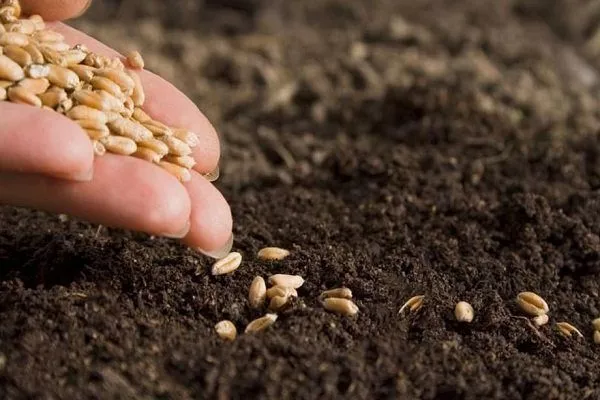
Sowing time is determined based on climatic conditions. This is based not only on soil or air temperature. Cool temperatures should not delay sowing, especially if there is little rainfall during this period, when moisture evaporates very quickly, and a lack of moisture reduces seed germination.
The stand density is regulated by setting the seeding rate, which is measured in millions of viable seeds per hectare. Adjustments are made for commercial suitability and the weight of 1,000 seeds.
It is recommended to sow seeds on:
- rich agricultural backgrounds 3.5-4 million/ha;
- on average 4.0-4.5 million/ha;
- for the poor - 4.5-5.0 million/ha.
The seeding depth should ensure timely, uniform, and complete emergence. When sowing spring barley, the biological characteristics of plant growth and root development are taken into account.
The tillering node of barley is formed at a depth of 2-3 cm, therefore, the seed placement depth should be 3-4 cm on heavy soils in wet conditions, and 4-5 cm on lighter soils with a lack of moisture.
Sowing barley is carried out in several ways:
- continuous row with row spacing of 12.5 cm, 15 cm, 20 cm, 25 cm;
- cross with row spacing of 15 cm;
- narrow-row with row spacing of 15 cm;
- narrow-row with row spacing of 7-8 cm;
- strip sowing;
- double strip sowing;
- sowing with the possibility of applying fertilizers between rows, including top dressing;
- sowing with a precision grain seeder.
Caring for crops
Although barley is an easy-to-grow and hardy crop, it still requires proper agricultural practices. When tending to the crops, ensure that the seeded areas are rolled with ring-and-spur rollers, especially during dry periods.
A modern integrated plant protection system includes the following actions:
- seed treatment;
- weed control using herbicides;
- use of plant growth stimulants;
- Protection against diseases and pests using modern fungicides and insecticides.
If the field after sowing is covered with weeds or has a crust that prevents young plants from growing through, harrowing is recommended. Conventional harrows or rotary hoes can be used to remove this crust. Harrowing should be done across the rows or diagonally at low speeds.
If the situation is different and weeds are already encroaching on the seedlings, post-emergence harrowing should be performed. This procedure is not recommended for low seeding density. A barley plot is cultivated manually.
An effective way to control weeds is by applying sawdust or spraying with herbicides (2,4-D and 2M-4X) such as Prima, Granstar, Pik, and others. However, herbicides can only be used on crops without overseeding perennial legumes.
Cleaning
Small household crops are harvested by hand. The harvest begins in dry, hot weather, beginning in August, when the grain reaches full maturity. The harvested grain is then threshed.
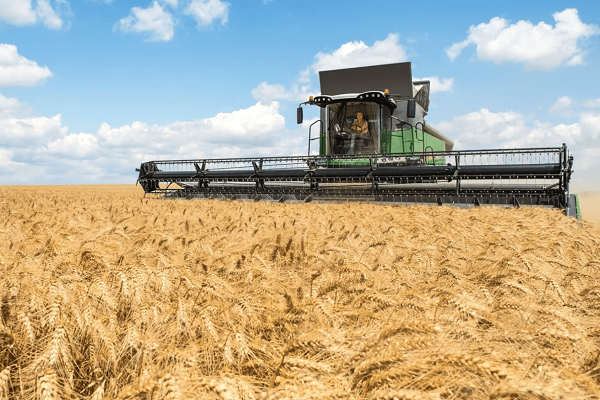
On an industrial scale, barley is harvested using direct and two-phase combining methods. At harvest time, the barley grain moisture content should not exceed 20%. Direct combining involves a single harvest and threshing.
Two-phase combining is used in fields with uneven grain ripening; the ears are first mown and placed in the headers, after which they are collected and threshed.
Grown for green mass, barley is harvested by mowing in two stages:
- The first stage is carried out before the barley blooms, approximately 55 days after sowing – about 50% of the crops are harvested.
- The second stage of mowing occurs during flowering. After mowing, the green mass is used as livestock feed.
After threshing, the barley is sent to elevators for further processing and long-term storage. The wet grain is placed in grain dryers, after which it is stored in silos, grain silos, or exported.
Storage facilities themselves are typically subject to strict requirements, as improper grain storage can result in losses of up to 35%. The grain is thoroughly cleaned and cooled before storage. Barley can be stored for long periods both in bulk in covered areas and in bins.
Where is barley grown in Russia?
In Russia, this crop is grown throughout the world, as barley is considered one of the most widely cultivated crops in the world. The only exception is the northern regions—the northern boundary of the crop runs along the latitude of the Kola Peninsula and Magadan. Overall, the crop's undemanding nature and specially bred varieties make barley one of the best for cultivation in the Russian climate.
Now, after reading this article, you shouldn't have any questions about how to properly grow barley—the growing process is quite simple, and we've done our best to cover the main points and rules of the procedure.