
"Vakula" is a six-row spring barley widely cultivated in Russia. With its increased tillering, this high-yielding variety allows farmers to save on seed, reducing the cost of grain production.
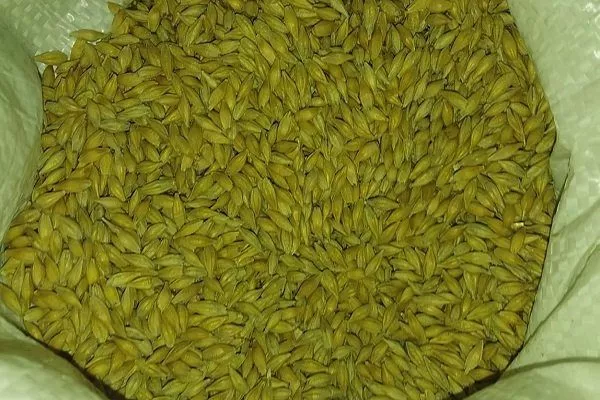
Vakula barley produces a good harvest
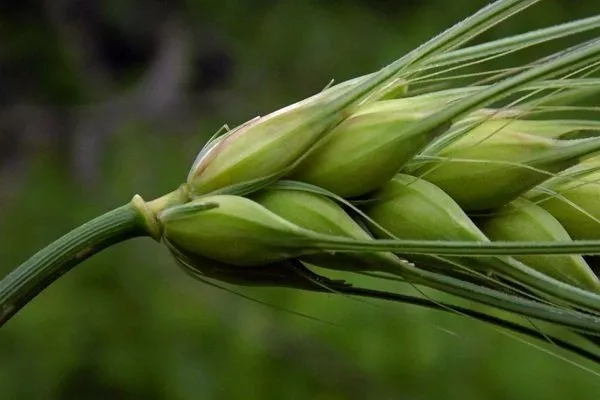
Vakula barley has a high brewing value index
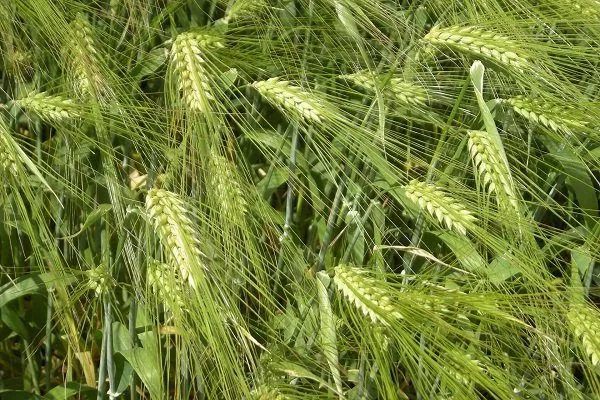
Barley Vakula
Description and characteristics of the variety
"Vakula" is one of the most productive spring barley varieties. This barley's high yield is due to its botanical characteristics.
Botanical description
Barley Vakula belongs to the Pallidum variety. It was included in the State Register in 2007.
Brief description:
- Bush. The plant is semi-erect, belonging to the short- to medium-stemmed type. The bush height is 70-80 cm.
- Leaves. Glabrous, green in color. Anthocyanin coloration is absent; the lower leaf sheaths have a thick waxy coating.
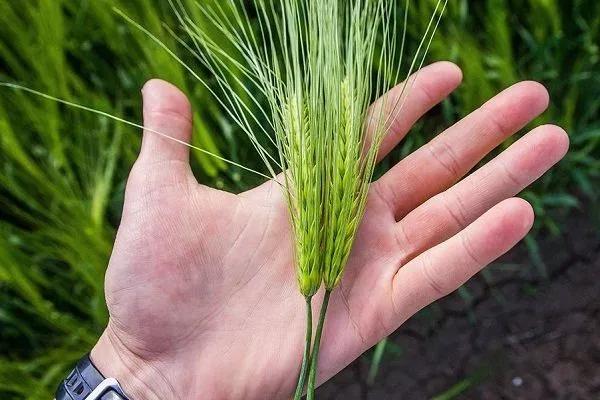
- Ear. Cylindrical, 6-rowed, loose, without a waxy coating. Awns are yellow, longer than the spike itself. Average length is 7-9 cm. Shape is rectangular-rhombic.
- Corn. Large, with 1,000 grains weighing 45-50 g. The ventral groove is pubescent. The grains are surrounded by filmy scales called lodicules.
The most common types of barley in agriculture are pallidum, a multi-row crop, and nutans, a two-row type.
Characteristics
According to its originator, Vakula is considered to be the highest-yielding variety of spring barley.
Main characteristics of Vakula barley:
| Characteristics/parameters | Description/Meaning |
| Ripening time | Mid-season (growing season – 70-85 days) |
| Productivity | 50-95 centners per 1 hectare |
| Protein content in grain | 13% |
| Purpose | Forage, brewing production |
| Seeding rate | 2-3 million seeds per 1 hectare |
| Drought resistance | High |
| Lodging | Stable |
| Resistance to diseases and pests | Resistant to powdery mildew and viral diseases |
| Photoperiodic sensitivity | Low (ensures high yields in different climatic zones) |
Growing regions
The Vakula variety is characterized by its ecological flexibility—it can be grown in regions with radically different climates. This barley thrives in areas with varying rainfall, average annual temperatures, and soil fertility.
The variety is recommended for cultivation in the following regions:
- Middle Volga;
- Central Black Earth;
- North Caucasian.
Advantages and disadvantages of the variety
Vakula barley is valued for its stable yield and the ability to double it by increasing soil fertility and creating favorable growing conditions.
Advantages of the Vakula variety:
- High yield. One of the highest among similar varieties.
- Reduced photoperiod sensitivity. This variety produces crops regardless of the arrival of spring. It grows in various latitudes.
- Drought resistance due to genetic traits.
- Salt and acid resistance – grows on problematic soils.
- High resistance to dangerous smut diseases.
- Resistance to lodging.
- Large grain. When watered, the weight of 1,000 grains reaches 60 g.
- Possesses high germination energy.
- It has a high brewing value index.
The most dangerous period for Vakula is germination. If a dry spell occurs during this time, the crops suffer severely.
Preparing for sowing
Barley grows poorly in acidic soils. The ideal pH for spring barley is 5.6-5.8.
The best soils for barley:
- black soil;
- gray forest;
- dark gray.
- ✓ Soil pH levels should be strictly between 5.6-5.8 for optimal growth.
- ✓ Proper drainage in the soil is critical to prevent water stagnation and root rot.
Predecessors
Barley can be grown in the same place three years after sowing, not earlier. Barley has a poorly developed root system, so it has poor nutrient absorption. To produce a good harvest, it requires fertile soil free of bacteria, viruses, and weeds.
The chances of a good harvest are increased by the correct choice of predecessors.
Good predecessors:
- corn;
- potato;
- flax;
- green manure;
- perennial herbs.
Legumes are unacceptable predecessors of barley if the grain is grown for brewing purposes, as they cause excessive tillering, which reduces the quality of the grain.
Pre-sowing soil cultivation
Soil cultivation for sowing Vakula barley is carried out in the same way as for other spring crops. Soil preparation for sowing begins in the fall.
Preparation stages:
- In autumn, stubble cultivation is carried out using disc harrows after the previous crops.
- After peeling, the soil is plowed.
- In areas with wind erosion of soils, non-moldboard loosening is carried out.
- In winter, snow retention is ensured.
- In spring, cultivation and harrowing are carried out, which helps retain moisture in the soil.
Soil preparation includes the application of fertilizers:
- In autumn. Potassium and phosphorus fertilizers are added during plowing.
- In the spring. Nitrogen fertilizers are applied before pre-sowing cultivation. Phosphorus fertilizers are also applied during sowing.
How much fertilizer is required to produce 1 ton of barley:
- nitrogen (N) – 25-30 kg;
- phosphorus (P2O5) – 10-15 kg;
- potassium (K2O) – 20-25 kg.
Seed treatment
Only healthy seed is used for sowing. The seeds must be large and have a proven germination rate.
Features of seed preparation:
- The seeds are treated 2-3 months before sowing.
- For treatment, use a 50% solution of Fundazol or a 75% solution of Vitavax 200.
Disinfection helps prevent the development of many dangerous diseases, such as root rot, loose smut and bunt.
Sowing barley Vakula
For sowing, use treated seeds with a growth rate of at least 80%. Barley yields the highest yields when sown early, as the high humidity and cool temperatures allow its root system to develop rapidly. Early sowing promotes uniform germination.
The exact sowing dates vary by region. Barley is typically sown as soon as equipment reaches the fields. The optimal time for sowing barley is considered to be the end of the first week of fieldwork. It is sown at the same time as spring wheat or immediately after.
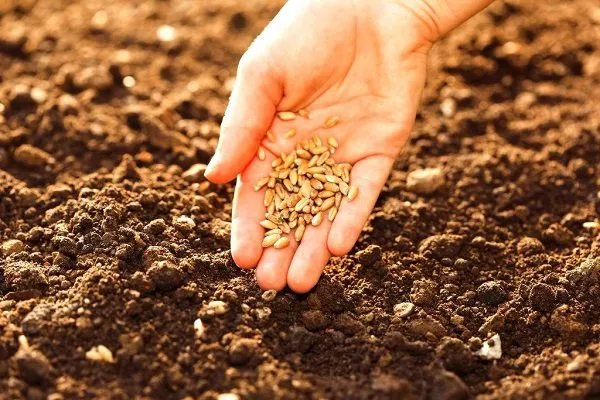
When to sow barley:
- In the southern regions – at the beginning of March.
- In regions with a temperate climate – in April.
- In risky farming zones – in May.
- Check the soil temperature: it should be at least 5°C at the sowing depth.
- Make sure the soil has sufficient moisture to ensure uniform germination.
- Avoid sowing during periods of predicted frost.
Barley is a continuous-seeded crop. The Vakula variety, like any other barley, is sown in a variety of ways, depending on the farmer's preference and soil and climate conditions.
How to sow barley:
- Narrow-row methodThe row spacing is 7.5 cm. This option allows for optimal use of the planting area.
- In the usual way. The spaces between rows are made twice as wide – 15 cm.
Owners of small farms resort to the old method of sowing: scattering the seeds by hand.
Seeding depth if soil is sufficiently moist:
- on heavy soils – 4-5 cm;
- on light sandy loams – 5-6 cm.
If the weather is dry, the seeds are planted 7-8 cm deep.
Spring barley is sown as early as possible. The slightest delay results in yield loss.
Caring for crops
Barley is an unpretentious crop and does not require special attention from farmers, but there are measures without which it is impossible to expect high yields.
Post-sowing soil rolling
Rolling is a simple but important agricultural measure that is carried out after sowing barley or simultaneously with it.
The purpose of rolling is to improve soil contact, ensuring dense and uniform seedlings. This procedure is extremely necessary during dry weather.
If there is excess moisture in the soil, then rolling, on the contrary, can negatively affect the seedlings:
- the aeration properties of the soil are reduced;
- a crust forms on the soil, and subsequently cracks appear.
To increase the protein content in grains, barley is fed with urea at the heading stage – 20-25 kg per 1 ha.
Harrowing
Pre-emergence harrowing is usually performed after rolling. The goal of this procedure is to prevent the formation of a soil crust and destroy thread-like weed seedlings.
Harrow the field 3-5 days after sowing barley. To avoid damaging the seedlings, harrowing should be done at a depth shallower than their initial planting depth. This procedure is performed before the seedlings exceed the seed's length.
When harrowing spring barley with harrows - mesh or medium - you can thin out the crops by 15-20%, which will lead to a decrease in yield.
Use of growth regulators (retardants)
Barley's resistance to lodging is the key to a high yield. Lodging reduces grain quality and promotes the development of pathogenic microorganisms.
Why are retardants used:
- increases barley's resistance to lodging;
- the length of the stems decreases;
- crop yields increase.
To prevent lodging, barley is treated with a retardant during the tillering stage, such as TsetseTse 460.
Weed and pest control, disease protection
Vakula barley is resistant to many diseases, including powdery mildew. Farmers' goal is to prevent diseases, pest attacks, and weed infestations.
If a dangerous number of weeds appears, the field is treated with herbicides:
- amine salt 2,4-D;
- Dialen;
- Lontrel.
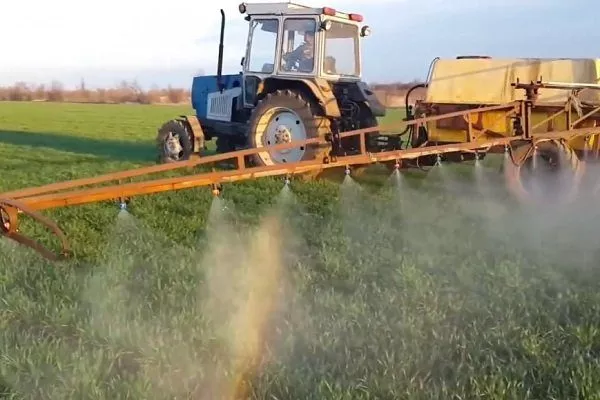
The treatment is carried out during the tillering and tube elongation phase.
If the soil is infested with perennial weeds, then in the fall, after stubbling, apply herbicides for general weed control, such as Uragan, Roundup, etc. The application rate is 4-6 l/ha. Within 2-3 weeks, 100% of the weeds are killed.
The Vakula variety can be affected by:
- powdery mildew;
- dwarf rust;
- striped helminthosporiosis.
If signs of disease appear on the barley, it is treated with fungicides - Impact, Derozal and others.
The main pests of barley are Vakula:
- bread ground beetle;
- Swedish flies;
- bread drinker;
- cereal aphid;
- thrips;
- common bird cherry aphid.
To combat pests, broad-spectrum insecticides are used: Karate, Fozalon, Decis and others.
Harvesting
Vakula barley not only emerges uniformly, but also ripens uniformly. When the ear is fully ripe, it becomes brittle. If the barley is left to mature for too long, it droops and lodges, and the grains spill onto the ground.
Barley is harvested in two ways:
- Single-phase (full cleaning). It is used when the grain is dry. The harvest is immediately removed from the field.
- Two-phase (separate cleaning). This method is used when the grain moisture content is high—36-38%. Barley at 50% wax maturity is placed into windrows using windrow harvesters. Once the grain has dried, after 4-5 days, the windrows are removed and threshed using combine harvesters.
The grain brought to the threshing floor is cleaned and, if necessary, dried. The optimal moisture content is 14%.
Farmers' reviews of the variety
Vakula barley produces excellent yields without requiring much care or investment. This variety's grain is suitable not only for livestock feed but also for the brewing industry.