
Barley is a crop that requires adequate soil nutrients. It absorbs most of its nutrients in the first 30-35 days of its development, so it's important to apply them promptly. In this article, we'll learn which fertilizers are used for this purpose.
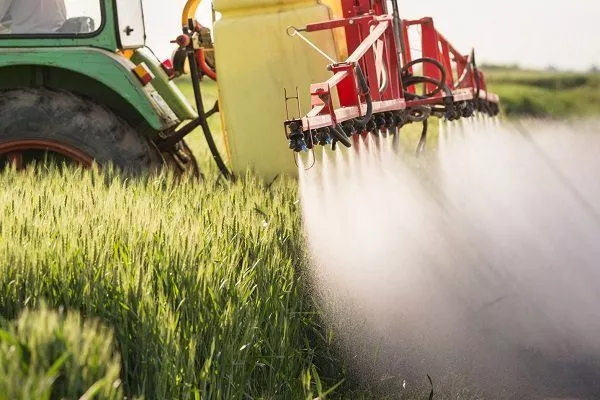
Fertilization system for barley
Fertilization is one of the main factors influencing both the size and quality of the barley crop. High levels of nutrition lead to early seeding, and fertilizers have a positive effect on the biochemical composition of the grain.
- ✓ Soil pH should be between 5.6-5.8 for optimal barley growth.
- ✓ The soil must have good drainage to avoid water stagnation.
Nitrogen-containing fertilizer
| Name | Nitrogen content | Form of nitrogen | Terms of use |
|---|---|---|---|
| Amide | 46% | NH2 | Better for foliar feeding |
| Ammonium | 21% | NH4 | Suitable for low temperatures |
Nitrogen is an essential macronutrient present in every part of the plant. It is easily leached from the soil, and providing it in sufficient quantities helps plants grow and develop fully.
If there's not enough nitrogen, the upper parts of older leaves and shoots begin to discolor, growth slows, and fruits become small. This is why it's crucial to apply nitrogen fertilizer to the soil.
The main forms of nitrogen fertilizers:
- Amide. In the soil, it converts to ammonium and then nitrate, as plants can only absorb these two forms in the soil. It is easily and quickly absorbed through the leaf surface. It is considered the best nitrogen fertilizer for foliar application.
- AmmoniumIt is gradually absorbed by the plant even at low temperatures and can partially convert into nitrate. This type of fertilizer promotes better root growth and nutrient absorption.
Barley's greatest need for nitrogen fertilizers occurs during the vegetative growth period - when the plant begins to form a tube, this period ends.
Types of nitrogen fertilizers:
- Ammonium nitrate is an effective ammonium-nitrate fertilizer that has a positive effect and can be applied to most types of soil;
- Calcium ammonium nitrate is a fertilizer that contains not only nitrogen but also calcium, which results in better soil acidification;
- Urea - a high nitrogen content solid nitrogen fertilizer;
- Urea-ammonia mixture is a nitrogen fertilizer with a high concentration, used in areas with insufficient moisture.
Phosphorus-containing fertilizers
Phosphorus is an essential nutrient used by barley throughout its lifespan, but its impact is greatest during the first half of the growth cycle. Superphosphate is a universal fertilizer used for all soil types. It can be used as a pre-planting fertilizer, a mid-planting fertilizer, and as a top dressing.
Phosphate slag, superphos, polyphosphorus fertilizers, and defluorinated phosphate work well on sod-podzolic soils. On acidic soils, rock phosphate is indispensable; it not only alkalizes the soil but also reduces its aluminum content. This fertilizer's effect continues for five years after tillage.
- ✓ Phosphorus fertilizers are most effective when applied in the fall before winter plowing.
- ✓ To achieve the best results, some of the phosphorus fertilizers should be applied during sowing (10-20 kg/ha of active ingredient).
The majority of phosphorus-containing fertilizers are applied in the fall during fall plowing. Good results can be achieved by applying superphosphate at sowing (10-20 kg/ha of active ingredient).
Potassium-containing fertilizers
| Name | Potassium content | A form of potassium | Application |
|---|---|---|---|
| Potassium salt | 40% | KCl | Autumn processing |
| Potassium chloride | 60% | KCl | Autumn processing |
| Potassium sulfate | 50% | K2SO4 | Foliar feeding |
Potassium is essential during the initial stages of growth. In agriculture, potassium salt, potassium chloride, and potassium sulfate (which is less readily absorbed than the first two) are used.
Potassium is also applied along with complex fertilizers during autumn soil tillage. Potassium can stabilize the nitrogen nutrition regime of plants, which is used to improve the quality of malting barley.
Increasing the potassium dosage to 100-160 kg/ha (active ingredient) optimizes grain parameters without significantly affecting yield. On sod-podzolic soils, the basic fertilizer application rate is 40-45 kg/ha of potassium.
| Name | Phosphorus content | Soil type | Validity period |
|---|---|---|---|
| Superphosphate | 20% | All types | Season 1 |
| Phosphate slag | 15-18% | Sod-podzolic | 2-3 years |
| Phosphate rock flour | 19-30% | Sour | 5 years |
Superphosphate
According to chemical origin and state of aggregation, superphosphates are divided into the following types:
- SimpleA gray powder that may cake if the recommended humidity level is not met. It contains up to 20% phosphorus as oxide. It is produced by treating phosphorus raw materials with sulfuric acid.
- Granulated. It is made from simple superphosphate by rolling it into granules. The granules are gray, have virtually no caking, and contain 20% phosphorus, calcium, and sulfur. It is characterized by good water solubility and a slow and uniform release of active ingredients. It is used for pre-plant fertilization of crops in various climates.
- Double. During its production, phosphorus raw materials are treated with phosphoric acid, resulting in a fertilizer that contains more phosphorus in an easily soluble form and contains virtually no gypsum.
Most often, granulated superphosphate is used in farms.
For superphosphate to be most effective, it must be applied as close to the root system as possible. This is because phosphorus is a relatively immobile element, making it impractical to apply to the soil surface.
Apply this fertilizer in the fall, either before plowing or during pre-sowing cultivation, mixing it with the soil. Soil acidity is a key factor for phosphorus absorption—phosphorus is best absorbed at a neutral pH. Even slightly acidic soils reduce absorption, making this fertilizer ineffective.
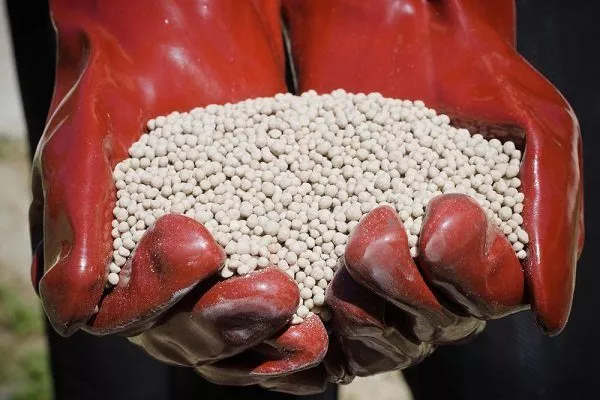
In order to improve the absorption of superphosphate, it is necessary to carry out reclamation procedures - to deoxidize the soil.
Potassium sulfate
The most effective foliar feeding can be achieved by using 0.4 l of potassium sulfate with microelements in combination with 5 kg of urea per hectare for treating barley.
Scheme for the application of potassium humate for winter crops:
- 1st treatment - during the germination period (foliar feeding helps prepare plants for winter);
- 2nd treatment - during the period of entering the pipe, which activates morphological processes;
- 3rd treatment - in the earing phase, which has a positive effect on the processes of grain formation and development.
Application scheme for spring crops:
- 1st treatment - during the tillering period, if it is an annual plant and at the beginning of regrowth for perennials;
- 2nd treatment - in the phase of the culture emerging into the tube to activate morphophysiological processes.
Liquid mineral fertilizers
Liquid fertilizers are also used as fertilizers, as they are considered the most effective. Mineral liquid fertilizers contain various microelements, macroelements, and humic acids. The amount of specific substances depends on the intended use of the product: there are nitrogen, phosphate, potassium, complex, and mixed substances—each with different proportions of minerals or other substances.
Types of mineral fertilizers:
- Water-soluble. Dry crystalline fertilizers are designed for mixing with water. Nutrients are better absorbed in these solutions. The only drawback is that some of the crystals may not dissolve and settle, causing uneven distribution of the fertilizer.
- Liquid. Fertilizers are available in solution or suspension form. They are also pre-diluted with water to obtain the desired concentration. The active ingredients do not precipitate or react with soil substances, placing minimal stress on the soil. Plants absorb 80-90% of the fertilizer.
Fertilizers in solution form are easily absorbed through both the root system and leaf surfaces. During the sowing and initial seedling formation stages, liquid fertilizers are applied to the roots. From the moment foliage appears until harvest, spraying is recommended.
By changing the composition of liquid fertilizers, you can influence the development of the plant and quickly cope with diseases and pests, consequences of frost or drought.
Fertilizers should not be applied by eye—the instructions for the solutions indicate the exact ratios of water and fertilizer, calculated for a specific treatment area and plant type.
What fertilizers are suitable for barley?
Depending on the barley variety, the appropriate fertilizer is selected. Let's look at several options.
Spring barley
Barley grows poorly in highly acidic soils. Young plants are particularly susceptible, with yellowing leaves and stunted growth due to disrupted chlorophyll production. Favorable pH is 5.6-5.8.
The effect of fertilizers on barley is determined by:
- type of fertilizer;
- dose of application to the soil;
- method of application;
- period of feeding.
To achieve a bountiful harvest, fertilization should be comprehensive and include micronutrients. Barley requires the following:
- zinc;
- boron;
- copper.
Combined fertilizers contribute to:
- increase in yield;
- drought resistance;
- wind resistance;
- frost resistance.
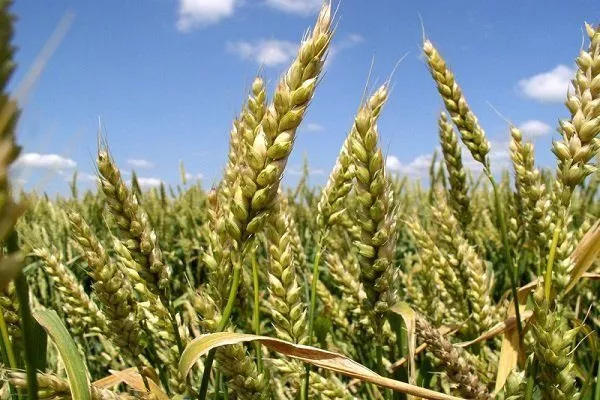
Why is liquid fertilizer most often recommended for spring barley? For the following reasons:
- they are applied evenly;
- contribute to increased crop yields;
- improve grain quality;
- activate growth;
- stimulate resistance to weather conditions.
Malting barley
This is a high-yielding crop, occupying a significant place in our country's grain balance. Compared to other grains, this variety of barley has higher nutritional requirements, due to its short growing season (90-100 days) and very high nutrient absorption.
To form 5-6 t/ha of malting barley together with straw, it is necessary:
- 85-110 kg of nitrogen;
- 40-55 kg of phosphorus;
- 100-120 kg of potassium;
- 30-40 kg of calcium;
- 20-25 kg of magnesium.
And the corresponding amount of microelements:
- 25-375 g of iron;
- 20-25 g of manganese;
- 20-260 g of boron;
- 40-110 g of copper;
- 150-160 g of zinc.
The absorption of these elements during the growing season is uneven. Barley requires this type of nutrition most during tillering and the beginning of stem formation, as well as during grain formation, formation, and grain filling.
Fodder barley
When growing fodder barley, increased doses of mineral fertilizers should be applied. For example, nitrogen fertilizers are used to increase the protein content of the grain. After fertilizing the preceding crops, especially if organic fertilizers were used, it is advisable to apply nitroammophoska.
Weather conditions during cultivation also significantly influence grain quality indicators: heavy rainfall during the growing season favors the production of malting barley, while a lack of precipitation against the background of high air temperatures favors the production of fodder barley.
Weather conditions can influence the conversion of barley from brewing to feed and vice versa.
Timing and methods of applying fertilizers
Mineral fertilizers should be applied during the primary tillage in the fall, applied to the rows during sowing, and used as a top dressing during the growing season. Delaying application of these fertilizers until fall or spring reduces their effectiveness.
It's best to apply fertilizers under plowing, which ensures they are mixed with the soil at a depth of 5-10 to 22-25 cm. Deep mixing promotes better root development, deeper penetration during the initial growth phases, and increased winter hardiness.
When applied before seeding, fertilizers are deposited in the topsoil. After incorporation with a cultivator and harrows, 50-80% of the granules remain in the 0-2 cm layer, and 81-100% in the 0-6 cm layer.
Even with double-till cultivation, 75% of the applied fertilizers can remain in the 0-4 cm layer, which greatly reduces the effect of the fertilizers, and with a lack of moisture, their effect is zero due to the drying out of the top layer of soil.
Fertilizing barley with urea
The most important fertilizer for barley is nitrogen. To maintain the required level of this element, urea, one of the most effective fertilizers, is applied. It is applied in three stages:
- during pre-sowing cultivation;
- at the first node stage;
- at the heading stage.
When fertilizing with urea, the fertilizer is incorporated into the soil during the first stage and into the root zone during the second. The average calculated dose is 60-70 kg of fertilizer per hectare.
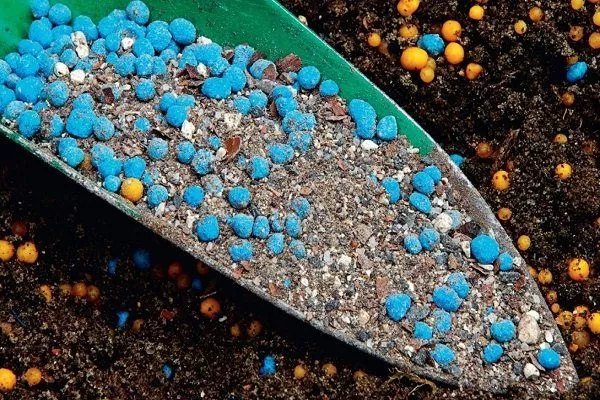
The third application is carried out by irrigation with a 10% solution, which may also contain other nutrients.
Barley as a fertilizer
Compared to other grain crops, barley is highly drought-tolerant. Therefore, in regions where drought is common, barley is sown more often as a green manure than other green manure crops.
In addition, the plant easily withstands frosts down to -5 degrees, which is why it is actively used for early spring planting as a precursor to main crops.
Roots decomposing in the ground after mowing and green mass incorporated into the fertile soil layer saturate it with vermicompost, phosphorus, potassium and many macro- and microelements necessary for growing staple crops.
Plowing barley is equivalent to applying traditional organic matter, not to mention mineral fertilizers. The recommended seed application rate is 1.8-1.9 kg/ha. Mowing and subsequent incorporation are carried out 4-6 weeks after mass emergence until the barley begins to ear.
Green mass can also be composted to produce a multi-component organic fertilizer that works for all crops.
By implementing a high-quality barley fertilization program, you'll achieve increased yields with minimal per-hectare costs. Good fertilizers are crucial for the subsequent health of this grain crop, so it's important to approach this issue with the utmost care.