
Although most barley varieties are resistant, there's always a risk of crop damage from diseases and pests. This can be caused by improper cultivation practices or crop rotation. In this article, we'll discuss the most common and dangerous barley pests and diseases, the damage they cause, and control methods.
The main diseases and pests of barley
Barley diseases and pests can be divided into several groups:
- root system;
- vegetative aboveground organs;
- smut;
- rusty;
- ear diseases.
Brown rust
This disease is caused by a basidiomycete fungus. Infection of cereals can be observed throughout the growing season. Symptoms appear on the upper surface of barley leaves and leaf sheaths and look like this:
- solitary, oval, light brown uredinia;
- black pustules - telia.
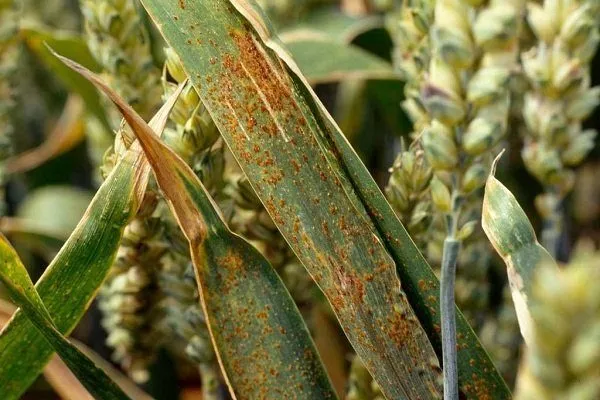
This is a harmful disease that disrupts vital physiological and chemical processes: affected leaves die, and the seeds are shriveled and have reduced germination.
Methods for combating brown rust are as follows:
- Agrotechnical:
- compliance with regional growing recommendations;
- weed control;
- use of pathogen-tolerant varieties;
- Isolation of spring and winter crop fields.
- Chemicals – treatment of vegetative crops with fungicides – Cansel (KS), instructions for use are given on the packaging.
- ✓ Consider the spectrum of action of the drug: it should cover specific barley diseases.
- ✓ Pay attention to the plant's development stage: some fungicides are only effective at certain stages.
Stem rust
The disease manifests itself in steppe zones during late crop plantings and is caused by fungi. Stem rust affects leaves, stems, scales, and leaf sheaths. It appears as rusty-brown, elongated rows.
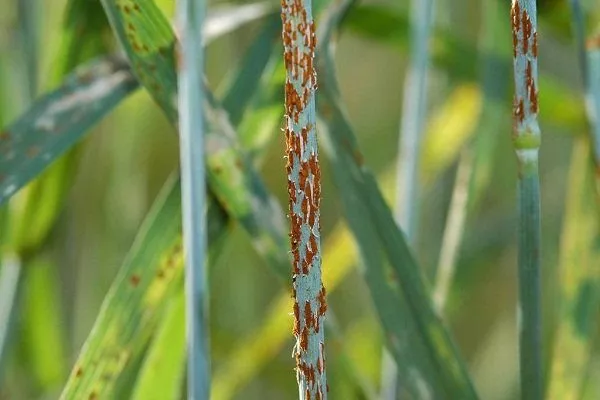
When barley is affected by this rust:
- drought resistance decreases;
- a puny grain is formed;
- water balance is disturbed;
- growth and development are inhibited.
If there is a risk of stem rust outbreaks, spray barley seedbeds with 80% zineb (5 kg/ha) or anilate (5 kg/ha) with the addition of a sticking agent (0.1-0.2 kg). Apply 100 l/ha of the working solution. Repeat treatment after 8-10 days, if necessary.
Agrotechnical measures:
- compliance with crop rotation;
- spatial isolation of winter crops from spring crops;
- sowing at optimal times;
- cleaning in a short time;
- destruction of intermediate plants;
- air-thermal and solar heating of seeds.
Dwarf rust
This is the name of a dioecious fungus that attacks winter and spring barley varieties. During the growing season, the infection is spread by uredospores through air currents. The pathogen survives in the form of uredomycelium on barley crops and volunteer barley.
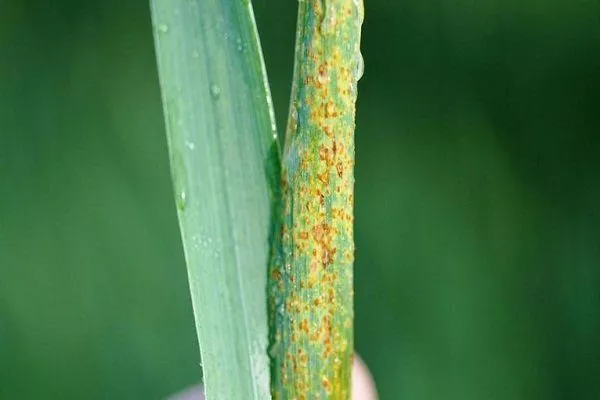
The initial stage of the disease is characterized by the appearance of small, light-yellow pustules on the leaves and sheaths of barley. It develops under the following conditions:
- presence of an intermediate host;
- presence of droplet moisture;
- air temperature +15-18 degrees.
The disease slows photosynthesis, metabolism, and water balance, deteriorating grain quality. Infestation leads to reduced yields and reduced winter hardiness.
Agrotechnical protective measures:
- compliance with crop rotation rules;
- use of resistant varieties;
- seed treatment with microelements;
- application of mineral fertilizers with increased potassium and phosphorus content.
A number of effective chemical preparations have been developed for the treatment of dwarf rust, which can be purchased in stores and used according to the instructions:
- fungicide Alpha-Tebuzol;
- Flutrivit;
- Polygard.
Fusarium head blight
Barley becomes infected during flowering and ripening. Typical symptoms include the appearance of a pink-red or pale pink coating on the glumes, which represents the mycelium and sporulation of the pathogen.
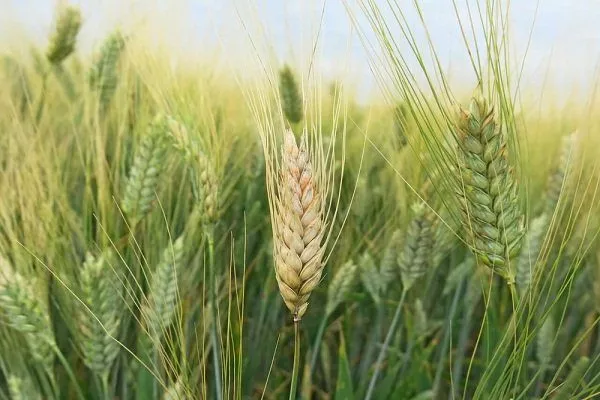
Grains affected by fusarium wilt turn whitish, have a dirty brown tint, and may develop a pink-orange bloom. The disease affects the barley's sowing qualities, which are reduced or lost altogether, and mycotoxins accumulate in the grain.
Fusarium develops due to wet weather during the earing period, and the source is affected grain crop residues.
Protective measures:
- alternation of grain crops with a break in crop rotation for at least 1 year;
- reduction of plant residues on the soil surface;
- sowing seeds in well-prepared soil;
- seed treatment before sowing.
Early fusarium wilt should be controlled during flowering—be sure to apply a fungicide to the crops. Tebuconazole is suitable for this purpose (see package directions).
Root rot
Like other grain crops, barley is also susceptible to root rot. This disease is widespread throughout barley-growing regions. The danger lies in the fact that young shoots are affected. Losing their ability to grow, they rot and die.
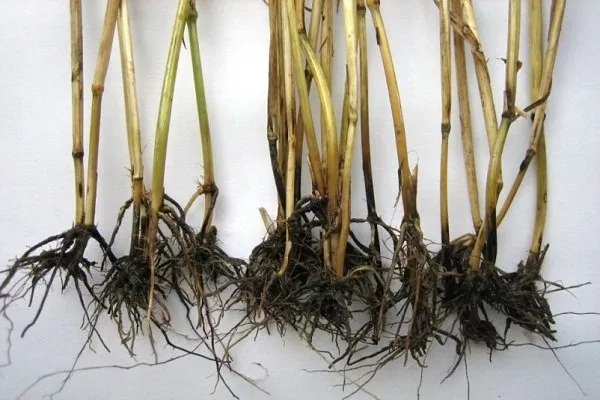
Symptoms:
- the stems and tops of plants become brownish-reddish in color;
- the underground stem internode turns brown;
- the aboveground part of the plant darkens;
- Diseased plants are easy to pull out.
Protection from disease:
- seed treatment;
- compliance with crop rotation;
- use of biological preparations – Fitosporin-M, Gamair, Gliocladin.
Powdery mildew
A common disease in spring barley growing areas. The pathogen survives well into the winter as mycelium in the axils of plant leaves. Cleistothecia may remain on affected plant tissue.
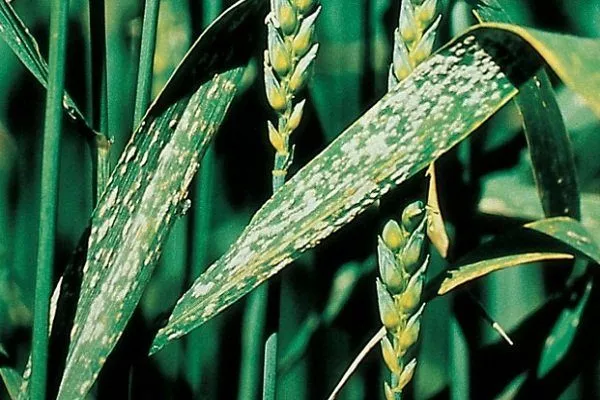
During the initial stage of infection, leaves and stems become covered with a web-like coating, which gradually changes structure and becomes denser. This coating contains fungal spores, which can become airborne and infect other plants.
The disease can develop due to high crop density, high humidity and temperatures around +20 degrees.
Agrotechnical control measures:
- spatial isolation of crops;
- compliance with crop rotation rules;
- cultivation of resistant varieties;
- sowing at optimal times;
- application of fertilizers.
Loose smut of barley
The pathogen (fungus) persists as mycelium within the grain, infecting it during flowering. Plants infected with this disease develop faster than healthy ones. Infected barley begins to flower earlier than the main field, and the disease manifests itself during heading.
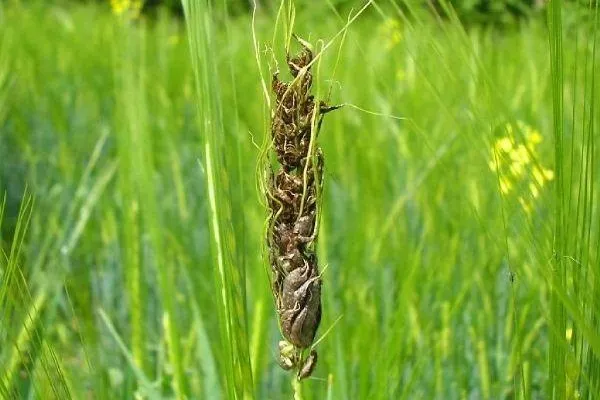
Infected ears have a charred appearance due to the destruction of the flower parts and the covering parts of the spikelets. Only the rachis remains intact.
Conditions of infection:
- prolonged flowering of barley;
- relatively humid weather;
- moderate temperature (about 23 degrees);
- Wind promotes the spread of spores.
Infected barley exhibits a sharply reduced grain yield, lighter grains, and may have empty grains. The plant produces poor tillering, and the quality of the harvest is reduced.
Control measures:
- seed treatment;
- compliance with sowing dates;
- compliance with crop rotation rules.
The most effective preparations for combating this disease are Serticor 050 k.s. (0.75-1.0 l/ha), Dividend Star 036 (1.0-1.25 l/ha).
Dark brown spot
Sources of infection include plant debris, seeds, soil, winter barley, and cereal grasses. In addition to leaves, the disease affects roots, ears, and grain.
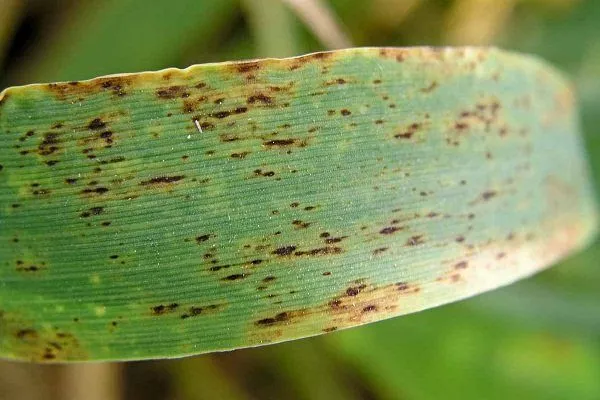
The first signs appear on seedlings in the spring as oval brown spots with a distinct chlorotic border. These spots can develop on leaves and leaf sheaths at all stages of the plant's growth.
When the infection is severe, the spots begin to merge and cover the entire leaf. After this, if weather conditions are favorable, the fungus attacks the ear and grain, causing black germ.
Control measures:
- destruction of plant residues;
- correct crop rotation;
- cultivation of resistant varieties;
- seed treatment with preparations: Benefit ME, Polaris, Scarlet, Tebu 60, Tuareg;
- use of fungicides: Title Duo, Triada, Capella.
Striped spot
The pathogen infects barley from emergence to maturity. During the growing season, the infection is spread by airborne conidia. It persists as conidia and mycelium on plant debris, in soil, and on seeds.
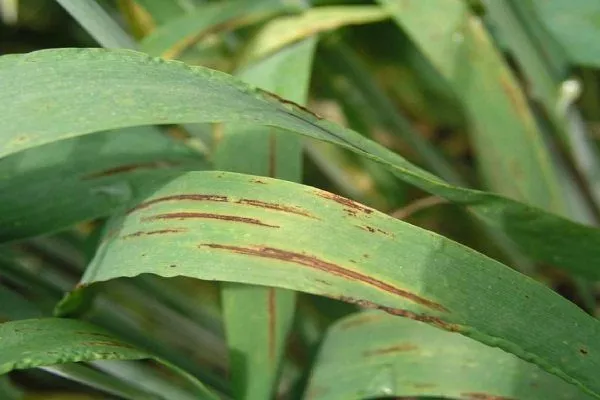
During the germination phase, pale yellow spots begin to appear on the leaves. Gradually lengthening, they merge into light brown stripes with a narrow purple border. The spots then become covered with an olive-brown coating of conidial sporulation.
Symptoms of stripe spot appear on every shoot. The disease is most severe during flowering and grain formation. Affected tissue cracks, and leaves break into two or three pieces lengthwise, after which they dry out.
To combat stripe spot you can use:
- Altin – spraying during the growing season, consumption – 300 l/ha;
- Avaxs– spraying during the growing season, 300 l/ha.
Agrotechnical measures:
- cultivation of resistant varieties;
- optimal sowing times;
- compliance with crop rotation;
- application of phosphorus-potassium fertilizers mixed with microelements.
Reticulated spot
The disease is caused by the imperfect fungus Hyphomycetes and begins to develop during the tillering stage, reaching its peak during flowering and grain filling. It is one of the most damaging diseases of barley.
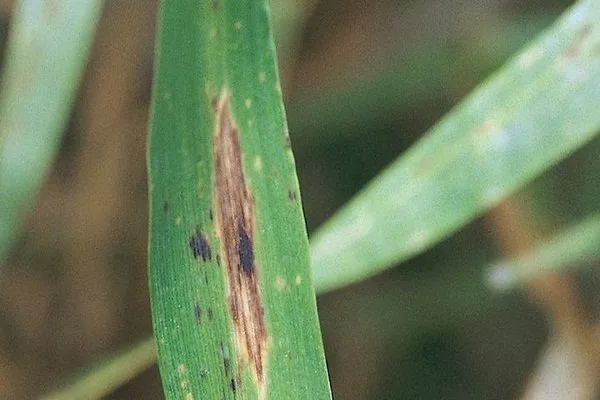
Based on the symptoms, two types of the pathogen are distinguished: reticular and spotted, and both types can occur both separately and together:
- with mesh type necrosis with a mesh pattern appears, surrounded by light green, yellowing areas;
- spotted type characterized by rectangular, oval or punctate, dark brown or light-colored necroses.
If the disease develops severely, the affected areas merge and the leaves begin to die.
The following fungicides can be used against net spot: Kornet KS, Arbalet KS, Balista KE, and the systemic fungicide seed treatment Forsage KS.
Agrotechnical measures:
- maintaining spatial isolation (more than 1 km) between barley crops;
- carry out spring harrowing (loosening) of grass with mandatory burning of all weeds on the sides of fields and roads;
- compliance with crop rotation.
Reticulated helminthosporiosis
The pathogen survives in soil and plant debris as mycelium for up to one year, and as spores located between grain scales for up to five years. Optimal conditions for disease development are temperatures of 15-25 degrees Celsius and 100% humidity.
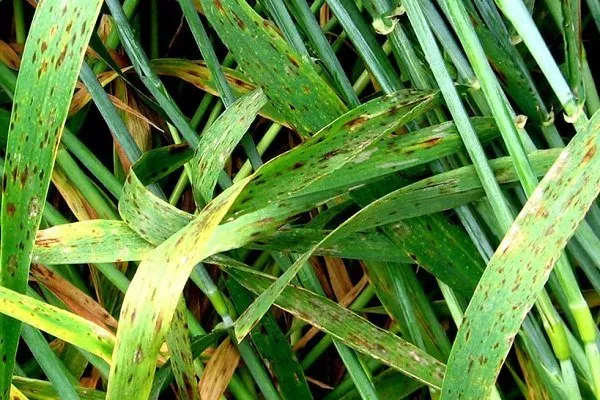
Infection with the net-like form causes the appearance of either dark brown stripes on the germ plates or grey-white, oval-shaped spots in the center of the leaf.
If the infection occurs on mature plants, small brown spots appear, which gradually turn into dark necrotic stripes.
Control measures:
- use of relatively resistant varieties;
- crop rotation;
- stubble removal;
- fungicide treatment of winter grain crops in the autumn or during the spring regrowth period - Tinazol (0.5 l/ha), Virtuoz (0.5 l/ha), Berkut (1.0 l/ha).
Rhynchosporium
Another name for this disease is border spot. It causes leaf spotting. Lower leaves are affected, but in severe cases, the infection spreads to the flag leaf and spike.
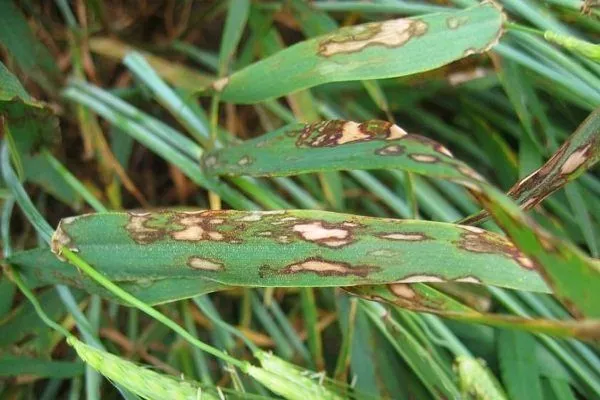
The first symptoms are dirty-green, water-soaked, elongated spots that gradually fade to a dull gray. In the final stages, necrotic spots develop a distinct dark-brown border separating them from healthy tissue.
Rhynchosporiosis can develop at temperatures between 2°C and 27°C and humidity above 95%. Spores are spread by raindrops. Symptoms of the disease can be seen as early as 8 days after infection.
Control measures:
- destruction of plant residues;
- compliance with crop rotation;
- control of cereal weeds;
- isolating barley fields from perennial grasses;
- treatment of vegetative plants with fungicides - Title 390 KKR, Title Duo KKR, Triada KKR, Capella ME.
Cereal aphid
The pest belongs to the order Homoptera and is widespread in the Central Black Earth, North Caucasus regions, in the south of Siberia and the Far East.
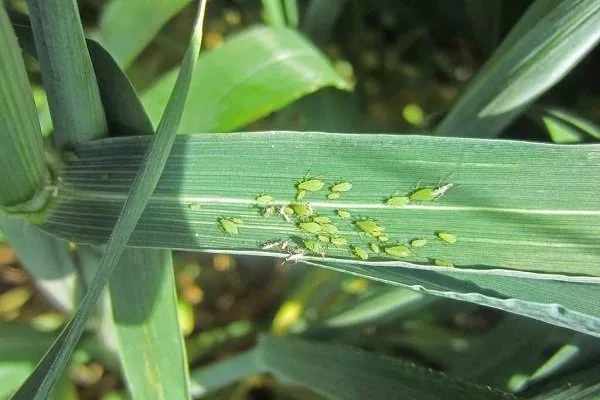
The aphid's body is up to 3 mm long and can be yellowish, light, or grayish-green in color. The legs and antennae are thin. Adults come in both wingless and winged forms.
The pest congregates on young, upper leaves. As the sap drains, discolored spots appear on the leaves. If damage is severe, the leaves turn yellow and dry out, and the shoots fail to emerge.
Aphids infest the ears and draw sap from various parts of the grain, causing partial whiteness and barrenness, and during the ripening period, shrunken, unfilled kernels. In northern regions, hot, dry weather favors aphid outbreaks, while in southern regions, warm, moderately humid weather favors aphid outbreaks.
Agrotechnical control measures:
- stubble cultivation;
- autumn plowing;
- sowing winter crops at optimal times;
- weed control.
Plants also need to be treated in a timely manner with grain pyrethroids, organophosphorus compounds and other insecticides:
- universal insecticidal seed treatment agent – Imidalit TPS;
- systemic insecticide – Clonrin, EC;
- broad-spectrum insecticide – Samurai Super, CE; Cyperus, K.E.;
- 3rd generation pyrethroid – Taran VE.
- ✓ The air temperature should be within +15…+25°C for most insecticides.
- ✓ The absence of precipitation for 4-6 hours after treatment increases the effectiveness of the preparations.
Striped grain flea beetle
An elongated, slightly convex beetle, black in color. The head and pronotum are greenish with a metallic blue tint. They develop in a single generation, overwintering in the topsoil or under fallen leaves. They emerge in mid-April and initially feed on winter cereals. After the spring crops emerge, the insects migrate to them.
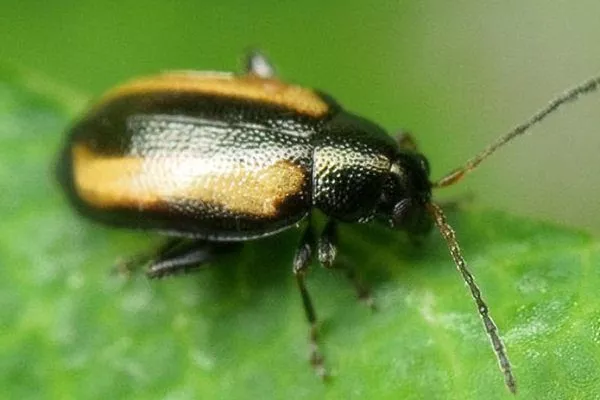
Adult flea beetles cause significant damage to barley leaves, eventually causing the plant to turn yellow and die. To prevent damage and limit flea beetle infestations, take the following measures:
- the earliest possible time for sowing barley;
- If there is a high number of flea beetles in the fields, insecticides are used (Zalp, Karachar, Faskord);
- Before sowing, the seeds are sprayed with an insecticide;
- weed control along the perimeter of crop areas.
Grey grain moth
A butterfly whose forewings are gray or dark gray with hints of brown. The dorsal half of the body is brown, and the ventral surface is light. This is a widespread pest, but mass breeding and damage can be observed in some areas of the Trans-Urals, Siberia, and the Altai Territory.
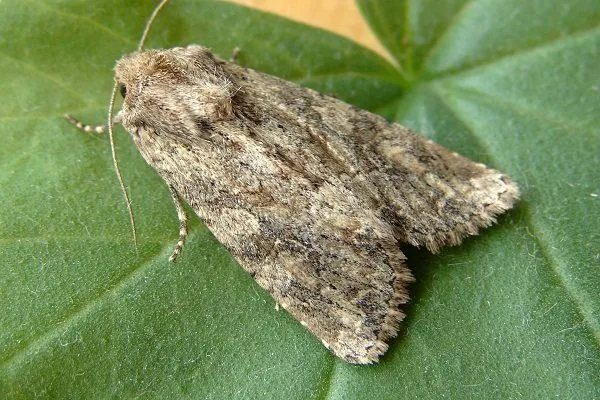
Cutworm caterpillars overwinter in the soil, at a shallow depth, in earthen cocoons. They emerge from hibernation in late April to early May, when average daily temperatures reach 3 to 9 degrees Celsius. They feed on weed and grain seedlings for a time, after which they pupate in the soil.
Caterpillars feed inside the grain, eating it away and leaving only the outer shell, filled with excrement and webbing. Control methods include:
- one-phase or two-phase timely harvesting;
- autumn plowing and stubble cultivation;
- optimal sowing times;
- spraying with biological preparations: Dendrobacillin suspension (1.5 kg/ha), Dendrobacillin paste solution (3 kg/ha), Lepidocide solution (1 kg/ha).
Yellow grain midge
This is a small mosquito, 1.5-2 mm long, with a black head and light yellow body. The larva is legless, spindle-shaped, lemon-yellow, and up to 3 mm long.
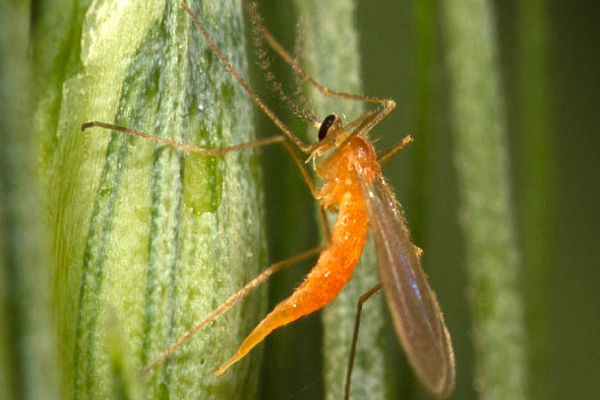
It is common in the North Caucasus, Central Black Earth, and Volga regions. Larvae overwinter in a silky cocoon in the soil, and in the spring they migrate to the upper soil layers, where they pupate.
The eggs laid by the female behind the lemma develop into larvae, which feed on the ovary and, less commonly, on the developing grain. Such damage causes sterility and reduced grain weight.
Protective measures:
- compliance with crop rotation;
- post-harvest stubble peeling;
- deep plowing;
- spraying with Karate Zeon during the earing phase.
Bread sawfly
The larva overwinters in the lower part of the stubble in translucent cocoons and pupates in the spring. In early summer, it emerges into the barley tube. Using a saw-shaped ovipositor, the female lays eggs, usually in the upper internode, in stems with hollow culms.
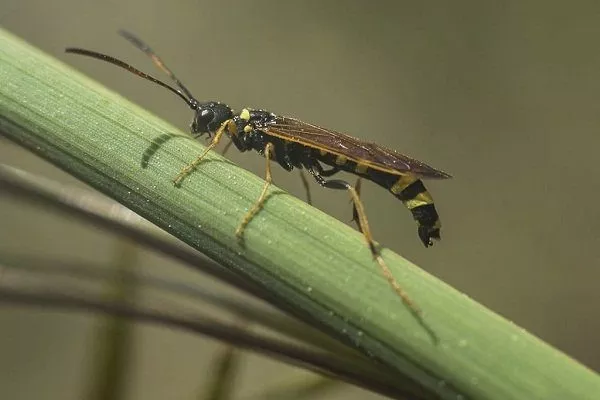
The larva feeds inside the stem, chewing through nodes and making circular cuts at the base of the culm. The damage causes the central leaf and the white stalk to wither.
Deep autumn tillage with stubble incorporation helps control sawflies. It's also important to use pre-crop crops that suppress sawfly populations, such as legumes and silage corn. Insecticides can be used against adult insects.
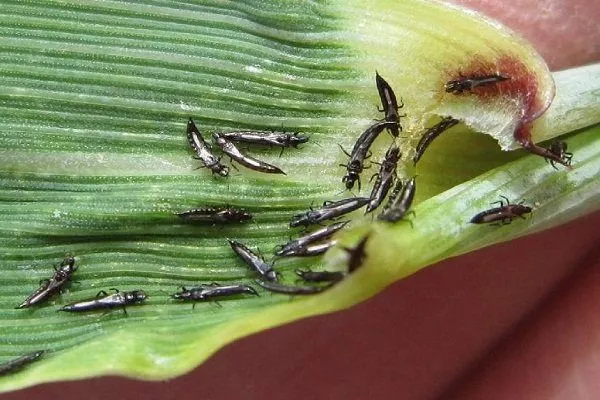
Wheat thrips
Thrips larvae overwinter in soil, plant debris, on fallen fruit, and on the leaves of winter barley. In cereal crops, the pest sucks the sap from the ear. The damaged upper parts of the barley appear whitish and frayed, and subsequently dry out. Thrips cause grain scabbing and shriveling.
Control measures:
- compliance with crop rotation;
- destruction of fallen fruit;
- stubble cultivation and deep autumn plowing immediately after harvesting;
- insecticide treatment – Borey Neo, Vantex, Bishka KE, Binom.
Barley fly
These small insects are classified as "hidden stem flies," nesting in the stems of grain crops. The fly is adapted to dry conditions and can also feed on flowers. It prefers barley crops for egg laying.
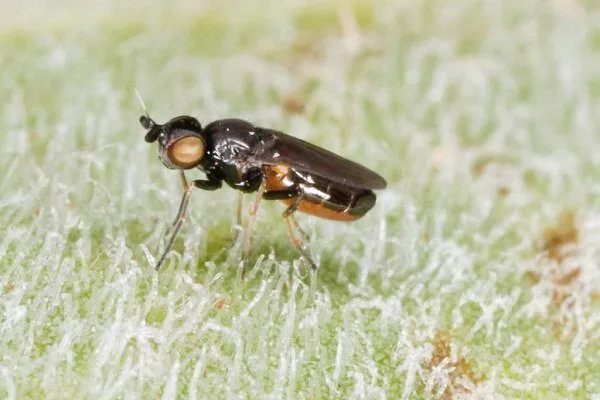
About a week after the eggs are laid, larvae appear, which penetrate into the middle of the stem, where they settle and begin to feed on the central leaves of the plant, which is why the cereal dies.
Methods of control:
- calibration of grains before sowing;
- selection of the most resistant varieties;
- application of balanced fertilizers;
- placement after legumes or row crops;
- post-harvest work;
- use of insecticides by spraying (Cruiser, Celeste Top).
How to protect barley from diseases?
Protecting crops from diseases helps ensure a healthy harvest – only by using an integrated approach can you achieve excellent results in a short time.
Please note the variety of agricultural practices:
- compliance with crop rotation rules and timing;
- active weed control;
- high-quality soil cultivation;
- compliance with harvest deadlines;
- competent selection of microelements;
- use of seed dressings, fungicides, insecticides, growth regulators and other preparations.
For information on the causes of various spotting conditions in barley, watch the following video:
Despite the large number of pests and diseases that can destroy your crops, you can avoid them by following proper agricultural practices. If the situation becomes severe, chemical and biological treatments can be helpful.