
Spring rye is a rarely used variety. In Russia, winter rye, which produces higher yields, is preferred. Spring rye is sown only in exceptional cases—when other methods fail to yield a harvest.
Description of spring rye
Spring rye is a form of sowing rye. Unlike the winter form, which is sown in the fall before winter, spring rye is sown in the spring. The word "spring" comes from the name of Yarilo, the god associated with the sun and the awakening of nature. Spring rye is harvested in late summer or early fall.
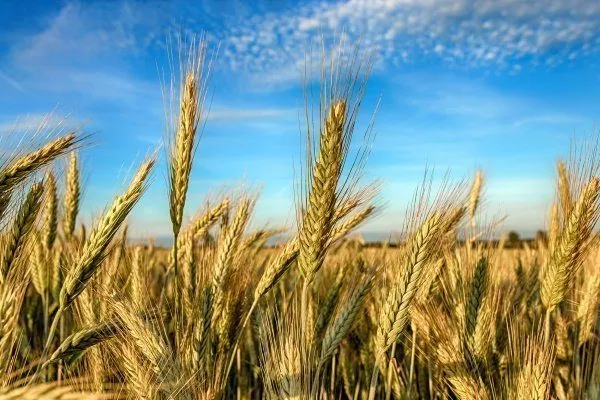
Rye is an aggressive plant capable of suppressing any weed. Only cornflowers grow in rye fields. The advantages of rye, whether spring or winter, compared to wheat:
- more resilient and unpretentious;
- higher resistance to diseases and pests;
- high resistance to lodging;
- is an effective green manure – it improves the structure and condition of the soil;
- Active phytosanitary agent – suppresses weeds.
Botanical description of spring rye:
- Root system. Fibrous roots penetrate 1-2 meters deep. It thrives in complex soils and has high nutrient absorption. The plant is characterized by vigorous tillering. A single seed can produce about a dozen shoots, and with proper care, 5-10 times more.
- Stem. It is a hollow tube with several internodes—from 3 to 7. The stem is glabrous, straight, and pubescent only just below the spike. The average stem height is 0.8-1 m.
- Leaves. The flat leaf is 15-30 cm long. The leaves are narrow, no more than 2.5 cm wide. The leaf blade is often pubescent at the top, indicating resistance to moisture stress.
- Inflorescence. The spike is elongated, unbreakable, with a strong axis. It is 5-15 cm long and 0.8-1.2 cm wide. The spike's awns are rough and 3-5 cm long. The anthers of the flowers, which have three stamens, protrude from the spike. The flowers are pollinated by the wind.
- Corn. The grain is elongated and oblong, with a longitudinal groove down the center. The germ is clearly visible. The grain surface is slightly wrinkled. The size of a rye grain is 4-10 mm long and 1.5-3.5 mm wide. 1,000 grains weigh 12-45 g. Spring rye grains are smaller than winter rye grains. Rye grains are similar in chemical composition to wheat grains, but there are differences. Rye grains contain less protein than wheat grains, but more globulins and albumins. They also contain less gluten, and the quality of this gluten is lower than that of wheat. The grain can be yellow, gray-green, brown, or reddish in color.
Demand for sowing
Spring rye is typically used as a replacement for winter rye that has been damaged or lost for some reason. The low demand for spring rye is easily explained: it is weaker than its winter counterpart, produces less yield, and is less resilient to environmental challenges.
There are 10 species in the rye genus, but only one is cultivated—common rye. All others are wild. There are 39 varieties of common rye, but only common rye is grown in Russia. Spring rye accounts for approximately 1% of all cultivated land in Russia.
Terrain and climate for growing rye
Profitable grow winter rye, as it is a frost-resistant plant that produces a good harvest. It easily withstands winter temperatures down to -35°C. However, if the winter climate is very harsh, winter rye will not survive. Therefore, spring rye is in demand in areas where extremely severe frosts occur in winter, preventing winter crops from surviving. This is why in the Far North, spring rye is sown in the spring, and winter rye is completely abandoned.
Spring rye is grown in regions with risky farming practices, such as Transbaikalia, Central Siberia, and Yakutia (the Sakha Republic). The regions where the bulk of spring rye fields are located, sown specifically rather than for reseeding winter crops, are Buryatia and the Chita Region.
What varieties are there?
| Name | Growing season (days) | Lodging resistance | Yield (c/ha) |
|---|---|---|---|
| Vyatka | 100 | High | 40 |
| Onokhoyskaya | 130-140 | Low | Not specified |
| Svitanok | 120-130 | Low | Not specified |
Spring rye is not in great demand in agriculture, so there are few varieties:
- Vyatka. An experimental variety developed specifically for the Volga-Vyatka region. It is used for reseeding when winter rye fails. It is a mid-season variety. The average growing season is 100 days.
The variety tolerates low temperatures well, emerges uniformly, quickly tillers, and forms tubes. If ripening occurs in rainy weather, the ears are often hollow or have a single grain. Under favorable conditions, the yield is 40 centners per hectare. The variety is resistant to lodging, and disease susceptibility does not exceed that of the winter variety.
| Variety | Resistance to stem smut | Resistance to powdery mildew |
|---|---|---|
| Vyatka | High | Average |
| Onokhoyskaya | Average | High |
| Svitanok | High | High |
- Onokhoyskaya. A variety developed by Buryat breeders. Designed for the harsh conditions of Eastern Siberia. The plant is tall, reaching 2.5-3 m. It is prone to lodging. The leaves are narrow, and the tillering is moderate. The spike is large and prismatic, producing large grains. The growing season lasts 130-140 days.
If you sow the seeds in May, you can harvest by the end of September. The grains are elongated, with minimal shedding. The color is gray-green with a yellow tint. 1,000 grains weigh 24-30 g. It tolerates spring drought and frost well. It is characterized by uniform germination and rapid growth early in the growing season. It effectively suppresses weeds.
- Svitanok. A Ukrainian variety derived from the Leningradskaya variety. It is used as a backup crop for reseeding winter crops. The growing season is 120-130 days. The bush is upright, with a strong stem and light green leaves. The spike length is 8-10 cm. The plant height is 1.2-1.6 m. The grains are large, with 1,000 grains weighing 40 g. It is highly resistant to root rot, powdery mildew, and snow mold. A disadvantage is lodging. A distinctive feature of this variety is its high yields on nitrogen-poor soils.
Seed preparation
To ensure uniform germination and a good harvest, seeds are sown in soil treated according to agricultural practices and properly prepared for sowing. Only well-developed seeds are selected. To determine this, seeds are tested for germination in a laboratory.
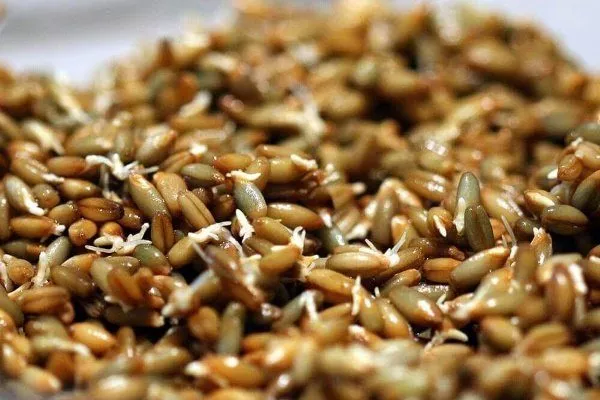
Minimum seed quality indicators:
- germination rate – 93-95%;
- purity – 98.5%.
The acceptable rate of weed seeds is 20 g per 1 kg of rye grain. Before sowing, the seeds are dried under a canopy. The drying area should be well-ventilated and have direct sunlight. Drying time is 3-4 days. To speed up drying, grain is dried in drying chambers, where the grain is heated to 60°C, and the drying process takes only 2.5 hours.
- ✓ The drying temperature of seeds should not exceed 60°C to avoid loss of germination.
- ✓ The moisture content of seeds before treatment should be no more than 14% for effective treatment.
After drying, the grains are treated with a dressing to prevent disease and stimulate shoot growth. Grain from the previous year's harvest is used as seed.
Soil preparation
Preparing the soil for spring rye includes:
- Autumn processing. In September and October, the fallow land is prepared, the soil is plowed, and cultivated with a subsoiler. The loosening depth is 26-30 cm.
- Spring processing. The soil is harrowed to a depth of 5 cm. The purpose of harrowing is to break up the soil crust and destroy shoots, mold, weed seeds, and dead plant debris. Harrowing during spring sowing increases the spring rye yield by 15-20%.
During pre-sowing soil cultivation, nitrogen fertilizers are applied, and during sowing, phosphorus fertilizers are applied.
Optimal sowing times
Spring rye seeds are sown in the spring. Sowing occurs in the second half of May. The exact timing and depth of seed placement depend on climatic conditions:
- In the forest-steppe zone, sowing begins in the third week of May.
- In the steppe zone – in the fourth week of May.
- In the Far East – May 1-20.
- In Siberia – May 10-20.
- ✓ The soil must warm up to +5°C at the seed placement depth to begin sowing.
- ✓ Optimal soil moisture for sowing is 60-70% of the total moisture capacity.
Sowing times also depend on the early maturity of the variety. For example, in East Siberian farms:
- early maturing rye is sown on May 15-25;
- mid-season – May 5-15.
If the soil has warmed up and there is no frost forecast, sowing begins earlier.
Landing
Rye is sown in one of three ways:
- Private. The most common option allows for even seed distribution across the area. Row spacing is 15-20 cm.
- Narrow-row. The sowing rate, compared to the row method, increases by 10-15%.
- Cross. The standards are similar to the narrow-row method.
The optimal seeding depth in the forest-steppe zone is 5-6 cm, in the steppe zone – 6-8 cm.
Care and cultivation
Spring grain crops, including rye, quickly absorb nutrients. Spring rye, although having a shorter growing season than winter rye, consumes just as many nutrients. Spring rye tillers less vigorously, and its root system is weaker than that of winter crops. It is important to provide it with adequate nutrition and protect it from diseases and pests.
Fertilizing and processing
Fertilizer requirements for spring crops:
- Nitrogen. The greatest need for nitrogen fertilizers occurs at the beginning of tillering. Between tillering and booting, the plant absorbs 40% of all nitrogen consumed during the growing season. To produce 1 ton of grain, approximately 30 kg of nitrogen fertilizer is required. Nitrogen fertilizers are applied in three stages: in the spring during cultivation, at the single-node stage, and at the earing stage.
- Phosphorus. Spring crops require the most phosphorus during periods of rapid growth. Phosphorus helps develop a strong root system, promotes large ears, and early ripening. Phosphorus doesn't provide the same yield boost as nitrogen fertilizers, but without it, plants develop poorly. 11.5 kg of phosphorus is required to produce 1 ton of grain. Phosphorus fertilizers are applied in the fall during autumn plowing or in the spring during pre-sowing cultivation.
- Potassium. Spring crops require the most potassium during the first growth period. 25 kg of potassium are required to produce 1 ton of grain. Potassium fertilizers are applied in the same way as phosphorus fertilizers—in the fall or spring.
Spring rye finishes absorbing nutrients when it reaches the earing and flowering stage. Precise rates of mineral fertilizers for spring rye cultivation are calculated based on specific conditions. Soil type, its composition, the previous crop, and the planned yield are all important factors.
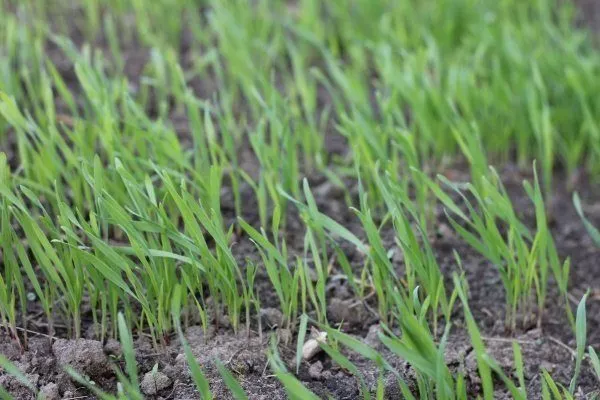
An important task in rye crop management is preventing weeds. Soil cultivation involves the following measures:
- Harrowing. It is applied when the seedlings reach the 2-3 leaf stage. If harrowing is delayed, and the weeds become established and form true leaves, the effect of this agricultural measure will be minimal. In practice, harrowing for weed control is extremely rarely used.
- Herbicide treatment. The type and dose are selected depending on the weed species. Spring rye grows quickly, effectively suppressing weeds, and pesticides are not always necessary. If herbicides are applied, they are done during the tillering stage. Early application risks damaging the crops. Delaying treatment can also result in ear deformities and reduced yield.
Herbicides are applied in aqueous solutions. Application times are early morning or late evening, at temperatures no higher than 20°C. Ground spraying is used.
An effective technique for growing spring crops is foliar application of copper. If the soil pH is above 6.0, crops are fertilized with manganese. The best time to apply is at the 1-2 node stage. The recommended dosage is 50 g of copper/manganese per hectare.
Diseases, pests and prevention
Protecting and preventing plant diseases and pests is the key to a high yield. Common rye diseases and their control measures are listed in Table 1.
Table 1
| Disease | Symptoms | Control and prevention measures |
| Stem smut | Stripes on the stem, leaves, and ears. They are initially leaden, then sprout black spores. |
|
| Cercosporella root rot | Spots appear on the underside. The plant breaks and lodges at the affected areas. The grains are underdeveloped. |
|
| Fusarium root rot
| The tillering nodes and internodes of rye turn brown, sometimes with a pinkish bloom. The trunk tissue is destroyed, and the plant dies. |
|
| Powdery mildew
| The leaves and stems are covered with a white coating, later black spots appear. The plant dies. |
|
| Yellow rust
| The leaf blades are covered with lemon spots. The cause is a fungus. |
|
| Rhynchosporium
| The appearance of red-brown stripes on the leaves. |
|
Spring rye, like any cereal crop, needs protection from pests.
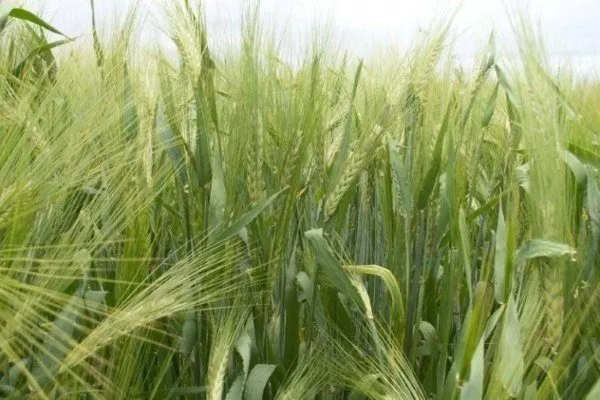
Without protective measures, crop losses can reach 15%. The most dangerous pests and protective measures are listed in Table 2.
Table 2
| Pest | Protective measures |
| Striped leafhopper | insecticides during the period of heading and milk ripeness of grain |
| Cereal aphid | control of wild cereals and the use of insecticides in May-June |
| The turtle is harmful | selection of resistant varieties and insecticide treatment of larvae |
| Wheat thrips | early autumn plowing, pre-sowing cultivation, crop rotation, and chemical treatment if necessary |
| Ground beetle | crop rotation, separate harvesting with rapid threshing of windrows |
| Striped grain flea beetle | prompt sowing of spring cereals and insecticide treatment of crops during the emergence of beetles from wintering |
| Grey grain moth | stubble cultivation and early plowing of fallow land, cultivation of inter-row spaces |
Harvesting
When harvesting rye, the crop's tendency to overripen and shatter is taken into account, so it's important to start the harvesting campaign on time. The key to harvesting rye is timing. Delaying the harvest by even 10 days inevitably results in significant yield losses. On the other hand, starting too early leads to a reduced harvest, as some of the grain is immature.
It takes 10-20 days for grain to reach full maturity from the milky-wax stage. When harvesting grain with a combine, the optimum time is to harvest it fully ripe. The moisture content of grains to be used as seed should not exceed 20%.
When choosing harvesting time, it's important to consider the maturity of the straw. If the straw is moist and the stems are long, adjust the combine harvester accordingly. Wet and long straw, wrapping around the drum, makes threshing difficult. If the crops haven't lodged and the weather is favorable, harvesting can begin even when the grain is immature.
Immediately after threshing, the grain is sent to the grain cleaning complex for drying and sorting. The grain is then brought to marketable condition. After threshing, the straw is removed from the fields to prepare the soil for the future harvest.
Despite its low prevalence, spring rye plays an important role in agricultural production. Spring rye varieties allow grain to be grown in risky farming areas and provide crop protection against winter rye frost damage.