
Winter rye is a key agricultural crop in the non-chernozem zone. It's also an effective green manure. We'll cover its cultivation in more detail later in the article.
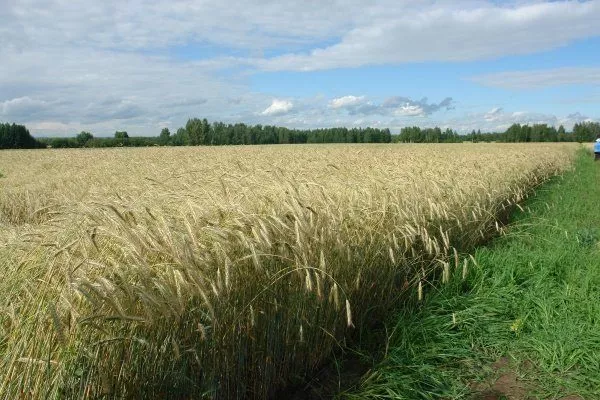
There are spring and winter cereals. Spring cereals are sown in the spring and mature by summer. Winter crops are sown in late summer or fall to yield a harvest in the spring or early summer.
Description of winter rye
Rye is a herbaceous plant, annual or perennial, belonging to the large grass family. Its Latin name, Secale cereale, means "sowing rye." Within this species, there are wild subspecies and over forty cultivated varieties. Differences among plants include the following:
- appearance and nutritional characteristics of grains;
- spine development;
- ear length;
- pubescence of the stem.
Root system
Rye has a fibrous root system, extending 1-2 meters deep. This plant has powerful and developed roots, which are particularly effective in light, sandy soils. Rye roots, consisting of primary (embryonic) and secondary (nodal) rootlets, rapidly absorb nutrients contained in poorly soluble compounds.
When a grain is planted in the soil, it forms two tillering nodes. One is located deep within the soil, while the other, near the surface, becomes the primary tillering node. Rye is characterized by intensive tillering—the plant produces 4 to 8 shoots, and under favorable conditions, 50 to 90.
Stem
The rye stem is a hollow straw consisting of several branches (4 to 7) connected by nodes. The lower internodes are thicker than the upper ones – 6-7 mm versus 2-4 mm. The stem is erect, pubescent below the ear, and then bare. Cultivated rye reaches a height of 1.5 m, while wild varieties reach taller – up to 1.8 m or more.
The stem and leaves are green, but a waxy coating gives them a glaucous appearance. As they mature, the stem and leaves change color, first turning gray-green, then gray-yellow, and finally golden-yellow.
Ear
Rye has a spike-shaped inflorescence consisting of two or three flower spikelets attached to a rachis. The grain is oblong or oval, slightly flattened on the sides. The top of the grain is either bare or pubescent. Each rye variety has its own spike length, ranging from 8 to 17 cm.
The weight of the grain depends on the variety:
- in large-grain varieties, 100 seeds weigh more than 38 g;
- for varieties with grain of above average size – 30-38 g;
- for varieties with medium-sized grains – 20-30 g;
- for small-grain varieties – up to 20 g.
Rye grains vary in size, shape, and color. Grain parameters:
- length – 5-10 mm;
- thickness – 1.5-3 mm;
- width – 1.5-3.5 mm.
Grains can have the form:
- oval - the length to width ratio is 3.3 or less;
- elongated - the length to width ratio is greater than 3.3.
The surface has noticeable transverse wrinkles. The grain can be white, greenish, gray, yellow, or dark brown.
Rye is a cross-pollinating plant and is pollinated by the wind. There are also self-pollinating varieties, which were developed for regions with risky farming to mitigate the risks associated with adverse weather.
Rye is one of the few crops that has two forms—spring and winter. The latter produces higher yields, but it can only be grown in regions with mild winters and sufficient snow cover. These conditions help winter crops survive the winter safely.
Demand for sowing
Rye is valuable as a food crop and as a fodder crop. It also makes an excellent green manure crop. Rye is used to bake bread, and its grain is used as feed for livestock. Pigs are fed its flour, and cattle are fed its bran.
Rye is Russia's most important national crop, but since Soviet times, its cultivation has steadily declined. While 8 million hectares were devoted to rye in Russia in 1990, in recent years the gross harvest has been 2.5-3 million tons. Growing wheat has proven more profitable than rye. Nevertheless, Russia remains the leading rye producer. Only Poland and Germany can rival Russia. The largest share of rye production, 20%, is in Tatarstan and Bashkortostan.
Terrain and climate
Rye is a unique crop; it is the only grain cultivated in all climates, from Yakutia to the hot South American countries. Winter rye is grown in many countries, but its primary crops are concentrated in the United States and Europe.
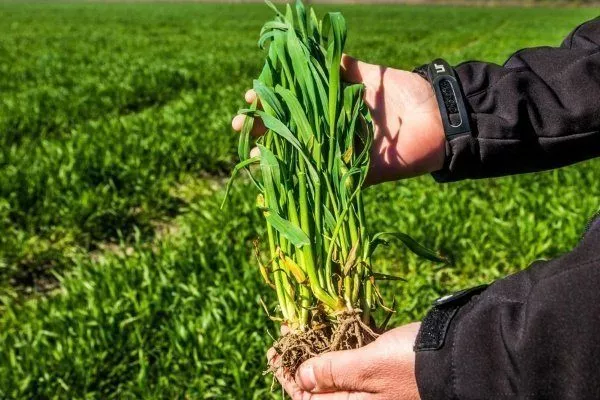
Advantages of winter rye:
- low dependence on meteorological conditions;
- undemanding to soil fertility;
- stability of yields.
Rye grains lose their germination capacity faster than other grains – after 3-4 years, 70% of seeds are no longer able to germinate.
Rye is very popular in Russia. It is especially actively grown in regions where other grains fail to produce high yields due to challenging conditions—low temperatures, high humidity, limited sunshine, etc.
In Russia, the leading rye producer is the Stavropol region. It boasts the highest average yields—up to 50 centners per hectare. Rye is also widely grown in the Lipetsk and Moscow regions, Krasnodar Krai, and Kaliningrad Oblast. In Transbaikal, Khabarovsk Krai, Yakutia, Buryatia, and Amur Oblast, rye is the main cereal crop.
Winter rye varieties
| Name | Yield, c/ha | Winter hardiness | Disease resistance |
|---|---|---|---|
| Tatarstan Relay | 40-64 | High | Resistant to powdery mildew and brown rust |
| Sunrise 2 | 40-50 | High | Weak immunity |
| Tatarskaya 1 | 40-70 | High | Average immunity to powdery mildew and brown rust, resistant to root rot |
| Saratovskaya 7 | 45 | High | Resistance to major diseases |
| Bezenchukskaya 87 | 42-59 | Very high | Not sufficiently resistant to powdery mildew and brown rust |
| Severskaya | 85 | High | Resistant to snow mold, brown rust, septoria and fusarium |
| Chulpan | 60-85 | High | Resistance to major diseases |
Winter rye varieties vary in yield and quality. The most popular varieties are easy to grow, winter-hardy, and productive:
- Tatarstan relay. A variety developed by breeders in Tatarstan. Developed through systematic, cyclical selection from numerous similar varieties, this diploid plant produces long, prismatic spikes. This mid-season variety, with long but brittle awns, is frost-hardy and resistant to powdery mildew and brown rust. The grains are large—1,000 grains weigh 40 g. The growing season lasts 330 days. Height: 1.25 m. Yield: 40-64 c/ha.
- Sunrise 2. A mid-season variety of domestic selection, bred specifically for the Non-Black Earth Region. The parent varieties are Hybrid 2 and Kharkovskaya 60. The plant has a dense, prismatic spike, 8-10 cm long. The awns are long and coarse. The grains are elongated and yellow-gray. 1,000 grains weigh 30-35 g. Plant height is up to 1.5 m. Yield is 40/50 c/ha. The growing season is 330 days. The variety is winter-hardy, but has weak immunity to major diseases.
- Tatar 1. This mid-season variety was selected from three dozen similar crops. Its distinctive feature is a loose, prismatic spike. The awns are long. The grains are medium-sized and yellow. The weight of 1,000 grains is 30-35 g. The growing season is 320-330 days. The plant height is 1.1 m. The stem is strong and winter-hardy. Its immunity to powdery mildew and brown rust is average. However, the variety is resistant to root rot. Yields are high even on poor soils. Tatarskaya 1 is often used as a backup. Yields are 40-70 c/ha.
- Saratovskaya 7. A mid-season rye with a growing season of up to 330 days. Resistant to lodging. Uniform plant heights ensure efficient harvesting. Large grains—100 g weigh approximately 4 g. Excellent baking properties. Resistant to major rye diseases. This variety is cultivated primarily in the Volga region and adjacent regions. Yield: 45 c/ha.
- Bezenchukskaya 87A very frost-hardy variety, retaining 98% of its seedlings by spring. The tall plant, up to 1.25 m, is resistant to lodging. High productivity potential. Tolerant of moisture deficits in the spring and summer. Insufficient resistance to powdery mildew and brown rust. Recommended cultivation regions: Middle Volga, Central Black Earth, and Volga-Vyatka regions. Yield: 42-59 c/ha.
- Severskaya. The growing season is only 285 days. This variety is resistant to lodging, has a well-developed root system, is winter-hardy, and drought-resistant. It is resistant to snow mold, brown rust, septoria, and fusarium. Ripe grains do not shatter for a long time. The germination rate is high – up to 92%. 1,000 grains weigh 35 g. Yield: 85 c/ha.
- Chulpan. This variety has a growing season of up to 345 days. The plant grows up to 1.3 m. The ears are light yellow. 1,000 ears weigh 28-30 g. Yield is 60-85 c/ha. The variety is winter-hardy, productive, and drought-resistant.
Soil preparation
Tillage depends on the preceding crop. Before sowing winter rye, the field is stubbled to a depth of 7-8 cm, after removing the preceding crop. If harvesting is late, stubble cultivation is omitted, manure is immediately applied, and the soil is plowed to a depth of 30 cm. In the spring, the soil is harrowed and cultivated twice, first to a depth of 10 cm, then to a depth of 5-6 cm. Additionally, in the summer, fields prepared for sowing winter wheat:
- cultivate;
- peel;
- they are discussing;
- harrow.
The interval between sowing and plowing is one month, which is necessary for soil settling. Plowing depth in forest-steppe and subtaiga zones is 25-27 cm, and in forest-steppe and steppe zones, 20-22 cm.
If fields are infested with difficult-to-remove weeds, instead of just cultivating them, it is recommended to treat them with herbicides, such as Roundup.
Optimal sowing times
Winter rye sowing begins no earlier than when average daily temperatures reach 15-16°C. Approximately 50 days remain before frost. When temperatures drop to these levels, the risk of Hessian and Swedish flies significantly decreases.
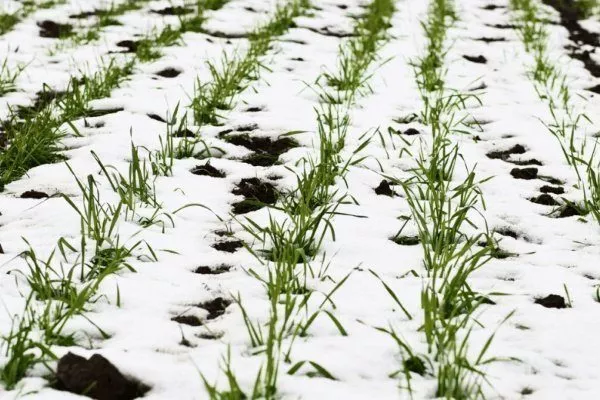
The quality of rooting and hardening of plants depends on the correct timing. In the northern regions of Russia, last year's seeds are used for sowing. If fresher seeds are used, they are kept in the sun for 3-4 days to warm up. Alternatively, they are treated with air heated to 45-50°C.
Approximate sowing dates:
- Non-Black Earth Region – from August 20 to September 5.
- Siberia – from the beginning of August to September 15.
- Central Black Earth Region – from August 25 to September 15.
- Southern regions – from September 25 to October 10.
Seeding rates depend on regional soil and climate characteristics, million pieces per 1 ha:
- Volga region – 4.6;
- Non-chernozem zone – 6.7;
- Urals and Siberia – 6.6.
Crop rotation
Predecessors of winter rye are selected in such a way as to create favorable conditions at the time of sowing rye:
- optimal soil structure;
- absence of weeds;
- absence of soil pests;
- optimal soil moisture and nutrition.
Predecessors are selected based on climate conditions and soil characteristics. The best predecessors for specific regions of Russia are listed in Table 1.
Table 1
| Region | The best predecessors |
| Non-Black Earth Region |
|
| Pre-Urals, North-Eastern regions | clean, well-fertilized fallow land |
| Central Black Earth Zone |
|
| Volga region (forest-steppe zone) |
|
| Volga region (steppe zone), Siberia | pure pairs |
Rye is an excellent predecessor crop, producing high yields in the same location for two years in a row. However, if rye is grown in the same location for a long time, yields begin to decline.
Landing
Sowing is carried out using one of the following methods:
- private;
- narrow-row;
- diagonally cross.
Leave approximately 7.5 cm between rows. Many farms use cross-seeding, which allows for more even plant spacing and suppresses weeds. Using narrow-row and cross-seeding, the seeding rate increases by 8-10%.
Sowing technologies are aimed at creating optimal stem density and grain-to-area ratios. Table 2 shows winter rye yield structure indicators that enable high yields.
Table 2
| Parameters | Winter rye |
| Seeding rate, pcs/sq.m | 400-500 |
| Plant density, pcs/sq.m | 320-360 |
| Number of stems before winter on one plant | 3-4 |
| Number of stems in autumn and spring per 1 sq.m. | 900-1200 |
| Number of productive stems before harvesting, pcs/sq.m | 550-600 |
| Number of grains per ear, pcs. | 25-30 |
| Weight of grains per ear, g | 0.8-0.9 |
| Weight of 1000 grains, g | 30-35 |
| Grain harvest, g/m2 | 350-500 |
To sow a field of 1 hectare, 3 to 6 million seeds are needed. The seeds are planted at a depth of 2 to 5 cm, determined by the climate and soil moisture.
- ✓ Optimal seeding depth depending on soil type: heavy – 2-3 cm, medium – 3-4 cm, light – 4-5 cm.
- ✓ The need to roll the soil after sowing to improve seed-soil contact, especially in conditions of insufficient moisture.
The seed planting depth is determined by their size and sowing conditions (temperature, humidity, etc.). Planting seeds deeper than 5 cm reduces germination and yield. Recommended seeding depth for normal soil moisture:
- heavy soil – 2-3 cm;
- average – 3-4 cm;
- lungs – 4-5 cm.
The spacing between the beds depends on the sowing method and is:
- ordinary type – 13-15 cm;
- narrow-row type – 7-9 cm.
When using wide-row and strip seeding, 45-90 cm are left between the rows to allow for cultivator passage. Cross-seeding uses row or narrow-row seeders that run lengthwise and crosswise across the field. For elongated fields, cross-diagonal seeding is typically used. If the field has been grown to rye for many years, wide-row seeding is more often used.
Care and cultivation
To ensure a high yield of winter rye, it requires year-round care:
- Autumn. The goal is to obtain strong, hardened, well-rooted, and bushy seedlings. The work involved:
- Rolling. Used to enhance seed-to-soil contact. This is especially helpful in areas with insufficient moisture. However, in heavy, wet soils, compaction is not required.
- Fertilization. Phosphorus and potassium fertilizers are applied to help the plants survive the winter. Nitrogen fertilizers are applied sparingly.
- Winter. The objective is to prevent crops from freezing. Work:
- Snow cover retention (snow retention)This technique prevents damage/death of plants and also helps the soil retain moisture.
- Growing samplesMeasures for the winter and spring periods are being developed and implemented.
- Spring. Preventing plant damage and death:
- Draining water. Stagnant water for 10 days completely destroys crops.
- Meltwater retention. This measure is used in southern regions, where moisture deficits occur as early as mid-spring. Snow banks are formed to retain moisture.
- Delayed snow melting. Prevents early growth of rye with the risk of death from spring frosts.
- Spring harrowing. Allows you to retain moisture in the soil, remove mold and dead debris.
- Summer. The goal is to eliminate pests and prevent diseases. Insecticides and preventatives against root rot are used. Anti-lodging agents that thicken stem walls and increase their strength are also used.
The use of snow retention increases the yield by 4 c/ha or more.
Fertilizing and soil cultivation
Two types of fertilizers are used to feed rye: mineral and organic. The latter includes manure, as well as a manure-peat compost mixture enriched with phosphate rock. Lupine is often ploughed in along with phosphate-potassium fertilizer on low-fertility soils.
Phosphorus-potassium fertilizers are applied during plowing, nitrogen fertilizers are applied twice:
- When leaves, nodes and internodes are formed – 30-65 kg/ha.
- When spikelet tubercles are formed – 30 kg/ha.
If you feed the crops on time, the increase in yield will be:
- forest and sod-podzolic soils – up to 8 c/ha;
- sandy loam and sandy soils – up to 12 c/ha.
| Soil type | Recommended fertilizer | Expected yield increase, c/ha |
|---|---|---|
| Forest and sod-podzolic | Phosphorus-potassium | up to 8 |
| Sandy loam and sandy | Phosphorus-potassium | up to 12 |
Table 3 shows approximate doses of fertilizers for winter rye.
Table 3
| Expected yield, t/ha | Nitrogen, kg/ha | phosphorus fertilizers, kg/ha | potash fertilizers, kg/ha | ||||||
| phosphorus oxide content, mg/kg | potassium oxide content, mg/kg | ||||||||
| up to 100 | 100-150 | 150-200 | 200-250 | up to 80 | 80-140 | 140-200 | 200-250 | ||
| 2-3 | 40-60 | 50-60 | 40-50 | 30-40 | 15-20 | 60-80 | 40-60 | 30-40 | — |
| 3-4 | 60-80 | 70-80 | 60-70 | 50-60 | 20-30 | 80-100 | 60-80 | 50-70 | 30-40 |
| 4-5 | 80-90 | 80-100 | 80-90 | 60-80 | 30-40 | 100-120 | 80-100 | 70-80 | 40-50 |
| 5-6 | 90-120 | 100-120 | 90-100 | 80-90 | 40-50 | 120-140 | 100-120 | 80-90 | 50-70 |
Crops are treated depending on their condition—if necessary, pesticides and disease control agents are used. Crops are also sprayed with Campazon, an anti-lodging agent. This product can be mixed with herbicides.
Diseases, pests and prevention
Diseases can significantly reduce rye yields or even destroy crops entirely. The most common diseases are:
- Stem smut. This is accompanied by the appearance of gray stripes on the leaves, which then germinate into black spores. Yields drop by 5-6 times.
- Fusarium root rot. It is accompanied by stem destruction. The ears of corn produced contain underdeveloped grain.
- Powdery mildew. The plants are affected by a bloom that destroys the leaves.
- Black and brown bacteriosis. Flowering organs and grains die.
Following crop rotation rules helps prevent diseases:
- processing of seed material;
- use of zoned and disease-resistant varieties;
- using only healthy seeds;
- compliance with the rules for storing seed grain;
- proper preparation of soil for sowing;
- rapid detection of disease foci and their prompt elimination using special drugs.
Along with diseases, insects and rodents also cause crop damage. Common winter rye pests include:
- grain beetle;
- aphid;
- turtle bug.
Pest control involves treating crops with insecticides such as Force, Shaman, etc.
It is prohibited to sow seeds harvested from fields where stem smut has been observed.
To prevent infestation of fields with weeds and insect pests, the following agricultural practices are used:
- rotation of grain crops in one field;
- seed treatment;
- presence of clean vapors;
- use of appropriate chemicals;
- compliance with sowing dates.
To prevent rodent infestations, such as mice and gophers, the field should be clear of grain. The goal is to harvest without losses. After harvesting, the following tasks are performed:
- they peel and plow the stubble;
- They arrange bait from grains soaked in poison.
Ground squirrels can cause significant damage to crops; to prevent their reproduction, unfavorable conditions are created – their habitats are plowed up and treated bait is laid out.
Rye harvesting
Harvesting is the final stage of growing any grain crop. Rye is harvested with combines when the grain moisture content is no more than 20%. This type of harvesting is carried out in a single phase. If the grain moisture content is 30-40%, a two-phase harvesting process is required:
- mowing ears of corn and laying them on stubble in swaths;
- After the grain has dried, which lasts for several days, the threshing and windrowing takes place.
The maximum yield occurs at the end of the waxy ripeness period, when the grain stops absorbing dry matter. To prevent grain shattering, harvesting is recommended to begin around the middle of the waxy ripeness period.
If rye is overripe, it can become infected with fusarium wilt. This is especially true during rainy weather. The optimal planting density is 300 stems per square meter. The optimal windrow thickness depends on the moisture content:
- high humidity – 15-18 cm;
- normal – 18-22;
- low – up to 25 cm.
If the weather is dry, then in the Non-Black Earth Region, the Urals and Siberia, the grain ripens in windrows in 3-4 days, in the Black Earth Region and the Volga region – 2-3 days.
When gathering windrows, combine harvesters and headers move in the same direction. The grain is fed with the heads forward to ensure uniform feeding.
Planting rye to improve the soil
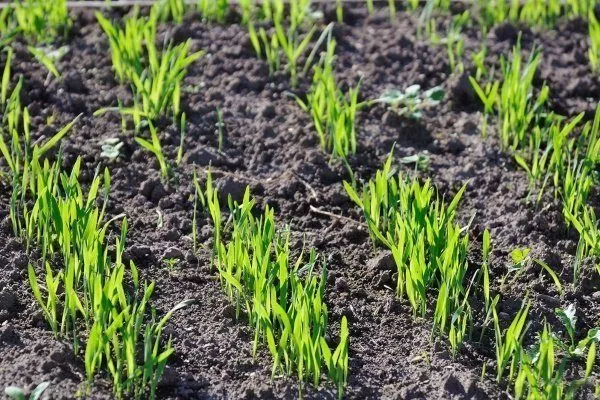
A distinctive feature of rye is its ability to accumulate abundant green mass throughout the autumn and winter. This crop not only produces grain—baking and feed—but also improves soil health.
Practical benefits of sowing rye:
- Retaining snow in fields improves soil moisture saturation;
- preventing soil freezing – this allows you to plant vegetables and root crops as early as possible;
- saturation of soil with phosphorus and nitrogen;
- preventing the proliferation of harmful microorganisms and repelling insects – wireworms and nematodes;
- destruction of hard-to-remove weeds – couch grass, sow thistle, bindweed;
- protection from water and wind erosion.
Planting winter rye as green manure
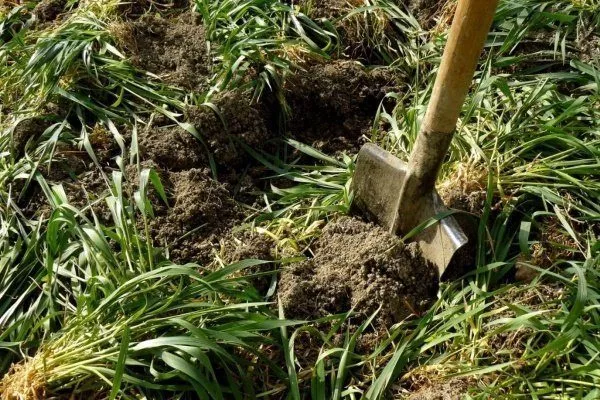
Green manure is a plant that enriches the soil, improves its structure, and inhibits weed growth. After growing winter rye as green manure, the soil is recommended for planting potatoes, zucchini, tomatoes, cucumbers, or pumpkins.
Small-grained varieties are typically used for green manure, as they yield fewer seeds. When planting rye, a solid seeding method is used. Row spacing is 15 cm. The seeding rate is 2 kg of seed grain per 100 square meters. The seeding depth is 3-5 cm, depending on the looseness of the soil.
Last year's harvest is used for sowing. Fresh seeds may not germinate. The sown seeds are covered with soil—a thin layer is sufficient. The seeds will germinate, and the green rye will overwinter under the snow. After the snow melts, the greenery grows vigorously, and within a short time, the field is covered with a thick green "blanket"—protective and enriching. One hundred square meters can yield up to 300 kg of green mass.
Timing of planting winter rye for green manure
The effectiveness of rye as a green manure depends on the sowing time. Young rye enriches the soil with nitrogen, while mature rye enriches it with organic compounds. Rye is sown according to the climate—from late August to mid-September, after the vegetable harvest. For germination, temperatures of 1-2°C are sufficient. In winter, the grain survives in temperatures down to -20°C.
When using rye as a green manure, be aware of its drawbacks. It actively dries out the soil, meaning subsequent crops will receive little moisture and will require irrigation. For this reason, rye is not grown near vegetables and fruit trees.
Interesting facts
Facts about rye you might not know:
- Rye grains are widely used for weight loss. They are rich in fiber, which promotes rapid satiety and satiety.
- Consuming rye products reduces the risk of gallstones by 13%. Rye promotes food movement through the gastrointestinal tract and reduces stomach acidity.
- Rye is an important source of magnesium. This element is essential for the production of over 300 enzymes, including insulin. Rye fiber reduces insulin requirements, which is why diabetics are advised to eat brown bread.
- Rye bread removes toxins from the body, reduces cholesterol levels, and prevents tumors and breast cancer.
Rye is a valuable food crop capable of producing yields in the most adverse climatic conditions. This cereal not only serves as raw material for the baking industry but is also an excellent green manure crop, allowing for increased yields of vegetables and root crops.