
Properly cultivating and sowing rye isn't the easiest task. Years of experience and experimentation will help. However, following the recommendations can yield good results from the very beginning.
Pre-sowing soil cultivation
In spring, during dry and windy weather, each hectare of soil can lose up to 60 tons of life-giving moisture. To prevent this, after the snow melts and the soil has dried slightly, use mesh or tine harrows in the field.
- ✓ Consider the soil type: for heavy clay soils, tooth harrows are preferable, for light sandy soils, mesh harrows.
- ✓ Pay attention to soil moisture: mesh harrows are less effective on waterlogged soils.
Net harrows:
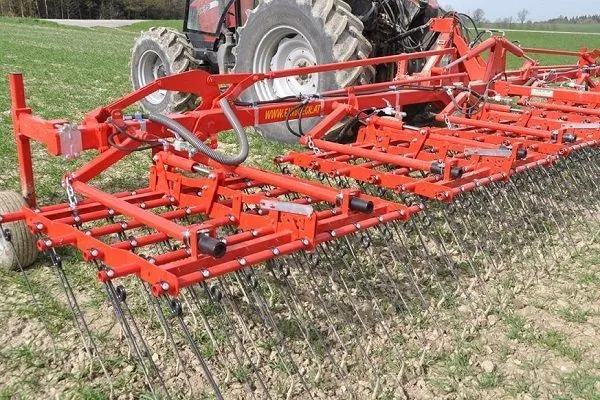
Tooth harrows:
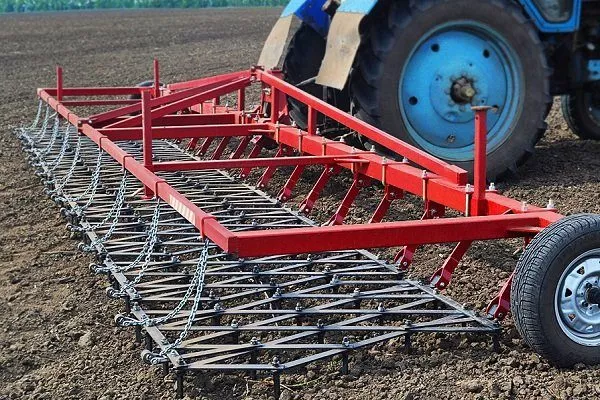
The first tillage is carried out across the ploughed area. A second pass across the first will level and loosen the soil well.
Harrowing and rainy weather promote rapid germination of weeds.
The signal to begin cultivation is the appearance of small weed shoots in the field. The typical first stage depth in grain-growing areas is 10 to 16 cm.
The second stage of cultivation occurs simultaneously with the introduction of seeding equipment into the field. The soil for seeding should be firm at the bottom and loose at the top – this will create the most favorable conditions for crop germination.
Before beginning cultivation, adjust the unit to the exact seed placement depth. Make a test run to ensure the cultivator's working elements are adjusted correctly.
Video on pre-sowing field treatment:
Preparing the soil for winter crops
Late-sown crops are called winter crops. The planting period ranges from the last days of summer to early fall. Fields intended for these crops are not seeded, but merely cultivated, meaning they are left fallow.
The method of soil cultivation is selected based on what plants previously grew in the field, according to fallow/non-fallow predecessors.
The advantage of steam cultivation is that it can meet the soil's basic needs. Objectives:
- prevent moisture from disappearing from the soil;
- rid the field of weeds and pathogens;
- accumulate nitrates for plants.
During steam treatment, organic and mineral fertilizers are used to increase yields.
Clean fallows for winter crops are used in areas with insufficient soil moisture – areas of the Central Belt, the North Caucasus and the Volga region.
Black fallow cultivation begins in the fall, after the harvest of the previously grown crop. Its main goal is to deplete weed roots.
Processing sequence:
- Peeling.It is carried out when the field is clogged with weeds and their rhizomes.
- Plowing.2-3 weeks after peeling, depending on the germination time of the weeds, plowing is carried out to a depth of up to 30 cm.
If the previous fallow crop significantly contaminated the soil with wild oats:
- Do not remove fallen grains from the arable layer; encourage them to germinate.
- Carry out disc cultivation along and across the field to a depth of 6 to 8 cm.
- After the weeds have sprouted, loosen the soil with a flat cutter to a sufficient depth.
If the problem of the field being filled with weeds is not too acute, cultivating with a flat cutter to a depth of 14 to 16 cm will be sufficient.
If the winter crop's predecessors are harvested late, stubble cultivation can be avoided, as weather conditions prevent weeds from sprouting, eliminating the need to clear the field.
Fertilizing before sowing
The yield of winter crops is directly dependent on the vitamin and mineral content of the soil in which they grow. Agronomists' experience shows that untouched soil is extremely deficient in the natural elements necessary for the nutrition of cereals. Fertilization is essential.
- ✓ Consider the soil pH: nitrogen fertilizers can acidify the soil, which requires additional liming.
- ✓ Pay attention to previous crops: after legumes, you can reduce the amount of nitrogen fertilizers.
Fertilizer table for cereal crops (per 10 c/ha):
| Type of fertilizer | Amount of fertilizer, kg |
| Nitrogen | 25-35 |
| Phosphorus | 11-13 |
| Potassium | 20-27 |
| Calcium | 5 |
| Magnesium | 4 |
| Sulfur | 3.5 |
| Bor | 0.005 |
| Copper | 0.0085 |
| Iron | 0.27 |
| Manganese | 0.082 |
| Zinc | 0.06 |
| Molybdenum | 0.0007 |
Winter crops, along with their harvest, remove a significant portion of minerals from the soil. The higher the yield and the initial amount of fertilizer, the poorer the soil will be after harvest.
Limiting factor and fertilizer ratio
Nutrient deficiencies, as well as excesses, are limiting factors for plant development, hindering crop growth. It's important to note that not only the amount of fertilizer applied is important, but also their ratio, particularly nitrogen, phosphorus, and potassium.
The optimal ratio to adhere to is 1.5:1:1-2.
Timing and methods of applying fertilizers
| Type of fertilizer | Method of application | Deadlines for contributions |
| Potassium | For plowing | It is applied in the fall during the primary soil cultivation period, during plowing. |
| Phosphorus | For plowing | In autumn, during the period of primary soil cultivation, during plowing. |
| Minerals | In rows when sowing | In autumn, during the period of primary soil cultivation and during the growing season. |
| Organic | For plowing | For primary cultivation of black fallow or in spring, during plowing. |
Applying fertilizers before plowing is the best way to enrich the soil at the root system level of plants and increase winter hardiness.
Timing of winter crop fertilization:
Nitrogen fertilizers
Nitrogen nutrition is crucial for plants, as is its balance. Each period—the first (regenerative or early spring), the second (productive, marked by the emergence of stem elongation), and the third (quality, marked by the onset of earing and ending with grain filling)—should be considered separately.
The recommended nitrogen rate for forming a grain yield of 10 c/ha is 28-37 kg.
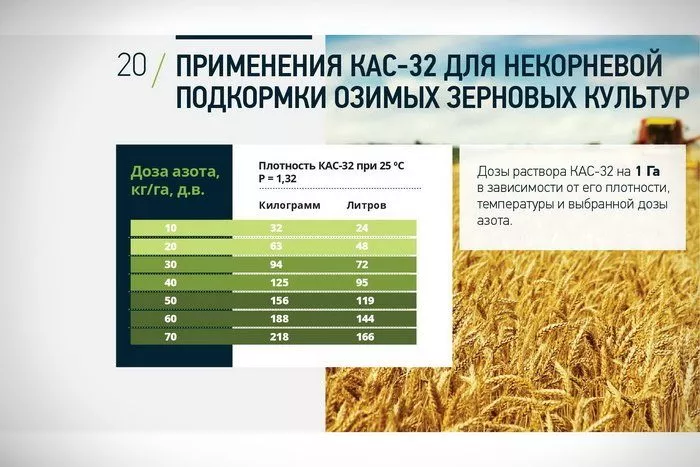
To avoid the occurrence of a limiting factor, follow the recommendations.
For the first (early spring) plant feeding:
- During the plant's growing season, avoid excess nitrogen. Maintain a ratio of 2.8-3.7 kg of fertilizer per 1 centner per hectare.
- Apply nitrogen during the flowering period – this will improve grain quality and crop growth.
- Use slow-release nitrogen fertilizers.
- Spread out the amount of fertilizer applied. Most of it should be applied in the spring and summer.
- Monitor nitrogen dosage. For the first feeding, apply up to 30 percent of the full dose to well-developed plants.
- Late spring is a good time to increase the amount of nitrogen in the soil.
- Apply nitrogen to frozen soil to increase the effectiveness of the fertilizer.
Second feeding period:
- Add herbicides to the fertilizer to prevent weeds from taking up nitrogen.
- Don't skimp on fertilizers: 50-60% of the total amount is applied during the plant growth period.
Third (high-quality) feeding:
- Apply the remaining fertilizer. This will stimulate photosynthesis, improve seed quality, and increase yield.
Pre-sowing soil cultivation techniques
Let's look at the basic techniques of land cultivation.
Peeling
Stubble cultivation begins simultaneously with or immediately after grain harvesting. This is the very first agricultural technique used to prepare the land for the upcoming harvest.
Peeling is the process of loosening and mixing the top layer of soil to a depth of five to fifteen centimeters.
The main purpose of stubble cultivation is to eliminate pests and create conditions for rapid germination of weed seeds. Stubble cultivation also prevents excessive moisture evaporation from the lower soil layers.
A video demonstrating the peeling process:
Plowing
Plowing is the primary method of mechanically cultivating soil using moldboard plows. The process involves turning, crumbling, mixing, and incorporating fertilizer into the soil.
Plowing is carried out after stubble cultivation to move slightly germinated weed seeds into the deeper layers of the soil and prevent their germination.
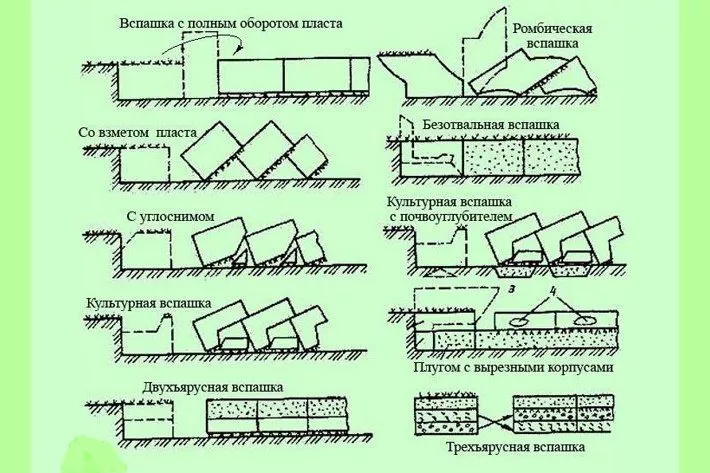
Main types of plowing:
- With a full turnover of the layer. The goal is to remove the grass cover by turning the soil layer downwards, that is, 180°. This type of plowing is used in the development and cultivation of virgin lands.
- The rise of the layer.It is used to increase the surface of arable land and enhance the effect of oxygen and light on it, as well as to warm the soil.
- Cultural plowing.Designed for deep soil cultivation of agricultural crops such as sugar beet and cotton.
- No-till plowing. A type of deep loosening performed by plow bodies without moldboards. The main purpose of plowing is to improve soil permeability in areas prone to erosion.
- Three-tier plowing. It is used to replace soil layers, mainly on solonetzic soils.
Visual illustrations of types of plowing:
Key features of plowing and operating instructions for the equipment:
Cultivation
Another important technique of surface soil cultivation is cultivation.
Cultivators trim weeds and loosen the soil, improving air circulation and stimulating microbial activity. They can perform continuous or inter-row tillage.
For details and operating instructions for the cultivator, watch the video:
Harrowing and rolling
In the spring, before sowing, it's crucial to prevent soil moisture from evaporating. This can be achieved by harrowing. The first implement to be used on the soil is a harrow. Its tines loosen the soil and its steel squares break up clods of soil.
Harrows break up the soil crust, comb out weed rhizomes, and incorporate seeds and mineral fertilizers into the soil.
Rollers are used simultaneously with harrows. These machines break up clumps of soil and compact the field. The ring-and-spur roller reduces moisture evaporation and loosens the topsoil after the harrow passes through the field.
A visual representation of the harrowing and rolling process:
Soil cultivation equipment
These days, the primary goal of all equipment is to be multifunctional, that is, to combine the functions of two or three different types of equipment in a single unit. Using separate units for each type of processing is time-consuming and inefficient.
An example of multifunctional equipment is the modern APPA-6-02 – a soil cultivation and seeding unit. Its functions:
- pre-sowing soil cultivation;
- application of mineral fertilizers into rows.
The main advantage of this unit is that it can simultaneously loosen, crumble, level and compact the seedbed, sow seeds and incorporate fertilizers to a specified depth.
The folding disc harrow (SKAD) allows for cultivation in all climate zones, soil types, and crops. The SKAD is also used for stubble cultivation, improving meadows, pastures, and lands susceptible to weathering and erosion.
In a single pass, the unit crushes and incorporates previous crop residues and weeds into the soil, creates a loosened and leveled soil layer, and incorporates applied fertilizers. One pass is equivalent to three passes of a traditional disc harrow.
Using a SKAD for soil cultivation increases its fertility, restores the natural humus layer while significantly reducing the costs of cultivating agricultural crops.
It's sowing time
Sowing is the most critical process in growing any crop. Only crops sown at the optimal time will yield the greatest harvest. The optimal time for sowing grain crops is when the soil at a depth of 10 cm warms to 10-12°C.
Seeding rates for winter and spring crops vary. Despite this, there are standard recommendations used by agronomists. These recommendations are based on two factors: precipitation levels in the soil and climate zone and the nutritional status of the crop.
Soil nutrition is considered in terms of fallow or non-fallow crop predecessors, so a range of values appears.
| Growing zone | Precipitation level, mm | Nutrition level, million |
| Northern forest-steppe | 5.5 | 5.0-6.0 |
| Southern forest-steppe | 4.5 | 4.0-5.0 |
| Steppe | 3.5 | 3.0-4.0 |
The optimal distance between seeds in a row ranges from 1 to 1.4 cm. In terms of seeds, this parameter translates to 100 to 70 seeds. Proper planting reduces competition between plants and weeds, increasing yield.
Seeding rate standards:
Crop rotation
Crop rotation is the alternation of agricultural crops and clean fallows over a period of time (from two to twelve years).
It solves the following problems:
- Nutrition.Different types of cereals require different amounts and types of fertilizers, so the soil's resources are not completely depleted.
- Weed control.Crop rotation tillage significantly reduces the number of weeds in the field.
- Exclusion of the pathogenic factor.Most pathogens accumulate on the plant residues of the predecessor and do not harm the next crop.
- Pest control.Spatial isolation of fields during crop rotation helps in the fight against mobile pests.
An effective crop rotation scheme across fields
| Time | Field 1 | Field 2 | Field 3 | Field 4 |
| 1 year | Winter wheat | Barley | Potato | Vetch and oat mixture |
| 2 years | Potato | Vetch and oat mixture | Barley | Winter wheat |
| 3rd year | Barley | Winter wheat | Vetch and oat mixture | Potato |
| 4th year | Vetch and oat mixture | Potato | Winter wheat | Barley |
Comparison of crop rotation with monoculture:
Timing and weather conditions for sowing rye
Timing, weather conditions and proper sowing depth are the key to an excellent harvest.
Timing of sowing winter rye
It is important to calculate the optimal time, since late sowing can expose the immature rye ears to the cold, while early sowing will lead to excessive growth of the crop.
Winter rye sowing table by region:
| District | Sowing dates |
| Southern regions | September 25 – October 10 |
| Central Black Earth | August 15 – September 1 |
| Non-chernozem | August 5-25 |
Sowing depth
There are two factors that influence seeding depth: soil condition and seed size.
When planting winter rye, the following rules should be followed:
- Place the seeds to a depth of 4-5 cm.
- Pay attention to the size of the seeds. The smaller the seed, the shallower the depth.
On heavy and wet soils, bury the seeds at a depth of 3-4 cm, on dry and loose soils at a depth of 5-6 cm.
Timing of spring rye sowing
The sowing time for spring rye varies depending on the climate zone and the early maturity of the seeds:
| Climate zone | Sowing dates |
| Forest-steppe | since May 14 |
| Steppe | from May 21 |
| Taiga | May 1-20 |
| Tundra | May 10-20 |
Mid-season rye is sown from May 5 to 15, early ripening rye is sown with a 10-day interval, that is, from May 15 to 25.
There are three ways to sow rye:
- Private. Characterized by uniform distribution of seeds.
- Narrow-row. The number of seeds increases by 10-15% compared to the row method.
- Cross.The number of seeds corresponds to narrow-row sowing.
Tilling the soil and sowing rye is a challenging task, especially if you're inexperienced. The key is to stay focused and follow the recommendations. Then everything will work out: the rye will sprout, and the harvest will only increase year after year.