
The benefits and harms of rye have been known for centuries. The impact of this grain crop on everyday life has even been reflected in the works of famous artists ("Rye Harvesting," by K. Malevich). Modern harvesting technologies significantly improve the efficiency of crop cultivation, but choosing the right harvesting time remains crucial.
How to determine the maturity of rye?
In grain growing, there are three stages of maturity. They differ in the ratio of starch, water, and protein in the grain.
These stages are as follows:
- dairy;
- wax;
- full.
The start date of harvesting depends not only on actual ripeness, but also on the grain filling process, ripening rate, weather, and harvesting method.
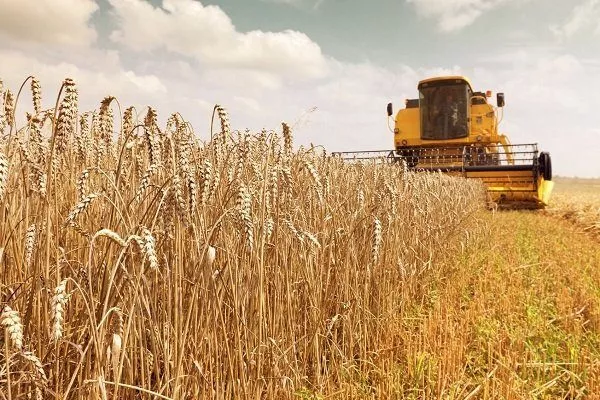
If the weather during grain formation is sunny and moderately humid, ripening will take longer than during lodging, dry, or wet weather. The time it takes for rye to ear is also directly dependent on weather conditions: in dry weather, this process takes longer.
To determine the stage of maturity, the weight gain of 1,000 grains and their moisture content are determined. This is done using a rapid method involving the artificial dye eosin. The process is as follows:
- The analysis begins with the preparation of a 1% solution of 250-300 ml of water and 2.5-3 g of dye.
- Then 20-30 whole plants with roots are collected.
- Sheaves are assembled and marked with mandatory signs: field area, variety, predecessor crop, harvest date.
- In the laboratory, an ear of grain with a stalk approximately 20 cm long is cut and immersed in a pre-prepared solution for 2-3 hours. If the dry matter continues to move within the grain, the ear scales will become colored. If more than 15 out of 100 ears change color, harvesting can begin.
Repeat the process described each day to determine the best date to begin work.
Winter rye ripens earlier, so samples are collected from winter fields. Spring varieties are tested only after the first ones have been harvested.
Harvest timing
During the early stages of waxy ripeness, yield will decline because grain mass has not yet reached its maximum. Harvesting during this period will overload the dryer due to the large amount of wet grain and may also lead to equipment failure or breakdown.
At later stages of ripening, the grain in the windrow becomes overstressed and crumbles. This will significantly reduce yield by 20-30%. Harvesting in wet weather will increase the risk of fusarium wilt.
The best time for harvesting is the mid- to late waxy stage, which typically lasts 2-4 days. From the end of this stage to full maturity, it takes an average of about 5 days. For this reason, harvesting in the field begins when the grain reaches the waxy stage. Most of the work here occurs at the end of this stage.
For spring varieties
Spring varieties are planted in the spring. This is most often done in early May or late April if the soil is already warm. Early sowing is only suitable for late-ripening varieties.
Other facts:
- the growing season of rye is 70-100 days;
- harvested in the second half of July and August;
- Under favorable conditions, rye begins to sprout after three weeks of germination, and after 45-50 days, ears begin to grow.
Flowering usually begins 10-12 days after the ears begin to grow. Its timing depends on temperature and humidity, and it lasts from 5 to 11 days. Milky ripening occurs two weeks after flowering ends and lasts about 10 days. The grains will ripen 50-60 days after planting.
For winter varieties
Of the 90 rye varieties found in Russia, more than half are winter crops. This is due to the fact that winter crops varieties have higher yields, tolerate frost well and can even be grown in northern regions.
Winter rye is planted earlier than wheat, as the tillering phase begins earlier in the season. Sowing times vary by region and are as follows:
- southern region – from the last week of September to mid-October;
- for non-black earth “lands” – in the second week of August;
- in southeastern Siberia – from August 10-14;
- for the rest of Siberia it is August and September.
The growing season also varies by region and ranges from 265 to 365 days. Dense winter growth allows rye to survive the winter more easily and begin growing faster in the spring. The plant begins to ear in the second or third week of June and flowers 6-11 days later. Rye is usually ready for harvest in the first ten days of August.
Harvesting technology
There are two main methods of harvesting grain. Namely:
- separate cleaning;
- direct combined cleaning.
- ✓ Consider the grain moisture level: for direct combined harvesting, the moisture content should be 10-16%.
- ✓ Assess the condition of the field: the presence of weeds and lodging of stems influence the choice of method.
With the combined method, rye is harvested when fully ripe and has a moisture content of 10-16%. After harvesting, the grain is immediately threshed, and the remaining straw is stacked into stacks.
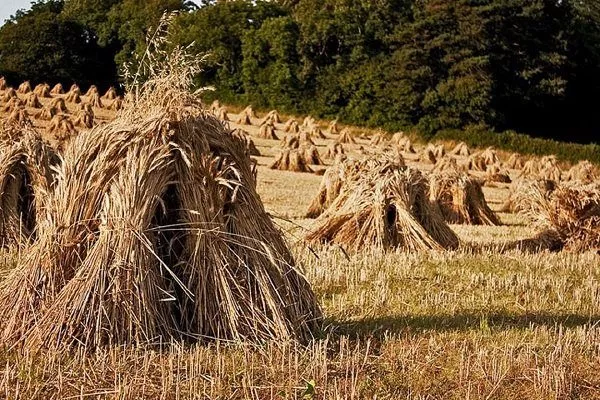
From a cost-effectiveness standpoint, split-harvesting is preferred. Using the split-harvest method, the ears are cut and placed into windrows in the field. After a few days, when these windrows have dried, they are collected by a combine harvester using a pickup and threshed.
Due to separate cleaning:
- harvest time is reduced;
- grain losses become less.
If May and June are dry and then the heavy rains begin, grain is also harvested using the split method. Dry weather causes grain to grow poorly, and future precipitation leads to active weed growth.
Assembly nuances under different conditions:
- In rainy weather. A single-stage method is recommended because the windrows don't have time to dry, and the grains are damaged. If it rains while the windrows are being formed, they are moved at an angle of 10-30°. This allows water to drain and minimizes crop losses.
- In arid areas. The grain and straw are harvested completely. The stacker is removed from the combine harvester and a special chopper is installed. The processed straw is loaded onto a trailer for transport and stacking.
- If there are a lot of weeds in the field. If high humidity and severe stalk lodging occur, combine combing is used. The grain stalk is captured by the comb and pulled out of the gap between the teeth. The grain is separated and, driven by the airflow, is transported to the conveyor, and from there to the threshing machine.
- In areas with a short ripening period. Agricultural techniques such as standing drying are used. The grain is then harvested using direct combining.
Fields where seeds are grown for sowing are usually harvested separately. Leaving the seeds in the ears can improve grain quality, increase its nutritional value, and strengthen the sprouts.
Tips for storing grain
For further processing and storage, rye must meet certain GOST criteria. This standard regulates the following parameters:
- humidity;
- content of grain and weed impurities.
To ensure a batch of grain meets the required criteria, large impurities are removed from the seeds using a sieve. They are then sent to a separator, after which the grain is dried in a grain dryer. The maximum primary drying temperature is 160°C, while secondary drying temperatures are 130°C and 160°C. The moisture content requirement depends on the subsequent use of the grain:
- in processing the permissible indicator is from 14.5 to 15.5%;
- in short-term storage it is 14-15%;
- for long-term storage it should be no less than 13 and no more than 14%.
- Check the moisture content of the grain before drying.
- Set the grain dryer to the required temperature: primary drying – 160 °C, secondary – 130-160 °C.
- Monitor the drying process to prevent overheating.
The harvested and dried grain is sent to the grain storage facility. The storage facility for the grain must meet several criteria:
- the room must be dry and well ventilated;
- there must be enough space to store a large amount of rye;
- Before loading into the compartment, the rye is processed, for this the floor is sprayed with a soda solution, and the walls are also washed with a mixture of lime and kerosene;
- It is necessary to maintain the humidity level in the room - if the winter is cold, additional heating of the grain storage facility must be provided.
Harvesting practices are aimed at reducing grain loss, preventing fungal and mold infestations, and improving seed quality. Depending on climate conditions and variety, rye is harvested in mid-ripeness or at the end of waxy maturity. Harvesting should be done at high speed to prevent ear shattering.
The method of harvesting grain in the field also depends on weather conditions and the intended use of the grain: the seed is usually harvested using the split method, using direct combining during short-term heat waves. Before being transported to storage, the rye is cleaned of debris and treated with a specialized solution.
Rye harvesting timing depends on the specific variety and weather conditions. For example, the growing season for spring rye is 70 to 100 days, while winter rye lasts 265 to 365 days. Agronomists use waxy maturity as a key factor in determining harvest timing.