
Throughout its centuries-long history, rye has always been one of the most valuable grain crops, not only in Russia but worldwide. Its primary use is in the production of rye flour. Dietary black bread is in high demand among those pursuing a healthy lifestyle.
From the history of the use of rye
Many centuries ago, rye wasn't used as a grain. It was controlled in fields and plots sown with crops like wheat and barley. Rye was considered a noxious weed.
Over time, farmers in the northern regions noticed the plant's frost resistance. Thus, they began introducing rye into their crops.
Rye has always been the mainstay of the Russian Empire's grain exports. Its decline began in the 20th century. This was influenced by the development of domestic breeding. Frost-resistant wheat varieties began to be developed. At the same time, grain trade with other countries increased.
Description of rye
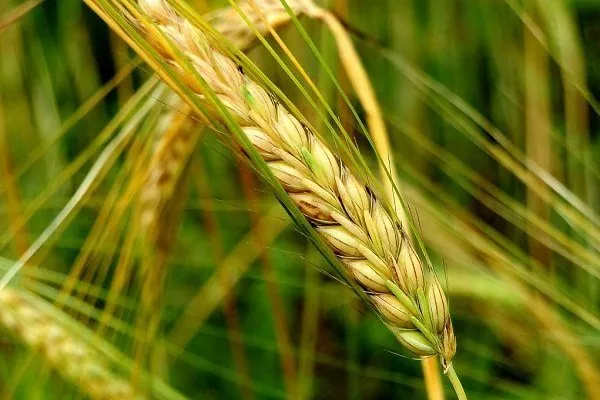
When mature, the grain is very tall, reaching up to two meters in favorable conditions. The stem bears long, narrow leaves. At the top of the stem is an ear. When ripe, the ear fills with yellow grains. The stem then dries.
The crop is undemanding to soil conditions. Moreover, rye itself is a natural fertilizer—a green manure.
The cereal's easy tolerance to soil frosts made it possible to cultivate this crop in cold regions.
The photo shows ears of rye:
Chemical composition, nutritional value, and caloric content of rye
The vitamin and mineral composition of the grain and its nutritional value allow us to more broadly appreciate the advantages and benefits of rye.
Vitamin content per 100 grams:
| Vitamins | Chemical name | Indicators |
| A | retinol equivalent | 3 mcg |
| B1 | thiamine | 0.44 mg |
| B2 | riboflavin | 0.2 mg |
| WITH | ascorbic acid | 0 mg |
| E | tocopherol | 2.8 mg |
| B3 | niacin | 3.5 mg |
| B5 | pantothenic acid | 1 mg |
| B6 | pyridoxine | 0.41 mg |
| B9 | folic acid | 55 mcg |
| N | biotin | 6 mcg |
Mineral content per 100 grams:
| Minerals | Indicators |
| Potassium | 424 mg |
| Calcium | 59 mg |
| Magnesium | 120 mg |
| Phosphorus | 366 mg |
| Sodium | 4 mg |
| Iron | 5.4 mg |
| Iodine | 9 mcg |
| Zinc | 2 mg |
| Selenium | 25.8 mcg |
| Copper | 460 mcg |
| Sulfur | 85 mg |
| Fluorine | 67 mcg |
| Chromium | 7.2 mcg |
| Silicon | 85 mg |
| Manganese | 2.77 mg |
For comparison, the chemical composition of some other grain crops is presented below. Rye is in no way inferior to its "relatives," and in some respects, even superior.
The table shows the chemical composition of cereal crops (%):
| Cultures | Water | Squirrels | Fats | Carbohydrates | Ash | Starch | Fiber |
| Durum wheat | 14.0 | 13.0 | 2.5 | 0.8 | 54.5 | 1.7 | 301 |
| Rye | 14.0 | 9.9 | 2.5 | 1.5 | 54 | 1.7 | 287 |
| Oats | 13.5 | 10.0 | 6.2 | 1.1 | 36.5 | 3.2 | 250 |
| Barley | 14.0 | 10.3 | 2.4 | 1.3 | 48.1 | 2.4 | 264 |
| Millet | 13.5 | 11.2 | 3.9 | 1.9 | 54.7 | 2.9 | 311 |
In addition to these properties, rye is rich in glucose, fructose, and sucrose. Unlike other grains, it also contains high amounts of micronutrients such as phosphorus, magnesium, zinc, and iron. 100 grams of rye contains 283 kcal.
Types of rye
| Name | Frost resistance | Yield (c/ha) | Disease resistance |
|---|---|---|---|
| I - winter northern | High | 40-50 | Resistant to brown rust |
| II - winter southern | Average | 35-45 | Moderately resistant to brown rust |
| III - spring | Low | 30-40 | Susceptible to brown rust |
Rye is divided into types based on growing regions. Winter rye has superior processing properties than spring rye. Grain classification allows for more productive use of the grain during cultivation.
Based on shape and territorial characteristics, rye is divided into three types:
- I - winter northern;
- II - southern winter;
- III - spring.
Spring and winter forms of rye
| Name | Sowing time | Heat requirement | Moisture requirement |
|---|---|---|---|
| Spring rye | Spring | Low | High |
| Winter rye | Autumn | Moderate | Moderate |
There are two types of cereals: winter and spring. They differ in their sowing stages and heat and moisture requirements:
- Spring rye is sown in spring. The grain harvest is in the fall. Cereals in this group are not heat-demanding, but they do require moisture. Thanks to the long summer days, rye grows quickly and produces a harvest in a short period of time.
- Winter crops are sown in autumn. Before winter begins, the plants manage to germinate to the tillering stage and remain in this state until spring. After the snow melts and warmer weather sets in, the rye begins to actively develop. The harvest is collected in midsummer.
Rye cultivation technology
Thanks to its frost resistance, rye can withstand quite severe frosts, down to -30°C, and produce a yield of 40 to c/ha.
- ✓ The plowing depth should be at least 20 cm to ensure optimal loosening.
- ✓ Soil pH should be between 5.0-7.0 for maximum yield.
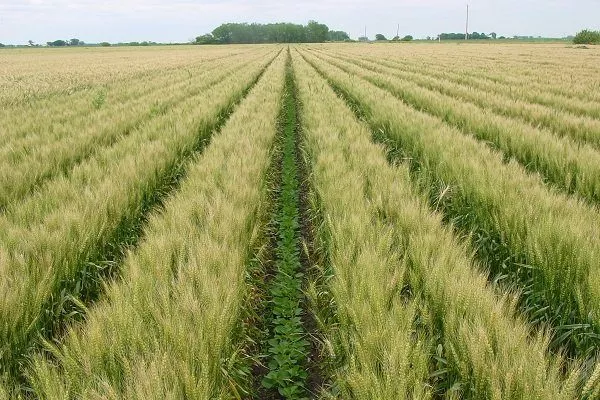
Rye is resistant to many pests and diseases (especially brown rust, stem rust, and snow mold). Unlike spring rye, winter rye is more productive. Winter rye varieties are very bushy, with three to eight stems per grain.
Rye is most productive after lupines, oats, perennial grasses, potatoes, corn, flax, and winter wheat. It is not recommended to sow rye after perennial legumes. The soil becomes oversaturated with nitrogen, causing the rye to produce long stems, which leads to lodging. Harvesting is difficult.
Once established, rye acts as a green manure. Its powerful root system loosens the soil to a depth of up to two meters, creating favorable conditions for other crops.
Rye is used not only to produce flour but also as nutritious livestock feed. It is also used in the production of alcohol, malt, and starch.
The sequence of rye cultivation consists of the following stages:
- Soil cultivation before sowing. The arable land is cleared of weeds and plowed at least twice, 3–4 weeks before planting.
- Preparing seeds for sowing. To prevent various diseases, planting material is treated with fungicides. The rate is 2 kg per ton of seed.
Each region has its own time for sowing rye: the non-chernozem zone - from August 5 to 25, the Central Black Earth Zone, the southeastern regions - from August 15 to September 1, the southern regions of Russia - from September 25 to October 10. - Sowing. To obtain uniform seedlings for different types of soil, it is necessary to take into account the depth of seed placement, namely:
- 2–3 cm on heavy soils;
- 3–4 cm on average soils;
- 4–5 cm on light soils.
- Harvesting. Grain harvesting begins when it reaches waxy ripeness. On large areas, it's best to begin harvesting earlier (mid-season), otherwise the grain will fall off and the stems will lodge.
New trends in rye cultivation
Over the past few years, rye acreage has steadily declined. This has led to a shortage of the crop on the domestic market, affecting purchase prices.
In 2019, large areas of rye were sown in the Orenburg Region, Tatarstan, Bashkortostan, and the Saratov and Volgograd Regions. The seed used was a new generation of hybrids from the German company KWS.
Hybrid rye seeds are of higher quality, have good resistance to pests and diseases, and produce excellent germination and a bountiful harvest. Some of these include:
- PIC AVIATOR. A new hybrid registered in 2019. During three years of state testing, KVS AVIATOR demonstrated consistently high yields. Even under unfavorable winter conditions, the plants grew vigorously in the spring.
- Hybrid PALAZZO. Recommended for cultivation in central Russia. It features a large amount of vegetative mass, optimal tillering before winter, and a balanced combination of greens and grains.
- KVS RAVO. A hybrid adapted to cultivation in a wide climatic range. It has high yield potential in low-water conditions and light soils.
This makes it an ideal solution for regions with unstable weather and climate conditions. KVS RAVO yields a 20–35% increase over standard rye varieties, depending on the region. - Hybrid KVS PROMMO. Designed for areas with unstable weather conditions, it ensures high yields in the arid conditions of the Volga region and the low temperatures of Northwest Russia.
- KVS ETERNO. The highest-yielding hybrid in Russia. When grown intensively, it yields up to 100 centners per hectare.
The hybrid is equally suitable for the food industry and animal feed. KVS ETERNO possesses an important characteristic: resistance to the main rye diseases: powdery mildew, brown rust, and fusarium head blight.
For lovers of natural products, organically grown rye flour is now available. This involves cultivating the grain without the use of fertilizers and with minimal agricultural interventions.
Winter varieties and hybrids are predominantly used for sowing. This is due to the difficulty of weed control.
The chemical composition of organoleptics differs significantly from that of similar crops. Per 100 g, it contains up to 77% carbohydrates, less protein and fat (up to 7% of the former, 2.1% of the latter), and its nutritional value exceeds 350 kcal.
Demand for rye, business profitability
Rye grain has a wide range of uses in the food and agricultural industries. This makes it one of the leading cereal crops in widespread cultivation.
It is most often grown to produce bread flour. Starch and sourdough are also in high demand. It is also a raw material for alcohol production.
Farmers successfully use the crop as an organic fertilizer. It has a unique quality: it naturally and effectively controls weeds and softens loamy soils.
Is it worth growing rye for sale?
Approximately 200 kg of seed are required to plant one hectare of land. The price for 1 kg of flour-milled rye seed, depending on the variety, starts at 10 rubles. Hybrid varieties are more expensive, but they have greater productivity.
- Application of organic fertilizers: 20-30 tons per hectare depending on the soil type.
- Mineral fertilizers: nitrogen - 30 kg/ha, phosphorus - 14 kg/ha, potassium - 25 kg/ha before sowing.
- Repeated application of nitrogen during the tillering phase to enhance growth.
To obtain approximately 1 ton of winter rye yield, approximately 25 kg of potassium, 14 kg of phosphorus, and 30 kg of nitrogen are required. In chernozem zones, the required amount of organic fertilizer is 15–20 tons per hectare, and in non-chernozem zones, 20–30 tons per hectare.
To grow rye you need to have the following:
- land;
- technology;
- labor force;
- seeds;
- organic and mineral fertilizers.
Growing rye is a low-margin business. You can earn around 15,000 rubles per ton of grain (this is a general figure; specific figures depend on the quality of the product and the variety). The initial seeding of over 20 hectares of land breaks the profit margin.
Rye grain is most often sold to factories or private enterprises producing rye flour and bakeries. Processing plants producing animal feed also purchase the raw material.
Rye is very popular among private and large farms as an organic fertilizer. They are the ones who sell organically grown food products, and they should be the first choice when looking for a buyer.
Rye is rich in vitamins and nutrients. Rye flour is a healthy and versatile product. Consuming rye products helps combat a wide range of health problems. It is precisely because of these unique properties, essential for the human body, that consumers are increasingly turning to rye products, making this grain crop highly sought after in the market.