
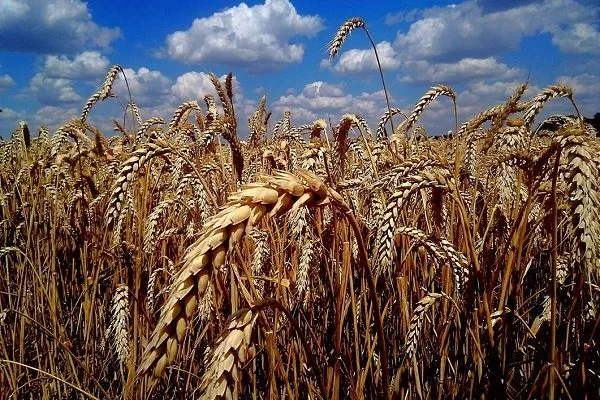
Recently, much attention has been paid to developing new wheat varieties that are resilient to environmental factors in specific regions. One example of such work is the "Voronezhskaya 18" variety, which will be discussed in detail in this article.
History of the variety's appearance
The "Voronezhskaya 18" variety is a spring wheat variety. It was developed at the V.V. Dokuchaev Research Institute of Agriculture of the Central Black Earth Region. Breeding characteristics:
- The variety was obtained by intraspecific hybridization followed by individual selection from the F2 hybrid population: Voronezhskaya 10 and Krestyanka.
- Evaluations and observations during production were carried out according to the methodology of the State Commission for Testing and Protection of Selection Achievements.
- The parent varieties of the selection are Kamennaya Steppe, which were chosen due to the following qualities:
- high plasticity;
- productivity;
- high baking properties.
The "Krestyanka" variety is characterized by rapid initial growth, resistance to soil drought, and resistance to leaf-stem pathogens. The "Voronezhskaya 10" wheat variety is drought-resistant during grain formation and ripening. These varieties have been in production for over twenty years.
Climatic features of the Voronezh wheat growing area
The Voronezh Region is located in the Central Black Earth Region of Russia, in the southeast. This area is characterized by a sharply continental climate, with moisture levels fluctuating throughout the year and during the growing season, insufficient for spring wheat growth. One of the weather conditions experienced in the region is two drought waves:
- one occurs at the beginning of the growing season;
- the second – for the period of filling and ripening of grains.
Drought affects photosynthesis, grain formation, and promotes leaf aging. Therefore, drought resistance is a key characteristic of local spring wheat. In the Voronezh Region, plants are susceptible to airborne pathogens, which cause significant damage to grain, affecting:
- its gluten;
- preservation of the harvest as a whole.
All these criteria became a factor contributing to the creation and introduction of the variety into production:
- adapted to specific local conditions;
- possessing high and stable yield indicators and resistance to external factors.
Characteristics of Voronezh wheat
The Voronezhskaya 18 variety belongs to the Lutescens variety and contains the following characteristics:
- the bush is semi-erect and medium-sized;
- height - 0.78-0.8 m, which is 1.6 cm more than the accepted standard;
- the straw is weak;
- ear:
- white;
- moderate density;
- pyramidal;
- with short spinous processes at the end;
- with a weak or strong waxy coating.
- the rounded shoulder is straight, and the narrow shoulder is of medium width;
- the tooth is short, slightly or moderately curved;
- the grain is colored;
- The approximate weight of one thousand seeds is 30-40 g.
The 'Voronezhskaya 18' variety produces good yields in the Central Black Earth Region – 39.4 c/ha, compared to the average for the Voronezh Region of 23.5 c/ha. Favorable weather conditions contribute to an average yield of 45.5 c/ha.
The highest result was recorded in the Kursk region in 2014 – 85.5 c/ha.
This mid-season variety has a growing season of 77 to 90 days. It meets standard standards for lodging resistance, windrow resistance, and root resistance. Its drought tolerance exceeds that of many wheat varieties and offers advantages over the yield standard.
The main advantage of Voronezh wheat is its high grain quality:
- protein – up to 17.1%;
- gluten – up to 36.3%;
- flour strength – up to 457 e.a.
Excellent flour can be obtained from such grain.
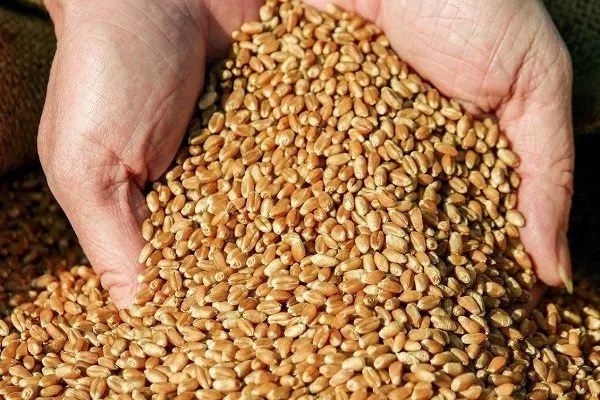
The Voronezhskaya 18 wheat variety, like its ancestors, is among the country's strongest wheat varieties. This is evidenced by the following indicators:
- 6 million viable seeds per 1 hectare is the seeding rate.
- The variety is resistant to frosts down to -6 degrees, so it is suitable for early sowing.
- The number of high-quality stems remaining for harvesting is 469-544 pieces per square meter.
Recommended region for planting
The Voronezh wheat variety is specially developed for planting and growing in the Central Black Earth Region of Russia, specifically in the following areas:
- Tambov;
- Lipetsk;
- Orlovskaya;
- Kursk;
- Belgorod;
- Voronezh.
It is in this area that Voronezh wheat will be able to demonstrate the highest yield and high grain quality indicators.
Advantages and disadvantages
In addition to the already mentioned advantages: good adaptability to climatic conditions, high yield, resistance to stress factors, etc., the "Voronezhskaya-18" variety has the following advantages:
- increased heat resistance;
- rapid initial growth in the initial period;
- dense stems.
- resistance to shedding.
- good baking qualities.
Subtleties of agricultural technology
Fertilizing and properly enriching the soil are essential for growing a high-quality crop. Don't neglect these rules and risk your future harvest.
- ✓ Optimal seed sowing depth: 4-5 cm.
- ✓ Recommended seeding rate: 6 million viable seeds per 1 hectare.
Tips for wheat cultivation:
- Wheat requires pre-sowing soil and seed treatment. Standard tillage methods can be used for sowing:
- harrowing;
- cultivation.
- Ten to fourteen days after treatment, plow the soil to a depth of about 20 centimeters. All wheat responds well to the following fertilizers:
- nitrogen - when the plant begins to form ears;
- potassium - at all stages of growth;
- phosphorus - during the period of tube emergence.
- The wheat sowing date may vary depending on weather conditions. "Voronezhskaya 18" wheat is best sown in the first ten days of spring – this will allow the crop to ripen and prevent it from overgrowing.
- During the growing season, additional fertilizers are applied by irrigation.
Diseases
Voronezh wheat may be susceptible diseasesThere are also many pests that are eager to taste fresh grains. In addition to reducing yield, this can also impact the quality of the grains.
Voronezh wheat is moderately resistant to:
- brown rust;
- powdery mildew;
- hard smut.
| Disease | Sustainability level | Period of greatest vulnerability |
|---|---|---|
| Brown rust | Average | Tillering phase |
| Powdery mildew | Average | Tube entry phase |
| Hard smut | Average | Heading phase |
| Loose smut | Short | Germination phase |
It's not possible to claim that the plant is completely immune to these diseases, so it's important to follow certain sowing and growing guidelines. To prevent their development, it's important to practice crop rotation, treat the soil with pesticides, and sow wheat at specific times.
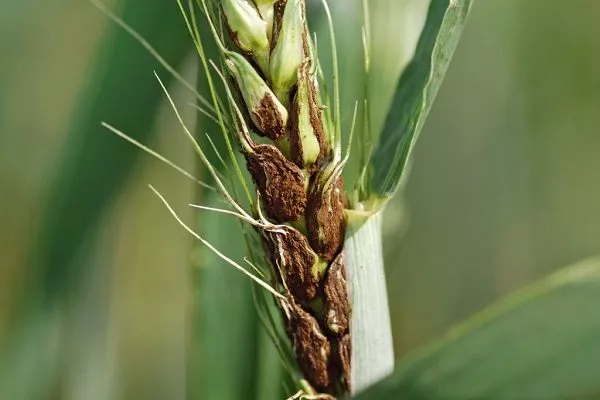
Voronezh wheat stems and ears are weakly resistant to loose smut, so seed treatment is recommended before sowing. If the plant is infected with this disease, the ear will turn black and then turn into a dusty gray mass.
Planting and caring for the Voronezhskaya-18 wheat variety doesn't require any special or different care than other varieties, yet farmers achieve yields well above standard. In addition to good yields, the plant is less susceptible to diseases, which is also encouraging and makes this variety even more attractive.