
To obtain a bountiful winter wheat harvest, it's essential to accurately determine the grain's maturity level. This is essential for planning the timing and method of the upcoming harvest, given favorable weather conditions, preparing the necessary grain harvesting and auxiliary equipment, and assigning specialists responsible for harvesting, transporting, and storing the grain.
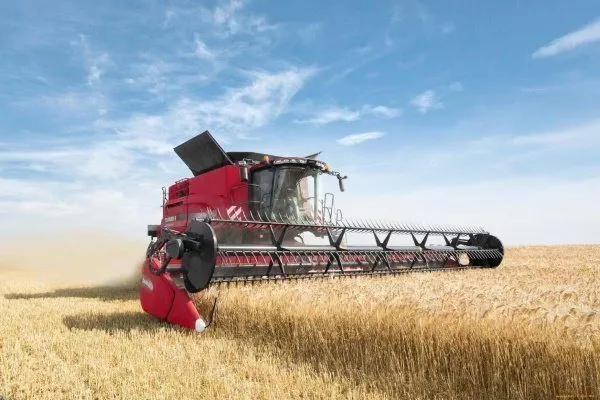
How to determine the time to harvest winter wheat?
Agronomists monitor the ripening and condition of winter wheat. They measure grain moisture with moisture meters and pay attention to the appearance and texture of the future grain, and decide when to begin harvesting.
The degree of maturity of wheat depends on its moisture content:
- Milk maturity. Humidity levels reach 60-70%. This occurs 10-18 days after flowering. The grain reaches its pre-harvest size, filling the entire ear. When pressed, a white, jelly-like liquid is released. During this time, the ear fills out and accumulates nutrients.
- Wax maturity. Humidity is 35-45%. This occurs two weeks after the milky stage ends. The grain turns from green to yellow, leaving only the furrow green. It can be easily cut with a fingernail, but is not crushed. After this stage, the internal grain consistency resembles wax. The leaves begin to dry out.
- Full maturity. Humidity is 12-20%. Leaves fall, the grain becomes hard and dry, and begins to crumble.
You can measure the amount of water in wheat chemicallyIt's more accurate than moisture meter measurements. To do this:
- 20 ears of wheat with a 20 cm stem are cut and placed in a 1% eosin solution.
- Leave for 3 hours.
- During this time, the plants turn red, the intensity of which indicates the maturity of the grain. The lighter the color, the more mature the grain. Once the nutrients have ceased to flow into the ear, i.e., at the stage of full maturity, the color of the wheat ear remains virtually unchanged after chemical moisture determination.
Grain moisture measurements are taken daily at wax maturity. When target values reach 20-22%, a test threshing is performed. For this, the grain is mown in diagonal sections across the field, then threshed and assessed for readiness for full harvesting. If the results are positive, the grain is mown along the perimeter of the field, and the crop area is divided into equal sections.
Harvest timing
Once the decision is made to begin harvesting, harvesting activities are organized. The necessary equipment is selected, and experienced and qualified workers are assigned. The work schedules of the specialists involved are often adjusted to ensure the grain is threshed as quickly as possible.
Harvesting begins when the grain moisture content is no more than 20%. Harvesting must be completed within 3-4 days, otherwise the wheat will become overripe and begin to crumble. In this case, yield losses can reach 40-60%.
Methods of harvesting winter wheat
The choice of method for harvesting winter wheat depends on the maturity of the grain, the weed infestation of the crops, weather conditions, and the availability of equipment on the farm.
- ✓ Level of field infestation with weeds and perennial grasses.
- ✓ Availability and condition of available equipment on the farm.
- ✓ Weather forecast for the harvesting period.
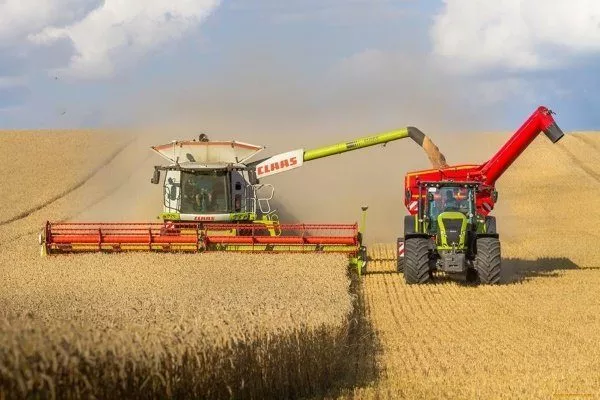
Direct combining
A combine harvester is a complex agricultural machine that combines three types of work: harvesting, threshing, and winnowing. It cuts the wheat and directs it along an escalator to the threshing and separating section. There, the plant is crushed, and beaters knock the grains out. The grain and small debris fall through openings in the bottom and enter the sifter, where they are separated. From the threshing section, straw, empty heads, and remaining grain are transferred to the straw-walking chamber. Here, the straw is finally thrown into the field, and the grain is transferred to a bin. From there, it is unloaded into trucks for transport to the threshing floor and grain storage facilities.
Direct combining is most appropriate when the ripening of ears in the field occurs uniformly, and the presence of weeds in the crops themselves is minimal.
Direct combining is the most common harvesting method. This method of harvesting wheat is used when the grain moisture content is no more than 15%. The work is carried out using DON-1500, E-525, E-527, and other combines. Thus, all work, from mowing to cleaning the grain, is carried out in a single phase, using a single type of equipment. The use of combines has reduced the time required for harvesting wheat and increased its gross yield. The process has become more streamlined.
Separate collection method
When wheat fields are heavily infested with weeds or perennial grass, densely seeded, or when ear ripening is uneven across the crop, separate harvesting is used. This should be done at the beginning of wax ripeness, when the wheat moisture content reaches 30-35%. This method of harvesting winter wheat yields the most valuable grain for baking, and its nutritional properties are enhanced.
First, the crop is mown and formed into individual windrows, which are left to dry in the field. To prevent the windrows from touching the ground as they dry, the plants are cut at a height of 15-25 cm. Then, after 2-3 days and the moisture content has dropped to 17-20%, a combine harvester equipped with a pickup picks up the windrows and threshes them, chopping up the straw. Avoid long intervals between these operations, otherwise the grain may shatter or the weather conditions may deteriorate. After the work, chaff collectors move across the field, collecting additional feed for the animals.
Pros and cons of the split method
The positive aspects of the split method of harvesting winter wheat include:
- obtaining high-quality baking grain;
- minimal amount of grain loss associated with self-shedding of the ear;
- allows you to start cleaning earlier;
- facilitating the work of the combine due to the drying of the green part of the plant.
But the separate method of harvesting grain also has its disadvantages:
- dependence on weather conditions;
- involvement of a large number and types of equipment;
- an increase in expenses, and therefore the cost of grain.
Single-phase harvesting
Single-phase harvesting is used in sunny weather or four hours after rain. Its cost and energy consumption are significantly lower than two-phase (separate) harvesting. This method harvests crops from seed plots in fields, as the germination rate is significantly higher than with other harvesting methods.
In practice, a mixed harvesting method is more commonly used. Harvesting begins with a two-phase (separate) process, and as the grain ripens or weather conditions worsen, a single-phase harvest is initiated.
The amount of harvest obtained is estimated in centners of grain per 1 hectare of area (centners/ha).
Watch a video about the winter wheat harvest:
Storage of the harvest
Storage facilities for wheat harvests must be dry and treated with disinfectant solutions before grain is stored. Grain is stored in bulk.
- Disinfect the storage facility before loading grain.
- Provide a good ventilation system in the storage area.
- Maintain air temperature at 5-8°C and humidity at 65-70%.
To preserve winter wheat, a good ventilation system is essential. Warehouse temperatures are maintained at 5-8°C, with ambient humidity between 65 and 70%. The grain should be periodically stirred to prevent spontaneous heating and rotting.
The main task of a grain storage facility is to preserve the quality and mass of grain.
If wheat storage technology is improper and temperatures rise to 11-15°C, the grain is at high risk of disease and pest attacks. If humidity levels rise and the grain is not mixed properly, it will compact and rot, becoming unusable.
The shelf life of seed wheat is no more than 12-14 months.
If all storage rules are observed, grain can be stored for up to 4 years.
Storage at home
To store wheat at home, you need a concrete room lined with metal. At home, wheat seed grains are stored in small portions in cloth bags, hanging them overhead. Glass containers can also be used. In this case, it is recommended to thoroughly dry the grain in the sun before filling, and carefully monitor the humidity during storage.
Large volumes of grain are poured into bags, which are stacked on wooden pallets. This prevents moisture from penetrating and accumulating.
Regardless of the chosen winter wheat harvesting method, the harvesting process should not exceed 5-7 days. Otherwise, significant grain losses are unlikely to be avoided, and its quality will also be significantly reduced. Therefore, it is crucial to realistically assess your capabilities and approach the harvesting process responsibly.