
Saratovskaya 70 is a popular spring wheat variety, producing high yields in the Saratovskaya Oblast and throughout the Lower Volga region. Let's learn about this variety's special features, as well as how to sow, grow, and harvest it.
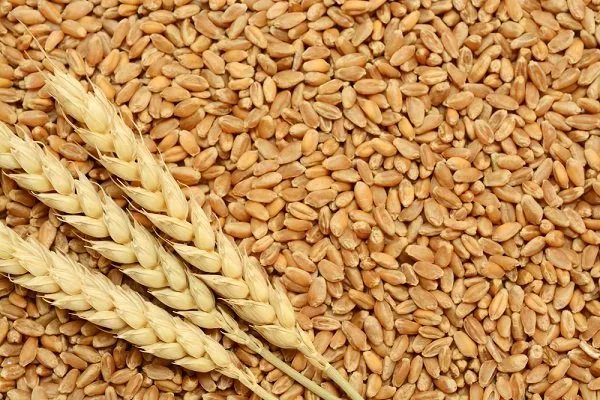
Saratov wheat has good baking qualities
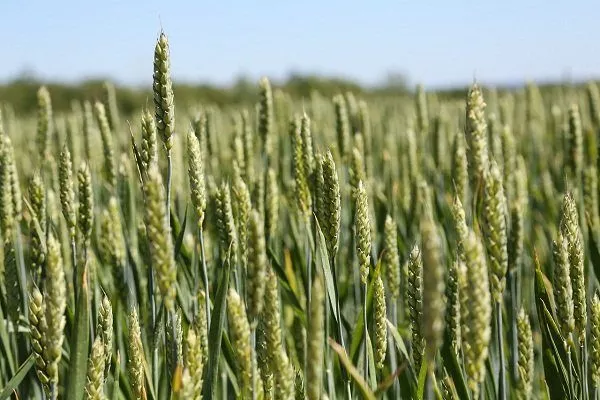
Saratov wheat
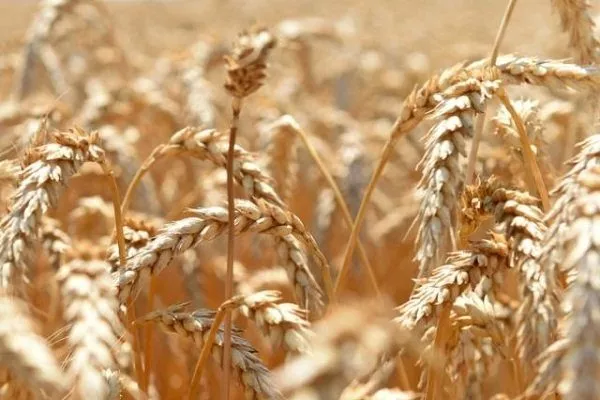
Saratov wheat is drought-resistant.
Features of the variety
The Saratovskaya 70 spring wheat variety was developed through complex stepwise hybridization. The cultivar's originator is the Southeast Agricultural Research Institute.
Botanical description
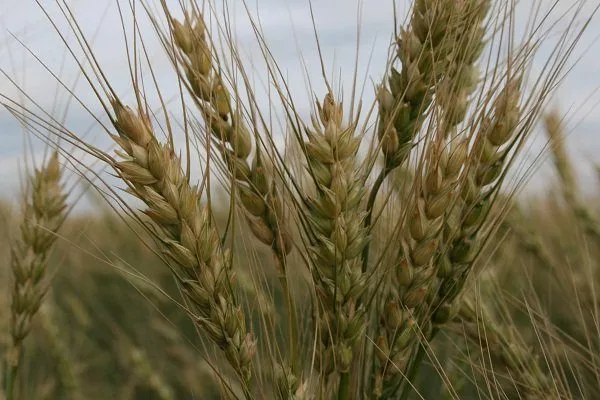
The Saratovskaya 70 variety belongs to the albidum variety, which includes soft wheat with white kernels and awnless ears.
Brief botanical description of Saratovskaya 70:
- the spike is glabrous, coarse, of medium density, awnless, white;
- inside the ear there are white oval-shaped grains with narrow grooves;
- the shape of the ear is a cylinder, slightly tapering at the top;
- Spikelet scales – medium-sized, hard;
- bushes are upright.
Characteristics
The variety was officially included in the State Register in 2002. It is zoned for the Lower Volga and Ural regions. It is recommended for cultivation in the Saratov region.
Saratovskaya 70 is a soft wheat variety with excellent agronomic characteristics. It exhibits high yields and is resistant to lodging.
Specifications:
- average yield – 12-20 c/ha, maximum – 32 c/ha;
- ripening period – mid-season variety, vegetation period is 85-95 days, ripens at the same time as the standards Saratovskaya 55 and Saratovskaya 58;
- disease resistance – average;
- weight of 1000 grains – 35 g;
- drought resistance – high;
- grain - glassy.
- ✓ High drought resistance due to deep root system.
- ✓ The tendency to lodging at yields above 25 c/ha requires additional measures to support the stems.
Advantages and disadvantages
Advantages of the variety:
- high productivity regardless of the weather – the variety is productive both in favorable and in very dry years;
- compared to the standard, it is resistant to loose smut;
- lodging resistance;
- good baking qualities;
- economically advantageous – due to increased productivity (compared to standards under the same conditions), it allows you to receive up to 600 rubles of conditional income per 1 hectare.
Other "Saratov" varieties
Along with Saratovskaya 70, producers offer several other "Saratov" varieties, differing in ear structure, ripening time, yield, and other characteristics. These varieties include hard and soft wheat, winter and spring, but all are successfully grown in the Saratov region.
Saratov wheat varieties:
- Saratov golden. A spring durum wheat variety. Leucurum. The ears are white, glabrous, with white awns and grain. The ears are cylindrical, and the grain is large. Yields up to 35-40 c/ha. At yields exceeding 25 c/ha, the variety is prone to lodging.

- Saratovskaya 73. A soft spring wheat. This mid-season variety is zoned for the Lower Volga and Ural regions. Recommended for cultivation in the Orenburg and Saratov regions. This variety is a graecum variety. The ears are awned, glabrous, pyramidal, and medium-dense. The grains are white, weighing 33-38 g per 1,000 grains. Yield is 10-22 c/ha. The growing season is 70-88 days. The variety is drought and lodging resistant. Disease resistance is average.
- Saratovskaya 90. A soft winter wheat. An early-ripening variety. Lutescens variety. The ears are medium-dense and cylindrical. The grains are red, elongated, and have a medium furrow. 1,000 grains weigh 36-46 g. The variety is frost-hardy and resistant to lodging and shattering. Yield: 6-7 t/ha. Used as a food grain.
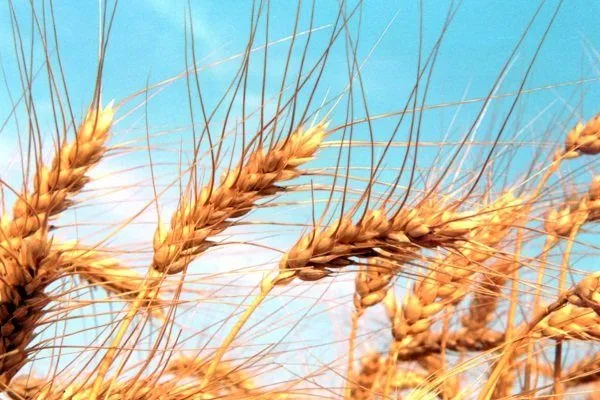
Agricultural technology of sowing
At growing spring wheat, sowing - its timing and conditions, are crucial for the future harvest.
- ✓ The optimal soil moisture for sowing should be 60-70% of the total moisture capacity.
- ✓ The soil temperature at the sowing depth (4-5 cm) should be at least +5°C to ensure uniform germination.
Selection of predecessors
Saratovskaya 70, like all varieties of spring wheat, is particularly demanding of its predecessors.
Place in crop rotation and features of choosing predecessors:
- If virgin land is plowed, then spring wheat can be grown in one field for 3 years in a row.
- If spring wheat is planted in arid steppes with an average annual rainfall of 300-350 mm, it is important for the soil to accumulate moisture before sowing. Therefore, it is best to sow this variety on bare fallow.
- The best predecessors in the Volga region are winter crops and row crops. In the Central Black Earth Region and the North Caucasus, legumes and row crops are the best. The latter include sunflowers, corn, potatoes, and root crops. In the south, spring wheat can also be planted after melons.
- Sowing after grain crops leads not only to a decrease in yield, but also to a decrease in the quality characteristics of the grain.
Soil cultivation
Soil preparation for spring wheat includes primary (autumn) and pre-sowing tillage. The wheat yield largely depends on the quality of these procedures. Soil preparation techniques depend on the soil type and the preceding crops.
Stages of basic processing:
- In high-moisture fields where grains, pulses, perennial legumes, or row crops were grown, primary tillage begins with stubble cultivation using disc or ploughshare cultivators. Stubble cultivation is performed immediately after harvesting the preceding crop. The stubble cultivation depth is 5-7 cm.
If the preceding crop is stubble, stubble cultivation is performed. The stubble cultivator penetrates to a depth of 10-12 cm on mineral soils and 8-10 cm on peatlands. If the field is heavily infested with rhizomatous weeds, such as sow thistle, couch grass, and the like, the stubble cultivation depth is increased to 12-14 cm. The field is stubble-cultivated twice: longitudinally and transversely. - If the predecessors were row crops, then cultivation is carried out at a depth of 10-12 cm.
- 15-20 days after stubbling/cultivation, the soil is plowed to the depth of the arable layer.
- If weeds appear, the fallow land is re-cultivated.
Autumn plowing is carried out as early as possible to allow the soil to accumulate moisture and nutrients. It also helps clear the field of weeds and produce a higher yield.
Harrowing of fallow land is usually not performed; the soil remains in the form of plowed ridges until spring. Pre-sowing tillage is carried out in early spring, as soon as the soil dries out.
Pre-sowing preparation stages:
- Harrowing is done in two passes—either transversely or diagonally. This technique helps level the soil surface and retain moisture.
- Two to three days after harrowing, cultivate the soil to a depth of 5 to 6 cm—this depth corresponds to the seeding depth. Harrowing and seeding are carried out simultaneously.
- Immediately after sowing, the soil is rolled – this procedure improves seed germination and increases yield.
Fertilization
Spring wheat is demanding in terms of soil composition and fertility. The crop responds equally well to mineral and organic fertilizers.
Wheat requires three key nutrients for growth and development: nitrogen, phosphorus, and potassium. To produce one ton of grain, the following must be added to the soil:
- nitrogen – 35-45 kg;
- phosphorus – 8-12 kg;
- potassium – 17-27 kg.
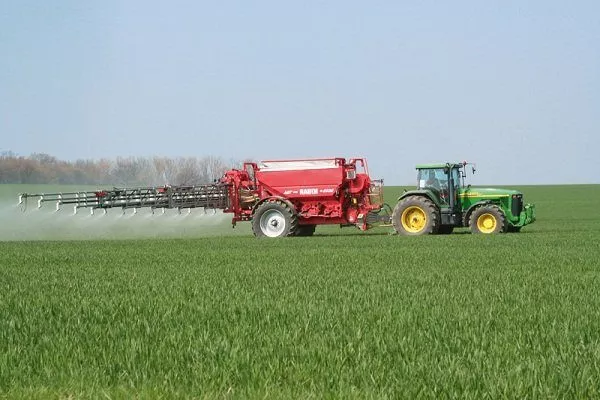
Nitrogen fertilization is recommended in conjunction with herbicide application to control weeds. Phosphorus and potassium are applied during primary tillage.
Features of fertilization:
- The primary fertilizer for wheat is manure, peat, or compost, which is applied during autumn plowing. The application rate is 20-30 kg.
- During sowing, superphosphate is added - 10-20 kg per 1 ha.
- It is recommended to add 2-3 kg of microfertilizers containing magnesium, boron, copper, and molybdenum per 1 hectare.
Sowing
Spring wheat should be sown early and as quickly as possible. The grain must be sown in soil that retains sufficient moisture for germination. A one-day delay can reduce yield by 0.5-0.7 centners per hectare. Early sowing increases the gluten content of the grain by 1.2-2.2%.
Seed preparation
Before sowing, seeds are treated with any approved product. For example, "Celeste Top," "Vitavax," "Maxim Forte," and others.
It is recommended to combine seed treatment with growth stimulants containing microelements. For this purpose, you can use, for example, Raykat Start. The application rate is 300 ml per 1 ton of seeds.
Benefits of stimulant treatment:
- resistance to diseases increases;
- resistance to unfavorable factors at the initial stage of vegetation is increased.
Methods and sowing rates
To ensure that each plant receives sufficient nutrients, moisture and light, it is necessary to optimally distribute the grain over the sowing area.
There are two methods of sowing spring wheat:
- Narrow-row. The distance between rows is 7-8 cm. This method increases the grain seeding rate by 10%, resulting in a yield increase of 2-3 c/ha.
- Cross. The distance between rows is 15 cm. This allows for two seedings. The second time, the seeder passes at a right angle to the initial seeding direction.
The seeding rate for soft wheat is 4-5.5 million grains per hectare. This rate depends on the soil. On mineral soils, the seeding rate is approximately 1-1.5 million grains higher than on peat bog soils.
Row sowing (with a 15 cm spacing between rows) is rarely used today. Firstly, it yields less than the narrow-row and cross-row methods, and secondly, it allows weeds to thrive in the wide row spacings.
To increase the yield, beds with spring wheat Saratovskaya 70 are located from north to south.
Planting depth
When determining seed placement depth, farmers consider soil characteristics, including soil type, moisture content, structure, weed infestation, and temperature. Different soil and climate zones have specific seeding depths.
Saratovskaya 70, like most spring varieties, is planted 4-5 cm deep. This depth may vary depending on weather and soil conditions:
- in arid regions, if there is a lack of moisture in the spring, the sowing depth can be increased to 6-8 cm;
- If sowing is carried out on clayey, poorly aerated soil, the planting depth, on the contrary, is reduced to 3-4 cm.
For spring wheat, it is important that its seeds are sown in moist, slightly compacted soil, at a depth that will ensure uniform and even germination.
Caring for crops
Saratovskaya 70 wheat requires standard care provided for spring wheat.
Care activities:
- Harrowing. It improves soil aeration and destroys weeds and soil crust. Crops are harrowed across rows or diagonally. The equipment used is a rotary hoe or a needle harrow. The first harrowing is carried out before the seedlings emerge.
- Rolling. This technique is essential in arid regions, and during droughts, it's also necessary in other regions. If the soil is wet, rolling will actually damage the seedlings.
- Weed control. Spring wheat seedlings develop quite slowly, so there's a high risk of being overwhelmed by weeds, which, on the contrary, grow by leaps and bounds. If there are 25 or more weeds per square meter, herbicides are used.
Treatment is carried out when the wheat is at the initial stage of tillering, and the weeds are in the phase of forming 2-4 leaves. - Top dressing. To improve grain quality, farmers use foliar diagnostics to decide whether to apply foliar fertilizer to crops with nitrogen-containing solutions.
Protection from diseases
Pesticide treatment in fields with spring wheat is carried out if diseases or pests exceeded the established threshold of harmfulness. The use of poisons is contraindicated without specific indications.
The Saratovskaya 70 variety is most often affected by:
- Hard smut. The causative agent is a fungus with teliospore-like characteristics. It manifests itself during the milky stage of grain ripeness. The ears become flattened, and when pressed, a gray liquid, rather than a white one, is released.
- Brown rust. The causative agent is a dioecious fungus that attacks leaves and ears. Brown voids form, photosynthesis decreases, and the root system suffers. Yields drop by 25%. Prevention involves weed control and seed treatment before planting.
- Powdery mildew. A fungal disease that reduces tillering and disrupts photosynthesis. Plants become covered with a grayish coating, and leaves dry out. It causes 30-35% yield loss. Fungicide treatment is required when 1% of crops are affected.
Preventive measures:
- To prevent diseases, fields are treated with broad-spectrum fungicides that affect plants throughout the growing season. Applying fungicides during the tillering-booting and heading-flowering stages can save 98% of the crop.
- Sowing only healthy and treated or disinfected grain.
- Crop rotation, proper soil cultivation, fertilization, weed control, etc.
- Avoiding close proximity of crops to winter wheat to prevent the spread of pathogens.
- Application of 20-30% nitrogen fertilizers and microelements in autumn.
Pest control
Wheat yields can be significantly reduced by insect pests. Spring wheat has many enemies, including aphids, flies, flea beetles, gall midges, beetles, thrips, and others.
The main pests of wheat Saratovskaya 70:
- Cereal aphid. A small insect, 3 mm long, they feed on plant sap from germination until the grains reach waxy ripeness. Damaged grains lose quality. Aphids produce 10-12 generations per season.
- Bread beetles. The most destructive member of this species is the scaly-headed beetle. These beetles consume grain right in the ear, pushing it to the ground. Grain losses can reach 2 centners per hectare.
- The bug is a harmful turtle. Wheat is damaged by over two dozen bugs, including tortoises, of which the most dangerous is the common tortoise. The bug's larvae damage the grain. Yield losses reach 7 centners per hectare.
Control and prevention measures:
- After harvesting, the field is plowed to destroy pests that overwinter in the soil.
- Optimal sowing times are observed.
- In spring, fields are treated with Metaphos (0.5 l per 1 ha) if grain flea beetles appear.
- Metaphos (0.7 l per 1 ha) or Metathion (1 l per 1 ha) helps against turtle bugs.
- To combat leafhopper larvae, use Metathion (0.4 l per 1 ha) or Fosfamide (0.2-0.5 l per 1 ha).
Harvesting
Wheat often ripens in cool weather. Inclement weather can complicate and delay harvesting, resulting in reduced yields. When planning the harvest, it's important to consider the weather and the ripening characteristics of the variety.
The following factors influence the choice of cleaning timing:
- height and density of stems;
- weather conditions;
- weed infestation;
- tendency to shedding.
Saratovskaya 70, like most soft wheat varieties, shatters fairly easily when ripe. Therefore, it must be harvested as quickly as possible. If the weather is damp, the grain may begin to germinate while still in the ears.
Cleaning features:
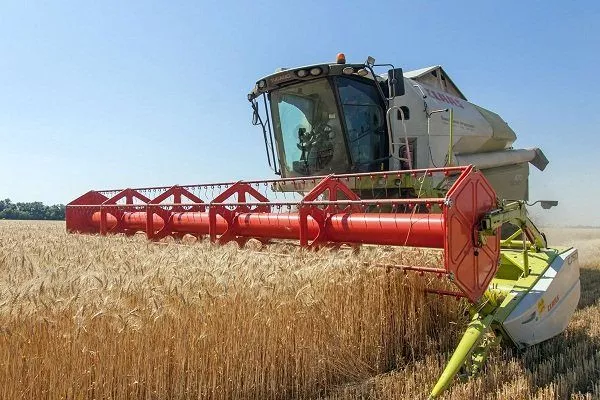
- Saratovskaya 70 wheat is harvested using a single- or two-phase method. Direct combining is the most common method.
- The two-phase method is used under unfavourable conditions – if the field is heavily infested or the crops have ripened unevenly.
The two-phase method allows harvesting to begin 4-5 days earlier, resulting in dry grain. Wheat is harvested at the waxy stage of ripeness. Optimal grain moisture content is 36 to 40%. The cutting height is 15 to 25 cm.
The choice of harvesting method is determined by each farmer's circumstances. The main goal is to minimize losses and quickly, within 7-10 days, harvest the entire crop.
Reviews
The Saratovskaya 70 spring wheat is a promising variety that allows farmers to achieve good yields even in unfavorable conditions. By following proper agricultural practices, damage from diseases and insects can be minimized and yields can be maximized.