
To successfully grow winter wheat, it is necessary to understand its characteristics, adhere to basic care and sowing rules, observe sowing times, and study all stages of crop development.
History of origin and spread
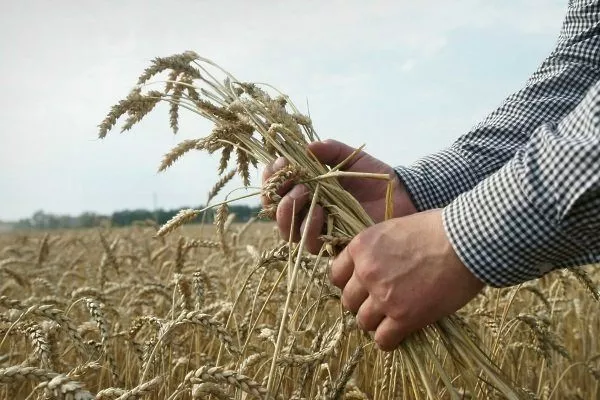
Winter wheat has been grown in Russia for a long time. Where it came from and how it emerged is a mystery. One thing is certain: this ancient grain species was one of the first cultivated by humans. The oldest winter wheat grains were found by archaeologists in Switzerland and Hungary.
Since time immemorial, our ancestors have grown grain not only for personal use, but also for the exchange of goods, and later for trade.
Winter wheat is currently the most widely grown crop in the world. Vast tracts of land are devoted to its cultivation. There are approximately 250 varieties and several thousand cultivars. Thanks to the efforts of breeders, winter wheat is expanding further north and "conquering" new territories.
The main crops are located in Eurasia and America (North and South), more precisely in the territory of:
- France;
- Great Britain;
- Russia;
- Italy;
- Spain;
- Romania;
- China;
- India;
- Turkey;
- USA;
- Canada;
- Australia.
Wheat is grown to a lesser extent in Africa—South Africa, Egypt, Ethiopia, Zimbabwe, Kenya, and Oceania. Its widespread distribution across various climate zones is explained by the vast selection of varieties and its excellent adaptability.
In Russia, wheat is primarily grown in the North Caucasus Federal District, the Central Black Earth Region, and the Volga region. However, its distribution area is much wider, extending from the Tyumen to the Leningrad Regions.
National economic significance
Why is so much land devoted to this particular crop? Winter wheat is valued for its nutritional qualities. Its grain composition meets all the necessary requirements for human nutrition. It contains:
- protein;
- starch;
- fats;
- ash substances;
- vitamins B, PP, E;
- provitamins, that is, precursors of vitamins A and D - carotene and ergosterol.
The calorie content of 100 g of wheat bread made from premium flour is 250 kcal, the calorie content of a piece of fatty meat (pork) of the same weight is 240 kcal.
Directions for use:
- Winter wheat is used to produce flour for bread and bakery products, as it is primarily a soft grain. It produces premium-quality flour with a fiber content of at least 28%. Bread made from wheat flour is delicious and nutritious.
- For confectionery production and, to a lesser extent, for pasta. High-quality pasta, on the other hand, requires durum wheat flour.
- For the production of concentrated feed and wheat bran for all types of livestock. Crushed straw, sometimes flavored with molasses, is fed to cattle.
- A good bedding material for barns. In early spring, winter wheat is used as green fodder.
- For crop rotation. It is a good precursor for other plants.
- In the processing industry. Grain is used to produce alcohol, starch, dextrin, and other substances. Straw is used to make paper, mats, and household items.
What is the difference between winter wheat and spring wheat?
The main differences between the forms of wheat:
- Winter crops are more demanding in terms of soil and moisture. To ensure good rooting, seeds are sown in fertile soil rich in macro- and micronutrients. A lack of minerals will reduce yield.
The following soil types are most suitable for growing it: chernozem, chestnut, and slightly podzolic soils. Spring varieties are very sensitive to increased soil acidity but are more drought-resistant. Winter wheat makes the most of autumn and spring precipitation, which ensures higher yields than spring varieties. - Sowing time. Spring wheat varieties are sown in early spring, while winter wheat varieties are planted before winter (hence the name). Depending on the region, sowing begins in late summer and ends in October.
Morphological features
Winter wheat is an annual member of the Poaceae family. It is an upright cereal plant that reproduces by grains. It has a fibrous root system located close to the soil surface, but the roots can penetrate 120-200 cm deep.
The straw-like stem is round in cross-section and hollow inside. It is divided along its entire length by nodes—ring-shaped thickenings into 5-6 internodes. The length of each internode increases as the plant grows. The stem's thickness varies. It is thinnest at the top and thickest in the middle. Lateral shoots emerge from the underground stem nodes.
The leaves are long, lanceolate, with parallel veins. The number of leaves and their size depend on a number of factors, including soil fertility, weather conditions, and cultivar.
Winter leaves come in two types:
- basal leaves are formed from underground nodes;
- stem - on the above-ground part of the plant - one leaf extends from the node, at the bottom it is twisted into a tube and covers part of the stem.
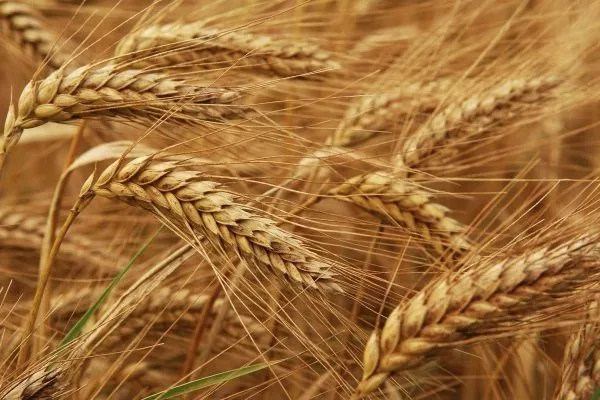
The inflorescence is a spike, consisting of a rachis, which is an extension of the stem, and individual spikelets. Flowering occurs from the center and spreads simultaneously upward and downward. The plant is self-pollinating. In cloudy weather, the bloom is closed; in sunny weather, it is open. After flowering, the spikelets form fruits—naked caryopses.
Biological features
Winter crops are among the most sensitive to weather conditions and external factors—soil, temperature, and light. In some years, extreme weather can destroy a large portion of the crop.
Light
It's a long-day plant and requires plenty of light. Photosynthesis, which occurs only in sunlight, allows it to accumulate nutrients. With optimal light, the plant will bush out and the leaves will be green. The following signs indicate insufficient sunlight:
- proliferation of the lower internode;
- the tillering leaf is formed in the lower part, which worsens the winter hardiness of the plant;
- when there is a lack of light in spring, the wheat stretches out and lodges;
- During the ripening and grain filling period, insufficient light results in deterioration of crop quality. This is usually observed in densely planted crops.
Temperature
The plant requires different temperature ranges during different growth periods. In general, winter wheat is a moderately frost-hardy crop, withstanding temperatures as low as -25°C (-22°F) if there is snow cover. Without snow, seedlings die at temperatures as low as -16°C (-62°F) and -18°C (-62°F).
Seeds germinate at temperatures of 1-2°C above freezing, but 12-15°C is considered optimal for normal growth. Sowing begins when the average daily temperature reaches 14-17°C.
Plants that have had time to develop a good bushiness (forming 2-4 shoots) have a high frost resistance. Overgrown plants, which have only managed to grow 5-6 shoots in the fall, have a reduced frost resistance. They often don't survive the winter, dying or becoming damaged.
In spring, wheat growth resumes. During this period, the optimal temperature is 12-15°C. However, if the temperature steadily rises above 25°C, this will negatively impact the growth phases.
The plant requires temperatures slightly above 15-16°C during stem formation. However, frosts (minus 7-9°C) damage the main stem, and the plant dies.
During the flowering period, temperatures between 18-20°C are sufficient. At higher temperatures—35-40°C—and low humidity, the grain becomes smaller and shriveled. The optimal temperature for grain filling is considered to be 22-25°C.
Moisture
The plant requires water throughout the growing season. However, its consumption varies and depends on the growth phase, climate conditions, and planting density. During seed germination and emergence, a large amount of moisture is needed. Otherwise, the plantings will be sparse.
A lack of soil water during tillering also negatively impacts productive tillering. The period of stem elongation, or booting, is critical in terms of moisture. Insufficient moisture reduces ear grain size, which in turn leads to reduced yields. On the other hand, prolonged waterlogging inhibits plant growth.
Development phases of winter wheat
The following growth phases of winter wheat are distinguished:
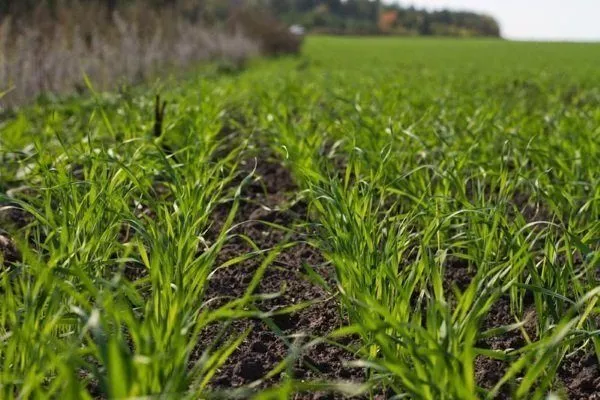
- Emergence of seedlings. Seed germination is most rapid at temperatures of 20-25°C. In this case, seedlings emerge within 7-9 days. However, for more rapid sprouting, a lower temperature of 12-17°C is required.
Thus, the germination phase extends to 15-25 days under normal conditions. With later sowing, the plant has time to grow 1-3 leaves before winter. In spring, the germination phase continues, but its duration, taking into account the winter dormancy period, increases to 100-150 days.
The primary agricultural goal for specialists is to increase seed germination to 80-90%. However, statistics show that in most farms, this figure is 50-70%, meaning no more than half of the planted seeds germinate. - Tillering. This is a biological characteristic of cereal crops, meaning the plant develops lateral shoots and nodal roots. Wheat tillers in both fall and spring. This process begins after the formation of the third or fourth leaf. When the temperature drops to 6-10°C, there is sufficient humidity and cloud cover, plant growth slows, but tillering accelerates.
Nitrogen fertilizer application and seed size also have a positive effect on tillering—the larger the seed, the better the tillering will be. Under favorable conditions, a single plant will produce 3-5 stems. The tillering node is the most important organ. If it is damaged, the plant dies. - Stem formation (emergence into a tube). The beginning of the stem-booting phase, or stem formation, is the formation of the first stem node, which occurs 25-35 days after the start of spring growth. It is located 2-5 cm above the soil surface, but it should be kept in mind that cold and cloudy weather inhibits plant growth.
- Earing. Thirty days after booting, heading begins—the emergence of the ear from the sheath of the upper leaf. The intensity of this phase depends on the amount of moisture and nutrients in the soil. This period is also the most favorable for treating crops with fungicides to prevent the development of various diseases.
- Bloom. Winter wheat begins to flower 2-3 days after heading. Flowering lasts about a week.
- Maturation.This is the formation and filling of the grain, the duration of which depends largely on the variety and weather conditions. Cool and rainy weather prolongs this period, while dry weather shortens it.
Winter wheat varieties
When choosing a particular variety for a particular region, consider:
- winter hardiness;
- drought resistance;
- demanding soil type;
- immunity to diseases;
- crop yield.
A few hard varieties of winter wheat are grown only in the North Caucasus and Lower Volga regions. Soft varieties are widespread throughout Russia.
Suitable for the North Caucasus region:
- Six-pole;
- Kherson awnless;
- Jubilee 75 and 105;
- Podolyanka and others.
For the North-West District:
- Astron;
- Galina;
- Zentos;
- Mironovskaya Jubilee;
- Toras.
For the Central Region:
- Angelina;
- Bezenchukskaya 616;
- Nemchinovskaya 17, 24 and 57;
- Moscow 40, 56;
- Dawn.
Suitable for the Volga-Vyatka region:
- Bashkirskaya 10;
- Helot;
- Kazanskaya 285 and 560;
- Yantarnaya 50.
In the Central Black Earth Region they grow:
- Scarlet Dawn;
- Antonovka;
- Belgorodskaya 12, 16;
- Chernozemka 88 and 115;
- Chernyavu and others.
In the Middle Volga region:
- Basis;
- Volzhskaya 16;
- Kharkovskaya 92;
- Tarasovskaya 70 and others;
The following are intended for Nizhnevolzhsky:
- Aelita;
- Bulgun;
- Rostovchanka 3, 5, 7;
- Smuglyanka and others.
In the Ural region they sow:
- Bashkirskaya 10;
- Volzhskaya K;
- Kalach 60;
- Pearl of the Volga region and others;
In the West Siberian region:
- Volzhskaya K;
- Volzhskaya S 3;
- Altai Harvest;
- Zimushka;
- Omsk 4, 5;
- Novosibirsk 32.
In the East Siberian District the following are growing:
- Novosibirskaya 2, 3, 40 and 51;
- Omsk Winter;
- Irtysh.
Wheat is also grown in the Far East:
- Moscow 39;
- Omsk Winter.
The winter wheat variety "Scepter" is intended for cultivation throughout Russia, with the exception of the northern district - this is the Arkhangelsk and Murmansk regions, the Republic of Karelia and the Komi Republic.
Timing and sowing rates
Sowing begins at different times in different regions. In the northern regions, wheat is sown beginning in the first ten days of August, while sowing begins a little later (in the second ten days of August) in the Central region. In the Central Black Earth Region and southern regions of Russia, sowing begins in early autumn. In the North Caucasus, sowing continues until mid-October.
Experts also calculate the seeding rate for each region separately. On average, the rate per hectare is 2.7-5.7 million seeds.
- ✓ The optimal soil pH should be in the range of 6.0-6.5 for maximum nutrient availability.
- ✓ The organic matter content of the soil should be at least 2.5% to ensure good soil structure and moisture retention.
Sowing technology
The technology of sowing winter wheat includes several stages:
- Selecting a planting site, taking into account crop rotation. The best predecessors for it will be vegetable and perennial legume crops, corn for silage, grain legumes, as well as black or clean fallow.
- Soil cultivation and fertilization. Organic and mineral fertilizers are applied, with special attention paid to nitrogen-containing fertilizers.
- Preparing seeds for sowing. High-quality seeds with a germination rate of at least 92% are selected. They are treated to improve germination and protect against various pathogens. Micronutrient fertilizers are used to increase plant resistance to adverse conditions.
- Sowing. It is carried out in three ways:
- narrow-row — with row spacing of 7-8 cm;
- solid rank and file — leaving a distance of 15 cm between rows;
- cross-method, but it is practically not used.
- Apply phosphorus-potassium fertilizers during primary soil cultivation at a rate of 60-80 kg/ha active ingredient.
- Divide nitrogen fertilizers into three applications: at sowing, during the tillering phase and during the tube emergence phase, the total dose is 90-120 kg/ha active ingredient.
The seeding depth depends on the soil type. On heavy loam and clay soils, it's 3–4 cm. On light, sandy, and arid soils, the seeding depth is 7–8 cm.
Crop care and harvesting
Caring for crops involves 3 procedures:
- Post-sowing rolling. This method is not used in rainy weather or on clay soils. It improves seed-to-soil contact, reduces moisture loss, and ensures more uniform emergence.
- Early spring harrowing. It is necessary for loosening the soil and preventing the growth of weeds.
- Protection of crops. In spring, seedlings are fed with nitrogen fertilizers and micronutrients. Specially formulated commercial formulations are used for each stage. If the field is infested with weeds, herbicide treatments are applied from the beginning of tillering until the booting stage.
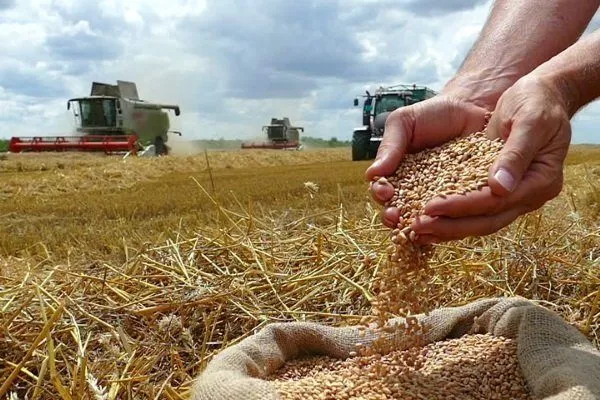
Winter wheat harvesting occurs when the grain is fully mature (waxy). Direct combining is typically used, as it minimizes grain loss. The maximum harvesting time is 10 days.
However, if the field is heavily weeded, separate harvesting is used. In this case, grain moisture should be kept below 30%, which will help prevent excessive shedding. This method is also used if the wheat has grown thick and tall.
In this video, a leading practitioner discusses winter wheat cultivation:
Diseases, pests and prevention
Parasitic diseases and pests can reduce grain yields. Winter wheat is susceptible to many diseases:
- ascochytosis;
- powdery mildew;
- Fusarium head blight and Fusarium root rot;
- snow mold;
- brown rust;
- ophiobolous root rot;
- septoria of leaves and ears;
- hard, loose and stem smut.
The most harmful pests are:
- grain beetles;
- grain beetle;
- aphid;
- Hessian fly (mosquito) larvae and the individuals themselves;
- cereal flies;
- bread drinker
Specialized formulations are used to combat pests. All treatments are carried out at the sowing stage. If insect numbers exceed the permissible limit, the fields are re-treated with insecticides. To reduce the negative impact on the plant, Aminokat 10% or 30% is used in parallel.
Favorable and unfavorable factors
There are a number of factors that influence the yield of winter wheat, both positively and negatively.
Increasing crop yields
The yield rate can be increased by following the following recommendations:
- crop rotation, selection of correct predecessors;
- application of optimal doses of mineral and organic fertilizers;
- high-quality soil cultivation before sowing;
- correctly selected variety;
- timely treatment of plants from pests and diseases.
Decrease in crop yield
Several factors negatively affect the yield rate:
- biological — the use of varieties that are not immune to diseases and pests and are prone to lodging and shedding;
- agronomic — incorrectly selected variety for a particular region, errors in sowing and harvesting times;
- technical - design flaws in machines, which result in poor quality plowing, harrowing of the soil or harvesting of grain;
- other factors — a large part of the harvest can be lost due to improper storage, as well as if the grain is infected with pests.
Storage conditions
With optimal storage conditions, virtually the entire winter wheat harvest can be preserved without loss of grain quality. To minimize losses, the grain should be dried and its moisture content should not exceed 12%. It should be stored at +12°C. Regular inspection for microorganisms and pests is necessary.
Winter wheat is a crop widely used not only in the food industry but also in many other sectors. However, a bountiful harvest can only be achieved with proper care and adherence to all wheat cultivation recommendations.