
The "Moskovskaya-40" winter wheat variety was developed relatively recently and has already earned recognition from agronomists. It combines low production costs with excellent flour quality. This wheat produces a good yield even in the harshest conditions.
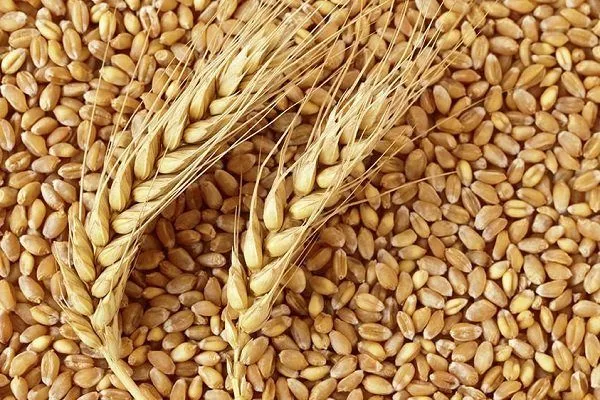
Moscow wheat produces high yields
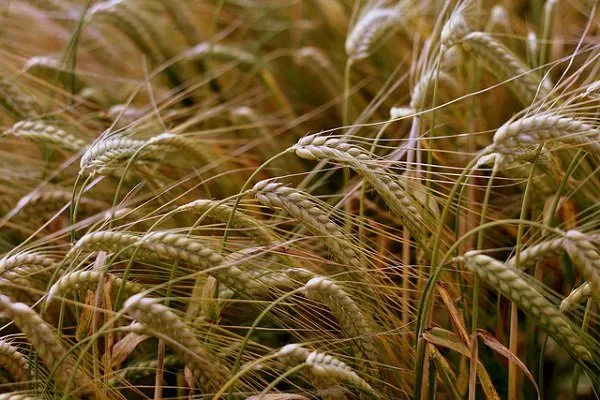
Moscow wheat withstands winter well
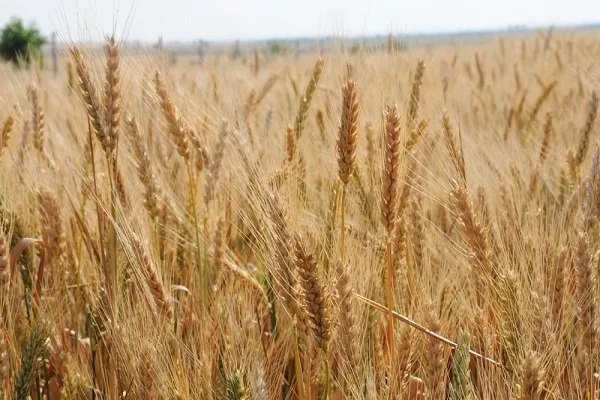
Moscow wheat
History of the variety's origin
| Name | Disease resistance | Winter hardiness | Productivity |
|---|---|---|---|
| Moscow-40 | High | High | 100–117 c/ha |
| Mironovskaya-808 | Average | Average | 67–74 c/ha |
| Moscow-39 | High | High | Not specified |
| Moscow-56 | Very high | Very high | 141 c/ha |
In the first half of the 20th century, 90% of winter rye was grown in central Russia. Wheat, a more sensitive crop, lacked winter hardiness and was unsuitable for the region's poor soils. Breeders focused on developing wheat varieties suitable for cultivation in this region:
- To impart the desired properties, wheat was crossed with wheatgrass; the first winter-hardy varieties were named WGH (wheat-wheatgrass hybrid).
- In 1964, the "Mironovskaya-808" variety was developed. It surpassed the PPG varieties in quality and remained the main variety cultivated in the non-Black Earth region until 2010. However, in harsh conditions and on depleted soils, this wheat did not produce the desired amount of protein in the grain or the desired gluten quality. The baking industry had to import wheat grown in Saratov and Kazakhstan.
- In 1999, the first winter wheat variety grown in the Moscow region was developed. It combined high yield and high quality, making it suitable for Russia's central regions. The experimental variety was initially introduced as Moskovskaya-39. It was developed by crossing the Yantarnaya 50 and Obriy varieties at the Nemchinovka Research Institute of Agriculture for the Central Regions of the Non-Chernozem Zone.
- The resulting wheat reached 1 meter in height and fell over under unfavorable conditions. It was resistant to most diseases and fungal infections, but lacked immunity to powdery mildew and leaf rust, and did not fully meet international standards. Nevertheless, Moskovskaya 39 was used for baking rather than for livestock feed.
- Breeders continued their selection, and 15 years later, the Moskovskaya-40 wheat variety was born. Since 2011, it has been included in the State Register of Promising Varieties of the Russian Federation for the Central Region. This wheat's stems turned out to be shorter and stronger, allowing it to preserve almost all the grains.
- But the work on improving the varietal characteristics did not stop there, and as a result of crossing the Inna, Moskovskaya 39, and Mironovskaya semi-intensive varieties, the Moskovskaya-56 variety was obtained. It is even shorter, with an elastic and hard straw.
It has been officially cultivated since 2008. This variety is resistant to lodging and has high disease resistance. For the first time in the history of the USSR and Russia, wheat yields reached world records at 141 centners per hectare, twice the global average. Moreover, this grain has the highest protein content among other varieties.
Characteristics of the variety
This is one of the latest varieties bred for the Non-Black Earth Zone and is recommended for cultivation in areas with long, cold winters and stable snow cover.
Moscow wheat has the following properties:
- Variety – erythrospermum.
- Type of cultivation - winter.
- Appearance: An early maturing plant with an upright/intermediate bush and short stems.
- Ear:
- dense;
- club-shaped;
- medium length (7.4 cm);
- medium density (18-19 spikelets per 10 cm of stem);
- awns are medium, diverging;
- The average number of spikelets in an ear is 14-16, grains – 27-30;
- Grain weight per ear is 1.06-1.26 g.
- Variety type: highly adaptive.
- Productivity - high:
- 100–117 c/ha (intensive cultivation technology);
- 67–74 c/ha (basic cultivation technology).
- Growing season — 309–324 days.
- Weight of 1000 grains — 50–55 g.
- Ripening type - early ripening.
- By height – short-stemmed, 73-105 cm.
- Grain characteristics:
- large;
- vitreous;
- grain nature 810 g/l.
- Winter hardiness – high (overwintering in 4 years – 94.4%), plasticity.
- Productivity – high (a large number of productive stems per 1 sq.m., on average 564 pieces over three years, which is higher than the standard of 106 stems).
- Direction of use - bakery (valuable wheat):
- the content of raw gluten in flour is up to 34.7%;
- protein content in grain up to 15%;
- Ripening period - late.
- Growing season: 271-319 days.
- Seed germination - tall and friendly.
It adapts well to environmental conditions in growing regions.
Drought resistance
The variety is quite drought-resistant; if irrigation and harvesting are carried out in a timely manner, the plants produce good grain.
Disease resistance
Moscow wheat is resistant to most diseases that are dangerous for cereal crops:
- hard smut;
- brown rust;
- to powdery mildew;
- snow mold.
The variety is susceptible only to septoria.
This eliminates the need to additionally treat crops with expensive chemicals, which contributes to low grain production costs.
Winter hardiness
Wheat exhibits high frost resistance. To ensure crops survive the winter, proper care is essential in the fall.
Lodging resistance
This variety was bred to be extremely resistant to lodging. The stem of Moscow wheat is able to withstand strong winds and other adverse conditions due to its structure.
- short;
- lasting;
- hollow.
Resistance to shedding
Thanks to its long, strong awns, which are covered with tightly packed grains, this wheat exhibits good shatter resistance. Its high tillering capacity allows for large yields.
Taste qualities of the variety
Moscow wheat is a valuable variety with excellent taste and baking qualities. It produces premium grade 1 flour (34% wet gluten and 70% water absorption), which is used to bake bread and other baked goods on an industrial scale.
The dough proofing time is 4.5 minutes, and its shape stability is rated at 5 points.
Advantages over other varieties
Unlike other varieties, where increased yields lead to decreased protein and gluten levels, the Moskovskaya wheat variety is an exception to the rule, producing good yields while maintaining grain quality.
This variety shows good results when grown in non-chernozem zones, and withstands the winter period well in central Russia.
Features of cultivation
Winter wheat of the Moskovskaya variety, if cultivated according to the proper technology, is capable of producing high yields on an industrial scale.
Recommended region
The variety is suitable for cultivation in the following districts:
- Central Black Earth;
- Volga-Vyatka;
- Central Federal.
Predecessors
The best predecessors for the winter wheat variety Moskovskaya are:
- pure and occupied pairs (vetch-oat, pea-oat mixtures);
- perennial herbs;
- corn for silage;
- grain legumes and early-harvested row crops;
- vegetable crops.
Planting dates
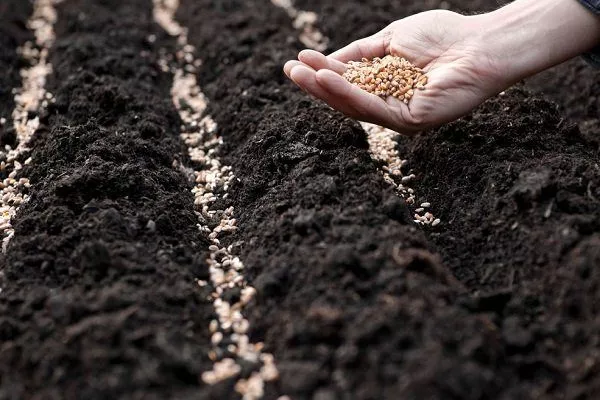
Wheat is sown in early autumn, 2 months before the onset of stable frosts (August 25 – September 15).
Soil and seed requirements
Seeds must be treated no later than 2 days before sowing to prevent planting material from becoming diseased and to ensure strong and uniform shoots.
Winter wheat is demanding in terms of soil composition and moisture:
- Timely irrigation during the sowing period. If there is a lack or excess of moisture, crops may die.
- The optimal temperature for seed germination is +13…+18 °C. If the temperature drops to +4…+5°C, wheat growth will slow and dormancy will set in. In the spring, when plant growth resumes, favorable temperatures will range from +11…+15°C. The optimal temperature range during grain filling is +20…+25°C.
- Loosening. Necessary to ensure air access to the roots.
- Weed control. To prevent weeds from choking out the seedlings, it's important to sow seeds at the right time. Herbicides are used on fallow fields, but their effectiveness decreases as temperatures drop to 12°C, and at 8°C to 10°C, they become ineffective.
- Soil acidity. For wheat, the soil pH should be close to neutral (5.6 - 6.0); to deoxidize the soil, lime is added to the fallow fields or to the preceding crop in advance.
- The best soils are:
- black earth;
- chestnut;
- slightly podzolic.
Landing technologies
Sowing of winter wheat of the Moskovskaya variety is carried out in several stages:
- Selecting a location. It is necessary to select a site for sowing in accordance with the crop’s requirements for soil composition, and taking into account crop rotation.
- Soil preparation and fertilization.
- Preparation of seed material, treatment.
- Sowing. Narrow-row sowing, running strictly from north to south, is preferred to ensure even sun exposure to all seeds. Since winter varieties are characterized by increased ear production and uniform emergence, seeding density should be low to avoid crowding. The seeding rate ranges from 3.5 to 6 million viable seeds per hectare, depending on soil type and condition. Seeding depth varies from 4 to 6 cm.
Caring for plantings
As the wheat grows, care for the plants is carried out, which includes:
- Rolling seeds after sowing. Improves seed-soil contact and reduces moisture loss.
- Herbicide treatment. This is done in the fall after germination, or in the spring during the tillering phase of the wheat. It is best to do this in dry, windless weather at temperatures between 15ºC and 25ºC.
- Treatment with pesticides. In autumn, crops are treated against snow mold, and during the period of ear formation and grain formation, treatment is carried out against a range of diseases:
- seed treatment with a fungicide and insecticide,
- one or two fungicide treatments during vegetation,
- the frequency of application of insecticides depends on the number of pests
- Regular fertilization.
Fertilizer
To increase the yield and quality of grain, mineral fertilizers are used:
- Nitrogen. There are 2 options for nitrogen fertilization:
- Gas - carried out 3 times at certain stages of tillering, internode and flag leaf, magnesium sulfate is added with one of the nitrogen fertilizers.
- Solid mineral fertilizers are applied in two stages: first, two-thirds of the fertilizer is applied, and then the remainder of the total amount is applied. In this case, the first application promotes good rooting, while the spring application promotes tillering and the formation of productive stems. Subsequent applications increase the protein content of the grains. Ammonium nitrate is preferred.
- Sulfur. It improves the baking qualities of wheat and increases the yield. It is applied to the soil during the period of green mass development. During the early stages of development, wheat has sufficient sulfur naturally present in the soil. Some agronomists use ammonium sulfate and slaked it with lime.
- Potassium. If the soil is deficient in potassium, it should be included in the fertilizer. In this case, the region and climate conditions should be taken into account.
- Phosphorus. It is added either to the main fertilizer mix or during sowing. This element increases winter hardiness and helps plants absorb essential nutrients. Phosphorus is beneficial for root development and is essential for the successful growth of the plant. Agrotechnical analysis of its content is required in the fall.
- ✓ Nitrogen fertilization should be carried out at a soil temperature of at least +5°C for effective absorption.
- ✓ Phosphorus fertilizers are most effective when applied to soil with a pH of 6.0-7.0.
For intensive technologies, nitrogen fertilizers are applied in the amount of (80–100 kg/ha active ingredient)
About harvesting and storing
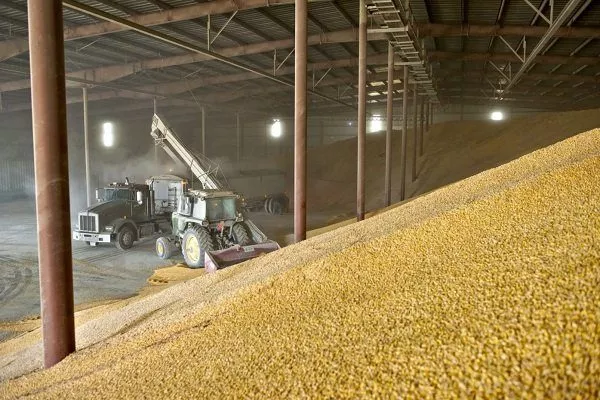
Harvesting is carried out when the wheat is fully ripe (waxy ripe) using direct combining, when the grain moisture content drops below 20%. The grain is then dried to a moisture content of 13–14%. During storage maintain grain moisture at a level of 14%, preventing spontaneous combustion of the grain mass.
The Moskovskaya wheat variety has already proven itself to be a high-yielding, frost-resistant crop and is successfully planted in areas with challenging climates—in the non-chernozem zones. It already occupies a leading position in the global market in terms of quality and yield.