
To avoid turning over piles of compost every year, many gardeners turn to artificial fertilizers. However, there are more affordable ways to enrich the soil with nutrients and improve its structure. Among these, one of the most notable is green manure, using a cereal crop such as oats. Let's explore how effective this is.
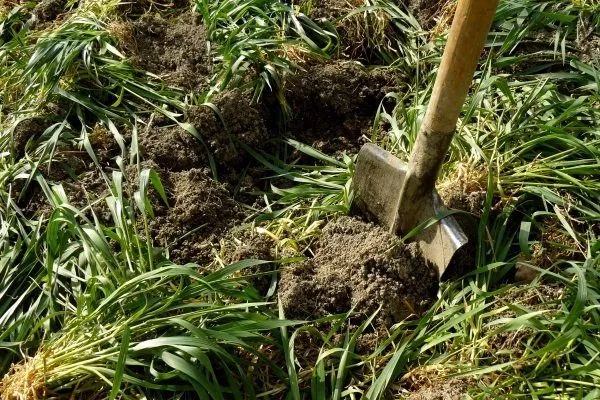
Green manure These are so-called "green manures." Certain plants are specially grown to be buried shallowly in the soil to improve its structure and quality.
Oats as a crop
Oats are an early-season cereal crop that grows widely in temperate climates as a loose bush with leafy stems up to 120 cm tall. Annual oats are most common in nature, but perennial oats also exist, although they are not widely cultivated.
Oats are grown both as a grain and as a green manure. They tolerate low temperatures above freezing, allowing them to be sown in early spring, when the soil has reached physiological maturity. However, unlike rye, oats are frost-intolerant.
The plant is quite moisture-loving, especially during seed germination, which distinguishes it from barley. In dry weather, seedlings are sparse, and the plant subsequently fails to produce dense vegetative mass.
Oats are also a heat-loving crop, but are undemanding regarding soil type, growing in loams, black soils, peatlands, clayey, and sandy soils. Of course, when grown in more fertile soils, the tillering rate and stem formation are higher.
Oats thrive in cool, damp weather, so it's not ideal to use them as a green manure crop in the summer or winter. The ideal season is spring and early fall.
Why are oats used as green manure?
Oats have long been used as a green manure crop due to its following properties:
- It has particularly nutritious stems that contain more valuable protein than alfalfa and clover.
- Vegetative matter contains more potassium and phosphorus than nitrogen. In terms of nutrient content, oat biomass is comparable to manure, but it contains fewer nitrogen compounds. It's worth noting that the amount of these nutrients depends on the plant's age: the older the plant, the more potassium it contains, while nitrogen predominates in young foliage. Therefore, oats are harvested for fertilizer when they reach 20 cm in height. Criteria for selecting ash for processing
- ✓ Use only hardwood ash, as it contains more potassium and phosphorus.
- ✓ The ash must be completely cool and dry, without any plastic or synthetic materials.
Due to its potassium content, oats are especially beneficial for nightshade and berry crops, cucumbers and cabbage, as this substance makes their taste richer and sweeter.
- It has a fibrous root system that strengthens light soils and loosens heavy ones. Furthermore, the incorporated green mass of the plant makes the soil more aerated and moisture-retentive.
- Oats form dense stands—their stems grow close together, preventing weeds from growing between them. Oats simply choke out the weeds, demonstrating greater competitiveness. If unwanted vegetation does appear, it doesn't have time to form seeds before the biomass is mown.
- It produces a high yield – from one hundred square meters of land you can collect a mass equal to 100 kg of high-quality manure.
Thanks to all of the above-mentioned properties, oats can be used to restore neglected areas and integrate them into crop rotation, although this will take time—about 2-3 years. Gradually, the topsoil will be restored, losing nitrates accumulated over years of using mineral fertilizers. The soil will gradually receive nutrients from the green manure, allowing it to become looser and more moisture-retentive.
Oats can be confidently sown as an optimal soil loosener, as well as to prevent root rot in garden crops.
Disadvantages of oats as a green manure
There are several disadvantages of oats:
- It has a small volume of green mass. In spring, the soil may be excessively depleted, so oats alone may not be sufficient for green manure, although they will support the area where the crop rotation is being performed.
- Oats contain little nitrogen. For this reason, oats should be sown in areas already growing alfalfa or clover. Subsequently, the gardener must plow both crops simultaneously.
- Oats require cool, above-zero temperatures and frequent watering. Oats prefer shade, cool conditions, and abundant watering, making them better suited for growing in regions with cool climates and damp springs. In hot weather, the plant will wilt and dry out.
Despite some disadvantages, oats as a green manure have many positive characteristics, which is why they are used by many gardeners.
Which is better: oats or rye?
Every green manure crop has its own advantages and disadvantages, so green manure should be selected based on different plantings and soil types. To determine which green manure crop is better—oats or rye—you should compare their characteristics and determine the planting goals.
You can find out how cultures differ from each other from the table:
| Green manure | Purpose | Soils | Consumption rate |
| Oats | It is grown in areas where a good harvest of crops requiring high amounts of potassium is expected. These crops include tomatoes, peppers, and eggplants. Oats can be sown after the early vegetable harvest, allowing for harvesting before the first hard frost. | Prefers acidic or peaty soils. Not susceptible to root rot. | 1.3-1.8 kg of oats can be sown per hundred square meters. Mowing occurs before mass flowering. |
| Rye | It is planted under a number of garden crops, including zucchini, pumpkin, cucumbers, tomatoes, and late cabbage. It is one of the most frost-resistant green manures, so it is primarily used for winter sowing. | It grows well in all types of soil. It also tolerates virgin soil and garden beds prone to waterlogging. | You can sow 2 kg of rye per 100 square meters. The plant should be mown 2-3 weeks before planting the main crop. |
In arid climates, it's better to sow oats, as rye has a drying effect. If you want to prevent weed growth and eliminate fungal pathogens and nematodes, rye should be used. Its root system perfectly loosens even the heaviest soils, although it does cause the soil surface to dry out.
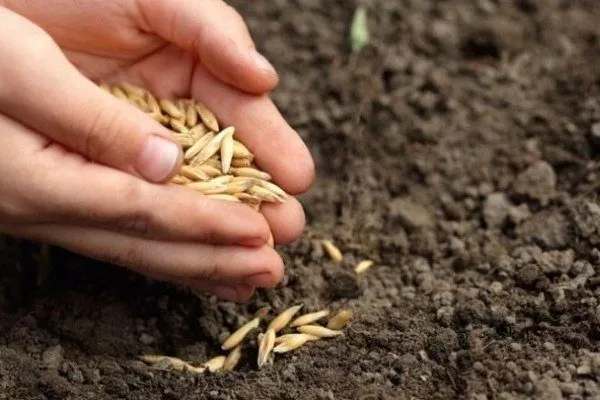
It's best to plant rye before winter, as it's not only cold-hardy but also resistant to even severe frosts. Oats, on the other hand, are better suited for fall or spring planting.
Some gardeners prefer to plant oats and rye together, as oat sprouts enrich the soil with potassium and phosphorus, while rye sprouts enrich it with nitrogen. Furthermore, both crops can be used as green manure in depleted areas with high acidity or salinity. However, when growing crops together, be aware that the main plant will not receive the required amount of moisture and will experience poor growth. To avoid this, the mixed seedlings should be watered generously, as rye and oat sprouts require more water.
What crops should it be planted before?
Oats have virtually no relatives in the garden, unlike other cereals, and are an excellent precursor for most crops. These include:
- raspberry;
- currant;
- strawberries;
- strawberry;
- sweet peppers of any variety;
- tomatoes;
- cucumbers.
Of course, it's important to keep in mind that oats are a cereal crop, so they shouldn't be sown before other cereals, such as buckwheat or wheat. Furthermore, it's not recommended to sow oats in a plot where you plan to grow potatoes. Their root system attracts click beetles and wireworms, which can increase their population and pose a significant threat to the potatoes. Therefore, a different green manure should be chosen for this crop.
After potatoes, on the contrary, it is recommended to sow oats for seed replacement, since their roots contain specific substances that destroy the remains of potato scab in the soil, and also prevent the occurrence of root rot, nematodes and fungal diseases.
Oats should be planted together with legumes, such as vetch or fodder peas, since such a mixture is an improved manure and enriches the soil with all the necessary elements.
Sowing time
Oats are cold-resistant and even cold-loving crops, so it is advisable to plant them during the cool season:
- Early springOnce the snow melts, you can plant winter seeds. The optimal time for this work is early April or late March. Oats thrive in moist soil, so you don't need to wait for the soil to dry out (it just needs to warm up) before planting. It's recommended to plant them approximately 2-3 weeks before planting the main crop, as the green manure is mown during bud formation, before seed set, when it has the highest micronutrient content.
- Early autumnOats are a cold-hardy but not frost-resistant crop, so they should be planted before frost sets in. The plant matures fairly quickly—in about 30-40 days. Oats planted in the fall should be mown and left directly in the beds, lightly covered with soil. This will help loosen the soil and allow it to retain moisture. Oats can also be left unmown. In this case, they will rot over the winter and turn into fertilizer. One plowing will suffice to break them up and mix them with the soil.
Autumn sowing is preferable if the main crop is planted too early, which prevents the oats from forming a dense mass.
So, oats can be sown as a green manure in early spring, when the soil has dried out slightly, or in the fall after harvesting. The greens will be ready for use as fertilizer within 40-45 days of sowing.
The process of rotting plant debris will take about two weeks, after which the seedlings can be transplanted. In total, the preparation process takes two months. With this timeframe in mind, anyone can calculate the best time to plant oats in their garden to ensure the soil is properly nourished.
How to sow oats as green manure?
If the plot is small, green manure is typically sown in rows (beds), while if the plot is large, it is scattered and then raked in to a depth of 3-4 cm. When using the first method, the application rate is 15 g per square meter of plot. If using the solid seeding method, the amount of seed increases by 1.5-2 times. This rate also increases if sowing is carried out in the fall. If a legume-cereal mixture is being prepared, the proportion of oats should be reduced to 40%.
At the same time, experienced gardeners recommend taking into account the following nuances:
- For sowing, it is worth choosing winter oats, especially in the case when the cutting of green mass is planned to be carried out in the spring;
- Before planting, the seed material should be soaked for 20-30 minutes in a weak solution of potassium permanganate or boric acid to prevent infection of the seedlings with fungi;
- seeds can be sown manually or using a special device;
- When sowing by hand, the seeds should be scattered over a pre-moistened area and covered with soil.
Experienced gardeners recommend mixing oat seeds with vetch, as this trick allows you to reduce the nitrogen concentration by 50%.
The following video explains how to sow oats without having to dig the soil:
How to care for crops?
After sowing, oats must be properly cared for according to the following rules:
- Water generously if the weather is dry. Oats are a moisture-loving crop, so if the water supply is insufficient, they won't grow vigorously and produce abundant green mass without additional irrigation.
- Check the condition of the crop every three days. Determine whether the sprouts have emerged, what type they are, and whether the leaves are developing normally or drying out due to the warm weather. If the stems are lagging, add a small amount of mineral fertilizer such as ammonium nitrate or superphosphate. It's worth noting that such problems arise when the previous crop has depleted the soil excessively, even for green manure.
- Use a special agricultural technique: when the oats reach 10-15 cm, trim them back by 30%. This stimulates plant growth, which in the future will yield more green mass for fertilizing the soil. It's worth noting that gardeners have experimentally found that oats cut back by a third of their height outgrow even those sown a week earlier.
In general, oats are easy to grow and require only adequate moisture. Only in rare cases is it necessary to add additional fertilizer to the soil.
When and how to mow oats as green manure?
It should take about 30-40 days from sowing to mowing, but it's best to base the harvest on the growth of the green mass and the flower stalks. As soon as pollen appears, the stems should be cut off. Furthermore, cutting should be done at the initial earing stage, when the oats reach 20 cm, as this is when they contain the most nutrients. Later, the stems will become coarse and decompose poorly in the soil, and will steadily lose potassium.
The following video demonstrates how to cut oats for green manure, and also explains why this particular grain crop is worth sowing as a green manure:
When sowing in autumn, the time for mowing often falls on the last days before the onset of cold weather, and when sowing in spring, before the onset of hot May days.
Oats as a green manure should be cut with a flat cutter, trimming the roots at a depth of 5-7 cm, and then incorporated into the soil to a depth of 5-15 cm, depending on the soil structure: deeper in clay soil, and shallower in light, sandy soil. In any case, avoid planting the oats too deeply, otherwise, without access to air, they will begin to decompose and acidify the soil, causing harm to the plants rather than benefiting them. Simply dig the green mass to a depth of a bayonet, then compact it with the topsoil.
- Check the soil moisture before planting oats; it should be moderate.
- Use a flat cutter to trim the roots to a depth of 5-7 cm.
- Incorporate the green mass into the soil to a depth of 5-15 cm, depending on the soil type.
If mowing is done in the spring, the oats should be incorporated into the soil no later than two weeks before planting the main crop, otherwise they won't have time to rot. If mowing is done in November, there's no need to tamp them down. It's best to do this shortly before planting in April. The mown stems will prevent the ground from freezing too deeply, so they'll be ready for planting in the spring.
Once mixed with soil, the green mass decomposes quickly in sufficient moisture, producing green manure. If necessary, the biomass fermentation process can be accelerated by watering the greens embedded in the soil with an effective microorganism (EM) product or by adding ammonium nitrate.
You don't have to dig up the stems; you can leave them on the ground as mulch. This will protect the soil from drying out and weeds.
If you have a large amount of green manure, don't incorporate the excess into the soil, as this will cause it to turn sour. Instead, throw the remainder into a compost bin, where the green manure will quickly break down into other components. Alternatively, you can place the green manure in a barrel of water or use it as feed for birds and livestock.
Can oats be used in summer?
Oats don't tolerate hot weather well, so growing them in the summer heat isn't recommended. However, some gardeners prefer to use them in the summer, as they are excellent at loosening loam and clay, removing putrefactive bacteria, and removing excess moisture from the soil.
In summer, spring oats are used as mulch, placed between the rows. To speed up the decomposition of the green mass, it should be watered with a solution of biological fertilizer and then covered with a layer of straw. This will also help retain moisture near the roots and encourage soil insects to gradually break down plant debris, converting it into humus.
Video: Oats as a green manure
The method of weeding oats can be clearly seen in the video below:
Oats are a cereal crop that can be used as a green manure crop, as their extensive root system effectively removes weeds and loosens heavy clay soils, preventing them from cracking and drying out. Furthermore, the green mass of oats acts as an excellent fertilizer, enriching the soil with nitrogen, potassium, and other beneficial elements.