
Golden Cob corn is a popular crop among many gardeners and gourmets. Its unique flavor and large cobs make this variety one of the highest-yielding. Proper cultivation and care guarantee plants with strong immunity and high-quality kernels.
Introduction to the variety
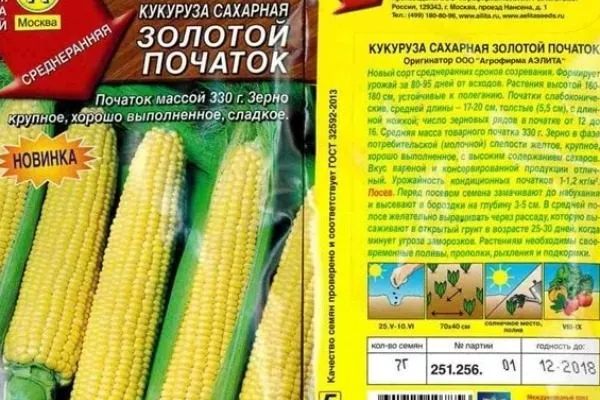
Golden Cob corn is an early-ripening sugar corn variety, entered into the State Register in 2017. The authors are V. G. Kachainik, M. N. Gulkin, S. V. Matyunina and O. A. Karmanova from Agrofirm Aelita LLC.
The plant grows up to 2 m in height and has green leaves. Other characteristic features:
- The lower ear is located at a height of 75-80 cm from the ground.
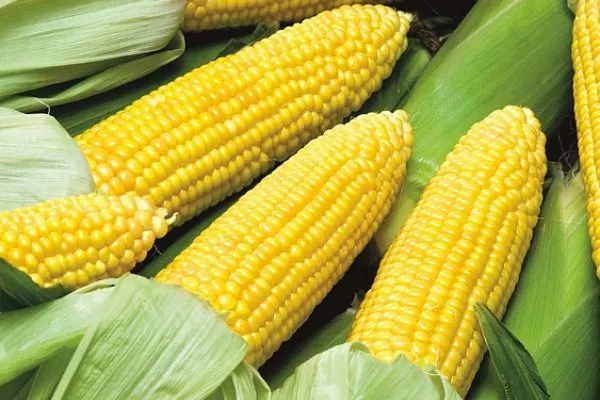
- The cobs are slightly conical in shape, about 22 cm long and weigh approximately 240 g.
- Corn contains up to 18 rows of large, well-formed yellow kernels.
- The cobs are tightly packed together, which gives them an aesthetic appearance.
- The grains have a thin and tender skin, and their structure is very soft and pleasant to the taste.
- The taste is excellent, especially when boiled, which is explained by the high sugar content in the grains.
Plant biology
Golden Cob corn has a number of characteristics typical of the crop as a whole. Like other varieties, this variety has a well-developed root system capable of penetrating deep into the soil to absorb water and nutrients.
Illumination
Corn is a light-loving plant that most quickly enters the generative phase of development with a day length of 8-9 hours. With daylight hours exceeding 12-14 hours, the vegetative phase and the entire period become longer.
Therefore, hybrids intended for northern regions must be genetically adapted to long-day conditions. The same variety produces more internodes and leaves in northern regions than in southern ones.
Soil
Corn grows well on medium and light loamy, sandy loam and sandy soils underlain by moraine loam, and on sod-podzolic soils with a high humus content.
Poorly cultivated, heavy loamy soils, and sandy soils underlain by sand are unsuitable for growing corn. Soil requirements are closely linked to climatic conditions.
Temperature conditions
Corn can die at temperatures dropping to -2 to -4°C. The optimal temperature for its growth and development is 15 to 24°C.
Growing seedlings
Growing corn isn't difficult, but it does require some attention from the gardener. Soil preparation and proper seeding are essential.
- ✓ The optimal soil temperature for sowing corn seeds should be at least +10°C.
- ✓ The distance between plants when planting seedlings should be 30-40 cm, and between rows - 60-70 cm to ensure sufficient space for growth.
Soil for sowing
Plant corn kernels in paper or peat cups filled with a nutrient-rich mixture of peat, compost, and sand in a 1:2:1 ratio. Add ash, approximately 400 g per 10 kg of mixture, or use a general-purpose vegetable compost.
Sowing seeds
Growing corn from seedlings is practiced in northern regions, where conventional sowing prevents the corn from reaching maturity. Cobs reach maturity in 70-90 days. For planting in the ground, use 30-day-old seedlings. Plant them 3 cm deep and sprinkle with sand.
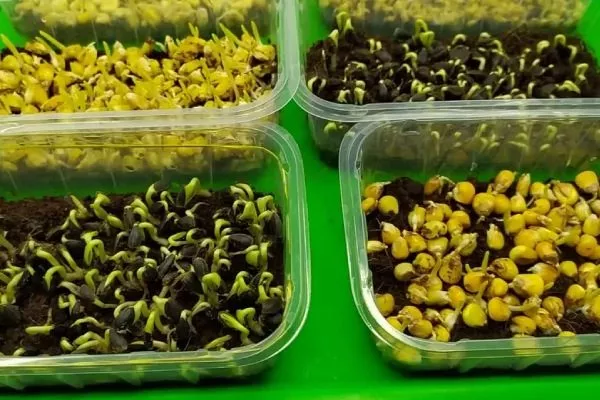
Ten days before planting the seedlings in the ground, fertilize them and water them generously. Sprouted seeds can be sown: to do this, place the fungicide-treated seeds on damp cheesecloth or filter paper a few days before planting.
Agricultural technology
The crop's yield and immunity depend on its care. It's important to implement simple agricultural practices to ensure the plants reward you with large, high-quality ears.
Transplanting
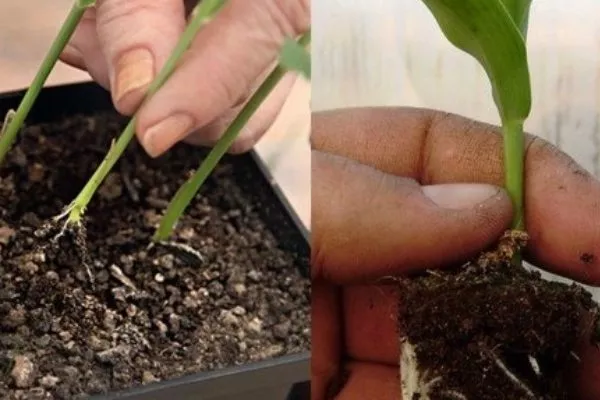
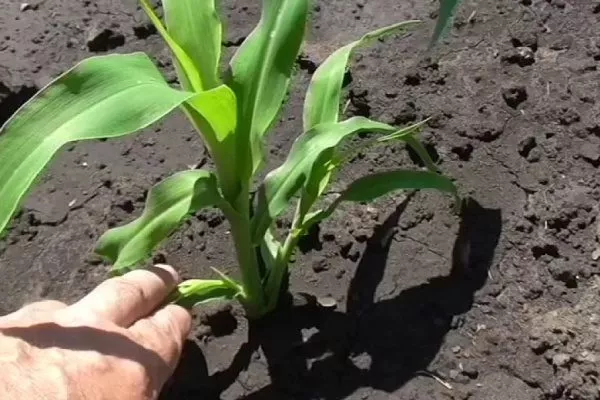
When transplanting corn seedlings into open ground, they should have a well-developed root system. Don't keep seedlings indoors longer than the three true leaves stage. When transplanting into open ground, plant them at a depth slightly deeper than they were growing in the cups.
Plant care and formation
Some corn varieties are prone to producing numerous side shoots, which drain nutrients and prevent the development of full-fledged corn. Therefore, it is recommended to remove all side shoots, leaving only 2-4 main ears.
- The first feeding should be carried out when 3-4 leaves appear, using a complex mineral fertilizer.
- The second feeding should be carried out in the 6-8 leaf phase, preferably with organic fertilizers.
- The third feeding should be carried out at the beginning of cob formation, using potassium-phosphorus fertilizers.
Fertilizers and dressings
Corn responds well to organic fertilizers such as compost, chicken and cow manure, and rotted manure. These additives promote growth and development. Liquid inorganic fertilizers, such as potassium, superphosphate, and ammonium nitrate, also contribute to positive results.
Fertilize the soil when six leaves appear on the stalk. Corn appreciates weeding and loosening, so do this at least three times during the growing season. The final weeding should not be too deep to avoid damaging adventitious roots.
Hilling up the plants once or twice helps stimulate the growth of additional lateral roots, which strengthen the stem and prevent the corn from falling asleep. Remove side shoots, as they can slow the growth and maturation of the ears.
Reviews
Golden Cob corn is a garden gem and a source of delicious culinary delights. Its juicy, sweet cobs add a unique aroma and flavor to many dishes. Thanks to its ease of cultivation and high yield, this variety has become very popular among both novice and experienced gardeners. Proper care is essential.