
Strawberry corn is a new variety with a very unusual appearance. Its primary use is ornamental, but the kernels are also edible due to their high nutrient content. It's a heat-loving crop, suitable for cultivation not only in the south but also in cooler climates.
Varietal characteristics
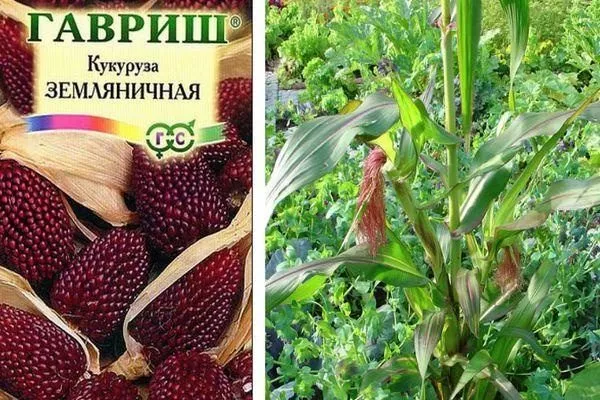
Strawberry corn is a unique variety of corn distinguished by its unusual maturation habit. With proper care and nutrients, new shoots actively develop at the base of the corn stalk, spreading out in a random pattern.
Characteristic features of appearance
This annual cereal crop is characterized by a medium height—from 150 to 200 cm (and sometimes even 300 cm)—and very strong, slender shoots. The variety can also be identified by other characteristics:
- Leaves:
- are located on the stem alternately and are characterized by a ribbon-like structure;
- the color of the foliage is green and rich, their length reaches up to 50-70 cm, and the width is only 5-8 cm;
- there are longitudinal light stripes on the surface of the leaves;
- The structure of the leaf blades is rather hard and rough.
- Cobs:
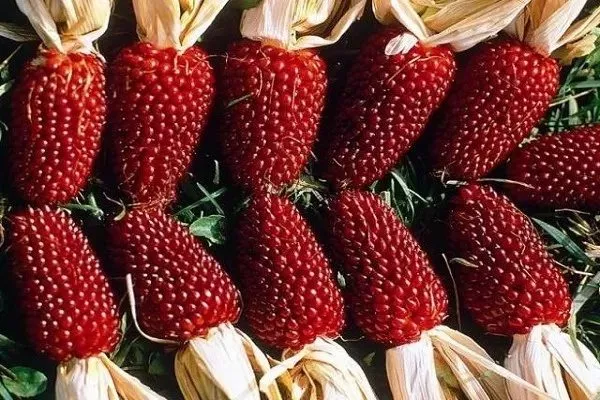
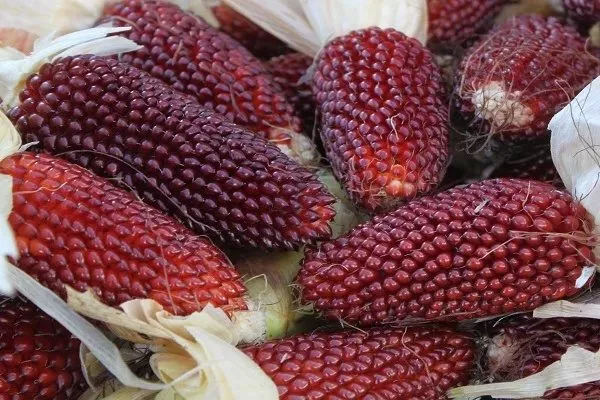
- small - their length does not exceed 8-10 cm, and the diameter is 6-8 cm;
- the shape is standard corn, but with a widened base that turns into a narrow top;
- In appearance, many compare them to pine cones or strawberries;
- the weight of one cob varies from 60 to 75 g;
- The heads emerge from the leaves early, when they are just beginning to ripen.
- Grains:
- small and numerous;
- their shape is pointed-oval;
- The color is bright ruby red.
- Spikelets:
- are flower inflorescences;
- contain a huge number of buds of different sexes;
- are located along the center line.
Purpose and taste
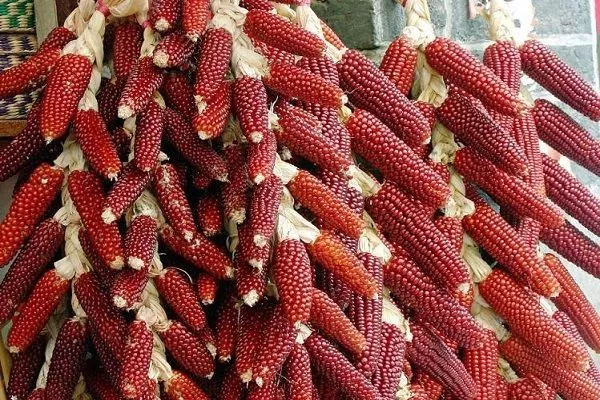
Strawberry corn has a wide range of uses – it's used to create hedges, zone large areas, and decorate flowerbeds. The fruits and leaves are used to create aesthetic compositions. Corn plants with attractive foliage create the perfect backdrop for flower beds.
Additionally, corn kernels are a valuable food product due to their vitamin and mineral content. They are processed into flour and grits, and the immature buds serve as excellent animal feed. Recently, these corn kernels have begun to be used to produce natural food pigments.
When to harvest?
The crop matures in 80-90 days, with mass harvesting occurring in August-September. Checking the grain's maturity is simple: when pressure is applied, a whitish liquid flows out, and the buds begin to slightly die back.
Harvests intended for cooking are recommended to be stored in the refrigerator, while other parts of the plant can be stored in a cool room with access to fresh air for several years.
Productivity
Strawberry corn yields high levels due to the formation of 2-4 ears per stalk. Maximum yields are achieved when the plants are grown separately.
Growing and care
Strawberry corn is grown both from seeds and from seedlings. The former method is considered more popular and profitable.
Features and varietal requirements:
- The best time to start sowing is in early May, when the soil and air temperature reaches +13…+18 degrees.
- Corn requires a location with plenty of sunlight and protection from winds.
- It prefers light, aerated soils with a high content of organic matter and good ventilation.
- The best predecessors for corn include beans, other legumes, alfalfa and potatoes.
- Before planting, the seeds are warmed in the sun and soaked in water for 24 hours.
- For planting, holes are made, in each of which several seeds are placed, immersed in the ground to a depth of up to a maximum of 7 cm.
- Corn does not tolerate dense planting, so the distance between plants should be 45-50 x 45-50 cm.
- Seed germination is observed approximately a couple of weeks after planting.
Watering and fertilizing
Corn care includes watering during drought, periodic soil loosening, weeding, removing side shoots, thinning the plants after the first emergence, and twice-season fertilization with organic and mineral fertilizers. Disease prevention is also important.
Peculiarities:
- It's important to water the plant carefully, avoiding washing out the root system. Ideally, create shallow channels between the rows of corn to allow water to accumulate.
- Fertilizing corn crops is key to healthy corn. It requires both mineral and organic fertilizers, which should be applied during periods of intensive growth and before budding.
Diseases and pests
Strawberry is susceptible to various fungal infections, including loose smut, fusarium wilt, stem rot, and smut. Disease prevention includes disinfecting the soil before planting and treating the seeds with special preparations.
Among the insects that can damage corn, the most dangerous are root aphids, cotton bollworms, and Swedish flies. Broad-spectrum insecticides are effective pest control.
Advantages and disadvantages
Strawberry corn, a decorative variety, has a number of advantages:
Reviews
Strawberry corn is a new variety in our country. It's considered ornamental, but the cobs are also suitable for eating, canning, and other purposes. If all agricultural requirements are met, this variety will yield abundant harvests. The key is to carry out preventative treatments against diseases and pests in the spring, as well as timely feeding with organic matter and minerals.