
Morning Song corn is grown by both novice and experienced agronomists due to its minimal requirements. This variety tolerates periods of drought and produces good yields, but to increase the number of cobs, regular cultivation is essential. Under these conditions, the plant will thrive.
Who developed the variety and when?
Developed in 2002 and included in the State Register, it is the result of the work of plant breeders A. A. Kapustin and A. V. Medvedev. This hybrid variety belongs to the sweet corn category and is distinguished by its universal use.
Description of the variety
Corn occupies a significant place not only among large field crops but also among vegetable crops. It is grown both in industrial fields and in small gardens, especially given the constant expansion of modern breeding. One of the new and popular varieties is "Morning Song."
Characteristics of the appearance of the plant, cobs and grain
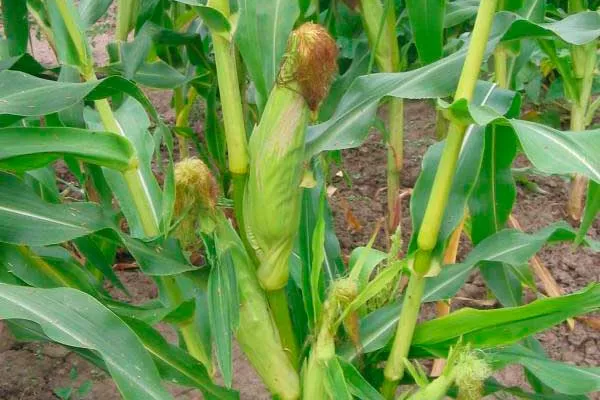
Characterized by a tendency to branch and a medium height, it reaches 1.4-1.5 m in height. The stem is covered with 12 leaves. The cobs have the following characteristics:
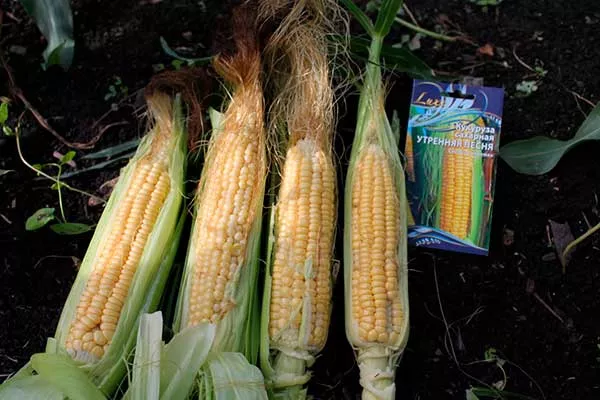
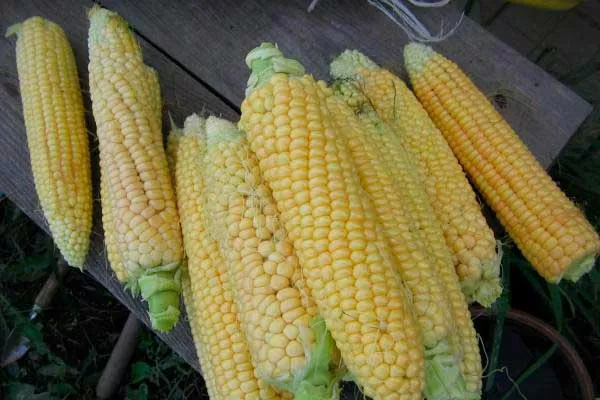
- Dimensions – large, reaching a length of 17 to 20 cm. The diameter is from 4.2 to 4.5 cm with a weight of about 200 g.
- Form - cylindrical.
- Grains – wide, arranged in 12 or 14 rows.
- Color - yellow, the skin is soft and tender.
Purpose and taste
The grains contain a high amount of sugar, making them sweet and pleasant to the taste. This variety is eaten fresh, frozen, and preserved.
Thanks to its versatility, it can be used in a variety of dishes and salads, both cooked and raw, without losing its flavor. At the milky stage, the fruit's sugar content is approximately 8%, and its starch content is approximately 12%.
Ripening time
Ripening is early. The hybrid's seeds reach maturity in late August or early September. From germination to technical maturity, it takes approximately 70-74 days.
Productivity
This variety is noted for its high yield and stability. With proper care, up to 7 kg of harvest can be obtained from each square meter of planting.
Growing and care
Corn thrives in loose, light soil that warms quickly and allows moisture and air to pass through. It requires sufficient soil fertility and a warm, sunny growing location. Plant the crop when the soil has warmed sufficiently and the risk of frost has passed—in mid- to late May.
- ✓ Soil pH should be between 6.0-6.8 for optimal nutrient absorption.
- ✓ The soil must have high drainage capacity to avoid water stagnation and root rot.
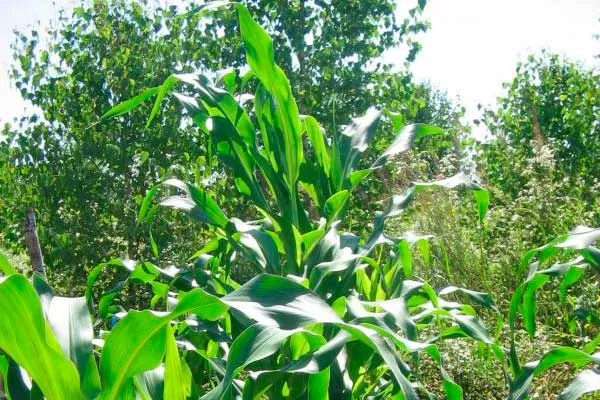
The landing algorithm includes the following steps:
- Dig furrows 4 cm deep in heavy soil and up to 8 cm deep in light soil.
- Sow 3 or 4 seeds at a time, 40 cm apart.
- The distance between rows is from 50 to 60 cm.
- If planting is dense, thin out the plants so that the distance is at least 30 cm.
Caring for this plant doesn't require much effort, but regularity is important. Provide the plants with:
- constant watering, especially during dry periods;
- mineral fertilizers for good growth and yield;
- weeding and loosening the soil.
Avoid cross-pollination to maintain the varietal characteristics of Morning Dew.
Resistance to diseases and pests
The variety is resistant to diseases and most pests. However, under unfavorable weather conditions or improper care, the risk of infection increases.
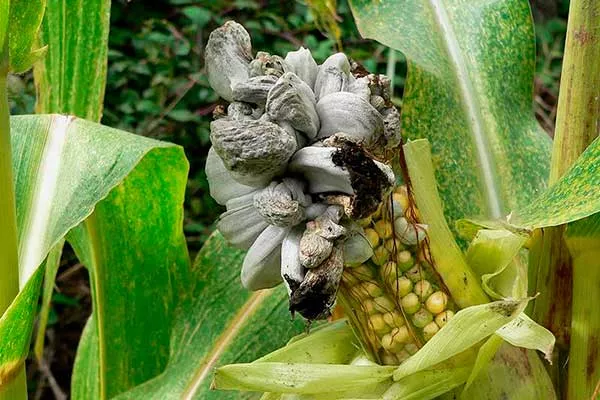
Possible damage by such diseases:
- Nigrosporosis. A fungal disease that can completely destroy a planting in unfavorable climates, especially during wet weather. Remove affected plants, as chemical treatments are not always effective against nigrospora.
- Fusarium. The first sign is browning of the kernels. Treating corn for the disease is often futile, so focus on prevention and seed treatment.
- Dusty smut. This fungal disease often attacks plants grown in the south due to warmth and moisture. Practice crop rotation and remove weeds promptly to prevent this disease from developing.
| Disease | Sustainability level | Recommended preventive measures |
|---|---|---|
| Nigrosporosis | Short | Removal of affected plants, crop rotation |
| Fusarium | Average | Seed treatment before planting |
| Loose smut | High | Crop rotation and moisture control |
Advantages and disadvantages
Before planting a new crop in your garden, study its positive and negative qualities to avoid any unpleasant surprises. The advantages of a hybrid include the following:
Reviews
Morning Song corn is a promising choice for both agricultural plots and home gardens thanks to its high yield, excellent flavor, and good resistance to disease. Although this variety can be somewhat demanding regarding growing conditions, its potential benefits outweigh the potential challenges.