
The intended use of the raw material determines the requirements for harvesting corn. This is also a determining factor when calculating the optimal time for harvesting the plant for grain or high-quality silage. The harvested crop also requires proper processing and storage.
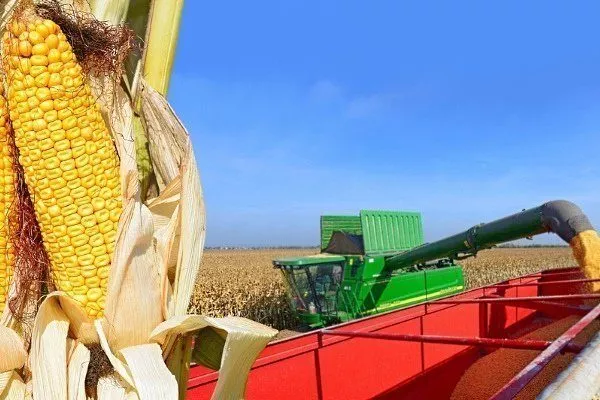
Cleaning period
Corn seeds should be harvested when they are sufficiently ripe, with a moisture content of 30% to 40%. Sometimes the grain is still immature, but there is a risk of heat damage. In such cases, a moisture content of around 40-45% is sufficient. However, if the moisture content falls below 18%, losses will be significant. The exact timing depends on the purpose of harvesting.
| Name | Ripening period | Disease resistance | Productivity |
|---|---|---|---|
| For grain | 60-70 days | High | High |
| For silage | 45-55 days | Average | Very high |
For grain
In this case, the farmer's main goal is to obtain corn with the highest possible dry matter content. Lodging-resistant hybrids are often grown for this purpose. To obtain cob grain, harvesting should begin when the dry matter content reaches approximately 60%. If harvesting is planned with threshing, the optimal dry matter content may exceed 70%.
You can tell if the dry matter content has reached the desired level by the presence of a black layer where the kernels attach to the stem. They should also be shiny and firm.
There is no point in touching the corn during periods of high grain moisture, since at this time the proportion of impurities, crushed grains, and damaged embryos increases significantly, which negatively affects the marketability of the grains.
It's important to note that the harvesting process typically extends over two weeks. To avoid a shortfall, it's best to sow hybrids with varying ripening times. If you need to harvest corn with a higher dry matter content as early as possible, it's best to grow early-ripening hybrids.
In any case, corn should not be left in the field until late autumn, as frequent rains can cause it to become infected with fungal diseases, which will significantly reduce its feed value. Furthermore, there is a high risk that the seeds will lose their viability.
For silage
Corn is harvested at the waxy stage of kernel maturity or at the end of the milky-waxy stage. At this stage, it has the following characteristics:
- the moisture content of the leaves is about 65-70%, and of the grains – from 35% to 55%;
- The dry matter content in grain is 60%, in cobs – more than 55%, in the whole plant – 28-35%.
Harvesting at earlier stages of corn development can result in a significant loss of nutrients. This is because, at the beginning of the milky-waxy stage, high grain moisture levels and dry matter losses cause silage to become more acidic, losing approximately 5% of its dry matter through the juice. Furthermore, premature harvesting is unacceptable, as it leads to a 1.3-1.7% weekly energy loss.
If silage is harvested at the waxy stage of corn grain ripeness, it will provide 20% of the animal's energy, reducing feed costs without compromising dairy cattle productivity. High-quality corn silage is particularly beneficial for cows, as it satisfies their energy needs, thereby promoting higher milk production.
When determining the optimal harvesting time, it's also worth considering the percentage of cobs. The higher the percentage, the further the acceptable harvesting time shifts toward the end of the waxy stage. To produce silage with high feed value, harvesting should begin when the percentage of cobs reaches approximately 50%. Ensiling corn at this stage prevents sap infiltration from the silage, which can lead to problems with mass compaction, fermentation, and aerobic stability.
Climate conditions are another important factor, as corn is quite sensitive to frost. At the waxy stage, it can withstand temperatures as low as -4°C. Frozen corn for silage must be harvested within 5 days, as once temperatures rise above freezing, the plant can become infected with fungi and bacteria, rot, or break.
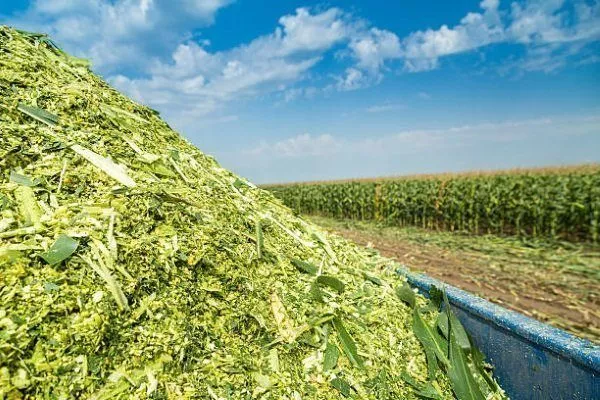
Crops that have been exposed to frost or drought must be harvested immediately, as excessive dry matter content (more than 30%) in the leaf and stem mass will negatively affect the ensiling process.
How to collect grain?
This can be done in two ways:
- cutting off the cobs (with or without cleaning);
- threshing of raw materials (using corn harvesters).
The first method is used for harvesting food and seed corn, and the second for fodder corn.
Regardless of the specific method, the farmer must comply with agricultural requirements and, following all work, conduct quality control.
Agricultural technology
Before you start cleaning, you should consider the following requirements:
- When harvesting cobs, the harvesting rate must be at least 96.5%. The maximum percentage of broken cobs is 2%, and the percentage of damaged kernels on the cob is 1%.
- When harvesting without husking, the kernel husking rate on the cob should not exceed 1%, and when harvesting with husking, it should not exceed 2%. In the latter case, the degree of husking on the cob should not be less than 95%.
- When harvesting corn with threshing, grain loss behind the combine should not exceed 0.7%, and underthreshing should not exceed 1.2%. The crushing rate should not exceed 2.5%, and the grain presence in the silage should not exceed 0.8%. Overall, grain damage during threshing should not exceed 2%. The minimum grain cleaning rate is 97%.
- When harvesting with chopping and collecting leafy stem material, the stems should be cut at a height of 10-15 cm. The harvesting efficiency should be no less than 98%. It is also important to prevent loss and contamination of the material during loading into the vehicle. The content of particles up to 50 mm in size in the chopped material should be at least 85%.
- ✓ For grain intended for food purposes, the critical moisture content should not exceed 14%.
- ✓ For feed grain, moisture content up to 16% is permissible, but subsequent drying is mandatory.
If grain combines are used, the surface area of the kernels on the cob cannot be more than 6%, and if corn harvesters are used, it cannot be more than 1.5%.
Collection vehicles and traffic pattern
The following combines are most often used for grain harvesting:
- Khersonets-200;
- Khersonets-7;
- COP-1;
- KSKU-6;
- grain harvester with PPK-4 attachment.
A header is used in conjunction with this equipment, which helps improve the process and reduce losses. If necessary, it can be replaced with a 4- to 8-row corn harvesting attachment, which allows the cobs to be cut and the straw to be thrown onto the field in chopped form. The straw is automatically chopped by cutting elements built into the combine.
To ensure compliance with all agricultural practices, the direction of travel of the harvesting machine must match the direction of seeding. Therefore, farmers use three main methods of machine movement:
- tonal - the removed corral is reduced by a right turn;
- swath width is increased by turning left;
- combined – the two above mentioned methods of movement are used simultaneously.
What each method represents can be seen in the diagram below:
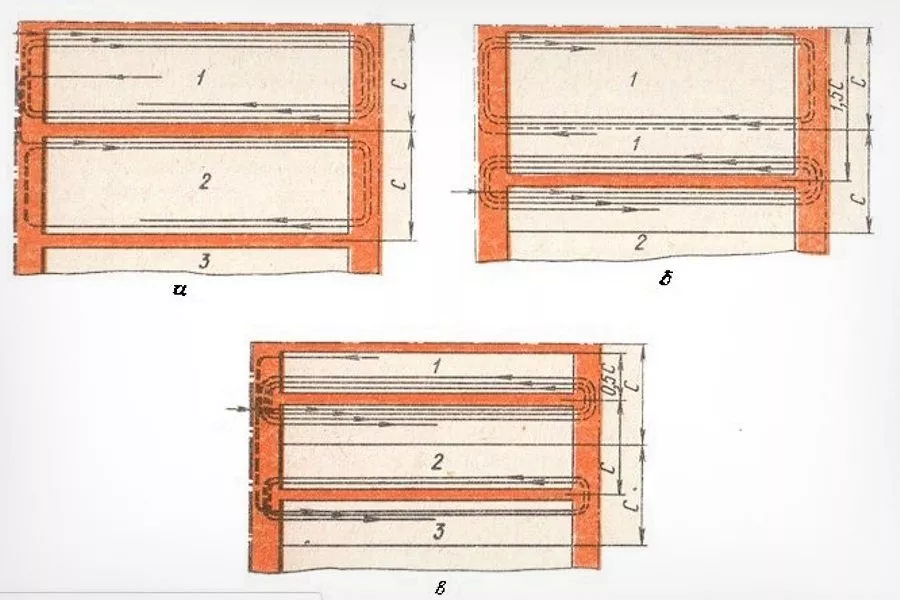
"a" – tone method, "b" – racing, "c" – combined; 1, 2 and 3 – pens; C – pen width.
Let's take a closer look at the diagram using the racing method as an example:
- Before harvesting, mow from all sides and divide into swaths, starting from the abutting space between rows.
- The number of rows in a paddock should be a multiple of the seeder's working width, and the width of the swathes between paddocks should be equal to the seeder's working width. For example, if the crop is 8-row, 4 rows should be mowed on each side of the connecting row.
- The width of the longitudinal mowing should be sufficient for the first pass of the machine (3-6 m), and the width of the mowing of the headland strips should not be less than the width of the headland strip during sowing (25-30 m).
- The acceptable aspect ratio for a corral ranges from 1:5 to 1:1. If the corral length exceeds 1000 m, a 6-7 m wide thoroughfare must be mown across the corral.
In the following video, a farmer will explain how he harvests corn for grain:
You can see the process of harvesting corn cobs and threshing the kernels in the video below:
Quality control
The performance of a corn harvester can be assessed by several indicators: grain loss, cob damage, the degree of cleaning, and cutting height.
To calculate grain loss, you need to collect cobs and loose grain from an area of 10 square meters, determine their average weight, and, knowing the yield, find the percentage of lost grain per hectare.
To determine the degree to which the cobs are cleaned of their husks and whether they are damaged in the form of broken rods, it is necessary to find the ratio of the number of unpeeled cobs and broken rods to the total number of cobs in the sample, presented as a percentage.
How to collect for silage?
As mentioned above, corn for silage is most often harvested between the milky-waxy stage and the late waxy stage, with the mass moisture content remaining between 65% and 70%. Trailed forage harvesters and self-propelled forage harvesters are used for this purpose. We'll explore the requirements for harvesting and how to use these machines correctly below.
Agricultural technology
In this case, the following requirements should be taken into account:
- the stems are mown at a height of 20 cm, which is necessary for excellent quality silage, although the harvest weight will be somewhat reduced;
- the length of plant parts does not exceed 6 mm;
- When grinding, each grain must be crushed;
- contamination of green mass is unacceptable;
- optimal dry matter content is about 30%;
- the number of particles of the required length is not less than 70;
- loss of green mass behind the combine harvester is no more than 1.5%.
Equipment and cleaning principles
The main machine used is a self-propelled forage harvester equipped with a forage chopper. In a single pass, it can mow, chop, and load the crop onto a secondary vehicle.
As a rule, the self-propelled forage harvester KSK-100 is used, as well as the trailed forage harvesters KS-1.8 "Vikhr", KPKU-75 and KSS-2.6 with the PNP-2.4 attachment.
The cleaning process itself looks like this:
- A cutting apparatus of a row or non-row type mows the plant, and an attachment to the knives crumbles it.
- Feed and pressing rollers feed the chopped corn to the chopping drums. The chopping length varies from 4 to 20 mm, depending on the specific machine. To prevent damage to the chopping drum from metal and non-metallic objects, it is recommended to equip the combine with metal detectors and non-metallic foreign body detectors.
- A final crushing device, such as a crushing roller (cracker), which is additionally equipped on a forage harvester after the first stage of crushing, completely crushes the whole corn kernels. Otherwise, large quantities of them would end up in the green mass and be difficult for animals to digest.
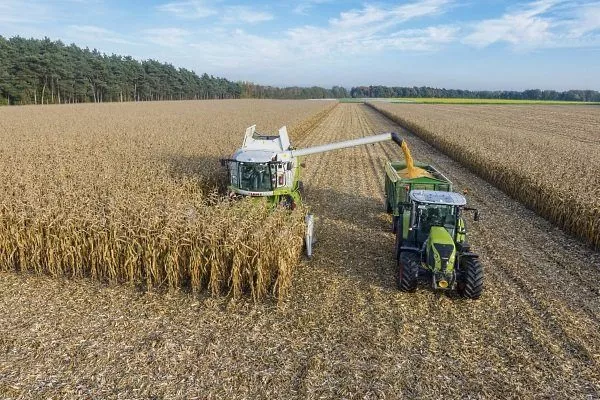
Fine cutting allows for the production of highly chopped silage that compacts well and stores well.
The harvested material must be transported to a silo. To maximize the high throughput of forage harvesters, it must be precisely matched to the capacity for transporting, stacking, and compacting the silage. The density of the chopped material is quite low (50-90 kg of dry matter per cubic meter), so large-capacity transport units are required in the chain of machines.
If the smooth and coordinated operation of all technological links is ensured, the technology using forage harvesters is the most effective for producing high-quality silage in large fattening and dairy farms with a predominant share of corn for feed.
Methods of unit movement
Immediately before harvesting, it's necessary to prepare the field, taking into account the method of machine movement. Generally, if the area is large and has uneven terrain, it's advisable to use a driven method, which involves the following steps:
- The field is divided into pens that correspond to the 2- or 3-day productivity of one or more units.
- Mow the field on all sides to a width double the combine's cutting width.
- To clear and mow turning strips up to 20 m wide.
- Make swaths up to 8 m wide between the paddocks.
- If the length of the field exceeds 1000 m, the paddocks in the middle part should be mowed transversely to prepare the paths for the movement of vehicles.
If the plot is small and not covered with large ridges, a circular method can be used. In this case, prepare 3-4 m wide slopes, and then mow the corners at a radius of 15-30 m.
The farm also uses direct combination to harvest corn for silage. In this case, proceed as follows:
- Mow the field edges and headlands, then begin harvesting the corn using the KSK-100 and KSS-2.6 combines. Please note that the KSS-2.6 combine is attached to an MTZ-100 tractor.
- The crushed mass is transported to the silo trench using GAZ-SAZ 35 07 vehicles and MTZ-80 tractors with 2 PTS-4 trailers.
- Unload the trucks at the beginning of the trench. Use a bulldozer to push the silage into the trench.
- Compact the silage using DT-75 tractors, and after filling the trench, cover the mass with straw.
This type of cleaning requires little effort, but there are a number of disadvantages to consider:
- with a small number of forage harvesting combines, harvesting takes a long time, which leads to an increase in the time it takes to lay silage, which can lose nutrients and overheat;
- Covering silage with straw alone reduces the nutritional value of the feed and increases the risk of mold and spoilage.
Regardless of the mode of transportation, if combines are in poor condition during harvesting, significant losses will occur during corn harvesting. Furthermore, a significant portion of the silage can be lost during transport to the trench due to poor road conditions.
This video provides a visual demonstration of the process of harvesting corn for silage using the Polesie KVK-800-36 forage harvester:
To determine the quality of corn harvesting for silage, it is necessary to evaluate the cutting height, losses and the degree of crushing of the green mass.
- ✓ The presence of a sweetish smell without signs of decay.
- ✓ Homogeneous structure of the mass without large fragments of stems.
Post-harvest treatment
Regardless of the purpose of the crop, after harvesting, corn grains must be cleaned of weeds and, if necessary, dried.
Cleaning
There are two types:
- primary – allows you to remove all impurities, leaving only the main raw material;
- secondary – allows to separate raw materials by the quality of fractions.
To clean corn kernels, special equipment is used, which comes in several classes, namely:
- air separators, which are used primarily to remove light impurities of organic origin;
- air-sieve separators, which select small or very large grains;
- indenting units that allow the removal of difficult to separate impurities of any length;
- Pneumatic gravity separators that remove difficult to separate impurities of uniform sizes.
As a rule, the farm uses air-sieve units equipped with aspiration channels and sieves of different sizes, which are selected depending on the machine used, the properties of the grain, and the technology and conditions of its cultivation.
Drying
In addition to cleaning, post-harvest processing involves drying the grain, as it contains a lot of moisture and various impurities that can negatively impact storage. Drying occurs immediately after harvesting and can be divided into different categories depending on the moisture content of the corn.
Freshly harvested corn can be stored if its moisture content is around 15%. If this level exceeds 17%, drying the kernels is necessary.
Corn drying requires specialized dryers, which can be column, shaft, or hopper types. Depending on the operating mode, these devices are classified as:
- RecirculationThese devices dry beans using continuous circulation. In this case, beans can be of varying sizes or moisture levels, making recirculating dryers more popular.
- Straight-throughIn such devices, raw materials with a uniform moisture level must be dried. This level is reduced by approximately 6% in one pass. If the moisture level is initially high, several passes are required. In any case, raw materials must not be allowed to dry below acceptable standard levels.
Once drying in specialized equipment is complete, the beans will be hot, so they need to be cooled before storage. It's recommended that their temperature not be more than 10 degrees above ambient temperature.
How to store the harvest?
Harvested grains must be stored properly to prevent spoilage and nutrient loss. Here are the most popular methods for storing grains, based on their intended use:
- Industrial or feed corn grain should be stored in bulk in warehouses, bunker storage facilities, or elevator silos. The height of the bulk storage facility can be determined based on the storage facility's capacity. It should be comfortable for normal handling and quality control of the raw material.
- Feed raw materials can also be stored in metal silos. In this case, constant monitoring of the raw material's temperature is necessary. Particular attention should be paid to the upper and lower layers of the silo to prevent condensation. This often occurs when the temperature in the silos fluctuates.
- Corn cobs should be stored in a dry, well-ventilated area with very low humidity, no higher than 15%. The optimal height for stacking cobs is up to 1.5 m. Before storing, they should be carefully sorted, all leaves removed, and dried to a moisture content of 13-14%.
- Store the seeds in plastic containers, cardboard boxes, or cloth bags. In the latter case, be careful not to let the bags become saturated with moisture, as this will prevent the seeds from germinating. The seeds can be stored in this form in an unheated room for up to 24 months. Their moisture content should not exceed 13%.
- At home, corn can be stored in the refrigerator. First, it should be thoroughly cleaned, soaked in salted water acidified with lemon juice, then placed in bags and refrigerated. However, it should be consumed within 10 days.
- To store the cobs in the freezer all winter, dip them alternately in ice water and hot boiled water for 2-3 minutes, then dry them and wrap them in cling film.
Corn harvesting involves a number of rules and specifics depending on whether it is being harvested for silage or grain. The difference lies not only in the harvesting process, but also in the principles for determining the optimal timing of the work and the equipment used.