
The corn we're most familiar with is light yellow or orange. The widespread dissemination of information and images of unusually colored cobs has led to a wave of questions and doubts about the edibility of this subspecies of the crop. Despite its unusual appearance, colored corn has become widespread.
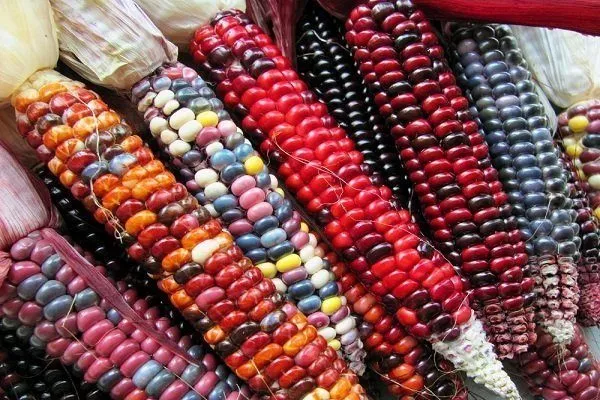
Colored corn
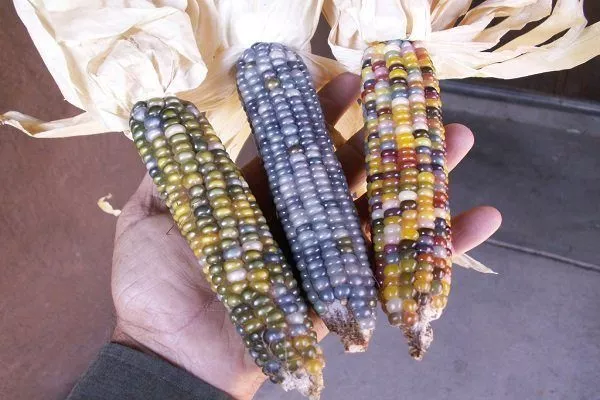
Colored corn tolerates frost well
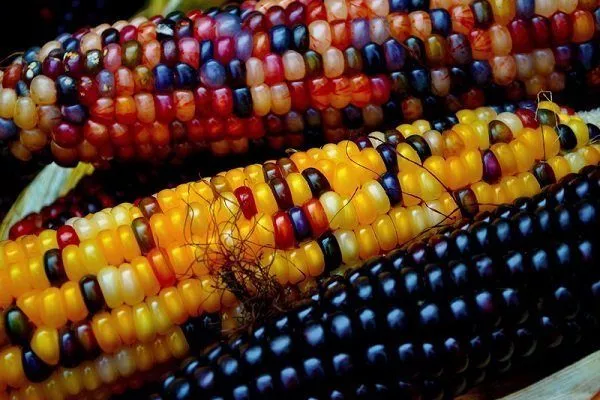
Colored corn has a sweet taste.
The history of colored corn
It is believed that colored corn appeared in the Americas during the time of Columbus. Other sources indicate that the ancient Mayans consumed colored corn. There are numerous references to Native Americans favoring colored corn, eating it, and feeding it to their livestock.
Colored corn varieties emerged as follows: agronomists selected cobs with a defective gene—colored kernels that would otherwise appear on normal plants—for subsequent planting. Thus, year after year, over the course of many centuries, the crop's color factor became increasingly apparent.
Modern agronomists praise the decades-long work of Oklahoma farmer Carl Burns, who revived the cultivation of multicolored corn on a large scale. He spent many years collecting and crossing hybrid maize varieties through painstaking open pollination. Since 2005, Burns has been actively growing corn, harvesting several crops a year, on the land of his friend and partner, Jose Lucero. Since 2008, the partnership between Burns and Jose has focused exclusively on multicolored corn varieties.
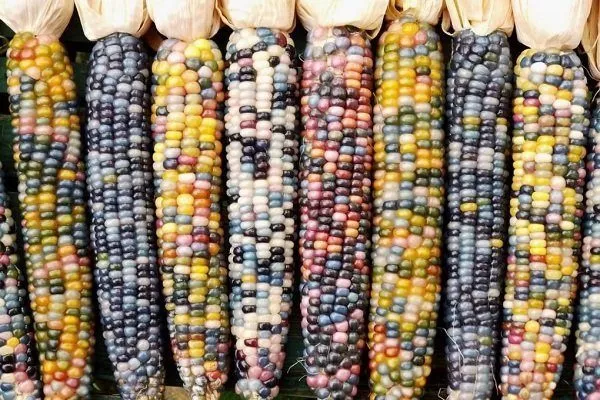
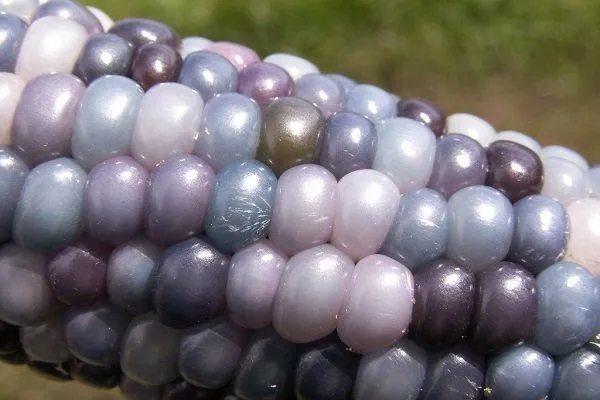
It was Karl who gave the colored corn the name "Glass Gem." Americans also call the colored corn flint, Indian corn, or Zea Mays indurate (in Latin). This corn is often compared to a scattering of mother-of-pearl, multicolored sea stones.
Multicolored corn is now being grown everywhere. New varieties of this flint crop adapted to the Russian climate are being developed.
Description of the culture
Colored corn usually refers to the flint subvariety, although it's not the only one capable of producing a color other than yellow. However, it's this variety that breeders have most often chosen to develop multicolored ears.
Colored corn differs from its counterparts of other subspecies by its round kernels, which have a characteristic indentation at the very top. The kernels are smooth and glossy, with a hard endosperm covering the entire surface. Their interior is loose and mealy.
Approximate chemical composition of colored corn kernels:
- 80% starch;
- 5% fat;
- 15% proteins.
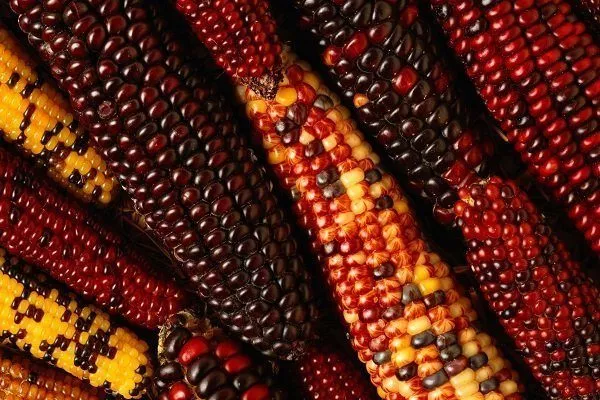
The color of the grains varies:
- yellow;
- white;
- brown;
- black;
- orange;
- pink;
- violet.
The crop is renowned for its early maturity and decent yield. Besides the colorful cobs, the flint subvariety is chosen for its undeniable advantages:
- high tolerance to frost, including sudden temperature changes;
- resistance to shedding, due to which the grains remain on the cob even after frost;
- low susceptibility to fungal diseases and rot.
Only colored varieties of corn produced a harvest in New England in the infamous 1816, dubbed the "Year Without a Summer."
Colored Indian corn is most often grown on an industrial scale for processing grits, milling into flour, forming flakes, producing popcorn, and many other processing methods. The iridescent colors of Indian corn cobs are widely used in decorative arts. Despite the preconceived notion that this product is unsuitable for consumption, the waxy, milky ripeness of flint varieties is in no way inferior in sweetness and flavor to the sugar variety.
Varieties of colored corn
| Name | Disease resistance | Soil requirements | Ripening period |
|---|---|---|---|
| North America | High | Neutral | Average |
| Magic Kaleidoscope | Average | Subacidic | Early |
| South America | High | Neutral | Late |
| Nacre | Average | Subacidic | Average |
| Pink glow | Low | Neutral | Early |
To grow this crop, domestic gardeners choose varieties adapted to Russian climate conditions. The most common and proven rainbow cobs are produced by growing the following varieties in their gardens:
- North AmericaThe stems reach almost 2 meters in height, and the color of the seeds varies from lilac to chocolate.

- Magic KaleidoscopeOne of the ornamental varieties of maize, distinguished by the multicolored coloring of each ear, ranging from white to almost black. Propagation is by seedlings. Seeds are planted outdoors in May, spaced at least 40 cm apart.
- South AmericaThe stems reach up to 2.5 m in height. The spadix grows up to 22 cm and has a very variegated coloration.
- NacreA mid-season variety: the wait from planting to harvest is approximately 100 days. The cob grows small – 14-15 cm – and is white-lilac in color.
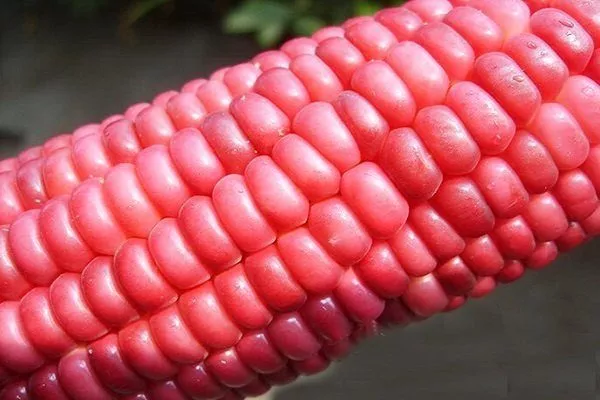
- Pink glowOne of the earliest varieties, it takes 60 days from planting to maturity. The stems are not particularly tall, reaching a maximum height of 1.2 m. The cobs are no more than 15-16 cm. However, the kernels have a pinkish-lilac color and a sweet taste.
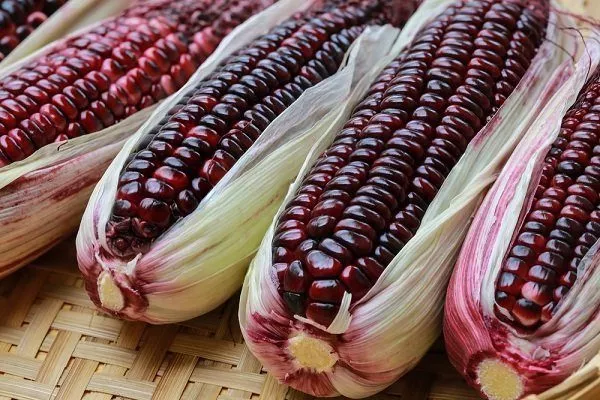
Where to buy seeds?
Corn grown by Carl Burns is available for purchase on the Native Seeds website. The company holds the rights to sell the original product. Proceeds from sales of the Glass Gem variety go toward agricultural research and the development of new, unique crops.
- ✓ Check seeds for germination by soaking them in water for 24 hours before planting.
- ✓ Make sure the seeds are adapted to your climate region.
On the corporation's website, the price of one packet of seeds ranges from $5 to $10. International online marketplaces like AliExpress and eBay also offer multicolored corn for purchase, ranging from $1 to $18 per packet.
Russian stores offer a wide variety of adapted colored corn varieties at a wide range of prices. These ears may not feature the pearlescent, multicolored patterns of Glass Gem, but they will certainly delight gardeners with their vibrant hues if properly cared for.
Features of growing colored corn
Growing colored corn is virtually the same as growing regular sweet corn (unless otherwise stated on the seed packaging). The soil should be fertile and neutral to slightly acidic. Choose a sunny, wind-free location for planting colored corn.
Disembarkation is possible in two ways:
- Planting seeds in open groundIn late April or early May, when the soil warms up to 10 degrees Celsius, the seeds are prepared. They are laid out in the sun to warm up for several days, then placed in a container of warm water for 24 hours. After this, the seeds are planted in prepared beds at a depth of 5-6 cm, spaced about 30-40 cm apart.
- Seedling methodFor an early harvest, seeds are sown indoors in late March or early April. Thin the seedlings when the fourth leaf appears. Transplant the seedlings into the garden once the spring weather has become consistently warm, spacing them 40-50 cm apart.
At the beginning of growth, water moderately, then increase as needed. To prevent the stalks from falling over, hill the corn periodically.
- Apply nitrogen fertilizer 2 weeks after germination.
- During the period of cob formation, add phosphorus-potassium fertilizers.
- Stop fertilizing 2 weeks before harvesting.
Depending on how the corn is used as food, it is harvested as it matures. Milky and milky-waxy cobs are used for sweet consumption, while more mature corn is used for further processing.
A video review of colored corn can be seen in the following video:
Growing colorful corn is an opportunity not only to reap a tasty and nutritious harvest but also to enjoy the abundance of vibrant colors as the crop matures. Choosing the right seeds from a reputable supplier and proper care are the keys to a bountiful harvest of colorful corn.
I didn't even know there was such a thing as colorful corn. Now I'm so excited to plant some! I can just imagine how much the kids will enjoy eating those colorful ears))) Thanks for opening my eyes!