
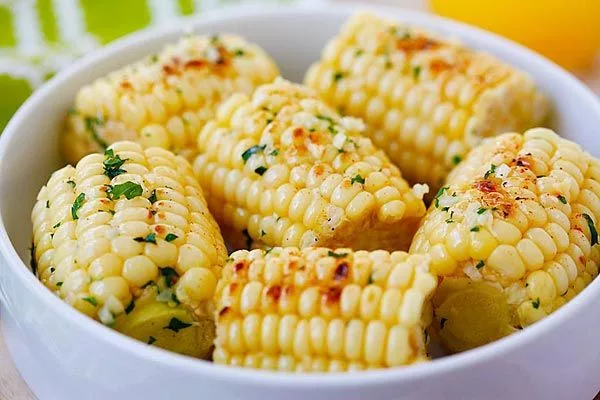
Trophy F1 corn is a high-yielding sugar hybrid with beautiful, uniform cobs. Its ears are delicious and juicy, suitable for boiling and canning.
History of creation and purpose
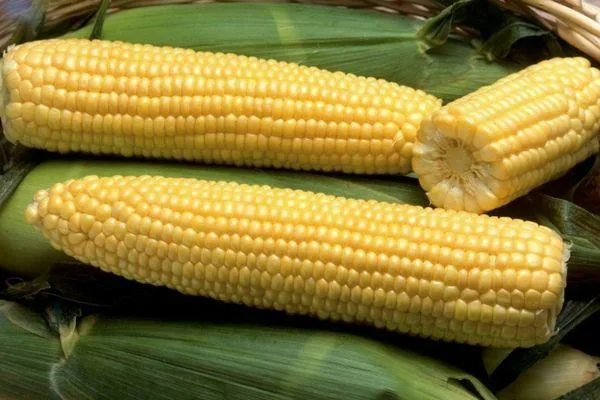
Trophy is a super-sweet hybrid variety from Monsanto Holland BV. This Dutch corn was added to the state register in 2008. Trophy is characterized by its slightly sweet flavor. It is eaten fresh, boiled, added to dishes, and canned.
Description of the plant and cobs
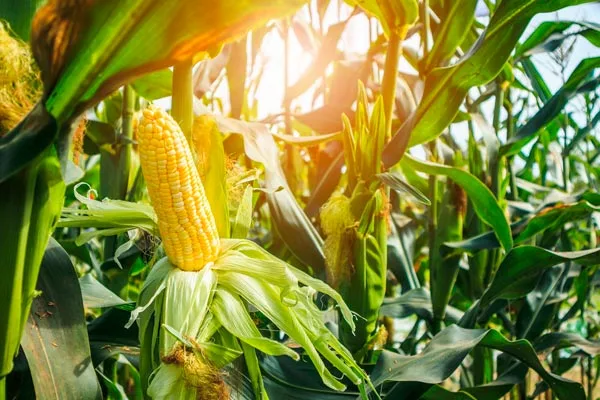
The plant can reach a height of 2 m. It has a sturdy stem with a small number of leaves (compared to other varieties)—13 to 15. The first (lower) cob is 60 cm above the ground.
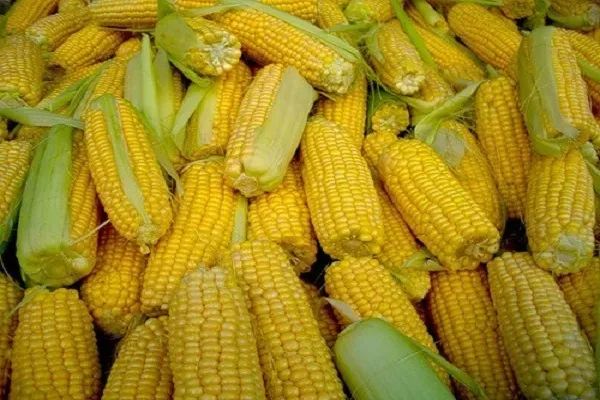
A single plant produces 4-6 cobs. They are 20 to 22 cm long and 4 cm in diameter. The cobs are cylindrical, with 14 to 18 rows on each cob. Each cob weighs approximately 200-230 g. The kernels are golden yellow, wide, and short.
Characteristics
Trophy corn is an early-ripening variety. Ears mature in 75-80 days. Yields range from 160 to 170 centners per hectare. The weight of 1,000 kernels is 140 g.
Pros and cons
No shortcomings were found in the Trophy variety.
Planting Trophy corn
The success of growing corn largely depends on how correctly the planting is carried out.
- ✓ Soil pH should be between 6.0-6.8 for optimal nutrient absorption.
- ✓ Check the soil for nematodes before planting, as they can significantly reduce yields.
How to plant Trophy corn:
- The site should be sunny or partially shaded, protected from winds. Stagnant water is contraindicated. Corn has strong and long roots, penetrating to a depth of 2.5 meters, so it tolerates drought well; overwatering, however, can lead to rot.
- Loose, porous, and breathable soils are preferred. They are prepared in advance by digging or plowing in the fall. Add 4 kg of organic fertilizer per square meter, as well as 30 g of superphosphate and potassium salt.
- Sowing pattern: 28 x 80 cm. Place 3-4 seeds per hole. Depth: 5-7 cm.
In the south, corn is sown directly into the ground. In more northern regions, seedlings are used. Seeds and seedlings are planted only in well-warmed soil, as corn is a heat-loving plant. In temperate climates, sowing time is mid-May.
Features of growing seedlings:
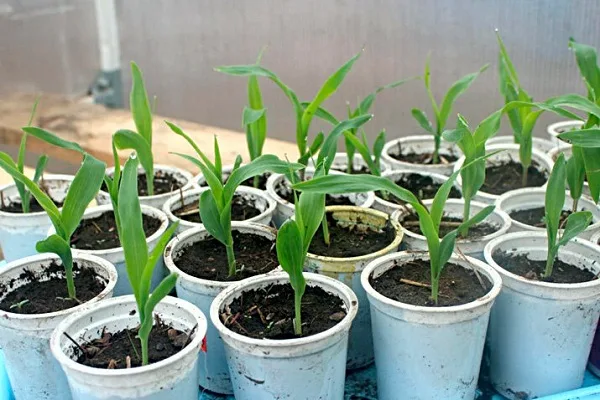
- Seeds are sown in cups filled with a nutrient substrate. This is made from soil mixed with organic matter (humus or compost) in a 1:1 ratio.
- The seeds are planted at a depth of 3 cm and watered with warm, settled water.
- Place the seeds in a well-lit area. The optimal temperature for growing seedlings is between 18 and 20°C. Water the seedlings once a week.
- Ten days before transplanting the seedlings into the soil, they are fertilized with Kristalon or other nitrogen-containing fertilizers, and are also taken outside daily for hardening.
Plant seedlings only after the risk of frost has passed. The soil should warm to 8…10°C.
Care Features
To obtain a high-quality and abundant harvest, it is necessary to provide Trophy corn with certain care.
How to care for corn:
- A few days after sowing the seeds, harrowing is carried out. This is necessary to break up the soil crust and kill weeds.
- If the temperature drops, crops are covered with agrofibre or film.
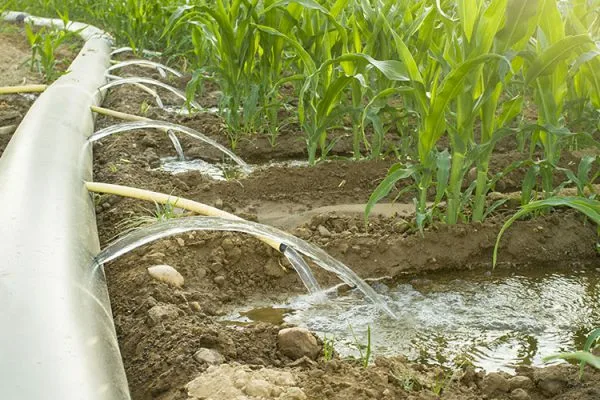
- The crops are watered once a week and loosened after each watering, irrigation, or rain. Loosening the soil ensures oxygen supply to the roots. The recommended watering rate is 3-4 liters per square meter. Moisture is especially important during the panicle formation period.
- To prevent lodging of plants, which can occur due to strong winds, hilling is carried out to a depth of 8-10 cm.
- When the plants have 2-3 leaves, thin out the seedlings. At this time, apply liquid organic fertilizer. At this stage, the roots are still underdeveloped and unable to extract the necessary nutrients from the soil. Apply the fertilizer so that it soaks the soil to a depth of 10 cm.
Pest and disease control
The Trophy variety has strong immunity, but like other corn varieties, it can be affected by various diseases and pests. Problems can be prevented with chemical treatments, which are typically applied at the beginning of the growing season, when disease or insect symptoms appear, and before flowering.
Pre-sowing treatment of seeds with fungicides helps prevent fusarium wilt, stem rot, rust, loose smut, and nigrospora, which are virtually incurable. Of the pests, the most dangerous are the frit fly and wireworm. Spraying infected plants with Barguzin is recommended.
Harvesting
Harvesting begins when the cobs reach the milky stage of ripeness. This occurs approximately 3-4 weeks after flowering begins.
The maturity of corn is determined by the following characteristics:
- The edges of the corn cob wrapper are drying out.
- The threads (stigmas) at the tops turn brown.
- The grains become smooth, yellow, without wrinkled folds.
- If you press on the grain, juice will squirt out.
Reviews
Trophy corn is a high-quality Dutch variety worthy of our gardeners' attention. It's versatile and suitable for both food and commercial purposes, and most importantly, it can be grown even in regions with the harshest climates.