
Spirit F1 is an early, high-yielding sweet corn variety, a simple hybrid developed by the Swiss company Syngenta. Accepted by the State Register in 2002, it is recommended for cultivation in home gardens and small farms.
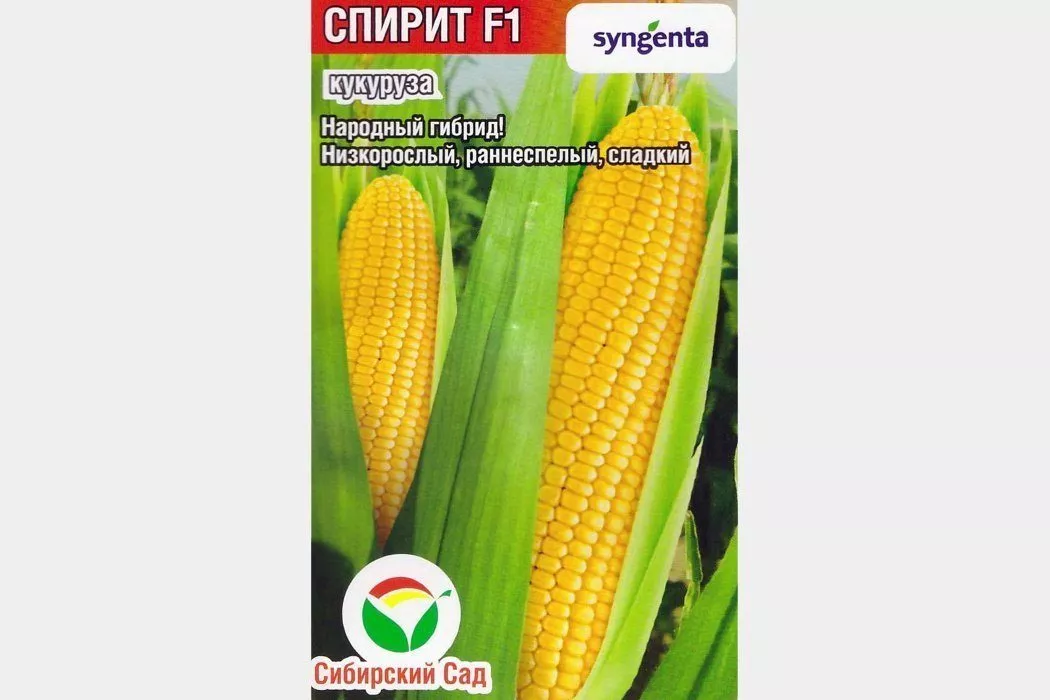
Spirit corn
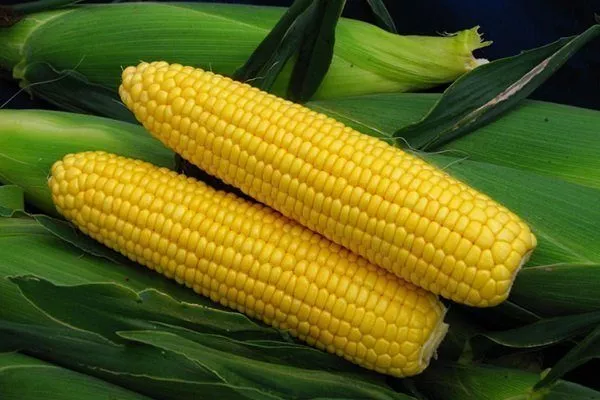
Spirit corn contains little starch.
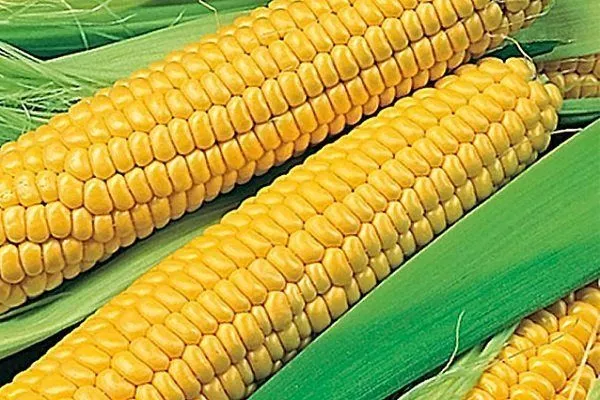
Spirit corn is resistant to adverse weather conditions.
Description of the variety
Under Russian conditions, the variety has proven itself to be one of the best in all growing regions. Spirit corn can be planted even in the Northwest, and in some southern regions, two harvests are harvested per year.
Appearance
General characteristics of the culture:
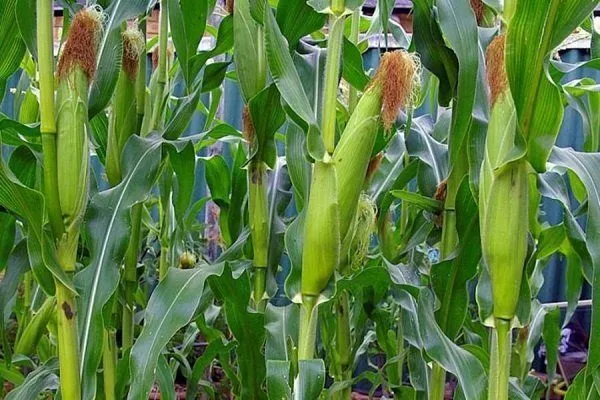
- StemThe Spirit variety is low-growing, producing a strong, upright, knobby stem ranging from 1.4 to 1.65 m in height and 3-5 cm in diameter. Unlike other cereal crops, the stem is not hollow, giving the plant stability, allowing it to withstand wind and support the weight of the cobs.
- LeavesThe leaves are green, large, oblong-lanceolate, with a pointed tip, about 10 cm wide and up to a meter long. They form at the base of the internodes and cover the ears during the initial stages of development. A single stem typically contains 8-16 leaves.
- RootsThe root system is extensive, extending to a depth of 1 m or more during the growing season. Some fibrous shoots spread outward, covering an area about a meter in diameter. Aerial roots may form at the lower internodes, supplying the plant with nutrients and moisture, and anchoring themselves to the soil when the stem falls.
- FlowersLike all corn, the Spirit variety is monoecious. A single panicle of male flowers crowns the stem. Female flowers are a cluster of threadlike stigmas, formed in the leaf axils. Hybrids may have several, but typically no more than two mature.
- FruitThe corn kernels are tightly packed together, arranged in neat rows, and gathered into an elongated ear covered with a husk. The first ear of Spirit corn forms at a height of 50 cm, is approximately 22-23 cm long, and resembles an elongated cylinder.
Large, sweet kernels are grouped in 14-16 rows and are distinguished by their good flavor and attractive appearance. When fully ripe, they turn a rich yellow color. A healthy ear of the Spirit variety should weigh at least 191 g, and 100 dry kernels weigh approximately 20 g.
Composition, taste, application
Spirit corn contains a high carbohydrate content—over 12%. Young kernels contain very little starch; it only begins to accumulate rapidly once they harden and become unsuitable for fresh consumption. This is what gives Spirit its excellent flavor.
The straightened cobs are eaten fresh, boiled, and canned.
Ripening time and yield
Regardless of region growing corn Spirit produces a stable harvest. It ripens uniformly, and farm fields can be harvested mechanically. The yield of quality cobs ranges from 73 to 92.5 centners per hectare.
The Spirit F1 variety is an early variety, reaching maturity in 65 days. This makes it suitable for planting in cooler climates using seedlings in open ground.
Advantages of the variety
In Russia, the Spirit F1 corn variety has proven itself to be flexible, adaptable to a variety of conditions, and producing consistently high yields even in regions less suitable for growing the crop.
Among the advantages of the variety, the following should be highlighted:
- early ripening period;
- high stable yield;
- attractive presentation;
- possibility of transportation and storage;
- the variety easily adapts to local conditions;
- corn is resistant to drought, short-term temperature drops and other unfavorable weather factors;
- can be grown in open ground, under film or in greenhouses;
- the variety is not prone to lodging;
- planting is carried out directly into the ground or through seedlings;
- has high resistance to typical crop diseases, especially helminthosporiosis.
Features of cultivation
The Spirit F1 corn variety is easy to grow and resistant to adverse weather conditions and diseases. It can be grown as a cover crop to protect more delicate plants.
Optimal conditions
Corn is an exceptionally light- and heat-loving crop. Even in light shade, it will not produce cobs. A mature plant dies at -1°C (-3°F), but seedlings can withstand short-term temperature drops to -2°C (-2°F).
Sweet corn thrives in fertile soil. It grows best in neutral soil, but tolerates slightly acidic conditions. In poor soil, add half a bucket of compost under each nest. Overly acidic soil can be improved with ash or dolomite flour—2 liters and 1 liter per square meter, respectively.
Landing
It is possible to plant the crop using seedlings or seeds.
Seedlings
In the Northwest, corn is best grown from seedlings. They are sown in half-liter containers or a greenhouse in mid-May. The seedlings are transferred to open ground in the second ten days of June, spaced 40x40 cm apart, and covered with lutrastil. Once the Spirit corn has grown, the cover is removed.
Grains
In the south, corn is planted as seeds in open ground when the soil warms to at least 10-12 degrees Celsius and the threat of frost has passed. This usually occurs in mid- to late May. Although corn germinates at 8-10 degrees Celsius, there's no need to rush – the cobs will appear and form a few days earlier, but the yield will be significantly reduced. The optimal temperature for corn germination is 20-22 degrees Celsius.
- ✓ Optimal seed planting depth: 5-7 cm, depending on soil type.
- ✓ Temperature conditions for germination: minimum 10-12°C, optimal 20-22°C.
When planting in open ground, use a square nesting method, with a 70x70 cm pattern. Holes are dug wide, 5-7 cm deep, and 3-4 dry or sprouted seeds are placed in each. If all sprout, leave one shoot; in fertile or well-amended soil, two. Loosely planted seeds will allow each plant to receive sufficient light.
The bed is covered with plastic film if temperatures are expected to drop at night. Once the seedlings emerge, the film is removed and replaced with lutrastil.
The ideal temperature for corn development and growth is between 22 and 25 degrees Celsius. If the temperature rises above 30 degrees Celsius during flowering, pollen quality declines, leading to a drop in yield. Therefore, in the south, people try to plant quickly, and in temperate climates, they should take their time.
Caring for the crop during cultivation
The Spirit variety is easy to care for and doesn't require much attention. However, if you follow all the proper growing practices, the harvest will be plentiful and the cobs sweeter.
Watering
In cooler regions, corn is sometimes not watered at all if rain falls at least occasionally. Of course, a strong, deep-growing root is a good thing; it will prevent the crop from dying from dehydration. However, the majority (75%) of early sweet corn roots, including the Spirit variety, are fibrous, spreading outward and located at a depth of up to 35 cm.
Insufficient watering, especially during the cob formation period, degrades their quality and reduces the yield. The milky stage of ripeness is significantly shortened, lasting only 2-3 days. Starch begins to accumulate in the kernels, making them less tasty and tender.
In the south, summers are hot, so regular irrigation is necessary. Without it, you can still get a good harvest, but it will be significantly lower than in irrigated areas.
Top dressing
In black soil, if each hole was well-compacted with humus before sowing, the crop may not require additional feeding. Along with the corn, peas or climbing beans are planted in the hole, enriching the soil with nitrogen.
If organic matter hasn't been added or the soil is poor, the crop needs fertilization. Fertilize corn 2-3 times per season:
- At the beginning of growth, when the shoots reach a height of 15-20 cm, apply a weed infusion diluted to half the volume of water. Pour a bucket of the mixture under each nest.
- If the leaves are green, the corn is growing well, and doesn't look stressed, skip the second feeding. Apply another one only if growth is delayed or the leaves are too light-colored, 10-14 days after the first. Use a weed infusion or any nitrogen-rich fertilizer, diluted according to the instructions.
- As soon as a panicle appears at the end of the shoot, the corn is fertilized with a complete mineral complex. Pour 10 liters of the solution under each nest.
Weeding and loosening
Loosening the soil is crucial when growing corn. Its roots require a lot of oxygen, and the crust formed by watering or rain is essential to remove. Weeding is also carried out as needed.
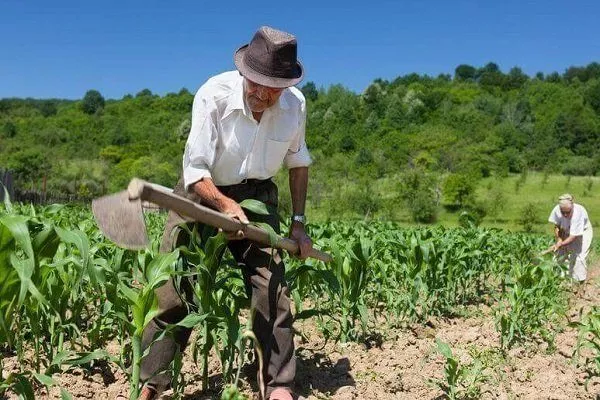
When the corn stalk reaches 1 meter, it is hilled for better stability, like potatoes. About 30 cm from the shoot, a wide furrow about 10 cm deep is dug to ensure that water reaches the plant during irrigation or rain, rather than spreading across the area.
Pest and disease control
The Spirit variety is resistant to major corn diseases, especially spotting (helminthosporiosis). The crop can be affected by:
- dusty or bladder smut;
- fusarium;
- wilt;
- rot.
Among the pests it is worth highlighting:
- aphids;
- weevil;
- Swedish fly;
- wireworm;
- stem moth.
- ✓ Resistance to helminthosporiosis: high, which reduces the need for fungicide treatment.
- ✓ Adaptation to various climatic conditions: can be grown in open ground, under film or in greenhouses.
Fungicides are used to combat diseases, and insecticides are used to control pests.
Harvesting and storage
By harvest time, Spirit sweet corn kernels should be easily felt beneath the outer leaves. They should be tightly packed together, with smooth, even tops. When crushed, the kernels release a thin, sweet juice.
The time and method of harvesting Spirit F1 corn depends on its use:
- For fresh consumption Corn is picked at the milky-waxy stage of ripeness, and only by hand, bending the cob away from the stalk. This prevents damage to the cob, which reduces its shelf life and consumer value.
- For processing Freezing and preservation – harvesting occurs at the end of the milky stage of grain ripeness. Over large areas, mechanical harvesting is acceptable for the Spirit variety.
Corn is harvested early in the morning or before sunset when temperatures reach 22 degrees Celsius. In hot weather, the kernels lose their flavor. If long-term storage or long-distance transportation are planned, the cobs are immediately cooled—this reduces the risk of spoilage and increases shelf life. It is recommended to transport them in boxes, without removing the husks.
Spirit F1 corn is one of the best early-ripening sweet corn varieties for cultivation in all regions of Russia. It has excellent flavor and is resistant to cold, drought, and disease. It produces high yields every year, even in cooler climates.