
Corn is a healthy and tasty product, available in a wide variety of varieties. Each has its own distinct purpose, growing season, taste, and appearance. Before choosing the right variety, it's important to determine the purpose of growing the grain and familiarize yourself with the characteristics of its various types. Let's explore the different varieties of corn and how they are classified.
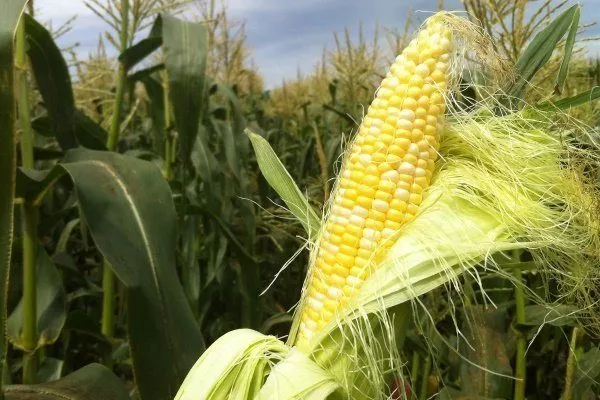
Air-popped corn for popcorn
This type of corn is one of the most ancient. The kernels are small, although there are several subspecies:
- rice - the top resembles a beak;
- pearl barley - has a round shape, like pearl barley;
- pearl - the seeds are very small.
- ✓ Consider the climatic conditions of your region to select the appropriate variety.
- ✓ Determine the purpose of cultivation: for fresh consumption, processing or ornamental purposes.
- ✓ Pay attention to the variety’s resistance to diseases and pests.
The kernel contains increased amounts of protein (16%), fat (20%), and protein, making it used in the production of cereals, flakes, and other products. It also has a thin but strong shell that doesn't crack, allowing moisture to accumulate inside. This causes the kernels to "bulk" and, when pressure builds up, explode from the inside. This causes the kernels to pop, which is why this type of corn is used to make popcorn.
When the kernels are heated, the steam begins to compress the starch spherocrystals, causing the pericarp and shell to burst. This causes the glassy outer layer to turn inside out, revealing a fluffy white mass, causing the kernel to expand and creating popcorn.
- ✓ Provide sufficient sunlight.
- ✓ Keep the soil moist but not waterlogged.
- ✓ Use high-nitrogen fertilizers to promote growth.
Popcorn looks beautiful, with its many branches and dense foliage, producing numerous cobs. The kernels come in a variety of colors: white, red, striped, and blue.
Main varieties:
- Miracle red coneIt is believed to have originated in China. The plant is short (up to 1 m), but is characterized by high bushiness and can produce up to 10 cobs. These cobs are 10-13 cm long and cone-shaped. The kernels are dark red and suitable for producing snow-white flakes.
- Yellow miracle coneIt grows to no more than 1 m, with an ear about 11 cm long and shaped like a pine cone. The small grains are slightly elongated, almost like long grain rice, but they have small whitish specks.
- Red ArrowThis variety also originates from China. It grows up to 1.4 m tall. The plant branches well, and a single branch can produce up to six cobs. These cobs are quite long, growing up to 14 cm. The seeds are small and round, and are very attractive, as they are colored burgundy, almost black.
- Mini StripedThe plant is quite tall, reaching 1.8 m. It is branched, producing up to 3-4 cobs. They are 11-12 cm long and cylindrical in shape. The kernels are small, kidney-shaped, and striped with white and red stripes.
- Lop-lopayThe plant reaches a height of 1.3-1.7 m, producing cylindrical cobs that weigh about 200-250 g. The grains are yellow, quite wide and elongated.
- ZeyaIt resembles the previous variety, but has different seeds. They are burgundy or dark red, wide, rounded on one side and pointed on the other.
- Granddaughter's joyIt thrives in moisture, does not tolerate drought well, and produces a bountiful harvest only in well-composted soil. The plant grows up to 1.5 m tall, producing cobs up to 12 cm long. The kernels are light orange and resemble "Zeya" in shape.
- A treatThe plant is highly drought-resistant and resistant to lodging. It tolerates high temperatures, so it can be grown even in the driest and hottest regions. The plant grows up to 2 m tall, producing cobs approximately 20 cm long. The grains are green and pearl-shaped.
The listed varieties are early maturing and ripen in approximately 80 days.
- Ping-pongA mid-early variety with a maturity period of 100-120 days. Produces short cobs up to 15 cm long. The kernels are small and yellow.
- Volcano (bursting volcano)This mid-early variety thrives in warm conditions and is resistant to many diseases. The shoots grow up to 2 m. The ears can be 15 to 22 cm long and yield up to 100-120 g of yellow, oval-shaped rice grains.
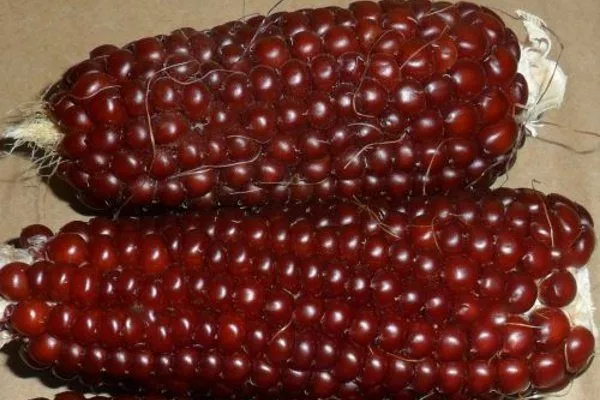
Miracle cone variety red
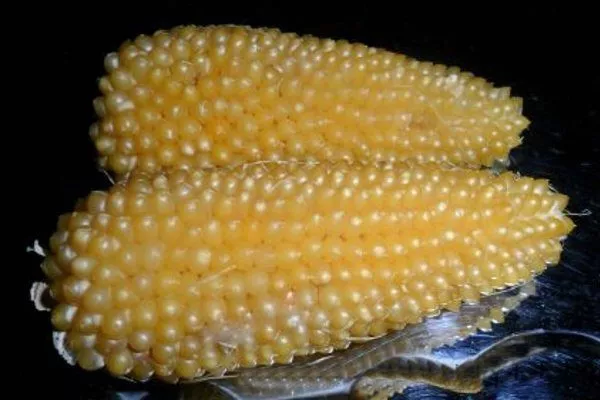
Chudo yellow cone variety
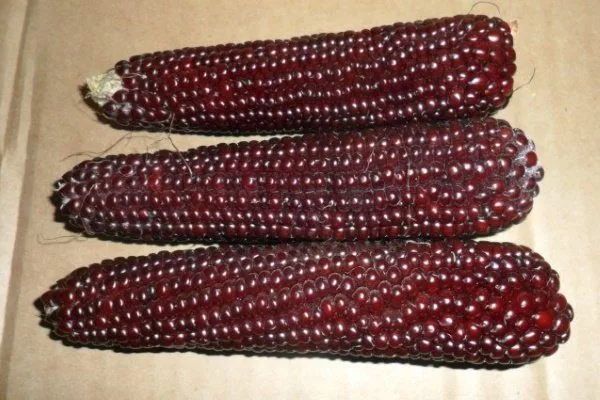
Red Arrow variety
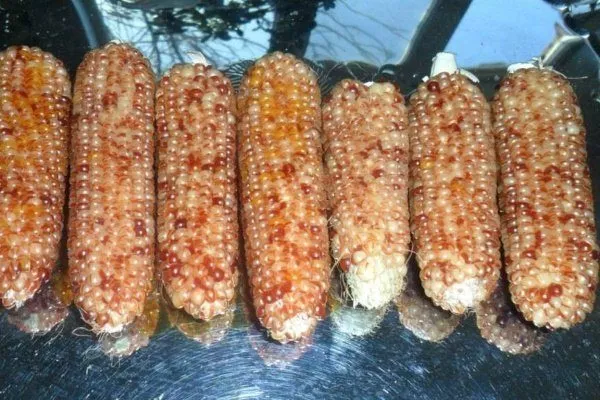
Mini-striped variety
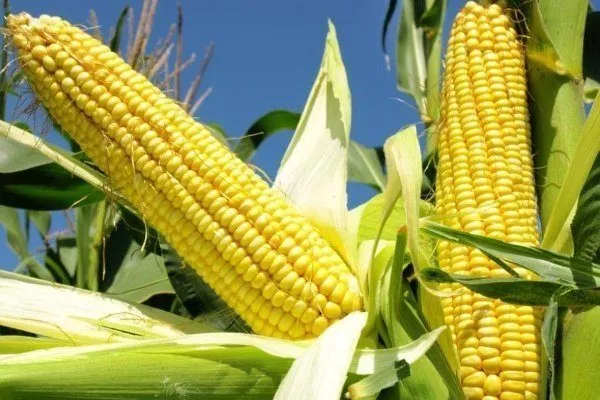
Lopay-lopay variety
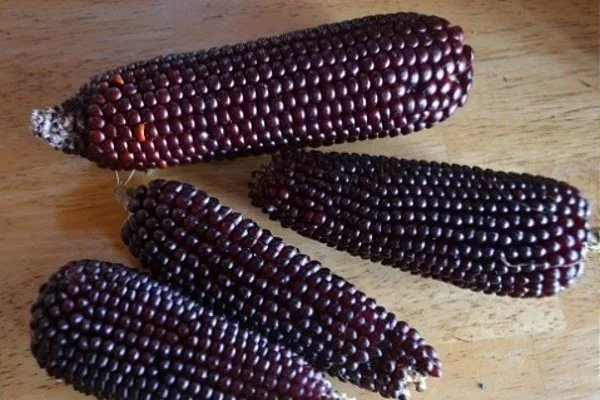
Zeya variety
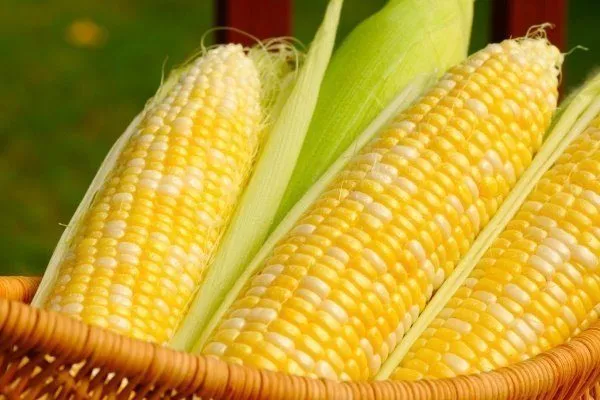
Vnuchkina Radosh variety
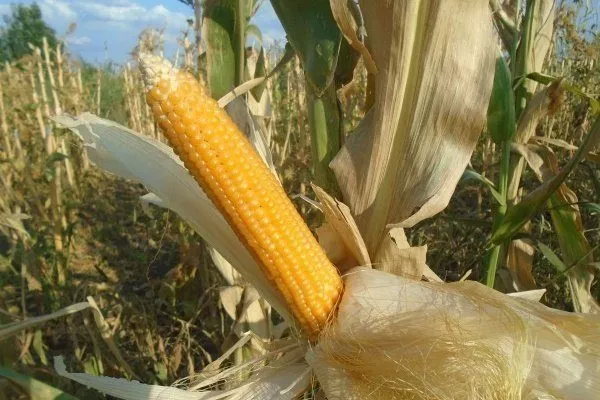
Gostinets variety

Ping-Pong variety
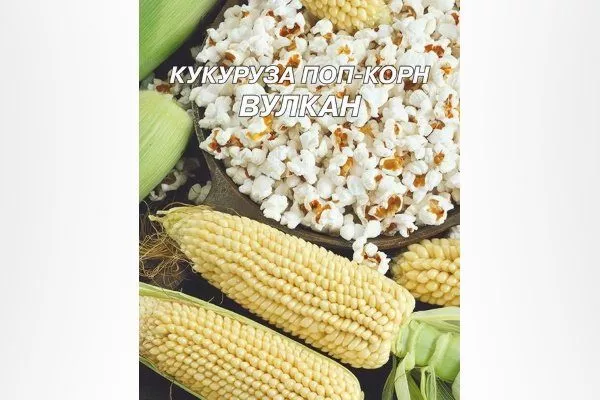
Vulcan variety
Dent corn
It is the most popular grain throughout Russia. It can be grown in garden plots for cooking or freezing. Industrially, the grains are used to produce cereals, flour, alcohol, and even silage for cattle.
This type of corn is characterized by large, flat, slightly elongated kernels. The endosperm in the center and at the top of the kernel is loose and floury. When the kernel ripens, a depression appears at the top. It contains up to 75% starch, up to 5% vegetable fat, and up to 10% protein, and is highly vitreous and has minimal flouriness.
The plants grow tall—approximately 2 meters in length—without much bushiness and produce an excellent yield—150 centners per hectare when planted in early spring. It's worth noting that many varieties in this category are mid-late crops.
Here are the most popular representatives:
- Ruby garnetA mid-late variety bred by Russian breeders. It grows up to 2.4 m. The cobs are cylindrical, large, and long (about 30 cm). The kernels are large and somewhat reminiscent of horse teeth. They have a reddish-ruby color. This corn is used commercially to produce flour and grits.
- Red cornIt's a mid-season variety, with a growing season lasting 90-100 days. This variety is very beneficial for the prevention of cardiovascular diseases and cancer, and also normalizes blood pressure and sugar levels, making it especially beneficial for diabetics.
- Indian giantA late-ripening variety native to India. The growing season lasts up to 125 days. It's rightly called "giant" corn, as it grows up to 2.7 m and produces 3-4 ears. These ears grow up to 40 cm and are cylindrical. The kernels are large, flat, and come in a wide variety of colors (white, yellow, orange, purple, lilac, and black). This variety is excellent for boiled consumption, as it contains over 30% sugar. It is processed into cereals, flour, and feed for poultry and animals.
- Blue JadeThis mid-season variety was developed in North America. It ripens four months after planting. The plant grows up to 2.4 m. The ears are approximately 17 cm long and rounded-pyramidal in shape. The large, flat kernels are pinkish-blue in color, covered with small white specks. This corn has a very tasty and unusual flavor when cooked. It has a preventative effect against serious diseases (cardiovascular diseases, cancer, diabetes), as it contains a large amount of anthocyanin.
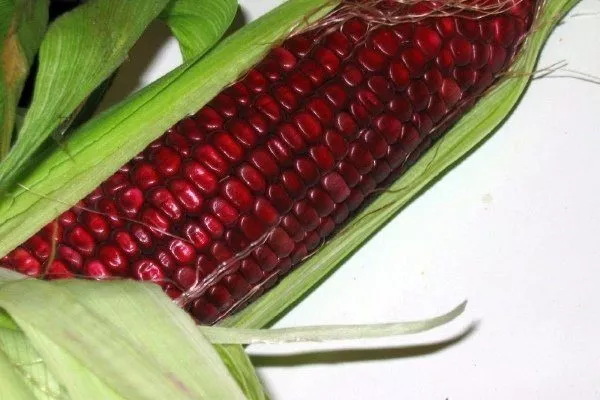
Ruby Garnet variety
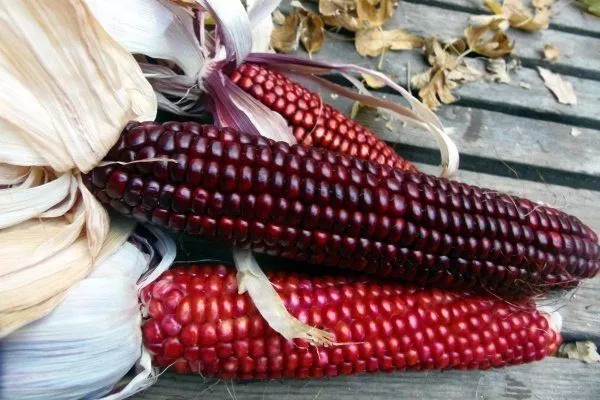
Red corn variety
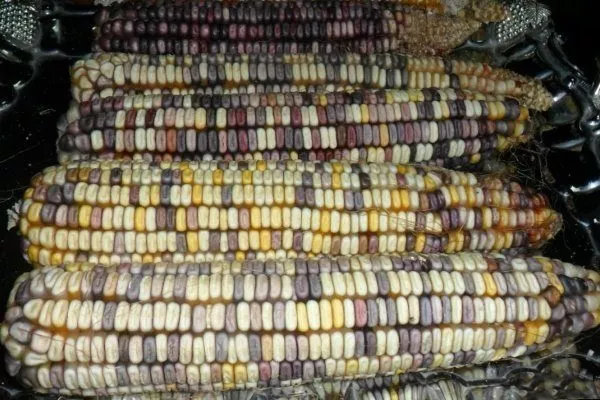
Indian Giant variety
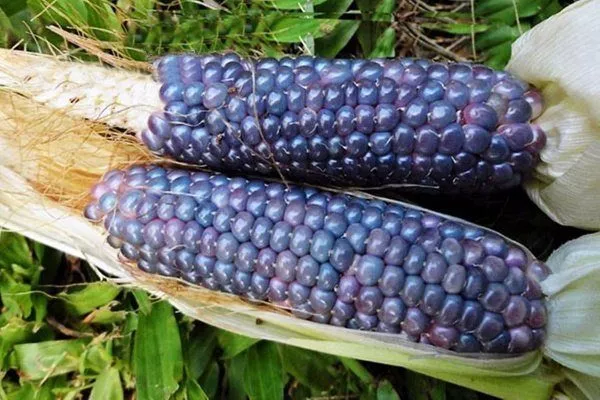
Blue Jade variety
Flint corn
It's not the most popular corn variety in production due to its low yield—up to 60-70 centners per hectare. However, the crop has many advantages, including high frost and shatter resistance (the crop can be harvested even after frost), a strong stem, and resistance to many diseases that can damage shoots. The variety is resistant to powdery mildew, rot, and fungal diseases.
The grains are round with a convex tip and a smooth, shiny surface. They contain up to 85% starch, up to 15% protein, and up to 4-5% fat, making them ideal for making flakes, cereals, and animal feed.
Popular varieties of flint corn include:
- Cherokee BlueAn early-ripening variety from North America with a growing season of 80-85 days. The plant grows up to 1.8 m. The cob is approximately 17 cm long and pyramidal in shape. The kernels are medium-sized and have a rare chocolate-lilac color. This corn is delicious when cooked and very healthy.
- Mays Ornamental CongoAn ancient, late-ripening variety native to South America. Full maturity occurs in 130 days. The stalks grow up to 2.4 m, appear vigorous, and produce up to 5 ears approximately 21 cm long. The kernels are quite large and come in a variety of colors. Corn can be eaten fresh, baked, or boiled.
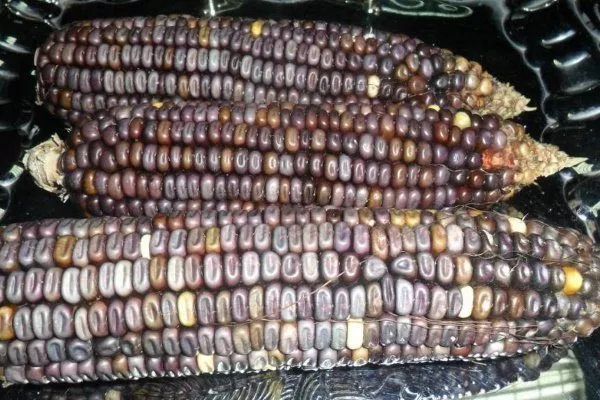
Cherokee Blue variety
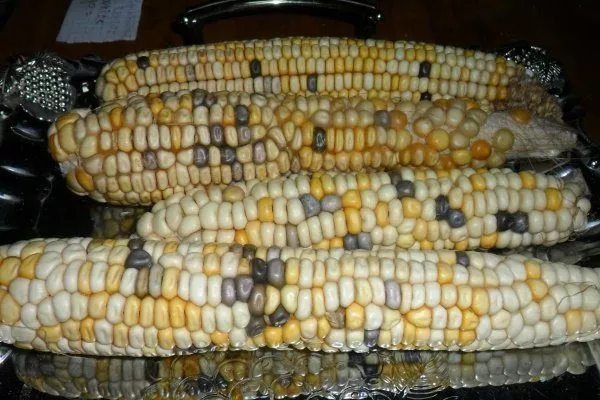
Mays Ornamental Congo variety
There's also semi-dent corn—a hybrid obtained by crossing dent and flint varieties. It's widely popular in the food industry.
Waxy corn
This group includes corn varieties whose starch contains only one component: amylopectin. The starch of other varieties contains another component: amylose. Due to the absence of monosaccharides, waxy corn is digested more slowly, thereby increasing performance and reducing blood sugar levels. This makes it particularly beneficial for diabetics.
Here are some popular varieties of waxy corn:
- Early Pink GlowA high-yielding, ultra-early variety, it matures in 60 days. The plant grows to 1.4 m in length, producing small, pyramidal-shaped ears (up to 14 cm). The kernels are distinguished by their unusual colors—pink and lilac. As it matures, the corn becomes sweet, making it delicious when cooked.
- White DakotaThis is an early-maturing corn variety, with a growing season of approximately 80 days. The plant grows tall, up to 1.8 cm. The cobs are up to 14 cm long and pyramidal in shape. The kernels are small and white. This variety is suitable for freezing, boiling, and baking.
- Black Waxy CornThis is a mid-season variety, requiring about three months to produce mature grain. The stalks grow up to 1.7 m. The cobs can be small or medium in size, ranging from 10 to 20 cm. The grains acquire an unusual emerald-black color. The vegetable is suitable for cooking.
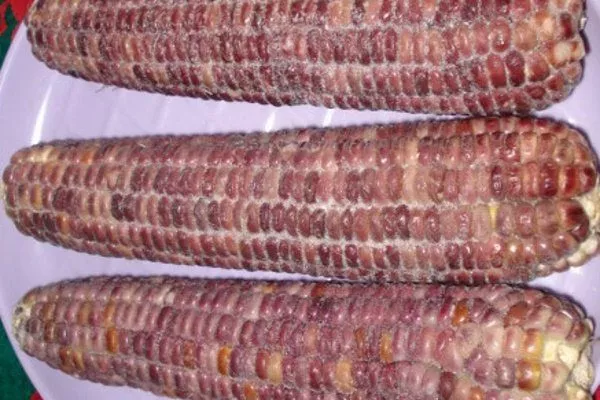
Early Pink Glow variety
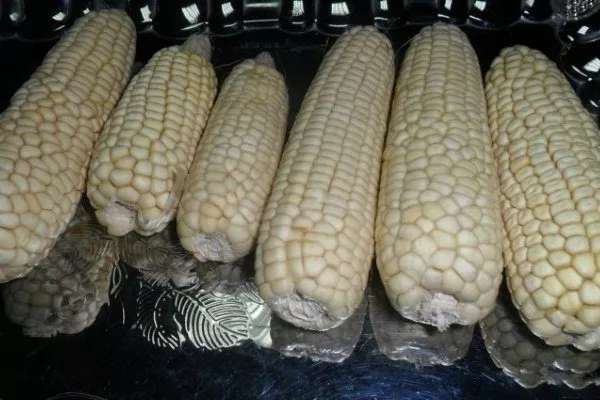
White Dakota variety
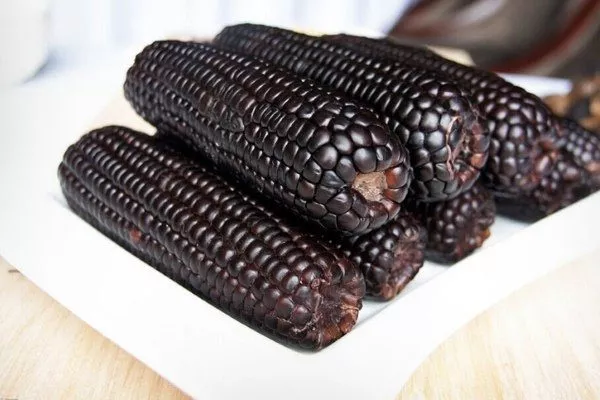
Black Waxy Corn variety
Interestingly, waxy corn was first discovered in China in 1909.
Waxy corn
This mutant was created by crossing different varieties—dent, North American, and Chinese bursting. It's quite rare, accounting for no more than 5-6% of all corn crops in Russia.
The grains are covered with an opaque, glossy layer on the outside, and have a starchy texture inside, containing up to 95% starch, which is 100% amylopectin. Because of this, this grain is very similar to waxy grain.
Waxy corn is grown primarily in China and includes the following varieties:
- StrawberryThis is a mid-season variety with a growing season of 80-90 days. The plant grows up to 1.8 m in height. The cob is approximately 22 cm long and 2-2.4 cm wide. The kernels are dark brown, reminiscent of small rice kernels. This variety is suitable for producing flour, cereals, and feed for animals and birds. It's also worth noting that this corn is very tasty when cooked at the milky-waxy stage.
- NacreIt is considered a mid-season variety, ripening 100 days after sowing. The plants are quite tall, reaching 2.1 m. The cobs are medium-sized, about 13 cm. The kernels are whitish with a pearlescent sheen and have a slightly elongated shape. Corn is used to make grits and is also cooked during the milky stage.
- Red cornThis early-ripening variety is native to North America. The growing season lasts no more than 90 days. The plants are tall, reaching 2.2 m. They also produce fairly long ears (up to 24 cm) that are round-cylindrical. The grain is red and is used to make flour and grits. It has a sweet taste when boiled during the milky stage.
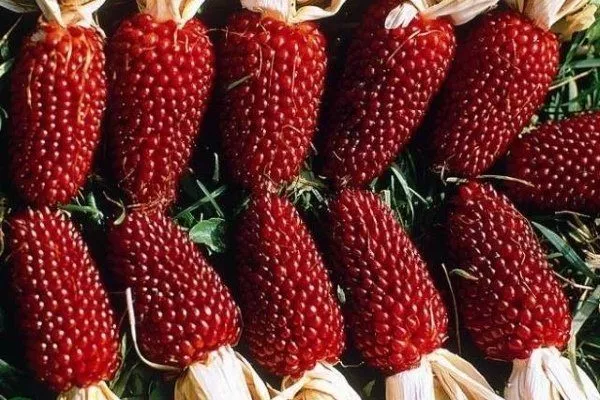
Strawberry variety
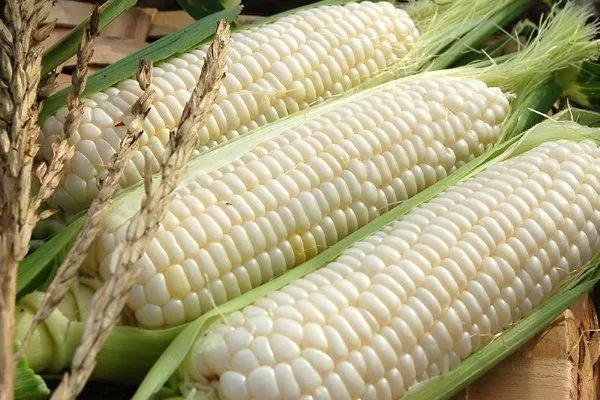
Mother of Pearl variety
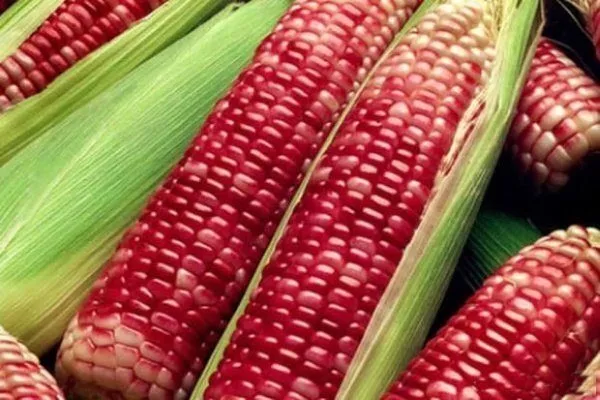
Red corn variety
Sweet corn
Considered a delicacy vegetable in the Poaceae family, it arose as a mutant by crossing dent and flint varieties. It is distinguished by its relatively low endosperm starch content and high sugar content (up to 35%), particularly dextrin, a water-soluble sugar.
Sweet corn converts sugars into reserve elements more slowly than other types of corn, so their concentration during harvesting during the milky-wax ripeness period is higher.
Among the varieties of sweet corn the most popular are:
- Honey nectarAn early-ripening variety with a growing season of 60-70 days. Plants thrive in cool, short summers and grow up to 1.2-1.5 m tall. Cobs are medium-sized, up to 19 cm. The kernels are golden in color and high in sugar, making them delicious when boiled. The kernels are also suitable for canning and freezing.
- Divine Paper 1822This is a rather rare variety native to China that matures in 90 days. It gets its name from the fact that when dried, the kernels flatten and become thin, resembling cardboard. The plant grows up to 2 meters. The ears are round-cylindrical and vary in size from medium to large. The kernels are whitish-yellow and literally melt in the mouth after boiling. The seeds remain soft until mid-October.
- Bloody ButcherOne of the rare early-ripening varieties native to Peru. It ripens in 68 days. The average plant height is about 1.6 m. The ears are round-cylindrical and large (up to 30 cm long). A single plant produces 2-4 ears at a time. The kernels are dark red and contain anthocyanins—antioxidants that slow aging, normalize blood sugar levels, strengthen blood vessels, lower blood pressure, and prevent many diseases.
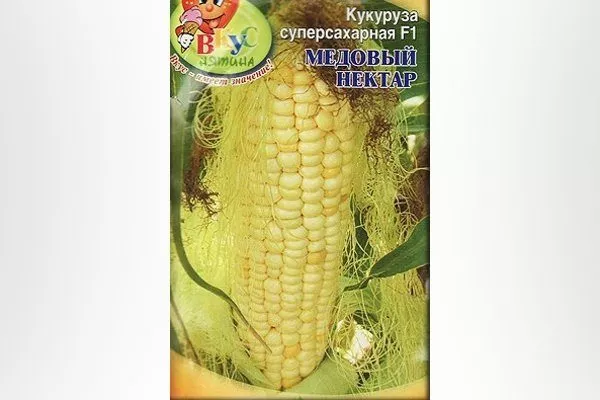
Honey Nectar variety
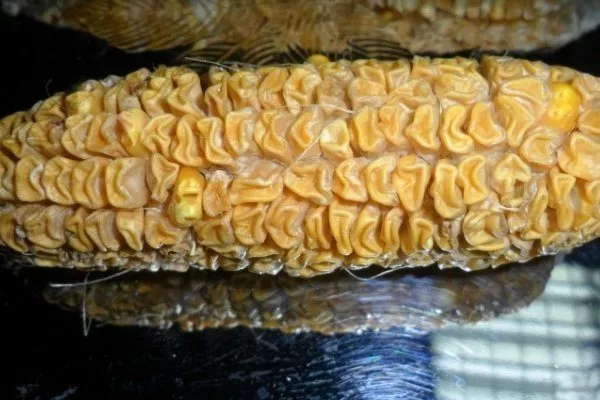
Divine Paper 1822
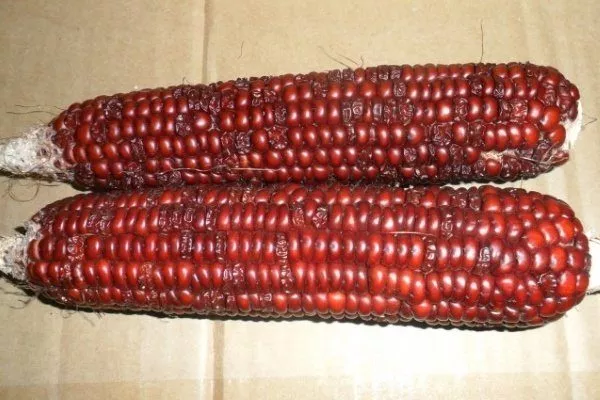
Bloody Butcher variety
Starchy corn
It is primarily cultivated in South American countries and southern North America. The plants are tall (over 2 m) and produce long ears (about 30 cm) with a thin head. The kernels have a convex top, a smooth, matte surface, and a rounded shape. The endosperm is characterized by a high starch content, friability, and mealiness. The kernel contains approximately 12% protein, 5% fat, and over 80% starch, so it is primarily used to produce alcohol and starch.
Starchy corn does not store well after harvest and is often susceptible to various diseases, since it has virtually no outer husk.
Well-known varieties in this category:
- Mays ConchoIt's an early-ripening variety and has a long history, having been cultivated by North American Indians. The shoots grow up to 2 m, and the cobs range from 20 to 35 cm. The kernels are golden in color, soft to the touch, large, and slightly rounded. This corn is suitable for cooking and processing into flour.
- Thompson ProlificA late-ripening, high-yielding variety that is very popular in America, where it is grown on virtually every farm. The plant grows to a gigantic size, reaching up to 3.2 m in height. It produces 2-4 ears, up to 42 cm long and cylindrical in shape. The kernels are large (twice as large as those of other varieties), flattened, and white. This corn is boiled and even roasted. Industrially, it is used to produce high-quality flour and feed for cattle and poultry.
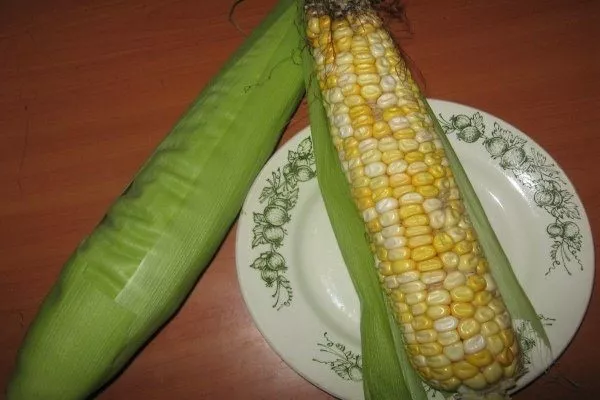
Mays Concho variety
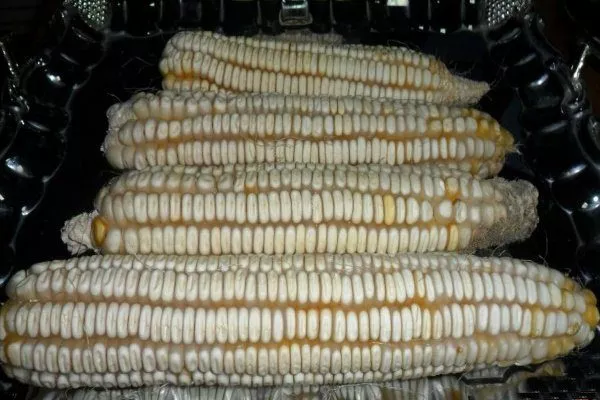
Thompson Prolific variety
Varieties of white corn
White corn is a hybrid characterized by small, sweet kernels. Plants typically grow up to 2 meters tall, are covered with linear, pointed leaves, and are sensitive to light, which greatly impacts yield.
The most popular white corn varieties include:
- The Little MermaidA mid-early variety from Ukrainian breeders that is drought-tolerant and highly disease-resistant. The growing season is 80-90 days. The ears are cone-shaped, 16-18 cm long, and weigh 200-250 g. The kernels are white with a pleasant lemon hue. The sugar content is 14-16%.
- Snow WhiteThis early variety has a growing season of 75-80 days and tolerates temperature fluctuations well. The ears are smooth, cylindrical, 18-20 cm long, and weigh 200-250 g. The kernels are a rich white color, sweet, and juicy.
- The Snow QueenA mid-season variety with a maturation period of 90-100 days. The cylindrical cobs are impressively large – they can reach 28-35 cm in length, often weighing 300-350 g. The kernels have a beautiful pearlescent hue.
- Lungwort F1An early-ripening hybrid, the harvest can be completed 75 days after sowing. It tolerates sudden temperature fluctuations and drought well. The cobs form 60 cm above the ground, are cylindrical, and medium-sized (17-19 cm long, 4-4.5 cm wide). Each head weighs 150-170 cm. The grains are white and sweet (sugar content up to 25%).
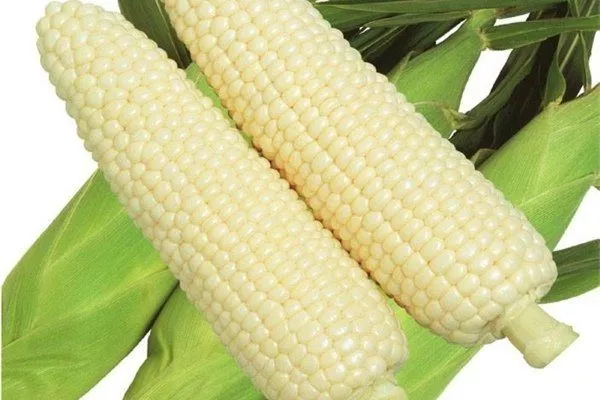
Mermaid variety
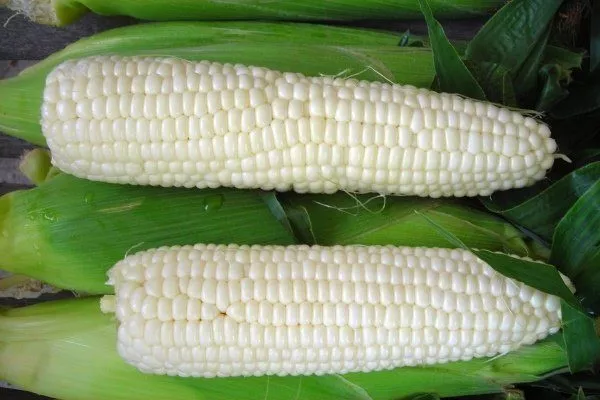
Snow White variety
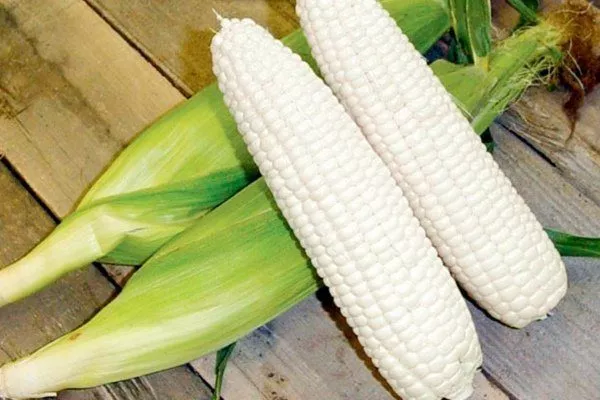
Snow Queen variety
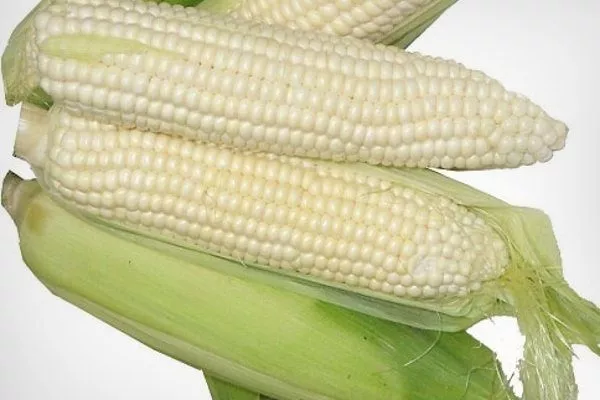
Medunka F1 variety
Any white corn can be boiled, canned or frozen.
Japanese (ornamental) corn
A corn variety traditionally grown in Japan and also known as Striped Candy. Its original seeds were exported from the country in the mid-1800s and are now extremely rare.
The plant requires light and produces a good harvest in light, fertile soils that are well-drained, permeable, and protected from winds. The articulating stems grow up to 1-1.5 m and bear beautiful, decorative foliage with green, yellow, orange, and red stripes. The corn kernels are burgundy-red and can be used to make popcorn. They are best eaten when they are still in the milky stage of ripeness.
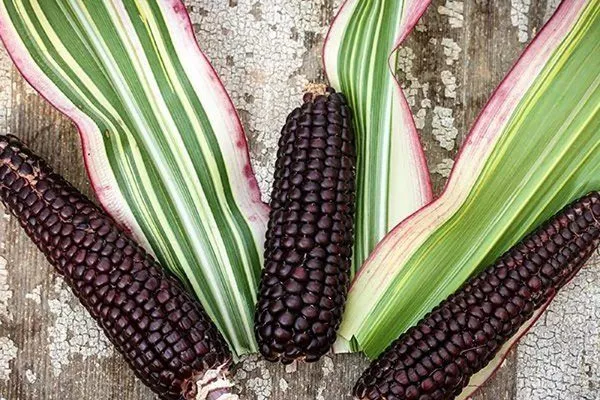
Japanese corn is a magnificent plant that can also be grown in a pot on a patio, for decorating a room or creating original flower arrangements.
Types of corn varieties by maturity period
Based on maturity, corn, like many other crops, is classified as early-maturing, mid-season, and late-maturing. The most popular varieties in each category are worth examining separately.
Early and mid-early
They can reach full maturity in a short period of time, so it's best to grow them from seedlings in regions with short summers. The most popular varieties and hybrids are:
- Sweet toothFull maturity occurs on the 75th day. The plant grows to 1.4-1.8 m. The cobs form up to 22 cm long and weigh 170-250 g. The kernels are orange-yellow in color and wide, elongated. They are suitable for canning, cooking, and freezing. This variety is high-yielding and exhibits high resistance to powdery mildew.
- Jubilee F1Considered a mid-early sweet corn variety, with a growing season of 80-100 days. The stalks can grow up to 1.6 m, and the cobs are also large – about 24 cm. Suitable for boiling and freezing, it is characterized by good yield and a pleasant sweet flavor.
- Landmark F1This is a hybrid that matures in 70-80 days. The plant grows up to 2 m. The cobs reach 20 cm in length and have bright yellow kernels with a sweet taste.
- F1 TrophyAn early-ripening hybrid that matures in 75 days. The plant grows up to 2 m. The ear is 22 cm long and weighs up to 220 g. The kernel is golden and very sweet.
- Sugar F1A mid-early hybrid with a growing season of 75-80 days. The stalks grow up to 1.8 m, and the cobs up to 20 cm. They weigh an average of 225 g. The kernels have a golden-amber color and excellent flavor.
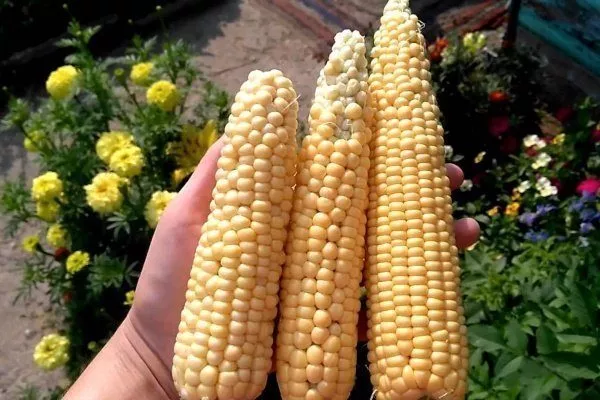
Lakomka variety
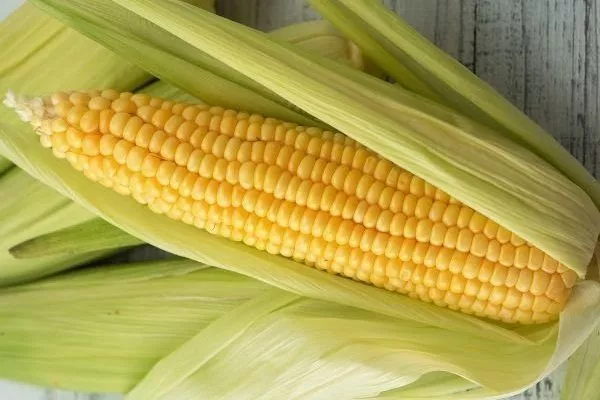
Jubilee F1 variety
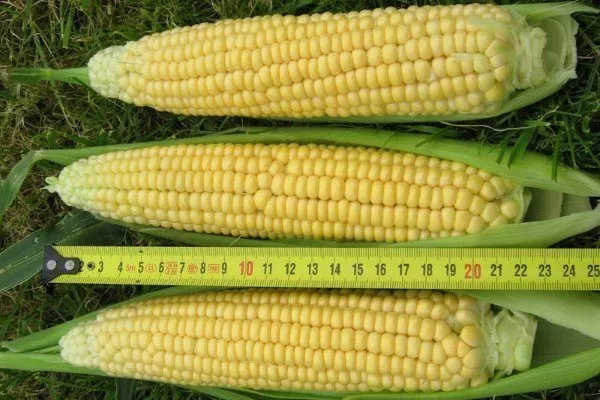
variety Landmark F1
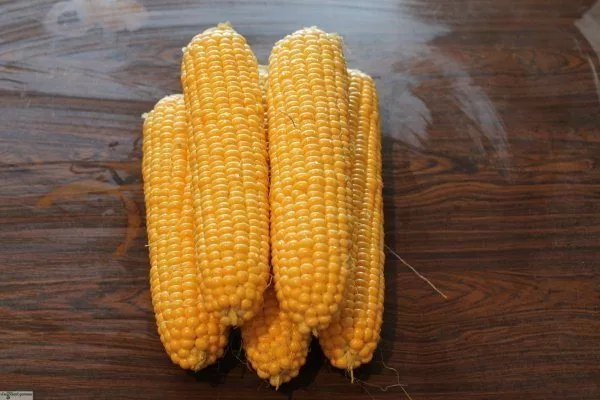
Trophy F1 variety
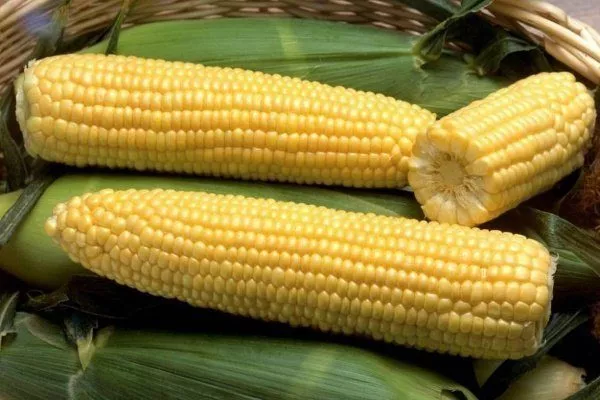
Sakharnaya F1 variety
Mid-season
They ripen a little later than early varieties, but tolerate dry air better during dry summers. Many have sweet beans. They are boiled, canned, and frozen.
Popular varieties and hybrids include:
- PearlThe harvest can be obtained in 83-91 days. It grows up to 1.7 m. The ears form approximately 21 cm long. The grains store well after harvesting.
- Sweetstar F1A sweet hybrid with a growing season of approximately 73 days. It grows up to 2.2 m. The cobs are quite large – about 24 cm. The kernels are yellow.
- Spirit F1The hybrid matures in 63-79 days and grows up to 2 m. The cobs can reach a length of approximately 23 cm, with juicy, golden-colored kernels containing a high sugar content.
- FavoriteIt takes 58-66 days for corn to mature. It grows to 1.8 cm. The cobs are about 23 cm long and the kernels are bright yellow. When grown in light, fertile soil, yields reach 45-55 kg per 10 square meters.
- DelicatessenSweet corn with a growing season of up to 70 days. The plant is small, reaching up to 1.4 m, but the cob grows up to 22 cm. The kernels are a rich yellow color and are easy to process.
- Sugar lingonberryCorn matures in 78-89 days. The cob is 21 cm long and 5.7 cm wide. It weighs an average of 173 kg. The kernels are bright yellow and juicy.
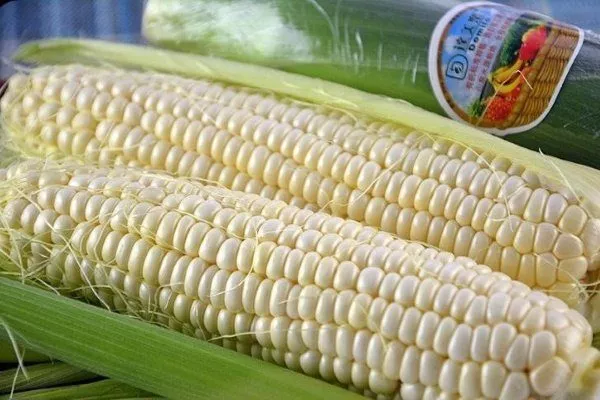
Pearl variety
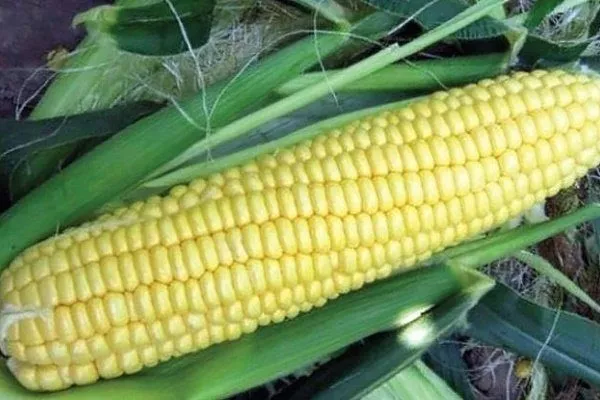
Sweetstar F1 variety
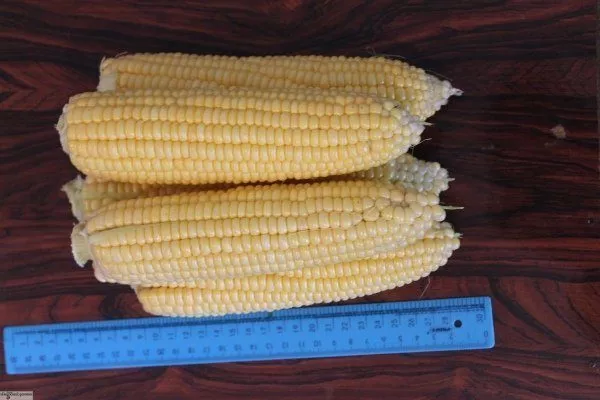
Spirit F1 variety
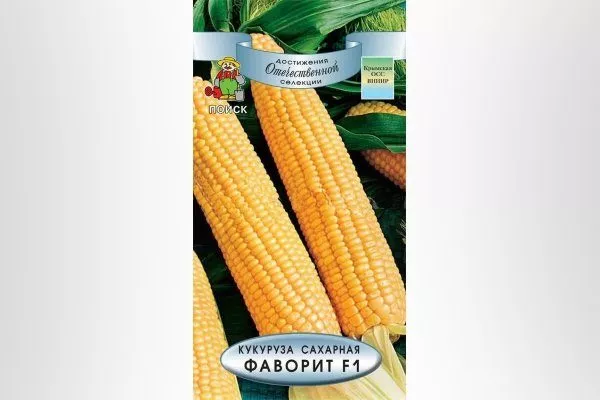
Favorite variety
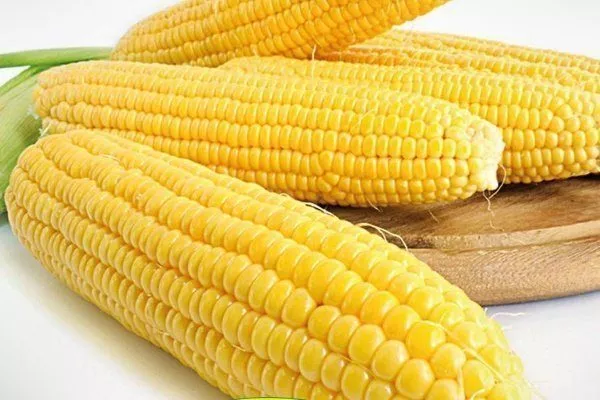
Delicatessen variety
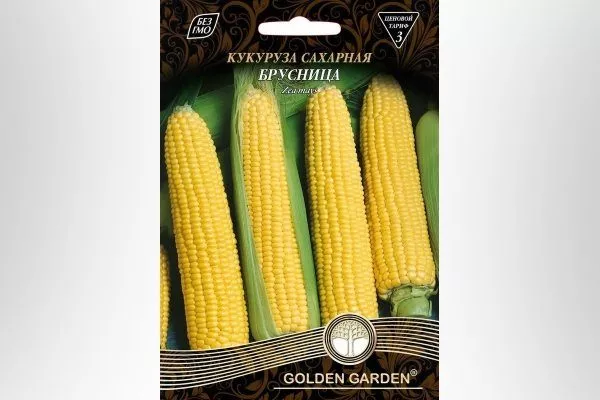
Sugar Lingonberry variety
Late-ripening (the most productive)
They have a long growing season, but easily adapt to various adverse conditions and produce abundant harvests. The most prominent representatives are:
- BashkirovetsThe growing season lasts 144 days. The plant grows up to 2.7 m. The cobs are approximately 24 cm long. The kernels are large (up to 350 g), yellow, and flat. The variety is resistant to various fungal diseases.
- PolarisA hybrid sugar bean variety with a growing season of 100-105 days. The stems grow up to 2 m, and the cobs up to 22 cm. They weigh an average of 320 g. The kernels are large and yellow. They are suitable for boiling and canning.
- Russian Burst 3A late-ripening hybrid variety, it matures in 95-98 days. The stalks grow to 180-190 cm and produce ears weighing 240-260 g. The kernels are yellow with an orange tip. They are excellent for popcorn. 98% of the kernels pop when heated.
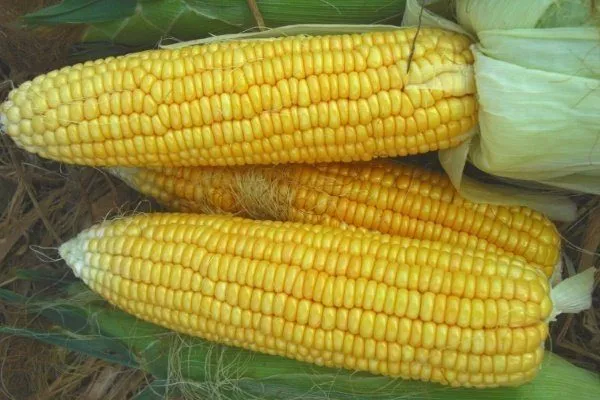
Bashkirovets variety
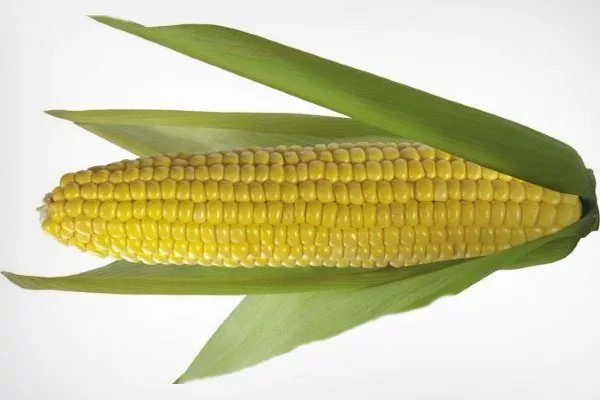
Polaris variety
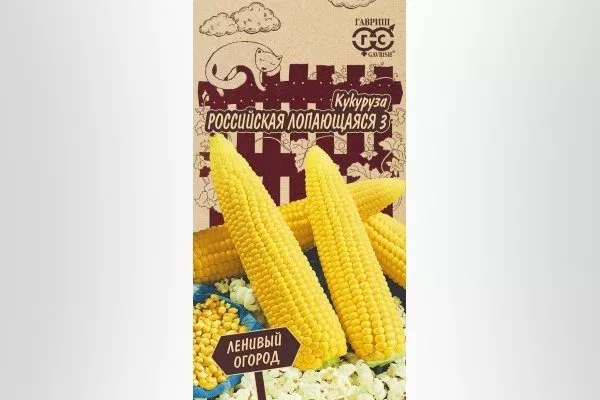
Russian Burst 3 variety
The best varieties for growing from seeds
Among the varieties that are most successfully grown from seeds, the following stand out:
- Dobrynya. This is an early-ripening corn variety. Ripe kernels can be harvested in two months. The plant grows up to 1.8 m in length, with cobs growing up to 21 cm. This sweet corn variety is suitable for boiling and canning. It can also be processed into cereals and flour.
- SyngentaA mid-late variety with a growing season of approximately 112 days. Grows up to 1.7 m. Cobs reach 21 cm in length. Delicious when boiled.
- SpiritIt's a mid-season variety, maturing in 111 days. The stalk grows up to 2.3 m in height, and the cobs up to 23 cm. The grains are yellow and used to produce flour and cereals.
- Early goldThis early-maturing corn variety matures in just 90 days. The hybrid is resistant to fungal diseases. The cobs reach 19 cm in length. The kernels are soft and tender when cooked.
- Sundance F1A low-growing plant with an early ripening period of 70-90 days. The plant reaches a height of 1.5 m. The grains are bright yellow and elongated. They are used for cooking and canning.
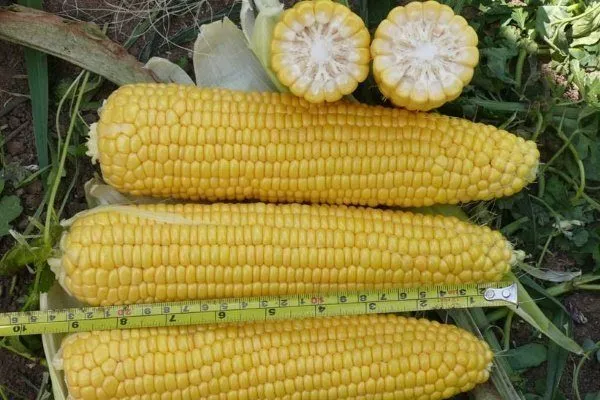
Dobrynya variety
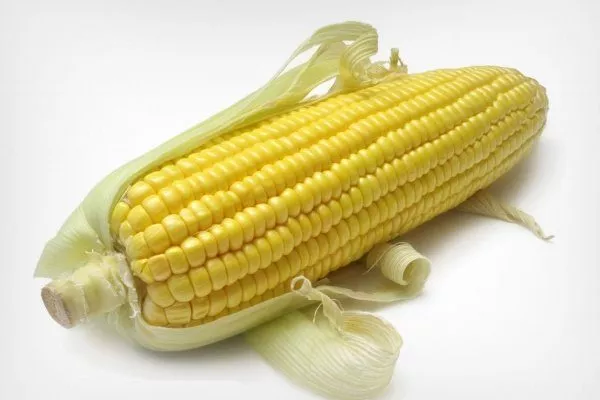
Syngenta variety
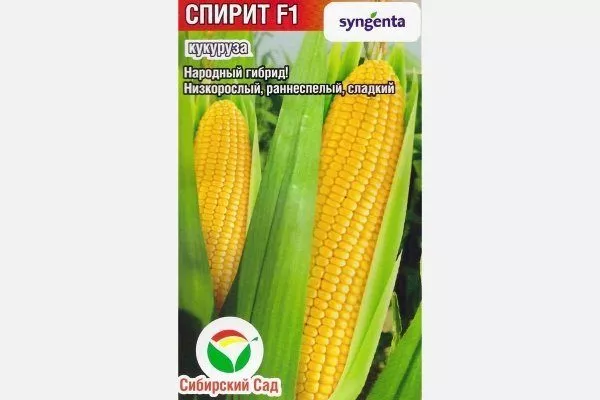
Spirit variety
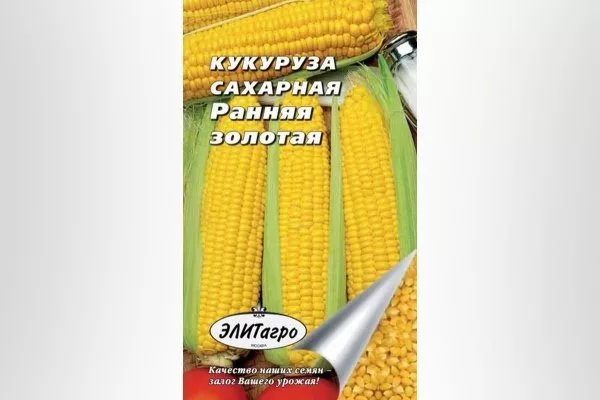
Early Golden variety
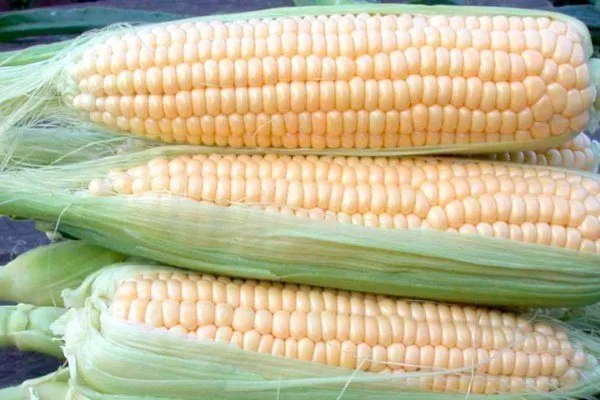
Sundance F1 variety
The best varieties of feed corn
When selecting corn for feed, it's the leafy stem, not the fruiting, that matters most. The following varieties have the best characteristics in this regard:
- Pearl;
- Saratov sugar;
- Aurica F1;
- Golden Fleece;
- Kuban early ripening;
- Viola.
The listed varieties of corn will be an excellent source of both silage and quality grain.
Is there a Bonduelle variety?
There's no definitive Bonduelle variety. That's the name of a canned corn company. They use the Spirit and Bonus varieties in their canned corn.
But savvy domestic agricultural firms quickly came to their senses and began selling seeds labeled "Bonduelle variety," not only on bags of corn, but also on beans.
So, to plant corn in your garden, you need to choose varieties that thrive in your specific climate. You should also consider the intended use and ripening time. Some gardeners plant seeds of different varieties to empirically determine the best option.