
Sugar Cob is the name of a high-yielding sweet corn hybrid. It has won over domestic gardeners and farmers for its ease of cultivation, disease resistance, and suitability for commercial cultivation. Its main advantage is the remarkable flavor of its kernels, which can be preserved and eaten fresh.
Breeding history
This hybrid variety of cereal crop was added to the Russian state register in 2011. Its development was attributed to domestic breeders:
- Gavrish S. F.;
- Kapustin A. A.;
- Volkov A. A.;
- Semenova A. N.;
- Artemyeva G. M.;
- Redichkina T. A.
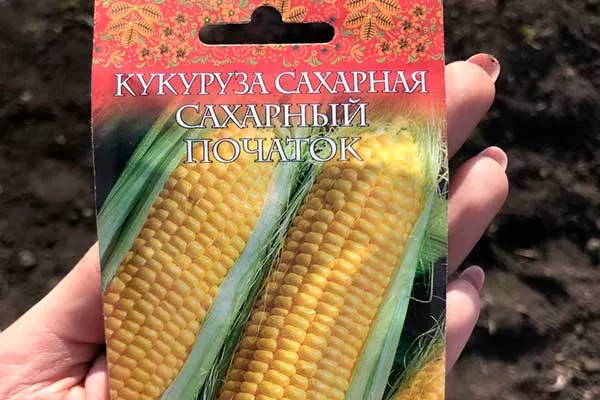
Sugar cob is recommended for cultivation throughout virtually the entire country, including Ukraine. It thrives in the climate of the central and even northern regions.
The State Register designates it for cultivation in the following regions:
- Central;
- Central Black Earth Region;
- Volga-Vyatka;
- Middle Volga;
- Lower Volga;
- Northern;
- North-West;
- North Caucasian;
- Ural;
- West Siberian;
- East Siberian;
- Far Eastern.
Description of the variety
Before you begin growing a hybrid sweet corn variety in your garden, familiarize yourself with its botanical description and technical characteristics.
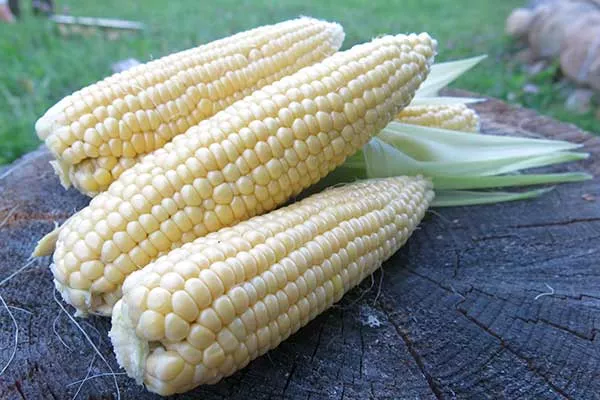
Characteristics of the appearance of the plant, cobs and grain
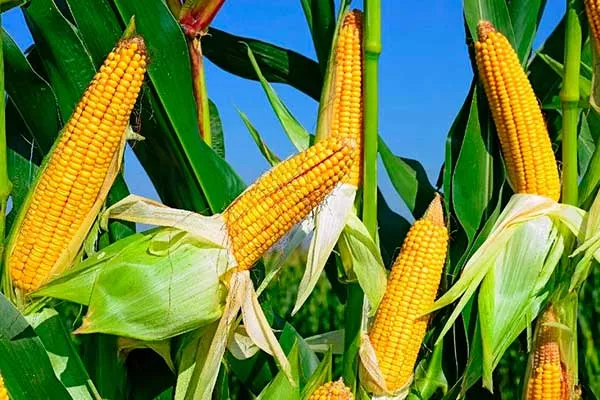
Hybrid corn is short, ranging in height from 1.2 m to 1.5 m. The plants are characterized by a low-growing cob, a kidney-shaped kernel. The number of fruit ovaries per stalk ranges from 3 to 5.
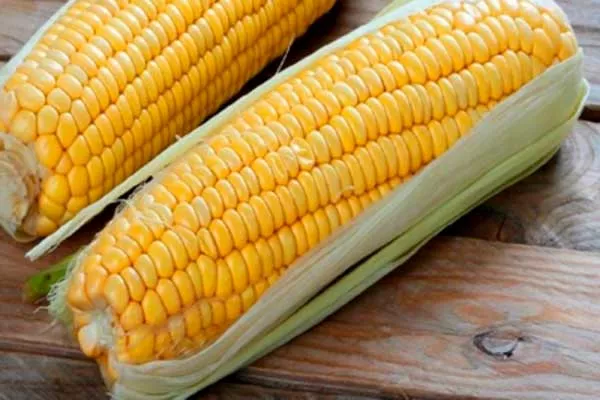
The cobs of this hybrid cereal crop are not uniform. They have the following external characteristics:
- cylindrical or slightly conical shape;
- length indicator - 15-20 cm;
- diameter - 4-4.6 cm;
- weight - 170-230 g;
- number of rows of grains - 12-14 pcs.;
- the weight of 1 corn grain is 0.17 g (the weight of 1000 grains is 170 g);
- wide, slightly elongated grain of bright yellow color.
Purpose and taste
The taste of the Sugar Cob harvest is excellent. The kernels are sweet both raw and cooked. They are a true treat for children and adults, especially if the cobs are picked at the milky stage of ripeness.
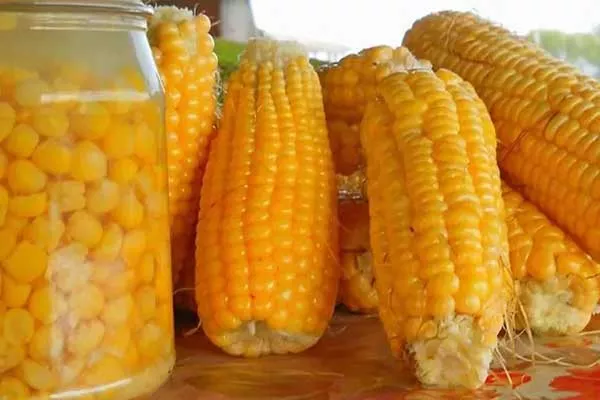
Hybrid sweet corn can be eaten without cooking. Housewives also use it for culinary purposes:
- boiled whole cobs;
- stew the grains to make a hearty and tasty side dish;
- added to soups and salads;
- canned;
- freeze.
Ripening time and yield
Sugar cob is an early-maturing cereal crop. Its harvest matures in 72-75 days after germination in the field. It ripens uniformly. The first fruits are ready for harvesting 80-90 days after sowing. Gardeners harvest them en masse in August and September.
The hybrid is famous for its stable and high yield:
- Gardeners harvest up to 6.2 kg of corn from 1 square meter of field;
- 0.5 kg/m2 is an indicator calculated in clean, conditioned cobs.
How to grow in open ground?
The grain crop hybrid is intended for cultivation in open areas of the garden/field using seedlings or direct sowing of seeds into the soil.
The most favorable temperature conditions for corn growth are +22-25°C during the day and +18°C at night.
It begins to grow green mass at +12°C. The planting is not damaged by spring frosts unless the growing point is damaged. However, autumn frosts of -4°C cause plant death.
Seed preparation
Before sowing, prepare the corn kernels. Begin this process one week before the planned planting date. Follow these steps:
- Place the seeds in a cheesecloth bag. Place it on a sunny windowsill.
- After 4 days, soak the seeds in water, adding a growth accelerator. If you don't have a suitable commercial solution on hand, use a pale pink solution of potassium permanganate.
- After soaking, place the corn kernels on a damp cloth and leave them there for a while.
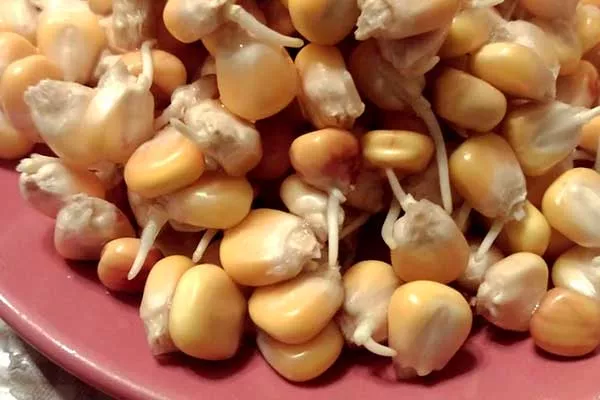
If you prepare your corn seeds properly before planting, they will sprout within a few days.
How to prepare the soil?
Select a sunny, wind- and draft-protected area with fertile, slightly acidic soil for planting sugar cob. It's a good idea to have previously grown the following crops in this area:
- cereals;
- legumes;
- potato;
- cucumbers;
- onions.
- ✓ Soil pH should be between 6.0-6.8 for optimal nutrient absorption.
- ✓ The soil must have good drainage to avoid water stagnation and root rot.
Prepare the selected area for sowing cereal crops. Perform the following steps:
- weed removal;
- digging and harrowing the soil;
- adding peat, river sand and organic fertilizers to it.
When to sow?
Sow corn seeds at the following times:
- in April or May - to obtain seedlings (transfer the seedlings to an open area when they reach 15-20 days of age);
- in the second half of May, at the beginning of June - direct sowing of seeds into open ground.
Plant the hybrid in a garden bed or in a field after making sure that the soil has warmed up to +15°C and the threat of recurrent frosts has completely passed.
How to plant?
Plant corn seeds in holes dug in the ground, 3-5 cm deep. Space at least 30 cm between plants and 60 cm between rows. A 50x70 cm pattern is recommended. The greater the distance between holes, the larger and fuller the cobs will be. Finally, water the crops.

To increase your chances of getting a rich harvest of sweet cobs, sow the grain crop next to your vegetable beds:
- cucumbers;
- pumpkin;
- tomatoes.
Corn also produces good yields when grown alongside beans and legumes. Celery and beets are poor companions.
If you want to enjoy sweet corn kernels throughout the second half of summer, sow seeds in batches, leaving an interval of 10-12 days between them.
Care
To get a rich harvest of large, sweet cobs, take good care of your hybrid corn plantings: water them regularly, fertilize them, loosen the soil under the plants, and control weeds.
Loosening and mulching the soil
At the initial stage of development, corn is in dire need of such care procedures as:
- weed removal;
- destruction of the soil crust.
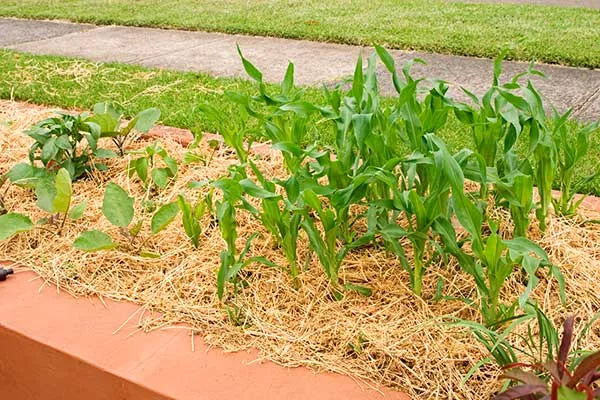
They ensure the retention of nutrients and moisture in the garden soil and improve air access to the roots. They are achieved by harrowing. Repeat this procedure several times per season:
- 3-5 days before sprouting, loosen the soil in 1 or 2 tracks, using light or medium harrows (this procedure will promote a more uniform emergence of seedlings);
- in the 3-4 leaf phase, cultivate the soil across the rows.
Sugarcob also benefits from organic mulching. This helps control weeds and maintain optimal moisture levels.
Watering and fertilizing
Sweet corn hybrids require a lot of watering. The soil under the plants should be watered at least three times per season, following this schedule:
- in the 9-10 leaf phase;
- before the panicles appear;
- at the beginning of grain filling.
- ✓ Watering should be done early in the morning or late in the evening to minimize water evaporation.
- ✓ Use water at a temperature of at least 15°C to avoid stressing plants.
Keep the grain planted under water at a rate of 400-500 cubic meters per hectare (for commercial cultivation of Sugar Cob). If you're growing the hybrid in your own garden, water it after the soil has dried to a depth of 5 cm. Saturate the soil to a depth of 12 cm.
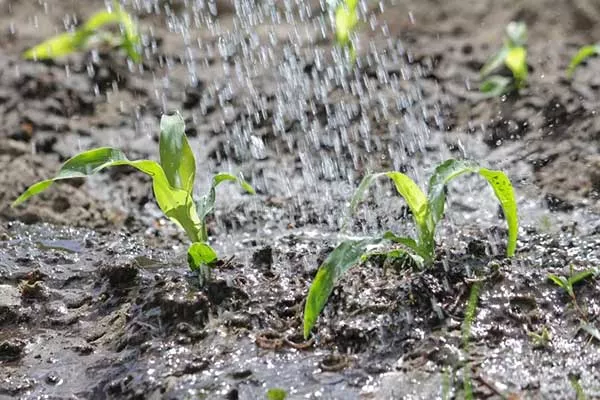
To ensure a good harvest of beautiful, juicy, and sweet ears, fertilize your corn regularly. Follow the fertilizer application schedule:
- First time Fertilize the seedlings after they develop 2-4 true leaves. Use a chicken manure-based fertilizer, Gumino de Gallina, or ammonium nitrate/nitroammophoska (40-50 g per 1 sq. m).
Do not skip this stage of fertilization, because in the 4-leaf phase of plants, cobs are formed and their number is determined. - Second feeding After the seedlings have developed six leaves, apply Baikal or a chicken manure infusion (1:50) to stimulate the formation of kernels on the cobs and increase their number in rows.
- Third time Fertilize the corn planting when the tassels appear. Provide the crop with maximum phosphorus to ensure good weight gain of the cobs and kernels.
Use 15 g of urea dissolved in 10 liters of water, adding 20 g of monopotassium phosphate and 10 g of potassium sulfate. Master 13.40.13 is also suitable as a third fertilizer.
Resistance to diseases and pests
The Sugar Cob hybrid was bred to be resistant to most grain diseases and pests. Under unfavorable conditions, its plantings may be susceptible to infections:
- fungal (rust, corn smut, helminthosporiosis);
- viral (dwarf mosaic disease of corn).
Avoiding losses when growing grain can be achieved by strictly following agricultural practices, purchasing seeds treated with fungicides by the manufacturer, and timely control of aphids (virus carriers).
With insufficient or poor quality care, the sweet variety of corn suffers from pest infestations:
- wireworm;
- Diabrotica (corn beetle);
- aphids;
- cotton bollworm;
- corn borer (moth).
Insecticides provide powerful insect protection. Spray the Sugarcob bed with them every 7-10 days after pests are detected. Use Coragen against cutworms, Euphoria against aphids, Ampligo against corn borers, and FORS against wireworms and corn rootworms.
Harvesting
Harvest sweet corn when the cobs reach waxy or full ripeness. You can tell when they're ready to eat by looking at their appearance:
- the pistils (hairs on the corn) began to darken;
- the inner leaves have dried out and tightly fit the cob;
- The grains became large and acquired the colour characteristic of the variety right up to the top of the head.
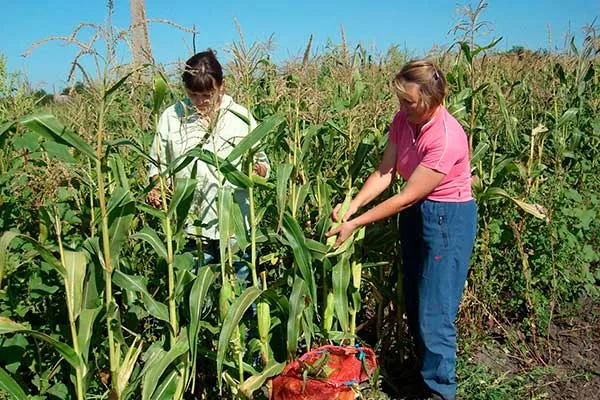
By following the harvesting schedule, you'll reduce losses. Harvest the cobs at the same time as threshing them. Do this in dry weather. Finish the work before frost sets in.
Processing and storage of corn
Immediately after harvesting, the cobs are processed or frozen, as after 24 hours the kernels will have lost a significant portion of their sugars. Modern methods also preserve all the beneficial properties of sweet corn. In the food industry, processing is carried out in the following sequence:
- clean the grains;
- soak them to soften them;
- crushed and washed to extract the embryos;
- separate starch from gluten.
To preserve the Sugar Cob crop for a long time, first cool it by placing it in ice water (at a temperature of 4°C). Then transfer it to the refrigerator. To preserve the freshness and juiciness of the kernels for a long time, keep them at 0°C.
Positive and negative qualities
The Sugar Cob hybrid has many advantages that make it a favorite among domestic gardeners and farmers:
Among the disadvantages, some vegetable growers point out the small height of the plants, which does not allow them to be used as a hedge.
Reviews
Sugar corn is a popular variety of sweet corn. It is grown throughout Russia due to its low maintenance and resistance to diseases and pests. The crop is characterized by excellent quality, including shelf life and transportability. The kernels on the cob are very tender and sweet.