
Raquel corn is a sweet, bicolor hybrid that has recently appeared in gardens and markets across the country. This beautiful and delicious corn has become a serious contender for established favorites.
Who and when developed Raquel corn?
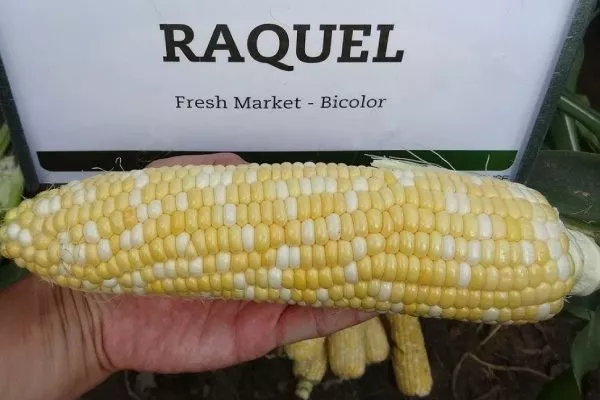
Raquel F1 is a super-sweet bicolor hybrid developed by French breeders (Clause). This corn variety was added to the State Register in 2018.
Description of the variety
Raquel corn grows up to 1.5 m in height. Each plant produces two ears, each 20-22 cm long and slightly conical in shape. The ears are 5.5-6 cm in diameter, each containing 16 to 18 rows of large kernels. The average weight of an ear is 380 g.
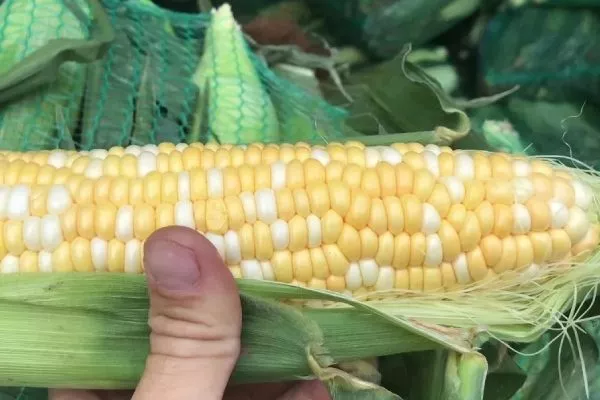
Raquel's beans are juicy and have a perfect texture. They have a wonderful flavor, delicate and slightly sweet. Most of the beans are yellow, while a smaller number are white.
Productivity and ripening time
Raquel has an early ripening period and a high yield—2.4 kg per square meter. It takes approximately 70 days from germination to ear maturity. This variety is ideal for fresh consumption.
Growing regions
Raquel corn can be grown in virtually all regions of the country—in open or closed ground, depending on climate conditions.
In particular, this hybrid is recommended for the Northern, Northwestern, Central, Volga-Vyatka, Central Black Earth, North Caucasian, Middle Volga, Lower Volga, Ural, West Siberian, East Siberian and Far Eastern regions.
How to grow sweet corn?
In corn grown for food, flavor is paramount. Raquel's is excellent, but it's important to remember that flavor can be influenced by a variety of factors.
- ✓ Check the soil pH level, the optimal range for Raquel corn is 6.0-6.8.
- ✓ Ensure there is drainage to avoid standing water, which can lead to root rot.
To ensure Raquel corn grows juicy and sweet, it is important to provide it with the appropriate conditions:
- Soil. The best soils are chernozem, dark gray loam, and river floodplain soils. Salty and highly acidic soils negatively affect the flavor of corn. Sandy and sandy loam soils can produce a high-quality harvest, but only if they are fertilized. It's also important to promptly remove weeds, which absorb nutrients intended for the corn.
- Temperature. Corn thrives in warmer climates; mature plants die at temperatures below -3°C. Seeds should be sown when the soil has warmed to at least +10°C. If the seeds are planted in colder soil, they will germinate poorly and produce underdeveloped shoots. A lack of vigor will also negatively impact the size and flavor of the cobs.
- Moisture. It affects yield, kernel flavor, and the size and number of cobs. Corn requires half as much water as cereals due to its long roots, but regular watering has a beneficial effect on yield and cob flavor.
- Lighting. Light promotes intensive growth of leaves and cobs, which has a beneficial effect on the quantity and quality of the harvest.
How to plant corn?
To get a good harvest, you need to properly prepare the soil, and also take into account the previous crops and observe crop rotation.
Landing features:
- It is not recommended to plant corn in the same area for several years.
- In autumn, the soil is thoroughly dug up or mechanically ploughed to a depth of 30 cm.
- Corn requires a lot of nutrients at all stages of growth to thrive. Fertilization is done in three stages:
- In autumn or spring, the bulk of fertilizers – organic matter and mineral substances – are added during plowing.
- In spring, fertilizers are applied when sowing seeds in rows.
- The last time plants are fertilized is during the growth of green mass.
Fertilizer application plan for corn Raquel- Two weeks before planting, add compost or rotted manure at a rate of 5 kg per 1 sq.m.
- When 4-6 leaves appear, apply a complex mineral fertilizer with NPK 10-10-10.
- During the period of cob formation, use fertilizer with a high potassium content.
- Seeds are sown in pre-prepared furrows. Suitable sowing patterns are 70x30 cm or 50x90 cm.
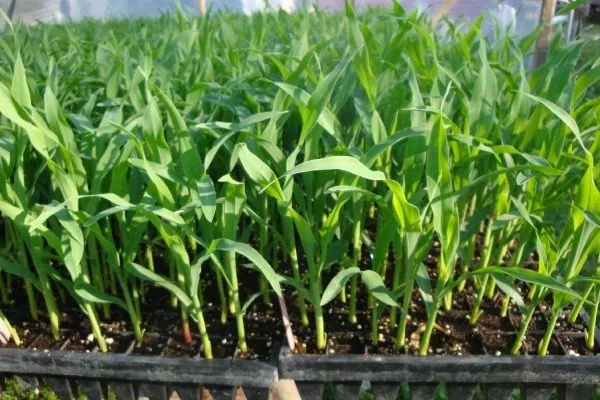
In regions with short summers, it's recommended to use seedling cultivation to obtain an earlier harvest. Seedlings are grown in special trays or cups filled with soil.
How to care?
To achieve high yields when growing Raquel corn, it is necessary to follow certain care rules.
| Irrigation method | Frequency | Efficiency |
|---|---|---|
| Drip irrigation | 2-3 times a week | High |
| Sprinkling | Once a week | Average |
| Watering at the roots | As the soil dries out | Low |
How to grow lots of delicious corn:
- If the crop is grown on an industrial scale, harrowing is carried out as early as 5-6 days to prevent weed growth. If necessary, harrowing is repeated after a while. Furthermore, harrowing loosens the soil and improves air circulation. Next, interrow cultivation is performed to loosen the soil and remove weeds.
- When growing corn in the garden, it's essential to provide it with water. Corn can be watered at the roots, or you can use drip or sprinkler irrigation.
- For large-scale cultivation, it is recommended to treat the field with herbicides. The choice of herbicide depends on the type of weed, its abundance, and the tolerance of the specific hybrid. Spray the area in the evening, during dry weather, at temperatures between 13 and 15°C.
Fighting diseases
The Raquel variety is resistant to rust, dwarf mosaic virus, and helminthosporiosis. Under unfavorable conditions, the risk of fungal and other diseases increases, including loose smut, anthracnose, red rot, root rot, stem rot, rust, and fusarium.
Diseases are controlled using a combination of preventative measures, chemical treatments, technical methods, and biological control. Among the most dangerous insects for Rakel are aphids, wireworms, gray weevils, cutworms, and corn rootworms. When these appear, appropriate insecticides are used.
Harvesting
The cobs are harvested when the silks turn brown. The top cobs always ripen earlier than the bottom cobs. When ripe, the cobs bend to the side, positioning themselves almost perpendicular to the stalk. Ripeness is also determined by the kernels; if they are ripe, juice squirts out when pressed.
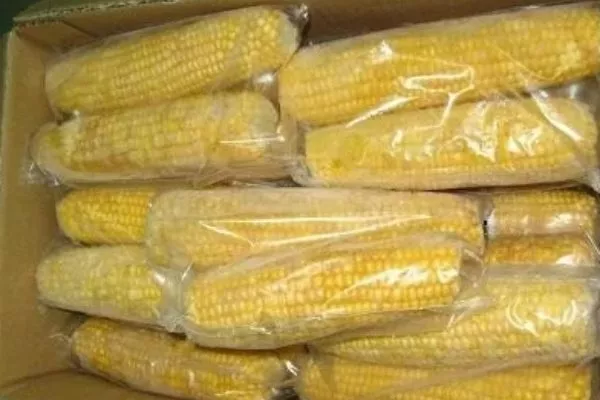
Harvested corn can be boiled immediately or stored. For maximum flavor, consume it within 24 hours of harvesting, as sweet corn varieties lose almost half their sweetness after 24 hours indoors.
Reviews
I shell the cobs, boil the kernels for three minutes, then immediately transfer them to cold water, spread them out on a baking sheet, dry them, and freeze them loosely. Then I transfer the frozen kernels to a container and use them in salads.
Raquel corn is a promising variety, equally suitable for both commercial cultivation and home consumption. Its two-colored cobs not only look impressive but also boast excellent flavor, rivaling the best corn varieties from the former Soviet Union.