
Corn is a moisture-loving plant. It requires soil moisture from the moment the seeds are planted until the cobs ripen. To achieve this, it's important to understand some of the specifics of watering this "queen of the fields."
How often should you water corn?
Corn growers believe that the crop should be watered according to its growing season.
When vigorous growth begins, with the formation of a strong stem and multiple branches, the crop's growth accelerates sharply (up to 15 mm per day). This period, before panicle erupts, is the most critical. This is when you should feed and water the corn most intensively.
There are 4 periods of crop irrigation:
- Duration of the first period – approximately 25 days. During this time, the plant develops 7-8 leaves. The root system is still very weak at this time. Watering required daily is 2-2.5 l/sq. m.
- The duration of the second period is The first panicles emerge, which takes approximately 30 days. During this period, the plant is well developed and requires more water—about 3.5-4 l/sq. m per day.
- Third period – determined from the emergence of panicles to the coarsening of the threads, is approximately 20 days. The plant grows vigorously and requires abundant watering – approximately 4.5-5.5 l/sq. m per day.
- The fourth period – occurs when the first cobs appear on the plant. Ripening begins. This period lasts 17-25 days. Reduce the amount of water per day to 3-3.8 l/sq. m.
Lack of soil moisture during the final stages of corn panicle formation and flowering can lead to yield losses of 20% or more.
In the video below, a specialist discusses the need for irrigation and the growing seasons of corn:
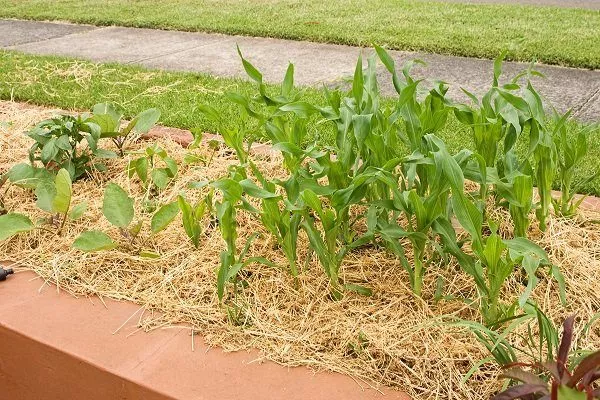
Mulching is often used during dry summers. Corn is mulched immediately after weeding and loosening. This helps the soil:
- moisture is retained longer;
- oxygen access increases;
- weed growth is reduced.
Rotted manure, straw, and dried mown grass are used as mulch.
- ✓ The mulch layer thickness should be at least 5 cm to effectively retain moisture.
- ✓ Mulching should be done in the morning hours to allow the soil to warm up.
What kind of water is suitable for irrigation?
If you prefer to grow corn from seedlings, use warm water to water the seedlings. Potassium permanganate is often used to disinfect the water, turning the irrigation solution a pale pink color.
For watering mature plants, use regular tap water. No additional steps are required.
Methods of watering corn
There are 2 methods that can be used to water corn:
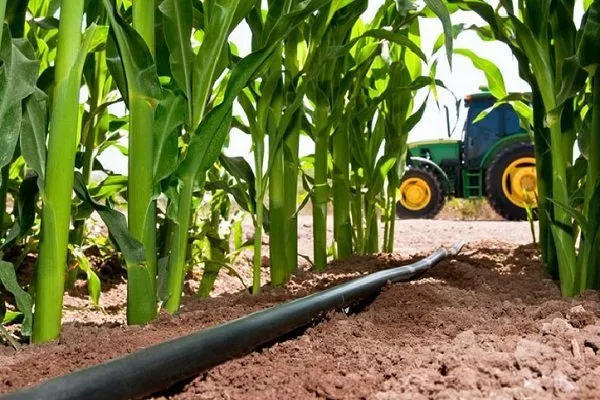
- Drip. One of the optimal options for maintaining the required soil moisture level. This method delivers water directly to plant roots.
Drip irrigation is installed by laying pipes into the ground to a depth of 2-3 cm. Holes in the pipes are spaced 20-30 cm apart. This irrigation method provides a consistent, even supply of water to each plant. Using drip irrigation for corn can increase crop yields by approximately 60%.

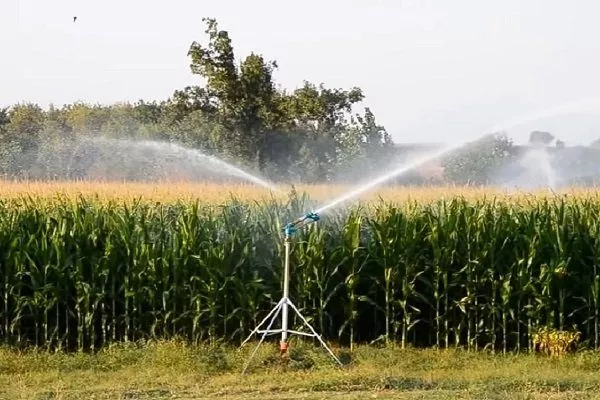
- Sprinkling. For its use, specialized equipment is installed in agricultural fields and lands. It is best suited for larger planting areas.
When to stop watering?
Maintain the established watering schedule throughout the corn growing season. As the plants grow, water consumption gradually increases at first and then gradually decreases.
Stop watering completely or only when necessary, once the silks (threads) on the cobs have darkened. At this stage, the kernels are ripening, and excess moisture is not required, otherwise the cobs will be watery.
By properly caring for your corn throughout the summer, you'll be rewarded with juicy, golden cobs. Maintain an optimal watering schedule, apply the required amount of water and fertilizer, mulch, and practice other agricultural practices, and your corn will grow healthy and delicious.