
Gardeners often complain about corn failing to germinate. Poor-quality seeds are usually cited as the cause. In many cases, this is true. But few people know that counterfeit seeds aren't the only factor affecting crop growth. Other possible causes include skipping a sowing step, improper watering after planting, and much more.
Poor quality seeds
The number one reason why seeds fail to germinate is their poor quality. You can't germinate something that's known to be unviable. Planting material becomes unusable if the storage instructions and expiration dates are violated.
- ✓ Check seeds for visible damage and uniform size.
- ✓ Check for any signs of mold or unpleasant odor, which may indicate improper storage.
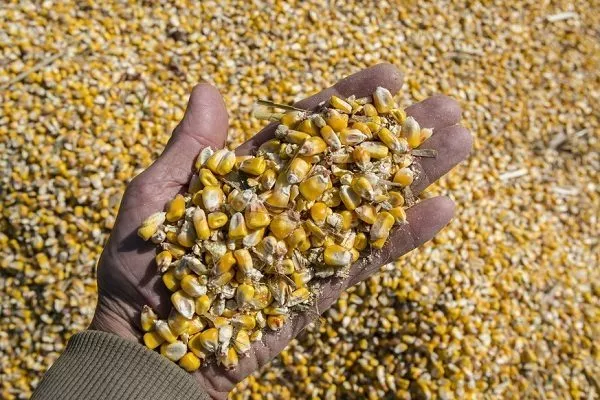
Prior to sale, seeds should be stored by the manufacturer in vacuum-sealed containers. The outer containers must be airtight. Metal-sealed packaging is permitted.
But the buyer has no control over the production process. The only option is to carefully inspect the beans' packaging for integrity, signs of dampness, musty odors, mold, etc. Next, pay attention to the packaging date.
It's important to adhere to seed storage guidelines. Corn is typically good for planting for five years. If seed storage conditions aren't met—excessive moisture and temperature fluctuations—the shelf life of the corn kernels will be reduced.
Check the suitability of seeds for germination in the following ways:
- Prepare salt water by dissolving 1 teaspoon of salt in a glass of water. Stir until the salt dissolves.
- Place the seeds in the resulting solution and stir. After 5-7 minutes, some seeds will sink to the bottom, while others will float to the surface. Floating seeds are not suitable for germination and can be discarded. Dry the seeds that have sunk to the bottom and use them for planting.
- ✓ Use of a thermostat to simulate optimal germination conditions.
- ✓ Use of a light microscope to assess the integrity of the embryo.
Another option: immerse the planting material in a saturated (bright pink) solution of potassium permanganate. Seeds that float to the surface are unsuitable for growing.
If you grow corn in large quantities, estimate the average germination percentage for the entire batch of seeds:
- Select 10-20 grains from each package at different storage depths.
- Divide into batches of 100 and place them in a germination zone.
- After germination, estimate how many seeds out of 100 have sprouted. This is the average germination rate to expect.
Incorrectly selected variety
| Name | Ripening period | Disease resistance | Recommended growing regions |
|---|---|---|---|
| F1 Trophy | Early | High | Cold regions |
| Sugar F1 | Early | Average | Cold regions |
| Madonna | Early | High | Cold regions |
| Sweetstar | Mid-season | High | Warm regions |
| Delicatessen | Mid-season | Average | Warm regions |
| Pearl | Mid-season | High | Warm regions |
| Polaris | Late | High | Very warm regions |
| Ice Nectar | Late | Average | Very warm regions |
| Bashkirovets | Late | High | Very warm regions |
A common cause of corn failure is planting a variety not recommended for growing in the gardener's region. In such cases, even following storage and planting guidelines won't help.
In cold regions with short summers, it's recommended to start with seedlings. For sowing in cool and temperate climates, choose early-ripening varieties:
- Trophy F1;
- Sugar F1;
- Madonna and others.
In warm regions with dry summers, mid-season varieties are preferable:
- Sweetstar;
- Delicatessen;
- Pearls, etc.
In regions with very warm climates, late varieties of corn can be planted:
- Polaris;
- Ice Nectar;
- Bashkirovets and the like.
Lack of seed preparation
Untreated seeds have a reduced chance of germinating. The plant will have to spend time and energy adapting to the soil and climate instead of developing roots and sprouting. Also, don't expect good germination unless you select the most valuable seed.
How to prepare:
- Cleaning. Spread the beans on a clean cloth or sheet of paper and remove any damaged ones. Remove any debris.
- Calibration. Select the best seeds by dividing the entire mass into fractions based on specific seed sizes. Large, uniformly shaped seeds are generally the best. If possible, sow only these.
- Disinfection. Immerse the seeds in a bright pink solution of potassium permanganate to disinfect them. To do this, thoroughly mix 1 g of the solution in 100 ml of water.
You can treat the plants with fungicides. Alpha-Protravitel is an excellent choice (the recommended dose of the working solution is 10 l/t). - Hardening. This is an optional method for strengthening the seed. Heat-harden the seeds at 35°C for 5 days. Alternatively, cold-harden the seeds. Wrap the corn in a damp cloth and store it in the refrigerator for 5 days.
- Soak. The seeds are covered with a hard shell. To avoid prolonged germination, it is recommended to soak them before planting. Submerge the seeds completely in water for 24 hours.
You can add 2 tablespoons of wood ash to 1 liter of warm water. Let the solution sit for 2 days, then soak the seeds in it for 12 hours.
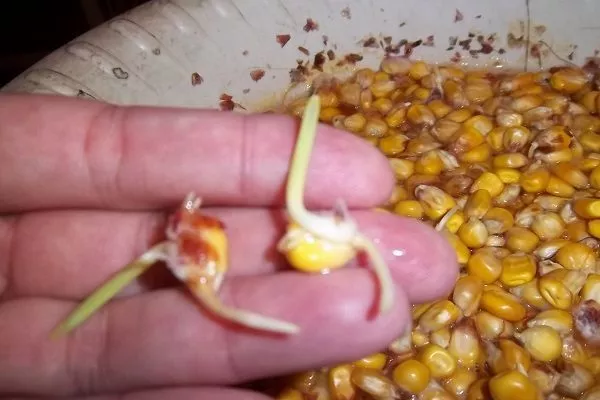
The germination stage was skipped
All stages of corn planting are important for a good harvest. But the germination stage is considered vital. Failure to do so can result in delayed germination. And under unfavorable weather conditions, the seeds may not germinate at all.
Use the following methods:
- Place wood sawdust in a germination container and generously moisten it with water from a spray bottle. Place the seeds on the sawdust, keeping a distance of 2–3 cm between them. Loosely cover the container with a lid to create a greenhouse effect and keep it on a windowsill for 2 days.
The optimal temperature for germination is considered to be +23…+25°C. Soon, small sprouts will appear (the seeds will sprout). This means the seeds are ready for planting. - Corn is often sprouted using a new method called "snail sprouting." Cover the top of a piece of plastic wrap (you can cut it from a plastic bag) with a strip of toilet paper. Spray the structure with water.
Place the seeds along the top edge of the tape, spaced a few centimeters apart. Next, roll the tape into a roll—a "snail." Place the resulting roll in water. The paper will soak in the liquid. This will keep the seeds moist and help them germinate quickly.
Use growth stimulants. Epin is a popular remedy:
- Dilute one or two drops of the preparation in 100 ml of water.
- Use the solution to irrigate the seed material on sawdust or to soak the "snail".
Inappropriate soil and container
For germination of seeds planted as seedlings, the container isn't particularly important. But for subsequent growth, its importance is crucial.
It's important not to damage the corn roots, as they are very delicate and fragile. Plant the sprouted kernels in convenient individual containers:
- plastic cups;
- recycled containers;
- garden cassettes;
- peat tablets, etc.
General requirements for containers:
- diameter - 12-14 cm;
- height - 8-10 cm;
- presence of drainage holes.
Soil preparation should be approached carefully. A universal vegetable soil mix is suitable for seedlings. If you prefer to prepare the soil yourself, mix 3 parts neutral peat moss, 1 part compost, and 1 part sand. Add ash at a ratio of 1:10.
Disinfect the soil you prepared yourself. Bake it in the oven for 20 minutes at 70–90°C.
When planting seeds directly into their permanent growing location, keep in mind that soil acidity isn't particularly important. It should be loose. If the soil is loamy, add sand. Humus can also be used as a loosening agent.
Heavy clay soil combined with deep planting will prevent seeds from germinating.
The boarding deadlines were violated
Adhering to planting dates can be critical for seed germination. How do you calculate the right time to sow seeds outdoors? The average daily temperature should be 10°C at a depth of 5 cm. At lower temperatures, even sprouted seeds may rot and fail to germinate in unheated soil.
Keep in mind that heavy, moist soil warms up more slowly than light, sandy soil. Therefore, it's better to sow later in clay soils than in loose soils, even under the same weather conditions.
Sowing rules were violated
If planted too deep, seeds may lack oxygen, while if planted too shallow, they may lack moisture. This will result in stunted growth and failure to germinate.
In light, dry soils, sow corn at a depth of 6 cm. In heavy soils, sow shallowly, 2.5–3 cm deep, and compact the soil slightly for better warming. When planting seedlings, maintain a sowing depth of 3.5–4 cm.
Corn seeds germinate quite quickly. Kernels that have undergone the soaking stage germinate in 5–6 days. Dry seeds should emerge in 12–14 days.
Incorrect watering
Soil moisture is crucial for corn seed germination. If the seeds are planted in watered soil, there is no need for additional watering until the first shoots appear. wateringSimply ventilate the container by removing the lid daily for a short time (15–20 minutes).
The soil shouldn't be too wet. This will cause the seeds to rot and, as a result, the sprouts won't appear. But don't let it dry out either. The seeds won't germinate due to a lack of moisture.
The conditions for growing seedlings were not met
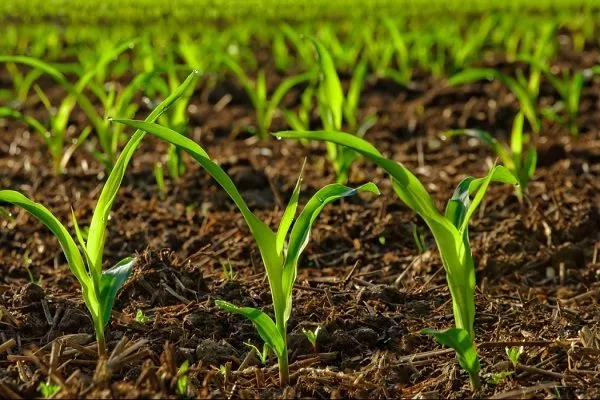
Corn isn't a particularly fussy crop. However, certain conditions must be met to grow seedlings. Missing any step can result in the absence of sprouts. Follow these steps:
- To germinate the seeds, regulate the climate in the room where the corn seedlings are planted. Maintain a temperature of 23–25°C from planting until germination.
- Avoid placing containers with seedlings in areas subject to prolonged cold spells. This can significantly slow down the seedlings' emergence from the soil surface.
- Ventilate the container daily by removing the lid for 15–20 minutes. Start with 5 minutes and gradually increase the time. A lack of oxygen will prevent the grains from developing properly.
- 7 days after planting the seeds in the ground apply fertilizerAny nitrogen-containing fertilizer will do: Teraflex, Kemira Hydro, Master, and others. Kemira Hydro or Master fertilizers are also approved for use. The plant requires nutrition for active growth.
Each of the factors discussed individually can delay corn germination. Their combined effect will inevitably leave the gardener without a harvest. It's important to remember that all stages of planting are important, even if the crop is considered easy to grow.