
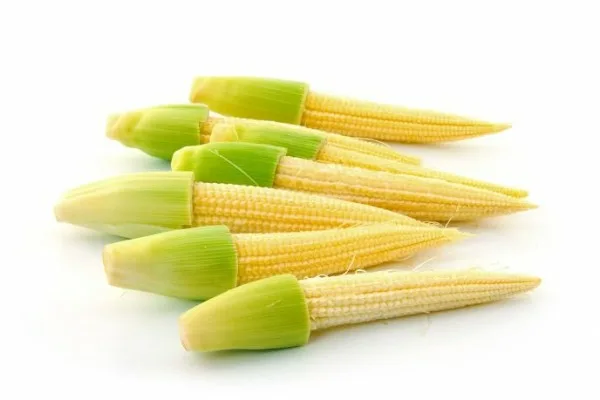
Minigold corn is a hybrid, hence the F1 designation. It's a dwarf shrub with small but very juicy cobs. It's a sugary variety, so it's widely used in cooking and canning. The kernels can be eaten even completely raw, but they must be in a milky state.
Who developed the variety and when?
There's no mention of this corn variety in the Russian Federation's register of plant varieties—only a tomato with the same name exists. This hybrid variety was developed in the Czech Republic. Unfortunately, more specific details, including its market launch date, are unknown.
Description of the variety
The Minigold variety belongs to the sweet corn category. The plant prefers fertile soil and appreciates full sunlight and warmth. Reviews highlight its rapid germination and ease of cultivation, as well as the large seedling size. This variety does not self-pollinate.
- ✓ The soil pH level should be strictly within 6.0-6.8 for optimal nutrient absorption.
- ✓ The soil must have a high organic matter content (at least 4%) to ensure the necessary water-holding capacity.
Characteristics of the appearance of the plant, cobs and grain
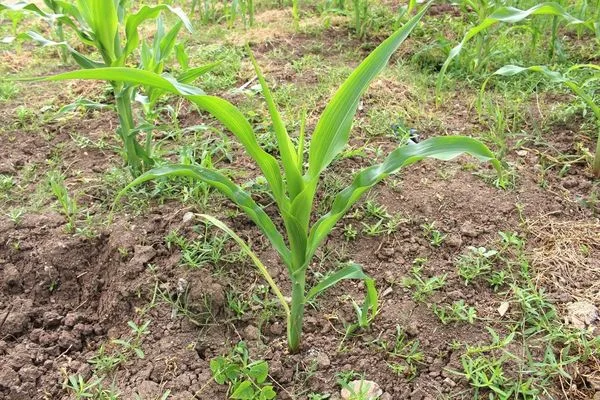
The primary goal of hybridization was to reduce the size of the plant and cobs. Therefore, Minigold is renowned for its minimalism—the bush reaches a maximum height of 100-120 cm.
Other signs:
- length of cobs – 11-12 cm;
- weight of heads – 90-100 g;
- diameter – from 2 to 4 cm;
- form - conical elongated;
- color - rich yellow (also called golden and sunny);
- pulp of grains – very juicy and tender;
- plant roots – they weigh about 100 g and fit almost entirely in the palm of your hand;
- skin – subtle, imperceptible.
Purpose and taste
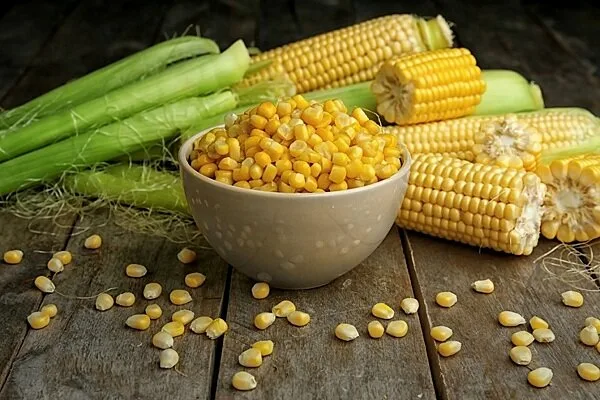
The grains are often eaten raw, but they retain their vitamins well even when frozen. They are renowned for their mild, sweet flavor and delicate texture. Cooked, roasted, or canned, the grains are also of high quality.
When ripe, the yield
From the moment the first green leaves begin to emerge from the ground until the corn reaches maturity, approximately 50-60 days pass, which indicates the high precocity of this crop.
Growing and care
It's recommended to plant seeds when the air temperature is favorable, given that Minigold is intolerant of cold. In most locations, planting occurs in May, allowing for harvesting as early as late June, although corn typically reaches maturity in July.
This variety is a classic example of outdoor crops. However, there are also varietal-specific cultivation characteristics:
- The time for sowing these seeds is April-May.
- Minigold corn grows best in light, well-aerated soil with a neutral pH. In some cases, slightly alkaline soil can be used. Before planting, plow the area and remove all weeds.
- The seed planting depth is 6-7 cm. The ideal spacing between plants is 30-35 by 50-55 cm (some sources indicate 70 by 20 cm).
- The best place for Minigold corn is a sunny and well-lit area.
- Before planting, the seeds are dried outdoors in the sun for four days and then soaked in water for one day. This method shortens the germination time.
- Fertilizers produce noticeable results if you don't overfeed the corn and follow the recommended techniques. Before budding, the plants are fed with complex mineral mixtures: add 30 g of the preparation to 20 liters of water. When the corn begins to flower, organic compounds, such as cow manure, are added.
- The first soil loosening for baby corn occurs when the plants have three true leaves. The soil should be worked to a depth of 9-12 cm.
Advantages and disadvantages
When discussing the Minigold corn variety, it's important to emphasize its positive qualities. The crop also has some drawbacks that may be important to farmers.
Reviews
Minigold dwarf sugar corn is a true find for lovers of juicy, soft kernels. This variety boasts relatively good characteristics, is disease- and pest-resistant, and is versatile, even eaten raw.