
Megaton corn is the brainchild of French scientists, yet it is widely cultivated in Russia. It is characterized by tall stature, large ears, medium maturation time, and increased resistance to stress, disease, and pests. It is suitable for cultivation in both garden plots and for commercial and agricultural purposes.
Who developed the variety and when?
The Megaton variety was created by specialists from the French company Clause, which occupies a leading position in the world selection rankings among producers of vegetable and garden crop seeds, and took 4th place.
After successfully passing all necessary tests, this hybrid was officially registered in the State Register of the Russian Federation in 2013.
What is the variety?
Megaton is a sweet corn variety already familiar to gardeners. This hybrid is grown outdoors and offers several advantages. It is renowned for its high yield and drought tolerance, making it easy to grow.
Appearance characteristics of the variety
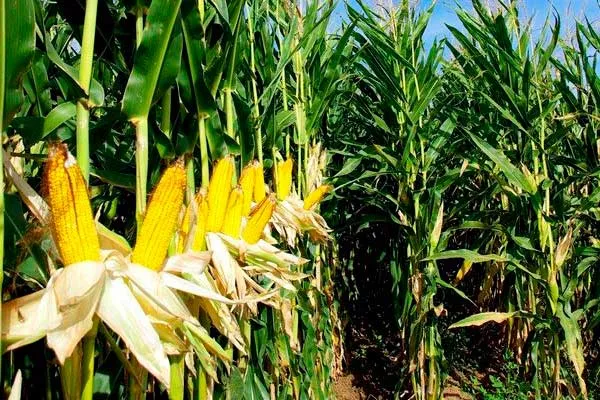
The stems grow up to 220 cm in height. They are erect and very strong, so even strong winds cannot break them.
- ✓ High drought tolerance, but watering is critical during ear formation.
- ✓ The thin skin of the beans requires careful handling during harvesting and transportation.
There are also other characteristic varietal characteristics:
- the root system is considered powerful, as it consists of several tiers and many branches;
- foliage is strong;
- leaf blades are medium in width, standard green color;
- the leaves are whorled, with slightly pronounced venation, pointed at the end and slight waviness along the edges;
- the number of cobs on one plant is maximum 2 pcs.;
- shortened peduncle;
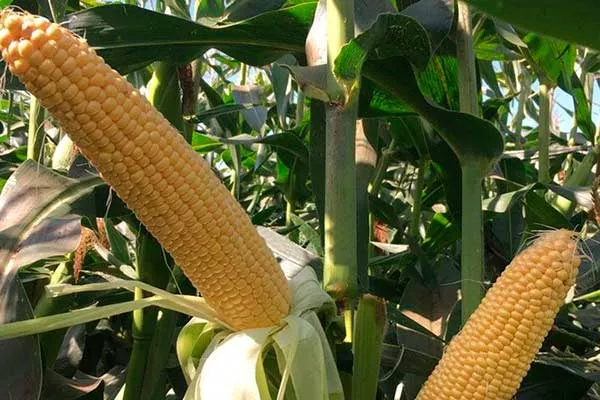
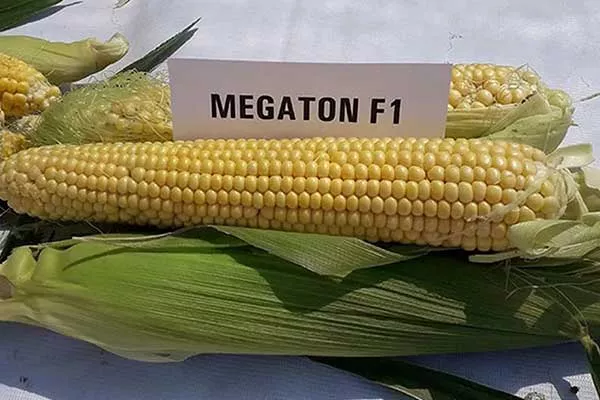
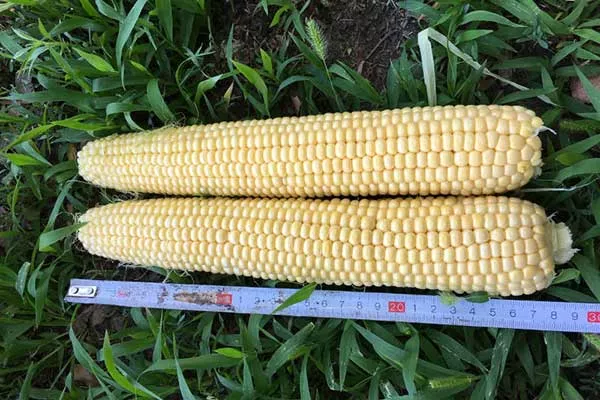
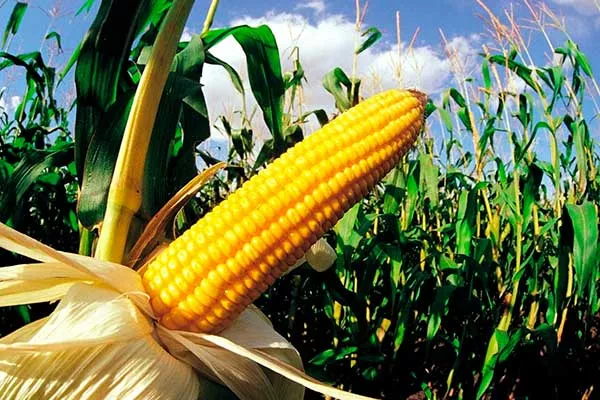
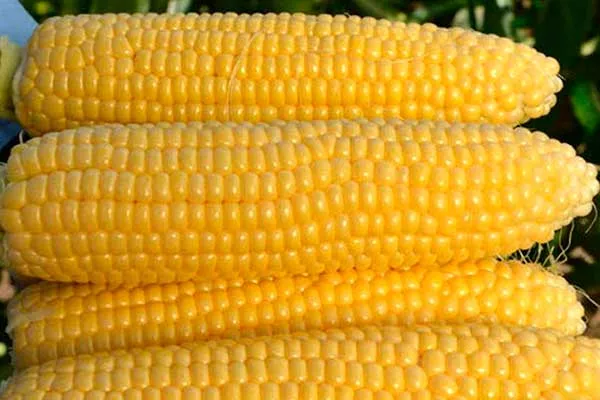
- the shape of the heads is slightly conical, the length is about 20 cm, and the weight is 180-200 g;
- the grains are beautifully arranged in 15 even rows and have a bright orange-yellow hue;
- The structure of the seeds is juicy and tender, with a thin skin.
Output of plant components:
- grains – 30-33%;
- cobs – 65-70%.
Purpose and taste
This hybrid impresses with a sweet, delicate flavor that persists even after cooking, making its seeds an indispensable ingredient in cooking. They are eaten fresh, added to soups, used to make purees and salads, and canned as a standalone snack or mixed with other vegetables.
When ripe, the yield
Megaton is a late-ripening variety—the period from germination to technical maturity takes 80-86 days. This hybrid is popular among gardeners due to its high yield. With proper care, it is possible to obtain up to 600 grams of pure corn kernels per square meter.
Growing and care
There are two approaches to successful cultivation: using seedlings or without them. Seedling cultivation begins with seeds planted in May and then transplanted into the field 3-4 weeks later, when the danger of frost has passed. Without seedlings, seeds are sown directly into the beds once the temperature stabilizes above 1°C.
- ✓ The soil pH level should be strictly within 6.0-6.8 for optimal nutrient absorption.
- ✓ The soil should have a high water-holding capacity, but at the same time provide good drainage.
To ensure a bountiful harvest, follow these simple agricultural recommendations:
- Corn should be planted in fertile, neutral soil. It performs best in light, well-drained soils, preferably sandy or loamy.
- Initial site preparation begins early, in the fall, with the garden dug to a depth of about 25-30 cm. Potassium and phosphorus fertilizers and any organic matter are added at the same time.
- In the spring, the future beds should be loosened again, but this time by 10-12 cm, and the surface should be carefully leveled.
- 8-10 days before work, it is recommended to add nitrogen-containing agents in the amount of 50-80 g per 1 sq. m.
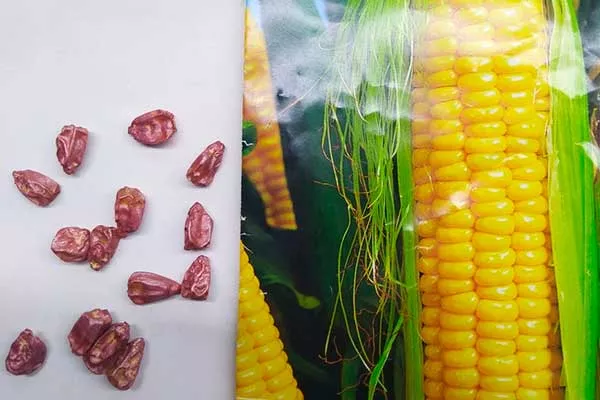
- To stimulate growth, the seeds are pre-soaked in warm water for 24 hours, then disinfected in a weak solution of potassium permanganate for 20-30 minutes. To speed up germination, the seeds are placed in a damp cloth for 4-5 days, after which they are ready for planting.
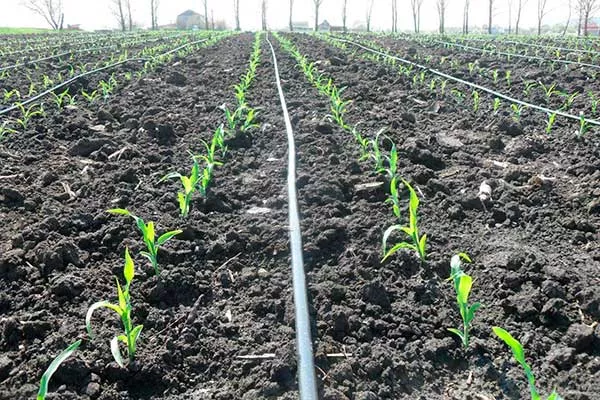
- Corn seeds are sown in straight rows to a maximum depth of 5 cm, with intervals of 30-40 cm.
- It's important to thoroughly water the soil before sowing. Each seeding typically consists of four seeds, and thinning should be done after the corn has three leaves.
- To prevent the corn from falling, it needs to be hilled up.
- Corn growth may be slow at first, but it will pick up speed. During this time, it's important to regularly loosen the soil, avoiding a dry crust, and remove weeds.
- This corn variety is drought-tolerant, but it still requires regular moisture. Without it, juicy corn will not be produced. Water daily using room-temperature water. Avoid standing water, as soggy soil can cause corn to rot and become diseased.
- Fertilizing plays a key role in corn care. The first application should be made after the 8th or 9th leaf appears, indicating active growth. During this period, corn can grow 5-7 cm daily, so it's worth feeding the plant with a slightly acidic urea solution. Experienced gardeners recommend scattering potassium and superphosphate fertilizers between the rows.
Resistance to diseases and pests
This variety has impeccable resistance to common diseases, including rot, rust, and fusarium. It requires no preventative treatment after planting, but pre-disinfection of the seeds in a potassium permanganate solution is recommended.
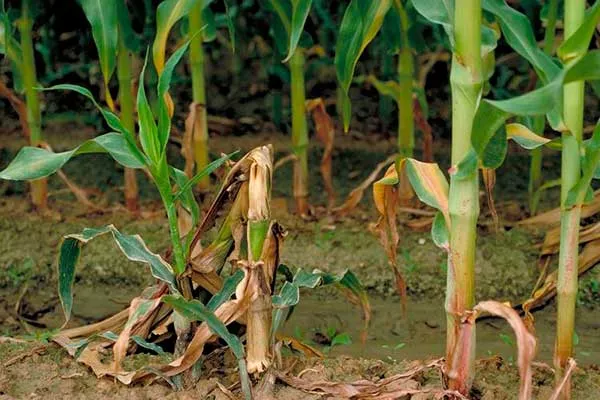
Among corn pests, moths, aphids, frit flies, and click beetles pose a particular threat. To prevent their proliferation, it is important to adhere to agricultural practices and strict crop rotation. If pests are detected, affected shoots should be removed and destroyed, and healthy corn should be treated with an effective insecticide.
What are the advantages and disadvantages?
The Megaton variety is distinguished by its high yield and large ears. Other positive aspects of this corn include:
Among the disadvantages of this crop, it is worth noting its late ripening period, as well as the fact that due to the fragility of the grain structure and thin skin, long-term storage and long-term transportation of this variety become problematic.
Reviews
Megaton corn is a leader among the best all-purpose, non-ornamental varieties. It is renowned for its abundant yields and resistance to diseases and pests, drought, and stress. However, to achieve good yields, it is important to plant it in the most fertile and breathable soil possible.