
In the US, Peru, Mexico, and China, red corn is nothing new to locals: it grows alongside other, less exotic varieties. In Russia, however, not every gardener knows about this unusually colored grass.
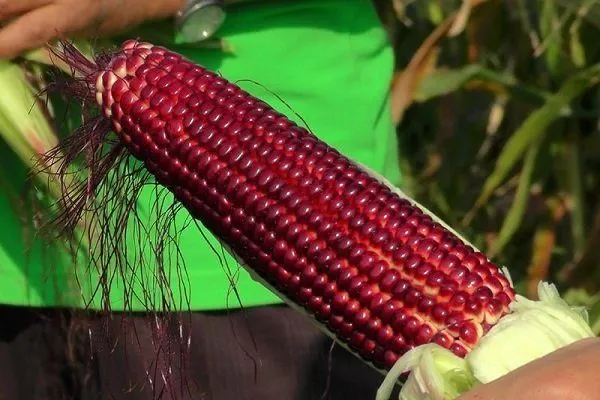
Red corn
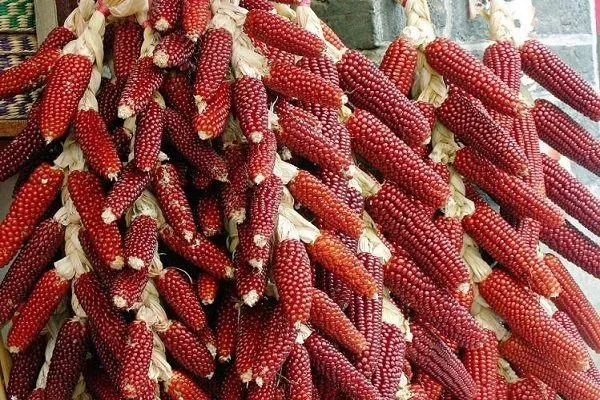
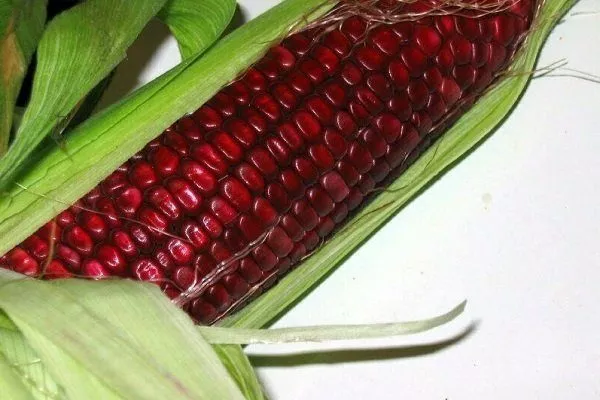
Red corn has a sweet flavor with nutty notes.
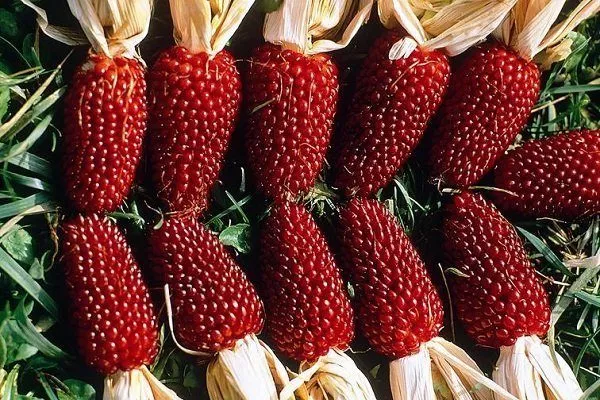
Red corn retains its color when cooked.
Description of the culture, advantages and disadvantages
Corn, ranging in shades of red from creamy pink to deep burgundy, is found among air, dent, and flint varieties. The stem height of this annual plant varies by variety and ranges from 1.8 to 2.6 m.
The ears are 10-30 cm long, with up to 10 small ears per plant and 2-4 large ears. Red corn differs from yellow varieties by its smaller ear diameter. The plant's fibrous root system supports the weight of the plant in calm weather. Strong winds can cause the stalks to topple over.
Red sweet corn is eaten boiled and canned. Popcorn is made from the popping varieties with their pointed kernels. The kernels of starchy varieties are ground into cornmeal, and ornamental varieties are used to decorate garden plots.
The benefits of red corn include:
- sweet taste with nutty or fruity notes;
- nutritional value is 20% higher than that of yellow varieties;
- color retention during cooking;
- a variety of varieties, allowing for the production of the product at different times;
- versatility of use;
- medicinal properties.
Red corn is unique because it contains anthocyanins, which are responsible for its color and beneficial properties. Research conducted in Japan and the United States has shown that the antioxidants in this crop effectively prevent and inhibit the development of malignant tumors and normalize blood pressure.
Red corn kernels are used in dietetics due to their ability to boost metabolism. In folk medicine, they are used to lower blood sugar and cholesterol.
Popular varieties of red corn
| Name | Ripening period | Plant height | Length of the cob |
|---|---|---|---|
| Oaxacan red | 3 months | 2 m | 25 cm |
| Floriani Red Flint | Early ripening | 2 m | 20-22 cm |
| Red Arrow | 80 days | 1-1.5 m | 13 cm |
| Miracle red cone | 80 days | 1-1.5 m | 13 cm |
| Peruvian Blood Butcher | 70 days | 1.6 m | 30 cm |
| Striped candy | Early ripening | 1.5 m | 15 cm |
| Ruby garnet | Mid-late | 2.5 m | 30 cm |
The most popular red corn varieties are those bred in the United States and China. However, other countries (Italy, Russia, India, Mexico, and El Salvador) are also developing new hybrids with unusual, vibrant colors.
The best varieties of red corn, popular among farmers and consumers:
- Oaxacan red — an American variety that matures in three months. Large, cylindrical ears up to 25 cm long grow on a two-meter-long stalk. The sweet, ruby-colored kernels are used to produce flour and corn grits. The high anthocyanin content of Oaxacan red corn makes it a medicinal crop.

- Floriani Red Flint — a highly productive variety of Italian origin, recommended for planting in home gardens. It is distinguished by its unique, distinctly sweet flavor with hints of banana and a spongy kernel texture. The early-ripening Floriani Red Flint produces large ears, 20–22 cm long, with pointed red kernels.
- Red Arrow And Miracle red cone These are Chinese varieties distinguished by their early maturity (80 days from germination to maturity). They are used to make puffed cereal. The stem height is 1-1.5 m, and the cob length is 13 cm. The elongated, rounded kernels of the Red Arrow are dark burgundy with a black tint, while the Miracle Cones are dark red.
- Peruvian Blood Butcher This variety is distinguished by its ability to produce up to four 30-centimeter-long ears of corn at an average plant height of 1.6 meters. Bloody Butcher is an extremely early variety, maturing 70 days after germination.
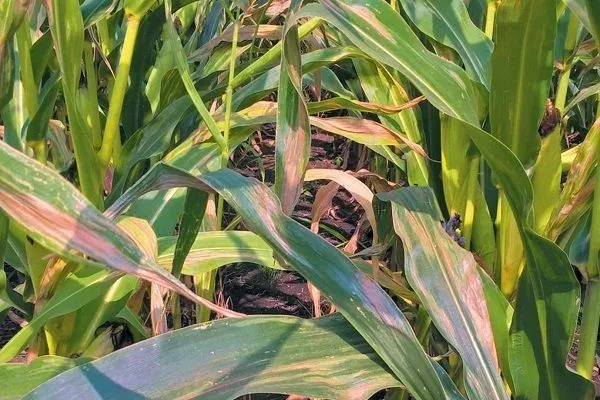
- Striped candy — a rare hybrid bred by Japanese botanists. This plant attracts the eye with its unusual leaves striped in red, yellow, and orange. The dark ruby kernels are suitable for popcorn, but the plants are more often used as a garden ornament.
- Ruby garnet, developed by Russian breeders, is a mid-late red corn variety. Plants up to 2.5 meters tall produce 30-cm-long cobs. The kernels are flat, serrated, and dark red.
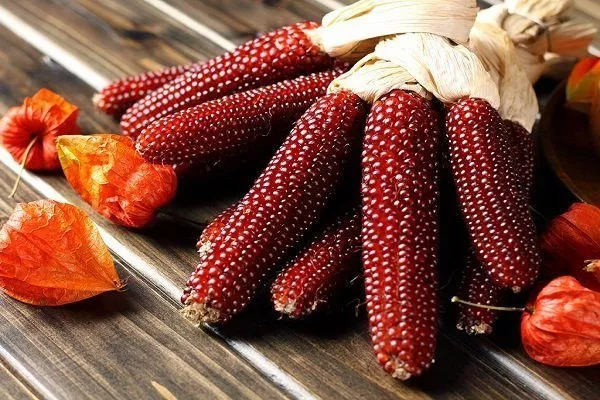
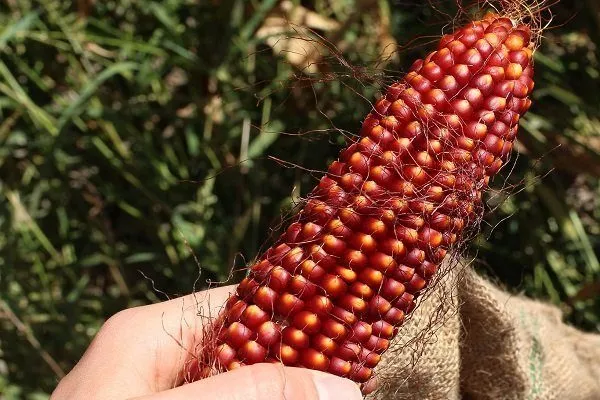
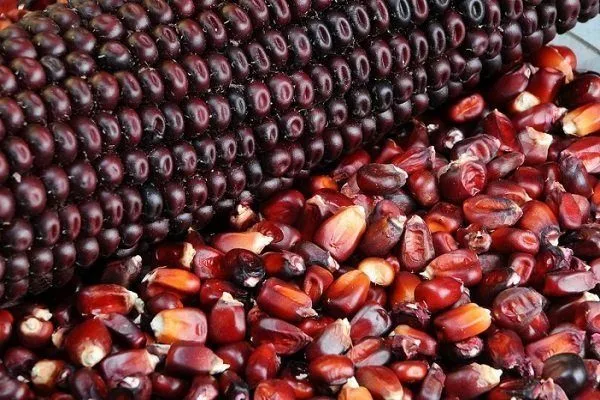
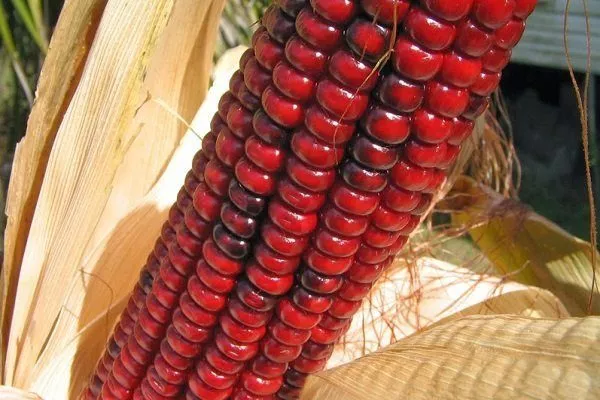
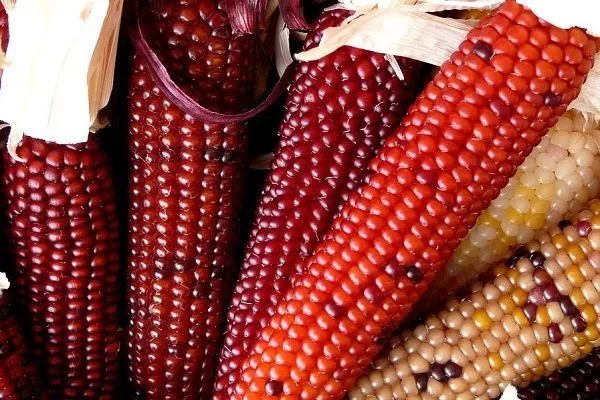
In addition to the domestic varieties listed above, Russian gardeners grow Beaded Red, Strawberry, and Cherry Red corn.
Landing
Red corn seeds are planted when the soil warms to 13 degrees Celsius or at least two weeks have passed since the last frost. If seeds are sown later than the first ten days of May, the plant will not have time to form stems and leaves before the onset of high summer temperatures, which can result in stunted growth, yellowing of the leaves, and reduced yield.
Pre-planting seed preparation consists of calibration, disinfection, and soaking:
- First, the material is sorted, rejecting embryos with mechanical damage, spots, and discoloration.
- Next, the seeds are treated with a solution of manganese, boric acid or copper sulfate, preventing diseases typical for the crop.
- To speed up germination, the seeds are soaked by placing them in a single layer between two damp cotton napkins, rolled up and placed in a plastic bag.
- Until the planting material swells and roots appear, keep it in a room with a temperature of 20 degrees, making sure that the fabric remains moist.
Red corn should not be soaked for longer than 4 days, as the risk of breaking the roots increases with each passing day due to their rapid growth.
Red corn prefers sunny sites with fertile, loose soils with a pH of at least 5.5. Because its roots grow close to the surface, the plantings are protected from the wind.
- ✓ Soil acidity should be at least 5.5, but not exceed 7.0 for optimal growth.
- ✓ The soil must be well drained to avoid waterlogging and root rot.
To increase the yield by a quarter or more, before planting, rotted manure or compost is added to the soil to a depth of no more than 30 cm at a rate of 1 bucket per 2 square meters.
To prevent red corn from lodging, increase the likelihood of pollination, and boost yields, even in a small home garden, it is recommended to plant seeds in rows, as on farms.
When planting, maintain a distance of 60 cm between rows. The furrow depth is 5 cm. When the seeds take root and the seedlings grow to 20 cm, the crop is thinned out, leaving 25-30 cm between plants.
Caring for the crop during cultivation
Plant care activities in open ground include watering, fertilizing, weeding and loosening, mulching, pest control diseases and pests.
Watering
Although sweet red corn can tolerate short-term drought, the crop requires moderate watering.
Over-irrigation puts plants at risk of fungal diseases. Insufficient soil moisture leads to a rapid transition from the milky stage to the technical stage.
Water the crop at the roots as the soil dries out.
Top dressing
If the soil was fertilized during planting, to obtain a bountiful harvest, the crop is fed twice per season:
- The first time phosphorus is added to strengthen the root system is when the plant has 5 leaves.
- The second time, to promote the formation of green mass and cobs, corn is fertilized at the 8-9 leaf stage. Use a urea solution sprayed onto the leaves at a rate of 400 g per bucket of water, or during the period of flower stalk growth, the plants are irrigated with ammonium nitrate (500 g per 10 liters of water).
Weed control
Soil care includes regular weeding of weeds that compete with corn for nutrients and loosening the soil to improve aeration.
Mulching
Mulch made from grass clippings or compost placed around plants and between rows reduces labor costs associated with irrigation and weeding.
Fighting diseases
If white growths-nodules appear on different parts of the plant, it means that the crop has been affected by the most common corn disease - corn smut.
Methods of control:
- spraying with Bayleton and Privent preparations according to the instructions;
- seed treatment before planting;
- destruction of insects that carry fungal spores.
Affected parts of plants are torn off, burned or buried to a depth of at least 0.5 m.
Harvesting and storage
For cooking and canning, it's recommended to pluck red corn from the cob early in the morning just before use, twisting it at the base. If cooking is delayed, store unhusked cobs in the refrigerator for no longer than 5 days, after which the flavor of the kernels deteriorates.
To make popcorn, flour, and starch, corn is harvested after it is fully ripe, but such varieties are not usually grown in summer cottages and garden plots.
The cob's readiness for harvesting is determined by its brown tassels and rounded tip. A kernel pierced with a fingernail should release a milky liquid.
Freezing the kernels in a freezer preserves the sweetness and juiciness of the grains for up to 1.5 years.
Red corn stands out among other varieties for its sweet, vibrant flavor and ease of care. The high antioxidant content of this plant's ruby-colored kernels has a healing effect and slows the aging process.