
Summer Sweet is the name of a sweet corn hybrid popular among Russian gardeners, characterized by a mid-season harvest and excellent marketability. It is prized for its uniform cobs, beautiful appearance, tenderness, and amazingly sweet kernels, as well as its ability to be stored for long periods without losing flavor.
When did it appear?
Summer Sweet is a new variety bred in 2015 by ABBOTT & COBB INC. It was added to the Russian State Register in 2017 as a vegetable variety intended for private cultivation in private farms located in the following regions:
- Northern;
- North-West;
- Central;
- Volga-Vyatka;
- Central Black Earth Region;
- North Caucasian;
- Middle Volga;
- Lower Volga;
- Ural;
- West Siberian;
- East Siberian;
- Far Eastern.
Introduction to the variety and characteristics
This vegetable variety belongs to the mid-season cultivars and hybrids. Its growing season lasts 65-80 days. Yields range from 8 to 10 kg per square meter of planting, with a recommended density of 10 plants per square meter.
Summer Sweet corn also has other excellent characteristics:
- friendly ripening of the cobs;
- disease resistance (hybrid plants are not prone to damage by rust and helminthosporium leaf spot);
- good adaptation to any type of soil;
- resistance to adverse weather conditions.
Appearance of the plant and cobs
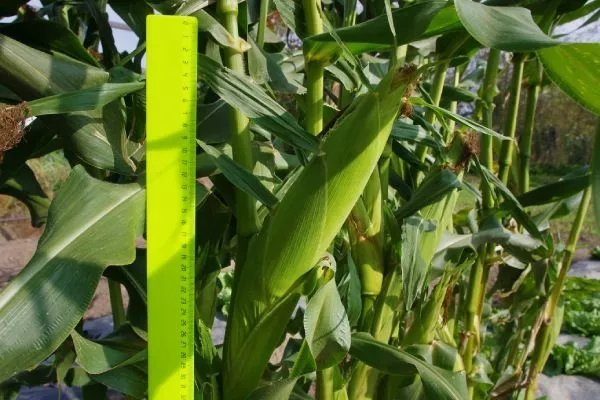
Summer Sweet corn is characterized by its tall, vigorous growth habit and medium foliage. Its plants reach a height of 1.98 m.
The cobs of the hybrid have distinctive features:
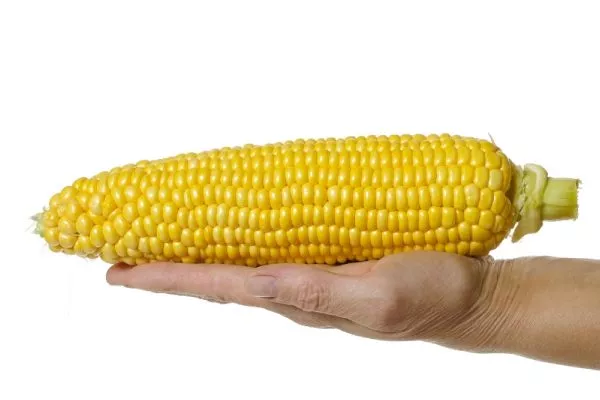
- cylindrical shape;
- large sizes (length - 22 cm, diameter - 5 cm);
- weight - 400-468 g;
- dense structure;
- 18-20 rows of grains, distinguished by their rich yellow color.
This variety of corn is renowned for its sweet flavor, due to its high sugar content (30%). It is suitable for both boiled and raw consumption. It is also excellent for canning.
Features of cultivation and care
Allocate a plot of land for planting a hybrid vegetable crop that meets the following requirements:
- with good lighting;
- protected from drafts and cold winds;
- flat or slightly elevated;
- with loose, breathable soil, rich in humus and having a neutral pH;
- with a groundwater depth of 1.7-2 m.
- ✓ The soil pH level should be strictly within 6.0-6.8 for optimal nutrient absorption.
- ✓ The organic matter content of the soil should be at least 3% to ensure sufficient nutrition.
Soil type deserves special attention. Remember that the following soils are best for growing sweet corn:
- loamy;
- sandy loam;
- chernozems;
For planting corn, select a plot where the best predecessor crops for this vegetable were previously grown:
- legumes;
- melons;
- nightshade;
- amaranth;
- cruciferous.
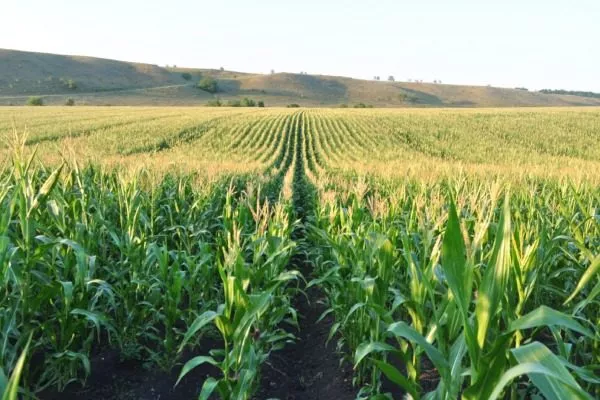
Sowing hybrid seeds in open ground should be carried out within the following timeframes:
- in May (from the 15th until the end of the month) - for the Middle Belt;
- when the soil warms up to +10-15°C - for the Urals and Siberia (plant corn only in warmed soil, this is the key to its active growth and fruiting).
Dig over and level the area where you'll be planting the vegetables. Remove weeds and roots, as well as plant debris. Prepare the planting holes. Add wood ash to each hole.
Carry out pre-sowing seed treatment:
- calibrate them;
- disinfect by soaking in a weak solution of potassium permanganate;
- treat with a growth stimulator or biofungicide Fitosporin-M.
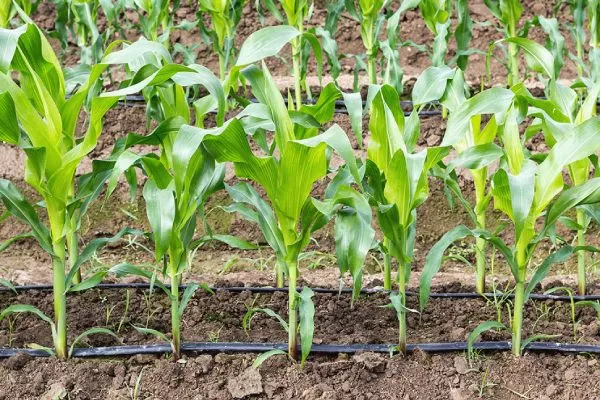
Carry out row sowing of the Sweet Summer hybrid, following the scheme:
- the distance between grains is 30-40 cm;
- between rows - 60-70 cm.

Properly care for your sweet corn plantings if you want a bountiful and high-quality harvest. Take the following steps:
- WateringWater the plants generously. Do this at least three times a week unless there's been rain. Avoid overwatering to prevent root rot.
When growing vegetables in a cool, humid climate, water the plantings once a week. Allow the soil to dry to a depth of 5 cm before watering again. - Weeding and loosening the soilPrevent weeds from growing and a dense soil crust from forming to maintain healthy plants.
To control weeds, use herbicides such as Stellar, Elumis, and Sumaro. Apply them according to the manufacturer's instructions. Perform the treatment on a dry, windless day. - Top dressingCorn requires nitrogen fertilizers throughout the growing season. Apply the first fertilizer in the fall, while tilling the soil; the second in the spring, during the second tilling (supplement this with phosphorus-rich fertilizers).
Fertilize the crop several times before the cobs begin to ripen. Apply complex mineral fertilizers containing potassium and phosphorus foliarly. - Tying upCarry out the procedure if there is a risk of plant lodging.
- Pinching out stepsonsThis manipulation will allow you to obtain larger and higher-quality corn. The optimal yield is 2-3 ears per stalk.
- Treatment against diseases and pestsRegularly spray your corn plantings with insecticides to prevent infestations by pests such as wireworms, corn borers, Swedish flies, and flea beetles. Use Tabu or Cruiser.
LF-Ultrafit will help you protect your plants from fungi and viruses.
- ✓ Watering should be done early in the morning or late in the evening to minimize water evaporation.
- ✓ The water temperature for irrigation should not be lower than 18°C to avoid stress on plants.
Reviews
Summer Sweet is a popular variety of sweet corn. It is grown throughout Russia due to its low maintenance, disease resistance, and resistance to adverse weather conditions. The crop is characterized by excellent quality, including shelf life and transportability.