
Faraday corn is a forage hybrid from French breeders. It has excellent characteristics and stable yields, making it ideal for growing for livestock feed.
Description of Faraday Corn
The Faraday plant is tall, vigorous, and robust. It has elongated, straight leaves that form a slight angle with the stem. The ears are quite short—about 18-20 cm—and medium thick. Each ear contains 14 to 16 rows of kernels.
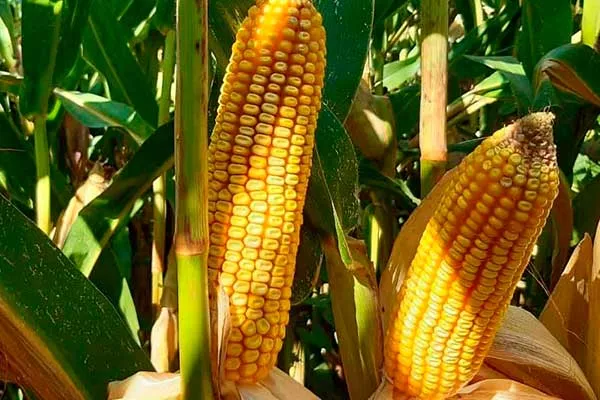
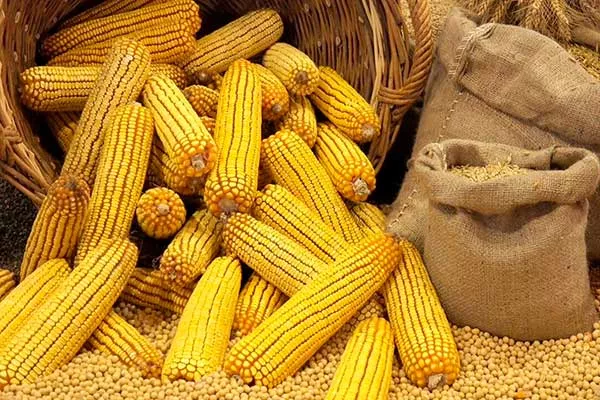
The grain is of an intermediate type, close to dent. The tops of the grains are yellow, and the bottoms are yellow-orange. 1,000 grains weigh 315 g. There are 28 grains per row.
History of the variety's creation
The Faraday hybrid variety was developed by French breeders. The originator of this corn is Lidea France. The hybrid was added to the State Register in 2018 and became available to Russian farmers. It is recommended for cultivation in the North Caucasus region.
The Flavor of Faraday Corn and Its Uses
Faraday corn has a pleasant, sweet flavor and aroma. Its cobs are eagerly consumed by cattle, pigs, and poultry. This forage variety is also used in the food industry. Its kernels are used to make corn flour, grits, starch, and other products.
Productivity and other characteristics
Faraday corn is a mid-season variety and very productive. It takes 117 days from germination to technical maturity.
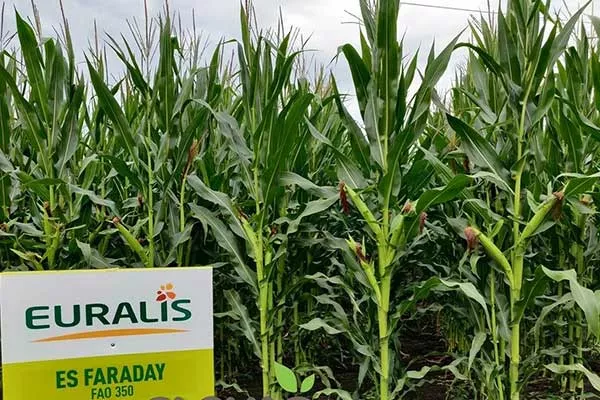
The yield of this feed corn in commercial cultivation is 68.5 centners per hectare, a 10.8% increase over the standard. The maximum yield reaches 99 centners per hectare. The hybrid is highly drought-resistant.
Pros and cons
The Faraday variety has its advantages and disadvantages, which are important to understand before planting. This will help you determine how suitable this tall forage hybrid is for your intended purposes.
How to plant corn?
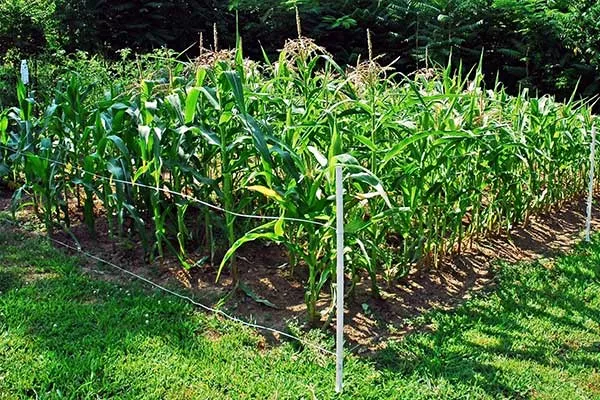
Faraday corn is grown in sunny locations that receive sufficient light and heat. The planting pattern is chosen based on climate conditions.
- ✓ The optimal soil pH should be between 6.0-6.8 for maximum nutrient absorption.
- ✓ The soil must be well-drained to avoid waterlogging and root rot.
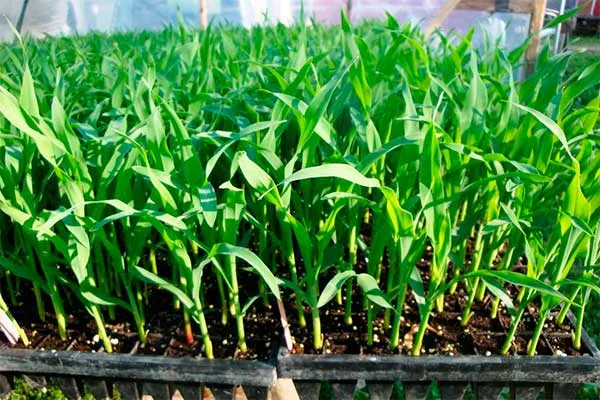
Landing features:
- In arid regions, 65 thousand plants are planted per 1 hectare, in moderately humid regions - 75 thousand plants.
- The seeds are placed in furrows about 7 cm deep.
- I keep intervals of 40 cm between adjacent seeds, and 50-60 cm between rows.
- The sown seeds are sprinkled with moistened soil, and the crops are mulched with dry soil on top.
Care Features
Faraday fodder corn is quite unpretentious, but to obtain a good, abundant and high-quality harvest, the crop requires certain care.
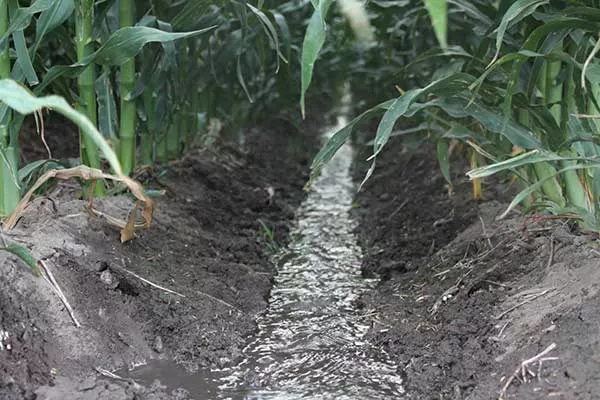
Care instructions:
- Watering should be moderate; water shortages negatively impact yield, while overwatering can lead to the spread of diseases. From germination until flowering, it is recommended to water corn once a week. After flowering, water twice as often. The best time to water is early morning or evening.
- Every 3-4 weeks, loosen the soil between the rows to ensure oxygen reaches the roots. As the plants get older, loosen the soil less deeply, otherwise the surface roots may be damaged.
- When the plant produces 5-6 leaves, add organic matter, compost, or lowland peat. Manure is used to accelerate the growth of green mass and cobs. On black soils, 20 tons of rotted manure is applied per hectare, and on sod-podzolic soils, 20-35 tons. Diluted chicken manure and mineral fertilizers are also added to feed corn.
Diseases and pests
Faraday corn is resistant to most common diseases and pests. Specifically, it is virtually immune to stalk rot and fusarium ear rot. Under unfavorable conditions, there is a risk of loose smut.
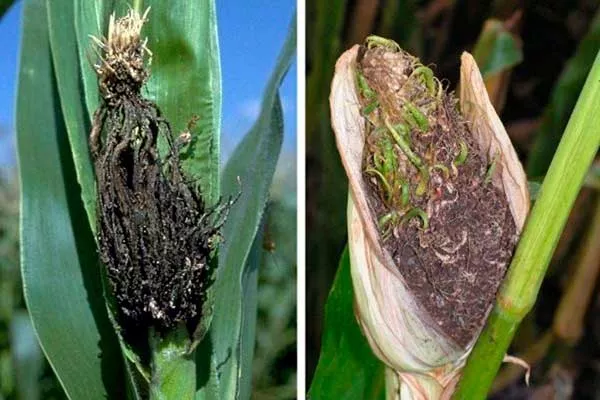
To prevent diseases, control the frit fly and other insects that damage corn cobs, treat the seeds before planting, apply fertilizer, and follow planting patterns to avoid overcrowding. It's also important to promptly remove diseased cobs and till the soil in the fall to remove corn residue.
Harvesting and storage
Corn is ready for harvesting by its external signs: the leaves and stems turn yellow and dry out, the husks of the cobs open, and the tips of the cobs, containing kernels that harden and turn yellow, are exposed. Corn grain is recommended to be stored at temperatures up to 10°C and humidity up to 14%.
Reviews
Faraday corn is a promising forage variety with excellent agronomic characteristics. It produces excellent yields, is popular with livestock, and can even be used in the food industry.