
Driver corn is a promising new product from French breeders. This super-sweet hybrid variety produces only one or two ears per plant, but they are large and incredibly tasty.
Who bred the Driver variety?
The Sugar Hybrid (SH2) Driver was developed in France by Clause. This versatile variety was bred for fresh consumption and processing.
Description of corn
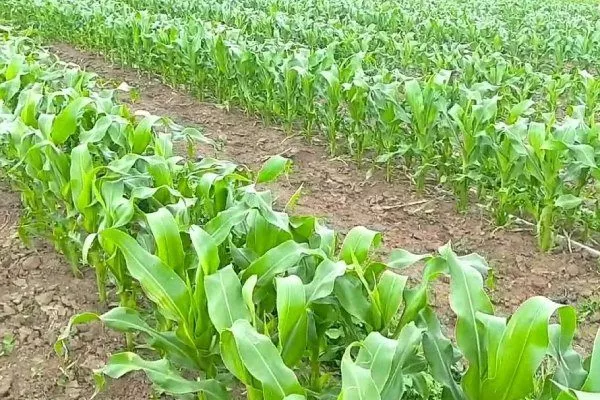
The Driver corn plant is vigorous and robust, reaching a height of 2.1 m. The lower ears are formed at a height of 0.65 m from the ground. No more than two corn kernels are formed on a single plant.
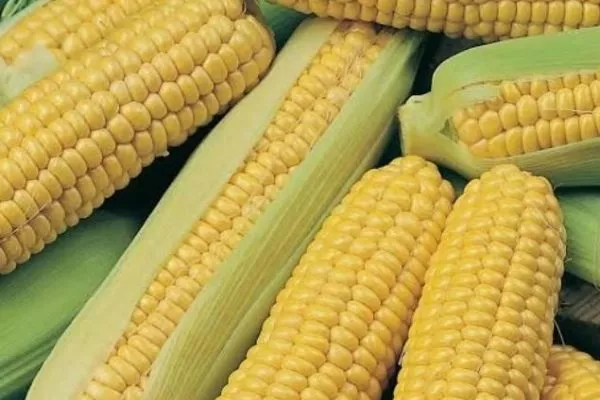
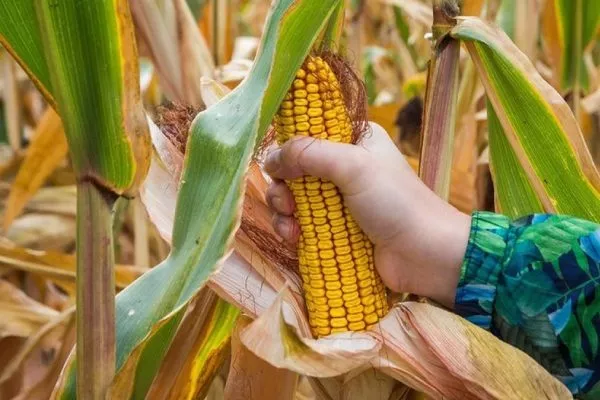
Driver corn cobs are very large, reaching 24-27 cm in length and 5.5-6 cm in diameter. The cobs are cylindrical, with deep yellow kernels, and about 20 kernels in a row. Each cob weighs 400 g.
Characteristics
The super-sugar hybrid Driver has a mid-season ripening period and is intended for outdoor cultivation. This variety is characterized by high yields, reaching 35 tons per hectare in commercial cultivation. The hybrid Driver is highly resistant to diseases and pests.
Purpose and taste
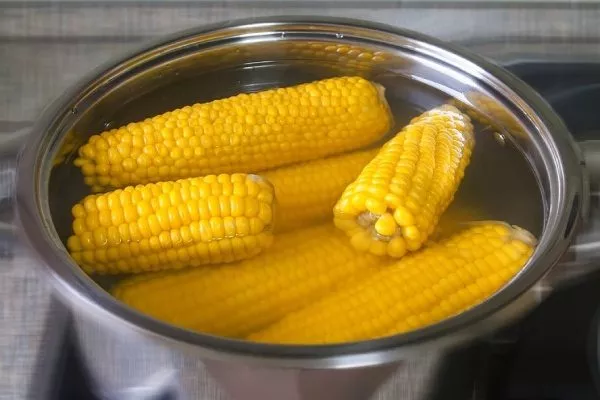
The Driver variety, as befits sweet corn, has a slightly sweet flavor that tasters rate highly. This French variety is eaten boiled, canned, and frozen.
Landing features
The Driver variety was originally bred for open ground, but it produces good yields in greenhouses and hotbeds. Planting is done in level, sunny areas. The soil should be fertile, permeable, and well-drained. Corn grows best in black soil, but it also produces good yields in loam and sandy loam soils, as well as in river floodplains.
Driver corn grows worst on dense, heavy, saline soils. However, it can produce good yields on podzolic, light soils, and drained peatlands, which are typical of northern regions. However, this is only possible with liming and fertilization. Furthermore, corn does not thrive in high groundwater levels.
Sow seeds at 30 cm intervals. Place 2-3 seeds in each hole. If both sprout, select the stronger seedling. Maintain 70 cm intervals between rows. The planting depth depends on the soil density; on average, it's 6-8 cm. In heavy soils, 4-6 cm is sufficient.
Sowing dates
Corn thrives on warmth, and the Driver variety is no exception. It should only be sown when stable warm weather has set in. Planting timing depends on the climate and weather conditions in the specific region.
In the south, corn sowing begins in early April, and in the temperate zone, in May. In Siberia and the Urals, the crop is grown exclusively using seedlings. Seedlings are planted in June. In any case, corn should not be planted before the soil warms to 10–12°C.
How to prepare seeds?
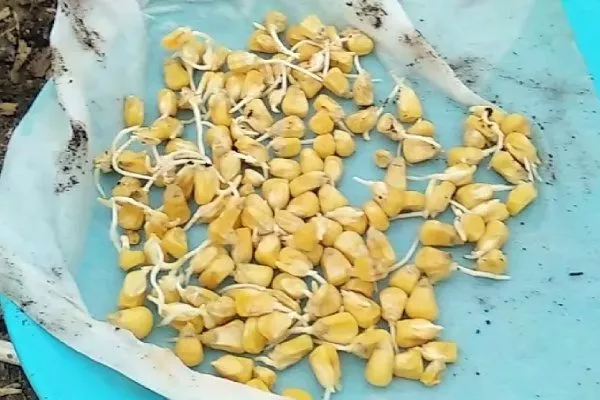
It is not recommended to sow dry seeds - you will have to wait too long for seedlings to appear.
How to prepare seeds:
- The seeds are sorted, and small, defective, and dry specimens, as well as darkened and spotted ones, are rejected.
- Selected seeds are warmed for 3-5 days, spread out in a thin layer under direct sunlight or in a warm place.
- Next, the seeds are immersed in a fungicide solution to disinfect the seed and protect it from fungal infections. Suitable solutions include Fitosporin, Skor, or regular potassium permanganate.
- To increase germination and speed up sprouting, seeds are placed in a growth stimulator - Zircon, Epin, or their equivalents.
- ✓ Concentration of potassium permanganate: 1% solution (10 g per 1 liter of water) with a holding time of 20 minutes
- ✓ Working solution temperature: +20…+25°C for optimal efficiency
- ✓ Treatment volume: 1 liter of solution per 1 kg of seeds for uniform coverage
Subtleties of the seedling method
The seedling method is used in regions with late springs and short summers, as well as for earlier harvests. In the south, this method of growing corn is practically never used; it is more popular in regions with harsh climates.
Features of seedling cultivation:
- Seeds are sown directly into individual cups. Do not plant the crops in the same container to avoid damaging the seedlings' root system during transplantation.
- The seedling cups are filled with a nutrient-rich substrate mixed from compost, high-moor peat, wood ash, and river sand in a ratio of 2:1:1:1. The seeds are sown to a depth of 2-3 cm. The seedlings are watered with settled water and placed in a warm, well-lit area.
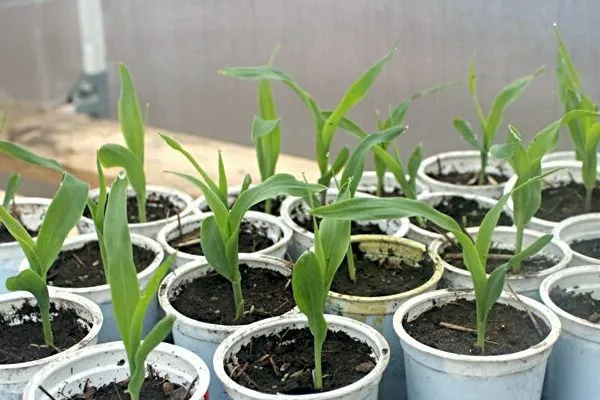
Seedlings emerge in about a week. Water them regularly, preventing the soil from drying out. Transplant into the ground when the plants have 2-3 true leaves.
How to care for it properly?
Corn requires specific care to produce good yields. This care affects not only the yield but also its quality. If proper cultivation practices are followed, the cobs will be large and tasty, as this variety is expected to be.
Features of caring for Driver corn:
- Watering should be moderate; drip irrigation is best. It prevents the soil from drying out and prevents waterlogging. The recommended watering frequency under normal weather conditions is once a week.
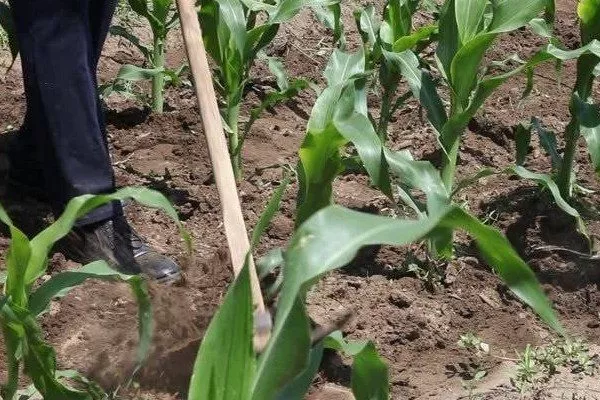
- Corn beds are regularly loosened and weeded. The plants also need to be hilled to encourage additional root growth.
- It is recommended to feed corn with diluted chicken manure, manure, or peat. To stimulate the growth of green mass and accelerate the maturation of the cobs, add bone and fish meal to the soil.
- Phase 3-4 leaves: application of diluted chicken manure (1:15 with water) at the rate of 0.5 l per plant
- The beginning of panicle emergence phase: top dressing with rotted manure (5 kg/m²) with incorporation into the soil
- Milk ripeness phase: addition of bone meal (200 g/m²) to improve grain quality
Diseases and pests
The Driver variety has good immunity, but under unfavorable conditions, the crop is susceptible to fungal and other infections. Plants can be affected by diplodia, helminthosporiosis, and rust. If any of these symptoms appear, the corn is treated with fungicides, such as Acanto or Abacus.
During a widespread insect infestation, Driver corn may be attacked by fritillary fly larvae, corn borers, aphids, wireworms, and striped click beetles. These insects can be controlled with insecticides such as Horus, Trichophyte, and similar products.
Harvesting and storage
Corn is harvested selectively as the cobs ripen. The cobs at the bottom ripen first. Only cobs that have reached the milky stage of ripeness are harvested for eating. The corn's readiness for consumption is determined by the condition of the hairs (stigmas)—they turn brown. Ripe corn kernels are juicy and squirt juice when pressed.
| Storage method | Temperature range (°C) | Shelf life (days) | Air humidity (%) |
|---|---|---|---|
| In leaves at room temperature | +18…+20 | 20-25 | 65-70 |
| Cleaned in the refrigerator | +2…+4 | 5-7 | 85-90 |
| Frozen | -18 | 180-240 | — |
Store corn on the cob in a dry place at a temperature of 18–19°C. If left unhusked, it will stay fresh for 4–6 weeks. For longer storage, you can use the freezer.
Reviews
Driver corn is the ideal variety for those who want to grow large quantities of sweet corn effortlessly. This hybrid variety offers excellent characteristics and is suitable for both food and commercial growing.