
Dobrynya corn is a hybrid variety distinguished by its sweet flavor, high yield, and large ears. Gardeners love this variety for its easy soil management and disease resistance.
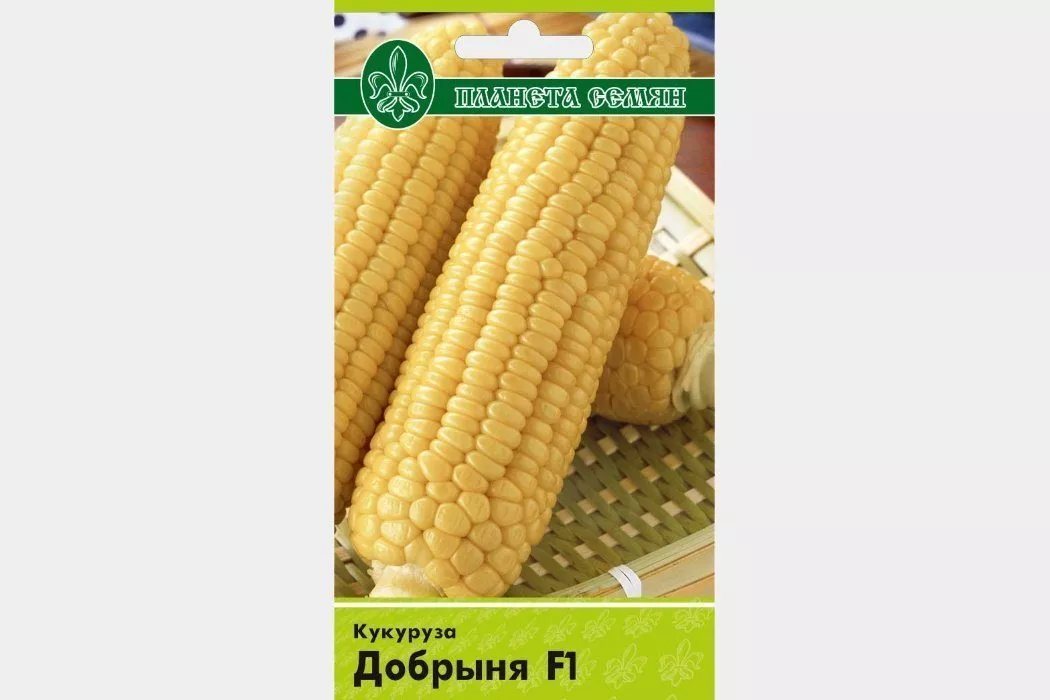
Corn Dobrynya
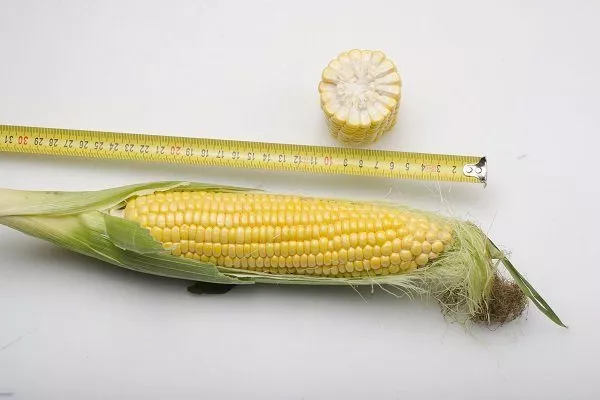
The taste of Dobrynya corn is very sweet.
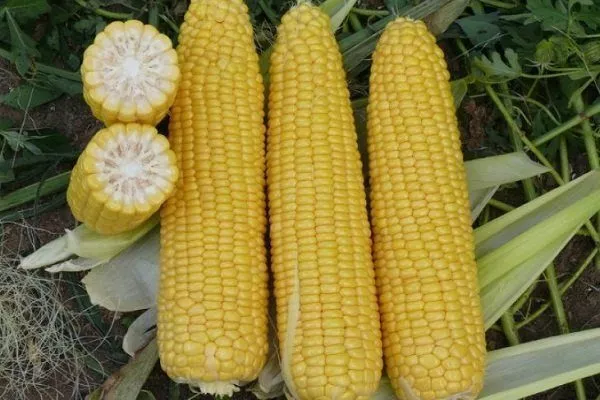
Dobrynya corn has a long shelf life
Description of the variety, its advantages and disadvantages
The Dobrynya corn variety is an early-maturing hybrid of American origin. This crop is also known as "American supersweet corn" because its seeds are imported from America, and its sugar content is 20-30%. The United States is the world leader in sweet corn production and consumption.
Ripe kernels have excellent taste and marketability. They are delicious when boiled and retain their flavor even after freezing and canning. The corn has a very sweet flavor. Large ears are full-bodied, with no undeveloped areas, and contain juicy kernels.
Main characteristics of the Dobrynya variety:
- plant height – up to 1.7 m;
- height of cob attachment – 70 cm;
- length of cobs – up to 25 cm;
- cob diameter – up to 5.5 cm;
- number of cobs on one plant – 1-2;
- number of rows of grains on the cob – 16-18;
- Ripening period: 2-2.5 months from the moment of seed germination.
Advantages of the variety:
- undemanding to soil composition;
- low susceptibility to wilting and common crop diseases (mosaic, rust);
- high yield;
- high nutritional value of grains (they contain proteins, water-soluble sugars, chromium, iron, nickel, selenium, zinc);
- long shelf life without loss of appearance and taste;
- fast ripening times.
Among similar varieties, Dobrynya is distinguished by its optimal ratio of early maturity and cob size.
Optimal conditions for growing
The Dobrynya corn variety grows and develops well under the following conditions:
- the minimum germination temperature is 10-12 degrees (in this case, seedlings appear after 3 weeks);
- the optimal temperature for germination is 23-28 degrees (shoots appear in a week);
- good sunlight (sweet corn is a short-day crop, meaning it requires at least 12-14 hours of daylight);
- Suitable soils are light, fertile, with acidity of at least 5 pH;
- the need for water is moderate, but increases during the period of emergence and the ejection of panicles;
- Optimal predecessor crops: potatoes, melons, buckwheat, cereals, legumes.
- ✓ The sugar content in the grains is 20-30%, which is significantly higher than many other varieties.
- ✓ Resistance to common crop diseases such as mosaic and rust.
Avoid planting sweet corn varieties next to dent or flint corn because cross-pollination will occur, resulting in lower sugar content in the kernels.
If you plant corn in soil rich in black soil and apply fertilizer in sufficient quantities in a timely manner, the crop can be grown again in the same area for 2 years.
Soil preparation
Before planting, the site must be prepared. In the fall, in late September or early October, it is recommended to till the soil to a depth of 27-30 cm. In the spring, cultivating and harrowing the soil are performed to control weeds.
If the soil is poor in texture, congested, or heavy, it needs to be improved, otherwise the crop will not yield a harvest. For very heavy chernozem or loamy soils, it is recommended to add sand, organic matter, and peat (at a rate of one bucket per square meter). For acidic soils, lime should be added.
Preparing the grains
Before sowing, it is recommended to warm the seedlings using a hot air heater. To do this, leave the seeds in direct sunlight for 4-5 days. Afterward, soak the seeds in water heated to 25-30 degrees Celsius.
You also need to pay attention to the condition of the seeds and their size: whole, undamaged, large seeds are suitable for planting.
Additionally, you can treat the seeds to protect them from fungal diseases. To do this, soak the seedlings in a potassium permanganate solution for 10 minutes.
Landing
The simplest and most common method for planting Dobrynya corn is without seedlings. Seeds should be sown in mid-May, when there's no risk of frost.
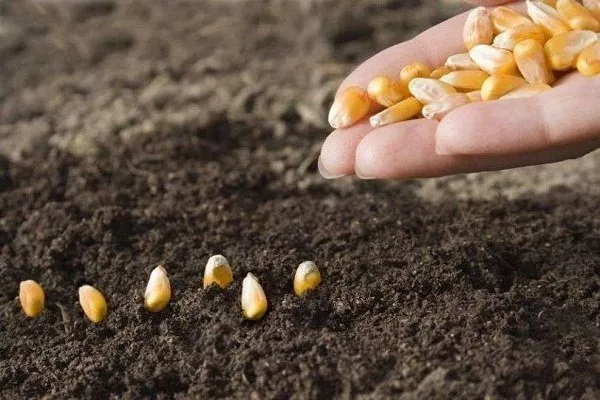
The average daily soil temperature should be 13-14 degrees Celsius. If seeds are sown in insufficiently warmed soil, seedlings will emerge very slowly and singly.
- ✓ The soil temperature for planting should not be lower than 13-14 degrees, which is critical for uniform germination.
- ✓ The distance between beds should be 40 cm to ensure sufficient space for growth.
Form beds 7-8 cm deep, with a 40 cm gap between each bed. Place the seeds in the soil, cover them with soil, and mulch to retain moisture.
Caring for the crop during cultivation
To get an early and abundant harvest of sweet, juicy corn, follow the care recommendations for the Dobrynya variety.
Top dressing
The first fertilizer application should be made after the first five leaves emerge. At this stage, the plant requires fertilizers containing potassium. Apply 15% of the fertilizer in the first month, and the remaining 75% over the following month. If the plant lacks potassium, the edges of its lower leaves curl, turn brown, and dry out.
During the rooting stage and during cob formation, sweet corn of the Dobrynya variety requires phosphorus. Gardeners recommend adding ammophos to the soil.
Once 6-8 leaves appear, nitrogen fertilizer can be applied. Urea is a good fertilizer for corn. An even greater effect can be achieved by combining it with ammonium nitrate in equal proportions. Fertilizer applications should be made three times, 7 days apart.
It is recommended to apply the majority of phosphorus and potassium fertilizers (up to 90%) in the fall, during tillage. At sowing, 80% nitrogen and 10% phosphorus fertilizers are used, and the remaining 20% nitrogen fertilizers are applied during the growing season.
Watering
The most convenient irrigation method is drip irrigation. It maintains the required amount of moisture in the soil and root zone. Farmers and gardeners note that drip irrigation contributes to increased ear size and kernel weight.
Corn requires different amounts of water at different stages of the growing season, which can be provided using a drip system. The average water consumption per irrigation session is 350-400 liters per 10 square meters.
Soil care
3-4 times during the growing season, it is necessary to loosen the spaces between the rows to ensure proper air circulation in the soil.
Pest and disease control
The Dobrynya variety, like other representatives of sweet sugar corn, is susceptible to the following pests:
- winter moth;
- cereal and corn aphids;
- corn butterfly;
- wireworms of different types (steppe, wide, dark).
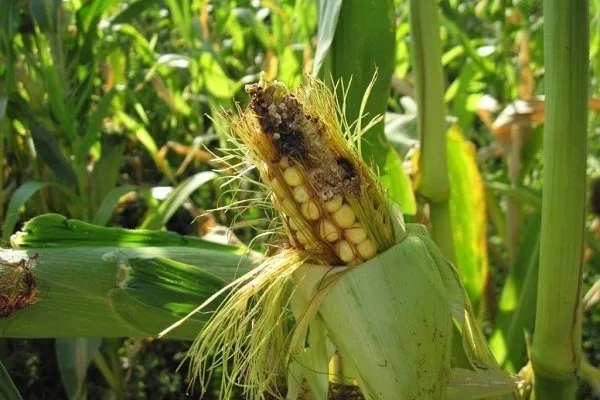
Trichogramma can be effectively controlled. This is a special biological method of crop protection that does not involve chemicals. Trichogramma is a small, active insect (0.3-0.6 mm) that destroys pest eggs, depositing its own larvae in them. Approved insecticides can also be used to eliminate pests, depending on the type of insect.
Sweet corn diseases:
- stem and root rot;
- fungal mold of seeds;
- gray mold of ears;
- fusarium cob.
Prevention of fungal diseases of corn Dobrynya - seed treatment before planting.
When growing corn, weed control is also essential. Weeds that are particularly harmful to the crop include:
- artemisia ragweed;
- field, yellow and pink sow thistle;
- creeping couch grass;
- white amaranth.
If weeds appear before sowing or corn emergence, non-selective herbicides (such as Uragan Forte) can be used. Post-emergence herbicides, which can be used between the 3rd and 7th leaf stages (such as Lancelot, Lumax, and Milagro), control perennial and annual weeds.
Harvesting and storage
Dobrynya corn should be harvested at the milky-wax stage of ripeness, when the grains acquire their characteristic color and structure, and the outer leaves become lighter and tightly adhere to the cobs.
The cobs are harvested by hand. It is recommended to do this within no more than 14 days from the appearance of the first technically mature cobs.
If the milky-wax stage of maturity is missed, the harvest will only be suitable for drying and grinding the grains into flour.
When large-scale corn harvesting is carried out in fields, combine harvesters are used. The equipment cuts the corn shoots at 15 cm above ground level. It is important to reduce crop losses during harvesting.
Dobrynya corn can be stored on the cob. This method preserves the sweetness and juiciness of the kernels. Cobs intended for storage are not washed, but are cleaned of fibers and husks. They are then placed in heavy-duty plastic bags and stored in the refrigerator's crisper drawer. They can also be placed in a basement or cellar. Fresh corn will keep for 5-7 days.
The kernels can be preserved in brine or pickled, or frozen. For freezing, use the cobs. Before freezing, plunge them into boiling water for 2 minutes, then cool them in cold water for the same amount of time. Once dry, wrap them in plastic or cling film. Sweet corn can be stored this way for up to 1.5 years.
A video review of the Dobrynya corn variety can be seen in the following video:
By following the instructions in this article for planting and caring for the Dobrynya corn variety in open ground, you can achieve fairly high yields.