
White corn is a hybrid of a yellow variety of the crop lacking lutein, the pigment responsible for its color. It has a number of advantages and can provide farmers with a decent harvest if all cultivation guidelines are followed.
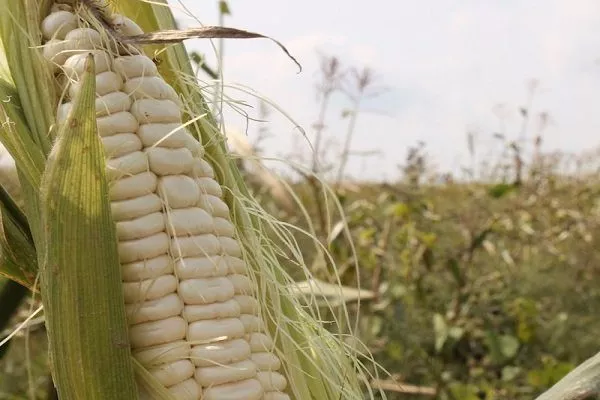
White corn
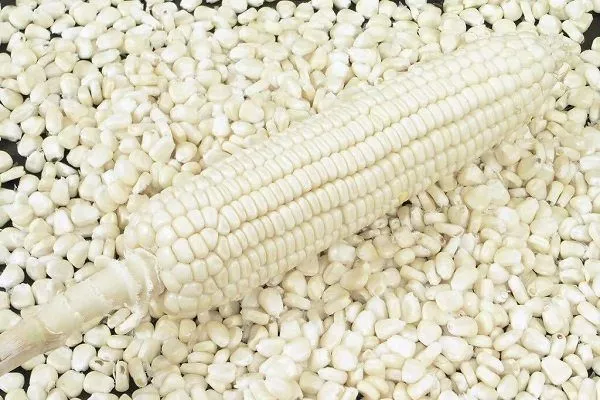
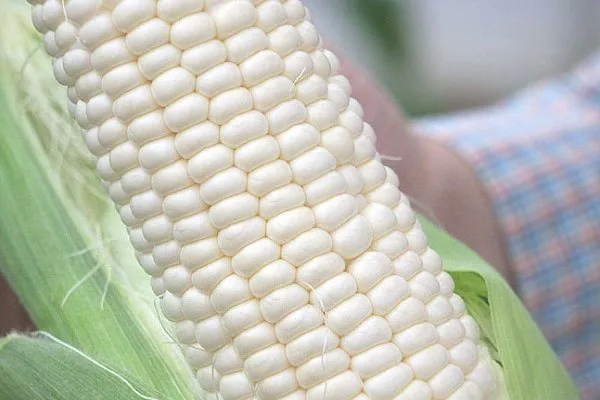
White corn kernels are soft and juicy
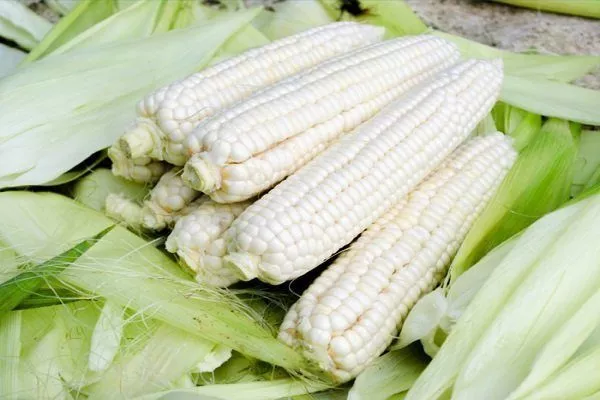
White corn cooks for no more than 8 minutes.
Features of culture
All types of corn, including white, became known to the world thanks to farmers in South America, where it has been cultivated since prehistoric times. Externally, white corn differs from yellow corn only in the color of the cobs; the plant itself also reaches 1.5-2 meters in height.
White corn contains easily digestible vegetable protein and is believed to have a higher sugar content than yellow corn. It also contains many beneficial substances, such as calcium, chromium, magnesium, selenium, sulfur, and vitamins.
All this makes the culture especially valuable for those who, for whatever reason, have given up animal protein in their diet.
Yellow corn also has a wealth of health benefits, but due to its relatively tough texture, it's not recommended for people with gastrointestinal conditions. White corn kernels are somewhat softer and juicier, so exceptions can be made for it from time to time. Because of its soft texture, white corn should be boiled for no more than 8 minutes, which preserves more of its beneficial properties.
Albino corn is used in the same way as regular corn: it is boiled, baked, grilled, and made into flour and oil.
Popular varieties
| Name | Ripening period | Plant height | Weight of the cob |
|---|---|---|---|
| The Little Mermaid | 90 days | 2 meters | 300 grams |
| The Snow Queen | 100 days | 2 meters | 350 grams |
| Lungwort | 70-75 days | less than 2 meters | 150 grams |
| Snow White | 73-80 days | 2 meters | 250 grams |
There are several common varieties of white corn:
- The Little MermaidThis variety is mid-season, ready to harvest in just 90 days. Plants reach 2 meters in height, with cone-shaped cobs. Each cob can weigh up to 300 grams. Rusalochka is resistant to drought and many diseases.

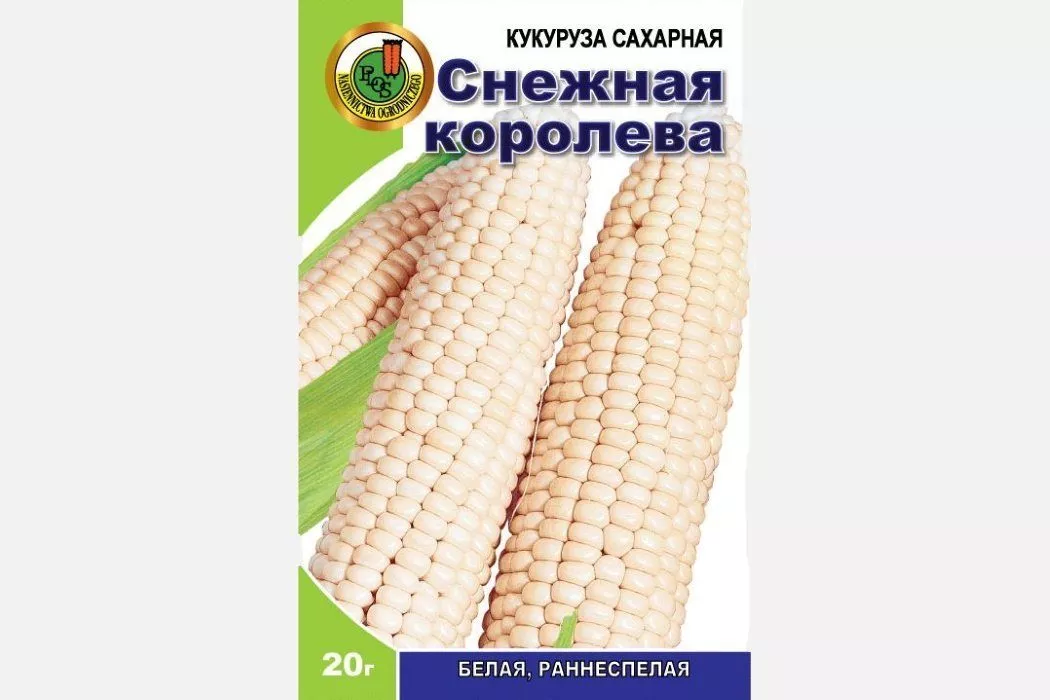
- The Snow QueenThis variety is renowned for its unusual cylindrical ears and high yield. Ears reach 35 cm in length and weigh 350 grams, making them record-breaking sizes for corn. It takes approximately 100 days from sowing to harvest.
- LungwortThis variety ripens quite quickly, in just 70-75 days, reaching a height of just under 2 meters. The fruits of this plant are quite miniature, up to 20 cm long, weighing about 150 grams. However, the seeds live up to their name: very sweet, a quarter of which is sugar. The variety tolerates temperature fluctuations well.
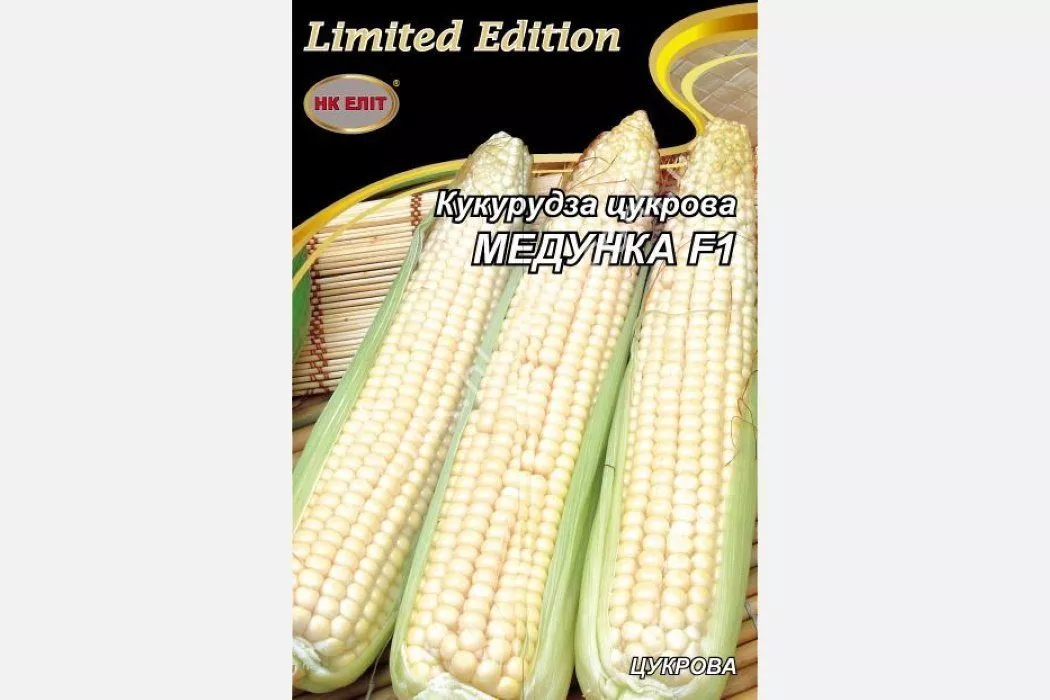
- Snow WhiteThis variety is second only to Medunka in terms of early maturity, maturing in 73-80 days. The plant reaches 2 meters in height, the heads are approximately 20 cm long, and each ear weighs up to 250 grams.
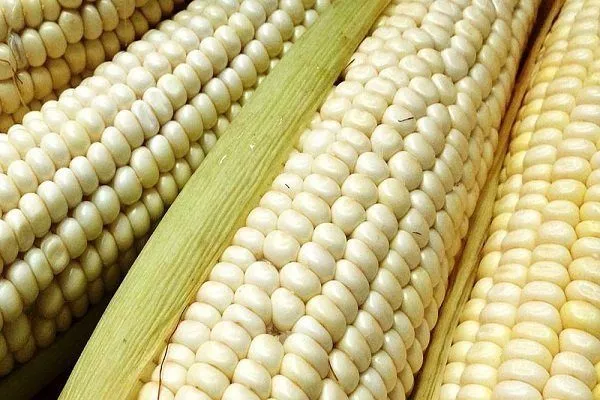
When choosing the right white corn variety for your growing needs, consider your local climate. Sometimes, to make a final decision, it's worth planting two or three varieties and choosing the one that best suits your taste.
- ✓ Drought tolerance: critical for regions with low rainfall.
- ✓ Ripening period: should correspond to the duration of the warm period in the region.
Planting white corn
It is important to correctly determine the timing of sowing the crop, select and cultivate the soil, prepare and plant the planting material.
Deadlines
Corn planting depends on local climate conditions. In warmer climates, the crop can be planted directly into the ground in late April or May. It's important for the soil to warm to 10 degrees Celsius (50 degrees Fahrenheit). Although corn can withstand short frosts, prolonged cold spells can cause uneven germination or even failure.
Planting corn too late is also a bad idea: it needs to have time to develop green mass before the onset of sustained heat. Otherwise, due to a lack of moisture, the plants will be weak, with curled leaves and a poor harvest.
Soil preparation
Before planting, you need to prepare the bed, preferably in the fall. The site should be sunny and sheltered from the wind. The soil should be neutral or slightly acidic, loamy, sandy loam, or peaty.
In the fall, you need to mix the soil with rotted humus, and loosen it thoroughly the day before planting.
Preparation of planting material
Hybrid seeds can be purchased at the market; the packaging should be marked "F1." You can also collect seeds from existing plants: select one or two robust ones, identify and retain the strongest cobs, and remove the rest. They can be harvested only after they are fully ripe, that is, when the kernel is firm and no juice oozes out when pressed with a fingernail. From these cobs, select the largest and healthiest seeds.
Before planting, seeds need to be soaked for 6 hours and treated with pests and diseases (for example, a weak solution of potassium permanganate).
Planting by seeds
Rows with shallow furrows should be made. The distance between rows should be at least 70 cm. Seeds are sown at a depth of up to 10 cm and spaced 5 cm apart.
Planting with seedlings
In northern regions or for an earlier harvest, corn can be grown from seedlings. This is best done in early May, with the plants planted in the ground 25 days later.
First, you need to germinate the seeds at room temperature. To do this, place them in a container of warm water, wrapped in cheesecloth or filter paper. After sprouts appear, plant the seeds in pots 10-12 cm wide, up to 5 cm deep. Place 2-3 seeds in each pot. When true leaves appear, select the 2-3 strongest seedlings. Immediately after this, add supplemental lighting with a fluorescent or phytolamp.
After 2-3 weeks, the plants can be planted in the ground. Avoid keeping the plants in pots for too long, as this will negatively impact growth and yield.
A week before planting, plants should begin hardening off: move them outside to a shady spot, gradually increasing the time spent outdoors. Immediately before planting, the plants should be left outside 24 hours a day.
Caring for the crop during cultivation
After the first 3-4 leaves have appeared, the plants sown directly into the ground should be thinned out, leaving a distance of 20-30 cm. Further care involves standard measures.
Watering
Corn thrives on moisture, so it's important to ensure adequate and regular watering. Initially, it should be moderate, but once the plants have seven leaves, gradually increase the amount to 2-3 liters per plant. During the panicle growth period, watering should be reduced, and when the filaments on the cobs begin to darken, gradually reduce to moderate.
If it is not possible to provide systematic watering, the soil between the beds should be loosened more frequently: this will allow the water to percolate better.
Overwatering the plant is also a bad idea: stagnant water will deprive the root system of sufficient oxygen. This can be indicated by the appearance of a purple tint on the leaves.
Top dressing
Even if all the necessary fertilizers and organic matter were added during soil preparation, the plants require additional feeding, as they are in a process of constant growth until the cobs are fully ripe.
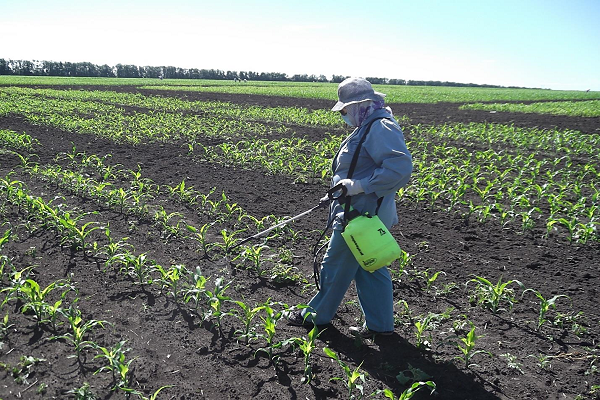
From planting until flower formation, the crop has a particular need for nitrogen. Corn also actively uses potassium from planting until mid-growth, but returns it to the soil during the second half of the growing season. Phosphorus is added to the soil from the time the plot is prepared until the kernels emerge.
- Application of nitrogen fertilizers: 2 weeks after emergence.
- Application of potassium fertilizers: during the formation of 5-6 leaves.
- Application of phosphorus fertilizers: before flowering.
Hilling
This procedure should be performed when aerial roots form or slightly earlier. Hilling will strengthen the root system and improve watering efficiency by improving moisture retention.
Harvesting and storage
White corn is best harvested slightly earlier than yellow corn. Signs of plant maturity include:
- drying out of the outer leaf layer on the cob;
- the threads on the cob have darkened and dried out;
- The grains are smooth, convex, and fit tightly together.
White corn is best eaten boiled and not stored for long periods: it's juicier than yellow corn, so it doesn't keep as well. For short-term storage, it's best left in its natural "packaging" and refrigerated, where it can keep for up to two weeks.
If the kernels are to be dried, the husk leaves should be folded down, braided, and hung in a dry, ventilated area. Once the cob is thoroughly dry, the kernels will fall out even with a gentle shake. Dried kernels can be stored in glass, plastic, cardboard, or canvas bags.
Freezing is considered the best way to preserve corn's nutrients. To do this, prepare two large containers: one filled with boiling water and the other with ice water. Place the peeled cobs in the boiling water for two minutes, then in the ice water for the same amount of time. After this, dry the corn on a cloth and place it in the freezer. It can be stored this way for over a year.
A good harvest of white corn is easy to grow and preserve. It's generally undemanding, but it's tasty, healthy, and can be an excellent alternative to the yellow variety.