
Peas are an easy-to-grow plant, whose modest requirements allow for a harvest not only from the garden but also at home. By following simple instructions, you can enjoy fresh, sweet peas year-round.
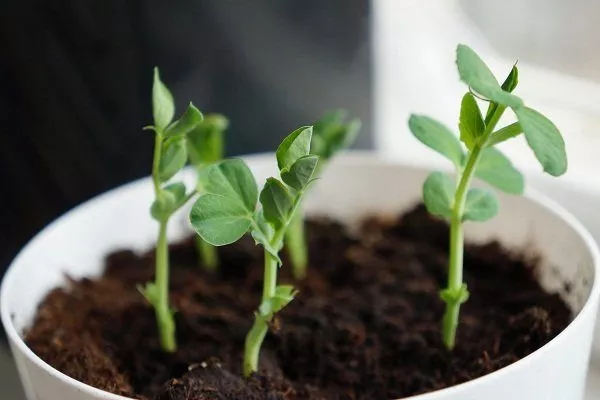
Suitable places for growing peas at home
First, you need to decide on a growing location. One of the most important requirements here is good lighting. You can choose one of three options:
- Glazed balconyAn insulated loggia or balcony is ideal, as it typically provides ample space and light, and the soil doesn't freeze. In such conditions, peas can be grown year-round.
- Open balconyThis location is only suitable until the onset of sustained frost. Although peas are cold-hardy, the soil in the pot freezes faster than in the garden bed. If this happens, the seeds or young seedlings will die.
- WindowsillIf your apartment doesn't have a balcony or loggia, peas can be grown on a fairly wide windowsill.
- ✓ Light intensity should be at least 10,000 lux for optimal pea growth.
- ✓ Daylight hours should be 14-16 hours to stimulate flowering and fruiting.
Peas are best grown on a window or balcony facing south, southwest, or southeast. If your apartment doesn't have such a window or balcony, you can increase the plant's daylight hours with a fluorescent, LED, or special grow light. Hang it approximately 50 cm above the plant container.
Peas don't mind fresh air, so you can safely open windows. This hardening off will benefit the plant.
Peas grow quite tall and can completely block a window, making the room dark. Therefore, it's best not to plant them in the only window in the room.
The best varieties of peas for growing at home
| Name | Plant height | Ripening period | Disease resistance |
|---|---|---|---|
| Adagumsky | 75 cm | Mid-season | High |
| Altai emerald | 50 cm | Early ripening | Average |
| Faith | 65 cm | Mid-season | High |
| Emerald | 85 cm | Mid-season | High |
| Premium | 80 cm | Early ripening | Average |
| Early-301 | 40 cm | Early ripening | High |
| Ambrosia | 70 cm | Early ripening | Average |
| Oregon Sugar Pod | 70 cm | Mid-season | High |
| Early Gribovsky-11 | 40-70 cm | Early ripening | High |
Some pea varieties are better suited to growing indoors. Dwarf peas are particularly noteworthy—they take up less space than standard peas, which can grow a meter or more.
- AdagumskyA mid-season semi-dwarf variety up to 75 cm in height.

- Altai emeraldA dwarf variety, reaching half a meter in height. The pods are small and smooth, and the fruits contain a lot of protein and sugar.
- FaithA semi-dwarf variety up to 65 cm tall, white in color. The fruits are wrinkled and yellow-green.
- EmeraldA mid-season variety, reaching a height of 85 cm. Known for its high yield: 10-12 beans per pod, up to 10 pods per bush.
- PremiumAn early-ripening variety, up to 80 cm tall. Fruit appears after 2 months. Each bush bears 14 pods, each typically containing 9 peas.
- Early-301An early-ripening variety, up to 40 cm tall. Ripens in approximately 50-55 days. Excellent for canning.
- AmbrosiaSugar variety, reaches a height of up to 70 cm. Ripens in 55-56 days.
- Oregon Sugar PodThe variety is resistant to cold and many diseases, growing up to 70 cm.
- Early Gribovsky-11An early-ripening variety, it ripens in an average of 64 days. It's a semi-dwarf variety, growing from 40 to 70 cm in height. The fruits are large and delicate in flavor.
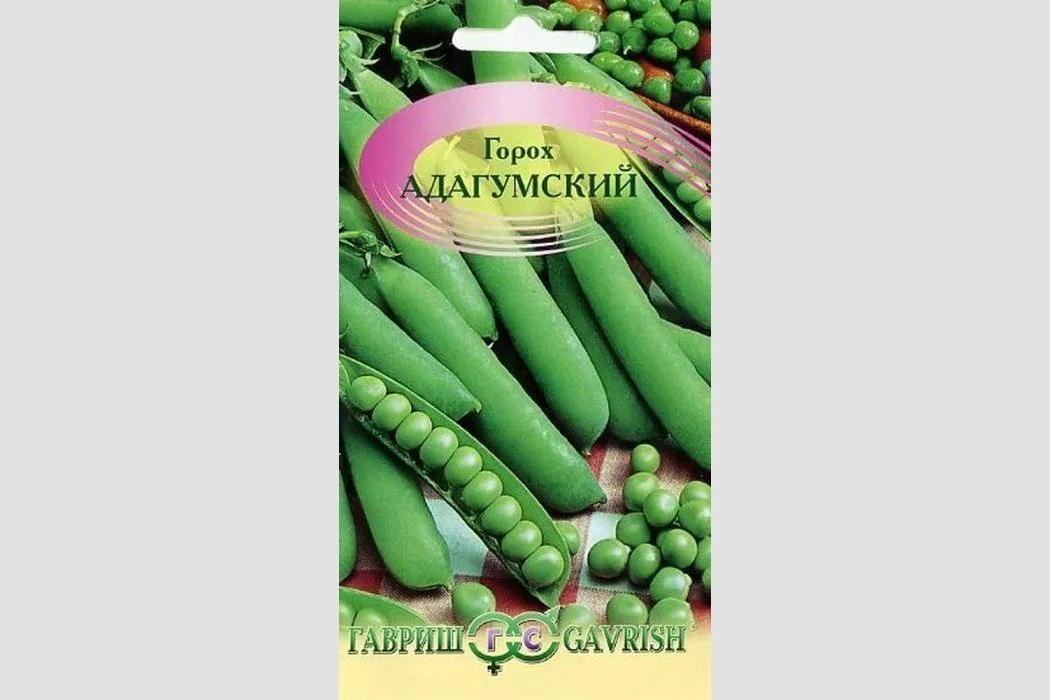
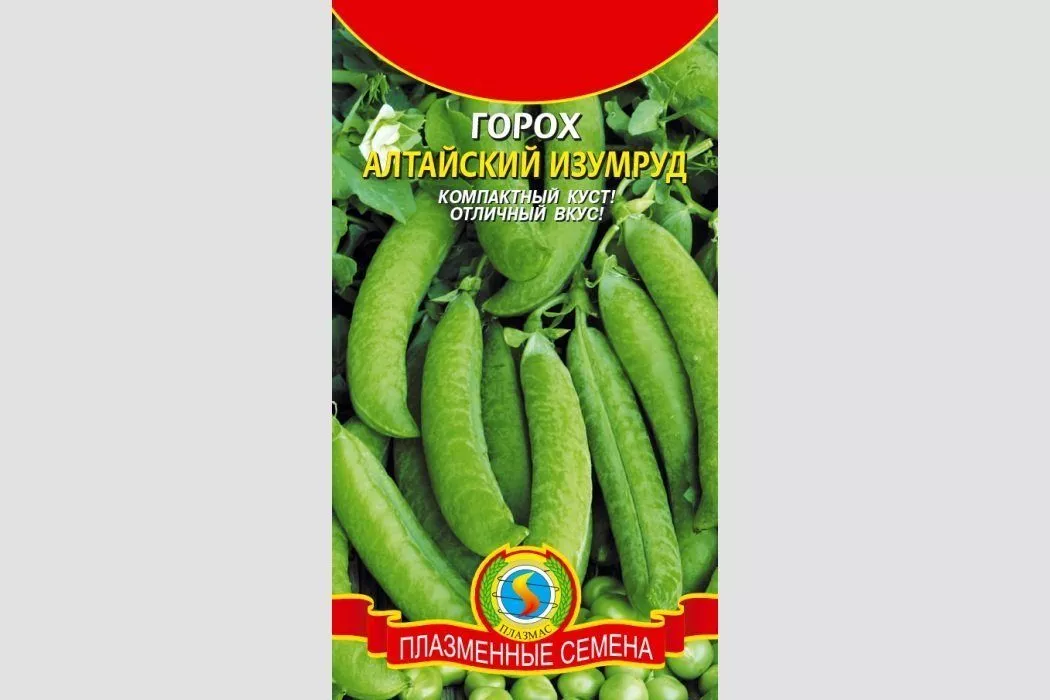
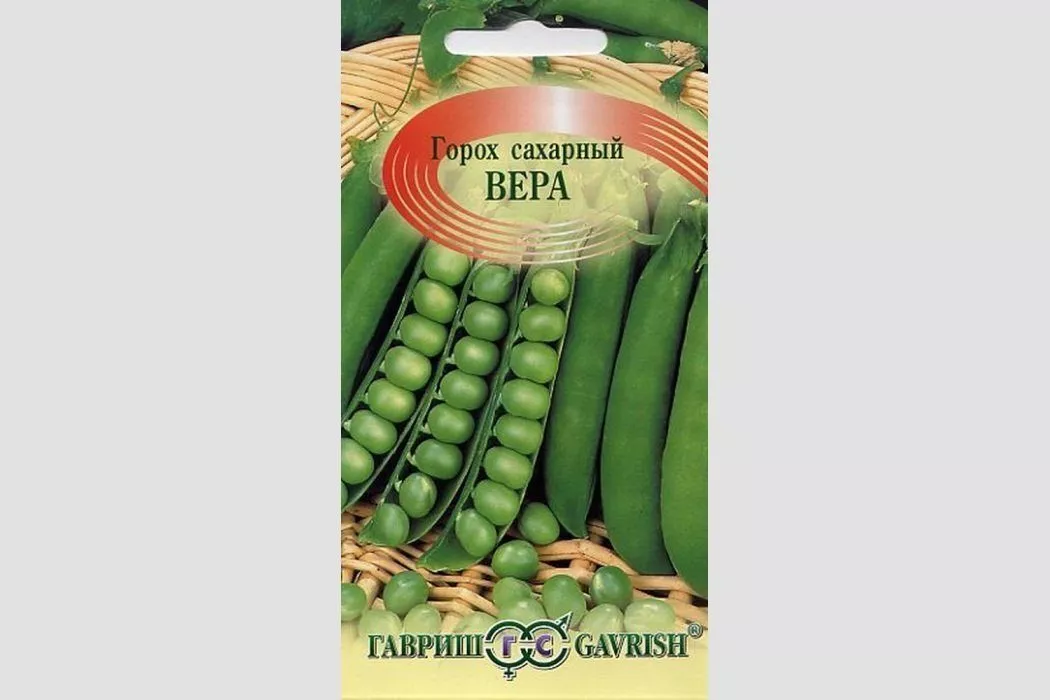
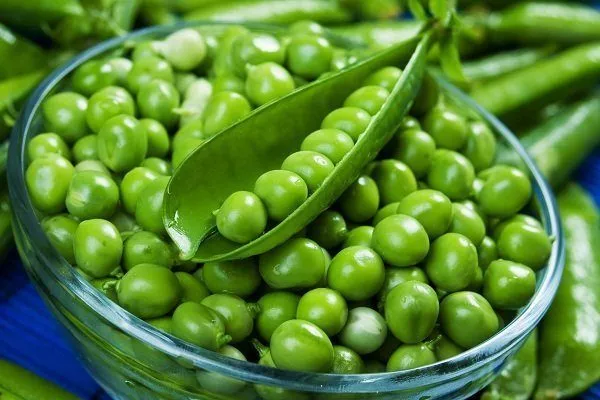
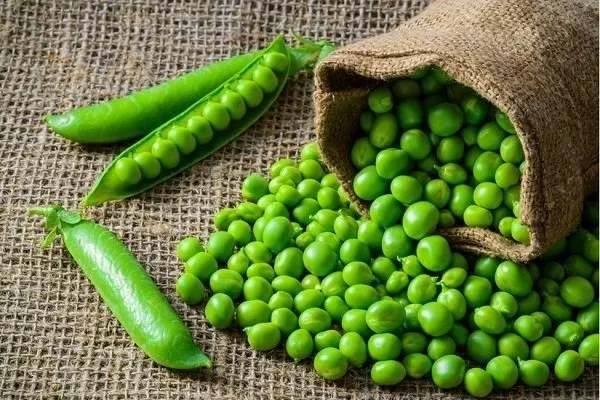
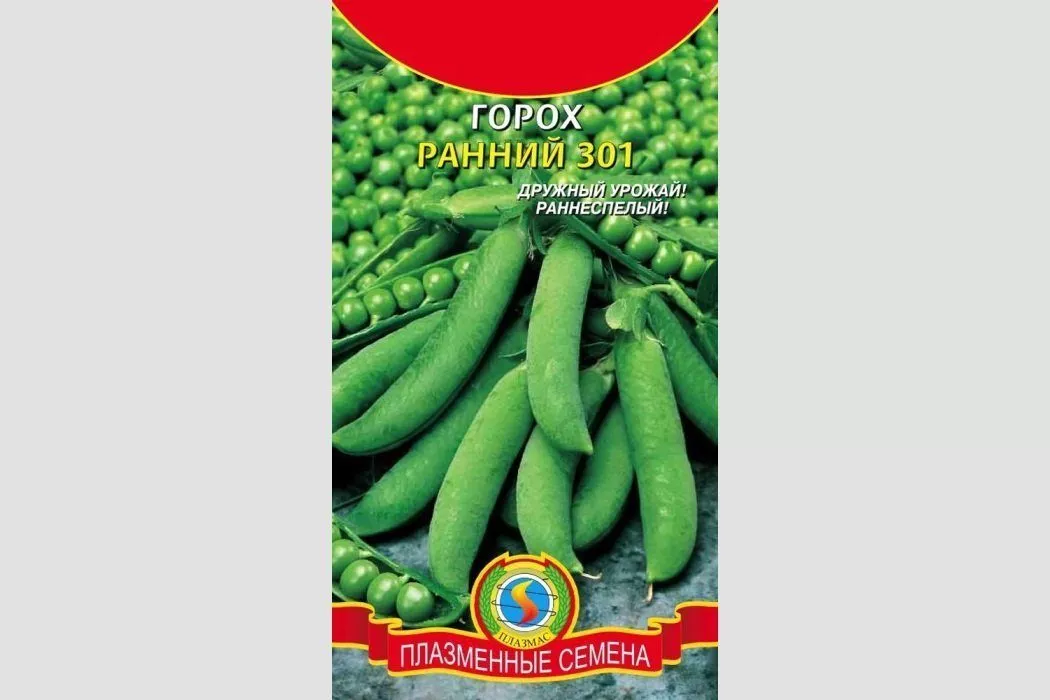
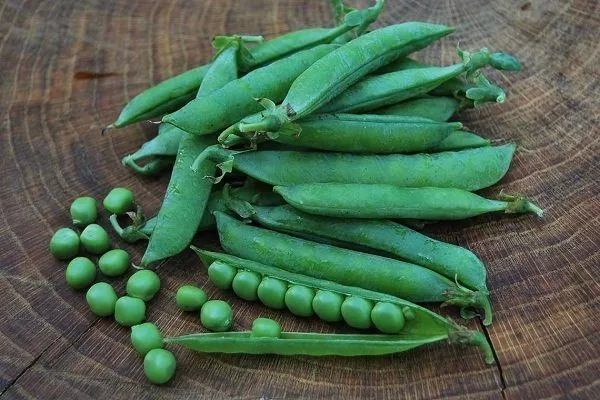
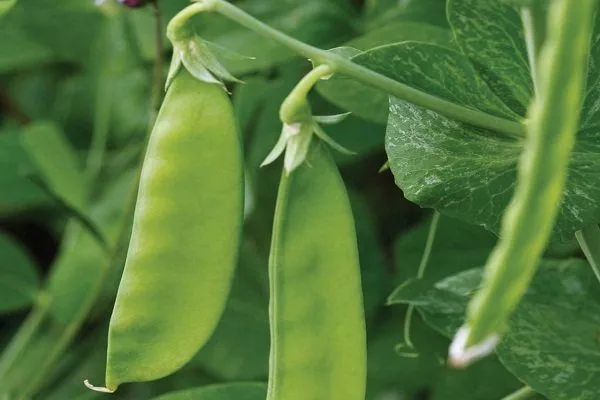
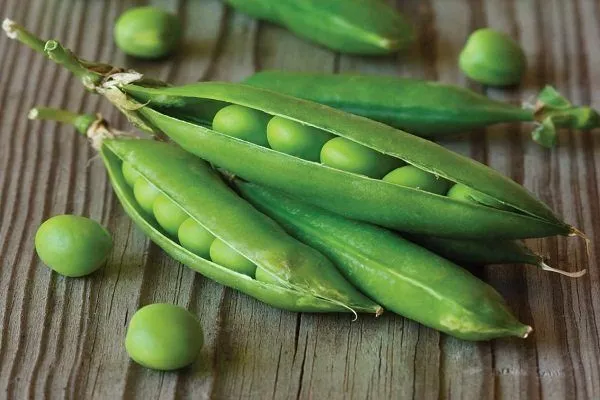
- ✓ The 'Adagumsky' variety has high drought resistance.
- ✓ 'Altai Emerald' requires minimal care due to its dwarf nature.
When choosing a variety, you can consult with those who have already harvested peas indoors. The best option may vary depending on the region.
How to grow peas at home?
To harvest peas at home, you need to follow a number of mandatory requirements for growing the crop.
Optimal conditions
Peas need ample light and space. When choosing a location, keep in mind that the optimal temperature for the plant is 18-24 degrees Celsius, although seeds can germinate at temperatures as low as 3 degrees Celsius, and young plants can withstand short-term frosts down to -5 degrees Celsius.
If there are pets at home, you need to protect the seedlings from them.
It's important to plan for support in advance: install vertical poles with netting or rope stretched over them for the plants to cling to as they grow. This will ensure more sunlight and a more abundant harvest.
Another important factor is humidity. This can be achieved through more than just regular watering. For example, you can place an indoor fountain, an open container of water, or other moisture-loving plants nearby. You can also place damp pebbles or expanded clay in the tray with the pea sprouts. It's a good idea to open a window or balcony during rain.
Before you start growing peas at home, you should consider how prepared you are for high humidity in your apartment.
Preparing the soil mixture
You can take soil from your garden. It's best to use soil where pumpkins or nightshades were previously grown, but not from a plot where beans were grown.
The collected soil should be sterilized. In winter, simply leave it out overnight on an unheated balcony. At other times of the year, you can freeze the soil, bake it in the oven, or steam it. This treatment will protect against any harmful insect larvae that might accidentally end up in the soil.
Sterilized soil should be mixed with loosening components (sawdust, finely chopped straw, pebbles or rotted humus) in proportions of 1:3.
The soil cannot be mixed with fresh manure: the peas will turn into tops and will not produce a harvest.
Next, dissolve phosphorus-potassium fertilizers in water, let them sit for 24 hours, and then fertilize the soil with this solution. Afterward, thoroughly loosen the soil.
Peas aren't picky about soil, but they produce a better harvest in light, alkaline soil. You can test the soil's alkalinity using vinegar: take a small amount of soil in a spoon and add a few drops of vinegar. If a light foam forms, the soil is alkaline enough.
Seed preparation
First, you need to check the seedlings for germination: pour a liter of warm water into a jar, dissolve 20 grams of salt in it, and pour in the seeds. If some seeds float to the surface, this means they are empty inside, without an embryo. Such peas are unsuitable for growing.
After this test, the seeds should be rinsed under running water and spread out on a napkin. The next step in seed preparation is disease prevention. There are two ways to do this:
- soak the seeds in a bright manganese solution for 6-8 hours;
- place them in a boric acid solution (0.2 g per 1 liter) for 10-15 minutes.
Then the peas need to be rinsed again and kept for 6 hours in clean water heated to 45 degrees.
Once the seeds have been checked and treated, you can choose a growing method. You can sow dry seeds, which will gradually draw moisture from the soil and germinate. If you plant sprouted seeds, the seedlings will appear about a week earlier.
To extend the harvest period, peas can be planted in 2 stages with a difference of 2 weeks.
Germinating seeds is easy. To do this, you need:
- Take a plate and a piece of cotton or linen fabric.
- Wrap the seeds in a damp cloth and place them in a plate, possibly covered with a plastic bag. Place the plate in a dark, warm place.
- The seeds need to be washed once a day and constantly monitored to ensure that the cloth remains moist: if it dries out, the seeds will die, and if they are not washed and kept exclusively in a stuffy and damp place, they will rot.
- After 5-7 days, sprouts will appear, approximately 3 times the diameter of the seed. This means the seeds are ready to be planted.
Avoid using cheesecloth for sprouting—the sprouts will poke through the threads, making it nearly impossible to remove them without damaging them. Paper towels are also unsuitable, as they retain moisture poorly and deteriorate quickly.
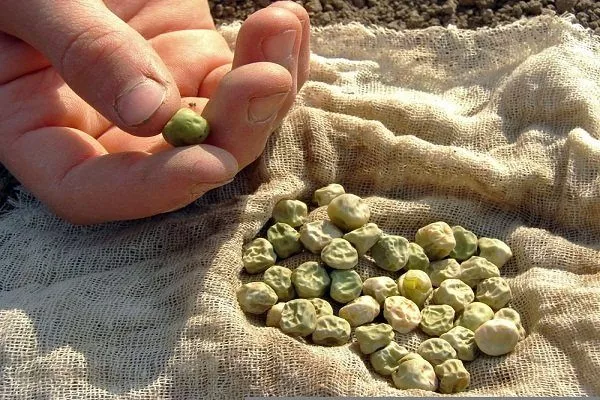
Immediately before planting, the seeds should be treated with nitragin and fertilizers containing molybdenum and boron. This will accelerate the development of the seedlings.
Selecting growing containers
Before transplanting, seedlings can be grown in newspaper envelopes or a common tray. They will then need to be transplanted into pots or boxes made of wood or plastic. Ceramic pots are ideal, as they provide adequate air circulation and prevent excess moisture from lingering.
For normal development of the pea root system, the depth of the box should be 35 cm or deeper, since in nature the roots of this crop go deep to a distance equal to the height of the plant.
It's important to have drainage holes in the bottom to prevent excess water from stagnating, otherwise the roots won't get enough oxygen and the plant may wither. It's best to add some drainage material to the bottom: 2 cm of fine pebbles or expanded clay. Then add sterilized soil on top, leaving 3-4 cm of space between the top and bottom.
- ✓ The container must be at least 35 cm deep to allow the root system to develop.
- ✓ The presence of drainage holes is mandatory to prevent water stagnation.
Planting seeds
It's best to plant the seeds in rows, leaving 2-3 cm between rows and 2 cm between seeds. Plant them at a depth of 2-3 cm. Water the soil thoroughly during planting, until it becomes firm.
Immediately after planting and watering, cover the container with plastic film to create a mini greenhouse—this is especially important if the balcony is cool. Remove the film for 10-15 minutes every day and water as the soil dries.
Don't allocate a large area for each seed at once, as the soil will become soggy and rot will occur. You can plant seeds in peat pots or disposable cups, but you will still need to transplant them into a larger container.
Caring for seedlings
Once the seedlings emerge from the ground, remove the plastic wrap. Don't expose the plants to direct sunlight right away; it's best to let them sit in the shade for a couple of days. About a week later, apply the first fertilizer—a superphosphate solution.
When the plant has two leaves, transplant the seedlings into individual pots or spread them out more widely in the tray. Plant the plants in rows, leaving 5-10 cm between seedlings and 10-15 cm between rows. It's best to transplant the seedlings with a lump of soil where the roots have grown.
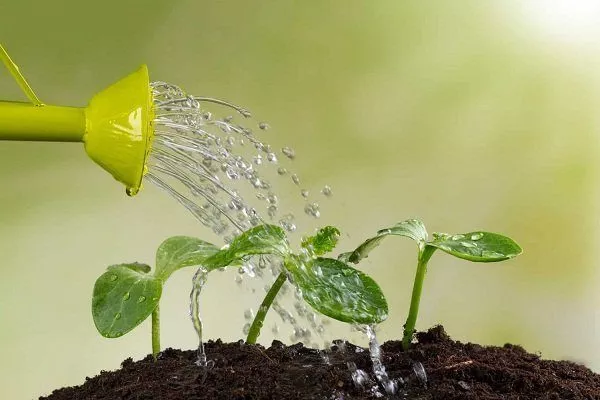
The plant is planted at a depth of 5 cm and covered with soil. Be sure to water the soil, using a fine spray with a special nozzle or strainer. At this time, add a complex fertilizer containing potassium, copper, and phosphorus.
Watering, loosening, fertilizing
Plants need to be watered regularly. A common sign of water shortage is a dry top layer of soil that feels prickly when rubbed between your fingers and is impossible to gather into a ball.
Before flowering, water the soil twice a week. After watering, loosen the soil between the rows to a depth of 3-4 cm: this will help retain moisture and provide oxygen to the roots. As the plants grow, they should be earthed up.
After about a month, the plants begin to bloom. During this period, stop feeding, and water more frequently, as peas require more moisture to form fruit than they need for their own growth. If you suspect soil sterility, you can treat the plants with a garlic solution during this period and add ash to the soil as a preventative measure.
Peas are self-pollinating, so fruit set is usually uncommon. If the plant is clearly not blooming well, you can shake the stems occasionally.
Fighting diseases
Peas grown at home rarely get sick, but some diseases cannot be ruled out.
Powdery mildew
One of the most dangerous diseases of the crop. Initially, a white or light gray coating appears on the leaves, which gradually darkens and thickens, causing the leaves underneath to dry out and curl.
The use of chemicals is not recommended because they remain in the soil and penetrate the fruit. As a preventative measure, you can add a small amount of potassium permanganate to the irrigation water and wood ash to the soil. It's also important to maintain proper temperature control: avoid sudden changes and avoid watering with cold water.
If the disease is detected at an early stage, you can get rid of it with the help of folk remedies:
- a mixture of sulfur and freshly slaked lime in a ratio of 1:2;
- colloidal sulfur solution (1%);
- a mixture of whey and cold water in a ratio of 1:10;
- a mixture of ash infused in boiling water (1 liter of boiling water per half a glass of ash) and soap solution (4 grams).
If this does not help, you will need to use fungicides or biofungicides: Tilt, Fundazol, Gamair and Planriz.
Root rot
The disease occurs when overwatering, not loosening the soil, or planting the plant directly into a large pot. The disease doesn't manifest itself immediately: at first, the plant appears healthy, but then it seems to be starved of moisture because the root system is no longer able to function properly. Then, dark, slimy spots appear at the base of the stem.
It is no longer possible to save such a plant; it must be thrown out along with the soil as a source of infection.
Potential problems when growing
If the rules for growing the crop are violated, other problems may arise:
- the vines are drying out - insufficient watering, too high temperature;
- the pods are not forming - excessive watering, lack of light or space;
- the leaves darken, dry out and fall off - lack of magnesium;
- the pods are crooked and half empty - potassium deficiency.
By following the rules for preparing soil and seeds, most problems can be avoided.
Harvesting
About a month after the main flowering, the pods begin to fill with peas. Typically, the first fruits are found at the bottom of the bush.
For fresh consumption, freezing, or canning, peas are harvested at the milky stage. This stage is indicated by a uniform green color and tightly packed peas. Do not pull the pods off by pulling them, as this can damage the rest of the plant. It's best to remove the pods by gently holding the stem with your other hand.
Timely harvesting improves the plant's fertility: if formed pods are left on the stem, they will accumulate nutrients, and if they are removed promptly, these nutrients will be used to form more pods. The fruits should be harvested approximately every 2-3 days; the harvest period lasts up to 2 months.
The harvest includes not only the peas but also the fresh pea leaves: they are rich in beneficial micronutrients, have a pleasant flavor, and a juicy texture. They can be added to salads.
If you need seeds for sowing, you'll need to wait until the pods are truly ripe, when the lower pods are covered with a yellow net and the peas have hardened. The plant is cut and hung upside down until the pods are completely dry, preferably in a well-ventilated area.
You can also learn about growing peas at home from the following video:
Growing peas indoors is a simple yet rewarding process. If you follow the planting and care recommendations provided in this article, you're guaranteed a bountiful harvest.
A very unusual way to grow peas in an apartment. You really intrigued me last year. So, after my experience, I'm definitely sharing my impressions. I followed all your recommendations, the peas grew well on the windowsill, and the harvest was excellent. But there was just one disappointing thing: how few peas there were. It's better to grow them in garden beds (thankfully, I have some).