
Chickpeas are a popular legume crop grown in various regions of Russia. Gardeners love them for their resistance to frost, heat, and drought, their abundant harvest, and their usefulness in crop rotation. Growing chickpeas has a number of important considerations.
General characteristics of the culture
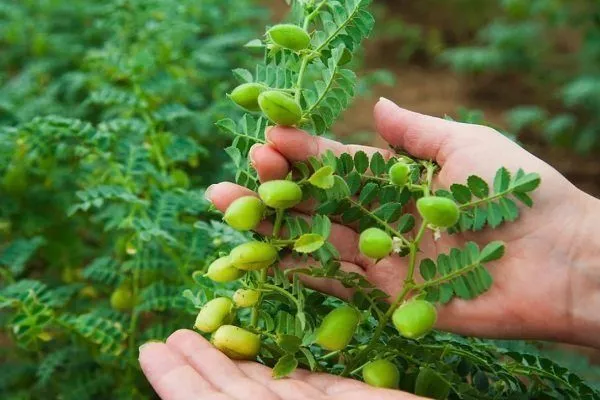
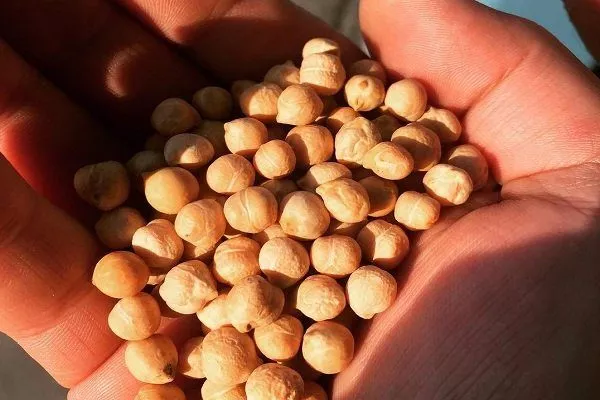
Chickpeas are nicknamed "garbanzo beans" or "turkish peas" for their unusual bean shape, which grows round and angular with a prominent beak. The slightly swollen seed beans of this plant range in color from light yellow to dark brown and do not split when fully ripe. Each pod contains between one and three pods.
The annual chickpea's root system is well developed and extends up to one and a half meters deep. The plant's unique roots are capable of forming numerous tubers, which enrich the soil with nitrogen and accelerate the dissolution of phosphates.
Chickpea stems, which are resistant to lodging, grow to a height of 25 to 60 cm and have a straight or branched structure depending on the variety. The elliptical foliage is green, with a reddish tint in the early stages of growth. Thanks to its well-established self-pollination system, chickpeas are easy to grow.
The chemical composition of chickpea seeds is as follows:
- 30% protein;
- 12% fiber;
- 8% fat.
The amount of protein in 1 gram of chickpea exceeds even that of grain crops.
The nutritional content of chickpeas:
- sodium;
- calcium;
- potassium;
- selenium;
- iron;
- phosphorus;
- magnesium;
- zinc;
- vitamins A, B, beta-carotene, E, PP, C.
Chickpeas are a favorite among many gardeners for their flavor and nutritional properties. They have proven themselves as a key ingredient in a variety of dishes and are often used in folk medicine.
Varieties of chickpeas
| Name | Mass of a thousand grains (g) | Plant height (cm) | Growing season (days) |
|---|---|---|---|
| Krasnokutsky 195 | 200-350 | 30 | 90-110 |
| Budjak | 350 | 60 | 80-90 |
| Anniversary | 200-350 | 40 | 90-110 |
| State farm | 200-350 | 30 | 100 |
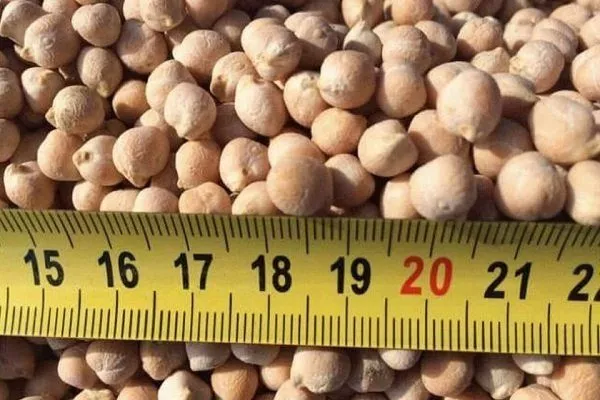
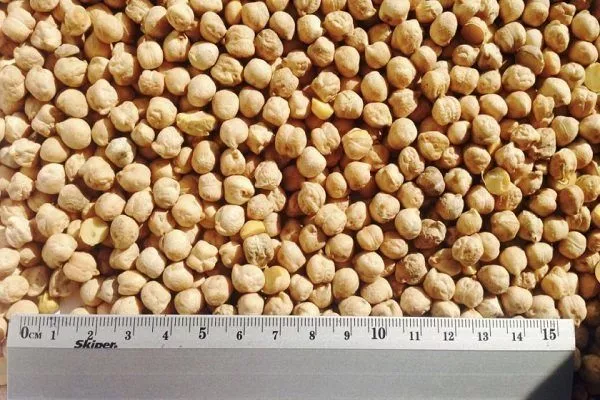
There are a huge number of chickpea varieties, as they are grown in over 30 countries. All chickpea varieties can be divided into groups based on seed size:
- small-seeded, the weight of a thousand grains is less than 200 g;
- medium-seeded with a thousand grain weight from 200 to 350 g;
- large-seeded, the weight of a thousand grains is more than 350 g.
There is another classification of chickpeas by growing region:
- Southern European groupAt maturity, the plant reaches 60-70 cm, with lush branching at the top. Chickpea flowers are small, red or pink.
- Central European groupMature seedlings grow to a height of 35-45 cm, forming a spreading bush, blooming only with white flowers.
- Anatolian groupIn the mature growth phase, the bushes are no higher than 25 cm with a lush upper part and white flowers.
In the climate of our country, 4 are considered the most common chickpea varieties:
- Krasnokutsky 195The branched, upright bush grows up to 30 cm, produces white flowers, and the lower pods are about 15 cm from the ground. A 10 square meter (10 sq. m) plant yields 2.5-3.5 kg of yellow-pink wrinkled beans. The growing season lasts 90-110 days. It has the highest protein content of all chickpea varieties.

- BudjakThe bush grows up to 60 cm tall, with large white flowers. The lower pods hang 20 cm from the ground. The growing season lasts 80-90 days. A 10 square meter plot yields up to 2 kg of elongated beige pods.
- AnniversaryA low, upright bush up to 40 cm tall produces yellow-pink beans yielding 1.5 to 3 kg per 10 square meters. The growing season is 90-110 days.
- State farmThe dense, low bushes grow up to 30 cm, producing angular, tapered, brown beans. A 10 square meter plot yields 1.8 to 3.7 kg of yield. The growing season lasts 100 days. It has the lowest protein content.
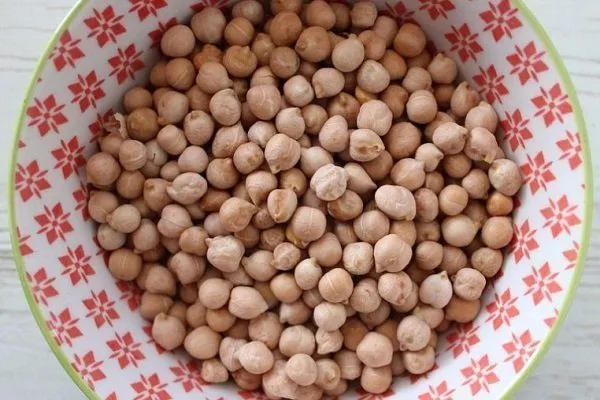
When the correct planting and care conditions are met, all varieties of Turkish peas produce good yields.
Optimal conditions for growing
Garbanzo beans are resilient to changing weather conditions. They can survive sudden frosts down to -10 degrees Celsius and tolerate high temperatures well.
The growing season lasts 80-110 days, with seeds beginning to germinate at 2-4 degrees Celsius. Chickpeas produce a good harvest when grown at temperatures of 20-25 degrees Celsius.
The crop is drought-resistant at all stages of growth. This is possible due to the abundant hairs that cover the leaves, stems, and fruits. Furthermore, the dense hairs on the chickpea secrete oxalic and malic acids, which protect it from most pests.
Chickpeas are not particularly demanding of preceding plants in the garden bed and perform well in fertile black soil without additional fertilizing. The nature of chickpea cultivation is such that it is one of the best predecessors for most crops, creating favorable conditions for moisture accumulation.
Garbanzo beans clear the plot early, which is why a winter wheat-chickpea-winter wheat crop rotation scheme is often used in large-scale agricultural cultivation.
Sowing dates
Given its good cold tolerance and seed germination even at -4°C (4°F), chickpea planting begins after sowing early grain crops. This typically occurs in April or early May, when the deep soil has warmed to 5-6°C (41-43°F).
In the southern regions, sowing of chickpeas is possible in late March or early April under favorable climatic conditions.
Preparing the land
Preparing the soil before sowing chickpeas is carried out in 2 stages:
- In the fall, after harvesting the previous cropBefore the onset of frost, the area under chickpeas is cleared of perennial weeds by cultivating or treating with glyphosate. If necessary, phosphorus-potassium fertilizers are applied.
- In the spring before sowingThe soil is dug over, carefully removing young debris. It is believed that the greater the plowing depth, the higher the chickpea yield.
- ✓ Optimum soil pH for chickpeas: 6.0-7.0. At pH below 5.5, liming is necessary.
- ✓ The plowing depth before sowing should be at least 25 cm to ensure good development of the root system.
Chickpeas do not cope well with weeds, so before sowing and during plant growth, it is necessary to ensure that there are no weeds.
Preparation of planting material
Before planting chickpeas on a commercial scale, the seeds are pre-treated with a nodule bacteria preparation to increase yield. To test germination in a small plot, the seedlings are soaked in a large container of room-temperature water immediately before sowing outdoors.
Chickpeas tend to swell to 140% of their mass when exposed to water for long periods of time. Therefore, when soaking beans for planting, use a container with a greater volume of liquid than the volume of the seeds.
After thoroughly mixing, soak the beans in water for 6-12 hours until they swell. Then drain the water and cover the container with a plastic bag to prevent the material from drying out. Leave the seeds in this condition at home until germination, checking them periodically and moistening them if necessary.
When using the indoor seedling method, chickpeas are not pre-soaked.
Planting chickpea seeds
There are two ways to plant chickpeas: directly into open ground or by starting seedlings indoors. Both methods yield a bountiful harvest if all steps are completed in a timely manner.
Planting in open ground
A week before the last expected frost, after the soaked seeds have germinated in warm conditions, they are placed in pre-prepared holes in the garden. When planting in rows, they are spaced 15 cm apart at a depth of 6-8 cm. If using the strip planting method, the seeds are placed in the same depth, 45 cm apart.
To ensure uniform germination, it's important to plant chickpeas at a uniform depth in well-moistened soil. If the soil isn't moist enough at planting time, water the holes first.
After laying out the beans, cover the rows with soil and level them. If frost is forecast, you can protect the plants with covering material at night.
Watch a video showing how to prepare chickpeas for planting and plant them outdoors:
Planting seedlings
A month before the last predicted frost, chickpea seeds are planted indoors as seedlings. Chickpea seedlings are not transplanted to avoid damaging their abundant root system, so use paper or peat pots for sowing seedlings, which will dissolve on site. Place 1-2 dry seeds in biodegradable containers at a depth of 2-4 cm.
If two sprouts emerge, the weaker one is cut off rather than dug up, so as not to disturb the roots.
Place the pots near a window to ensure the soil receives sufficient light. Keep the soil moist until the seedlings emerge, which usually begins within two weeks.
After all danger of frost has passed, when the seedlings reach 10-13 cm, they are transplanted to an open area. In the prepared area, dig holes the same size as the cup. The chickpea seedlings are planted 14-20 cm apart, leaving 40 to 60 cm between rows. After laying out the pots, lightly cover the surface with soil.
Caring for the crop during cultivation
Caring for chickpeas during the growing season involves a number of standard measures.
Weeding
One of the most important periodic procedures required when growing chickpeas is weeding. After planting, weeding should be done for the first time a week after the young plants emerge from the beds. The second weeding is necessary when large leaves appear on the plants. Afternoon is considered the optimal time for weed control.
Watering
Water generously, keeping the soil moist during the initial stages of chickpea growth. Water twice a week until the chickpea pods form. Once the plants reach this stage, reduce watering to once a week.
An important requirement for watering chickpeas is to ensure moisture at ground level. Overhead watering can cause the pods to split prematurely and promote mold growth. Closer to harvest, watering should be done no more than once every two weeks to ensure proper drying.
Mulching
A thin layer of mulch is added around the stems to retain sufficient water in the soil and prevent weeds from growing between the rows.
Top dressing
Fertilizing with well-rotted compost mid-season is acceptable. Avoid additionally fertilizing chickpea beds with nitrogen-containing fertilizers, as this can lead to excess nitrogen, increased foliage, and reduced yield.
Pest and disease control
To control chickpea pests, watch for unwanted insects and apply control measures only after they appear on the plant. The most common pests are spider mites, leafhoppers, and aphids. They are controlled by spraying with insecticidal soap or natural pyrethrin-based products.
- Inspect plants regularly for pests, especially during periods of active growth.
- At the first sign of pests, use insecticidal soap or natural pyrethrin-based products.
- Remove heavily infested plants to prevent the spread of pests.
Seedlings may be susceptible to rot, anthracnose, or mosaic. To prevent infection, periodically clear the area of debris and avoid contact with the plant when it is wet. Infected seedlings should be removed from the beds to prevent the spread of disease.
Harvesting and storage
Particular attention must be paid to harvesting the Turkish nut crop. Mid-season chickpea varieties are ready for harvesting 90-100 days after sowing, while late-season varieties can take up to 150 days to mature. The climatic conditions of a particular region largely determine the product's readiness.
To eat chickpeas fresh, they can be picked when the pods are still green.
Chickpeas typically ripen evenly across the entire plant. The pods reach 3-5 cm in length and contain 1 to 3 beans. The shells do not split, and the beans do not spill onto the beds. When the leaves turn brown and the entire plant is dry, it is uprooted and laid out on the ground to dry completely in natural conditions.
The beans are harvested when the pods split. If there's a chance of rain, the chickpeas are brought into a ventilated area to finish drying. Failure to do so increases the risk of mold developing, which will damage the chickpeas from the inside and ruin the harvest. Also, during natural drying, rodents may appear, damaging the chickpea pods and adding extra work.
After thorough drying, the chickpeas are placed in cloth bags and stored in a dry place. The chickpeas are ready to eat. Chickpea straw is used to feed cattle and pigs, mixed with cereal straw.
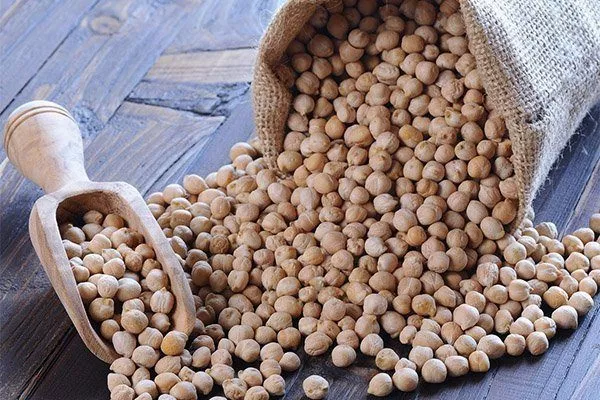
When stored properly, chickpeas remain viable for 8-10 years.
Following all the growing conditions for chickpeas will allow you to harvest a bountiful harvest of this healthy and tasty crop, as well as enrich the soil with nitrogen before planting subsequent crops.