
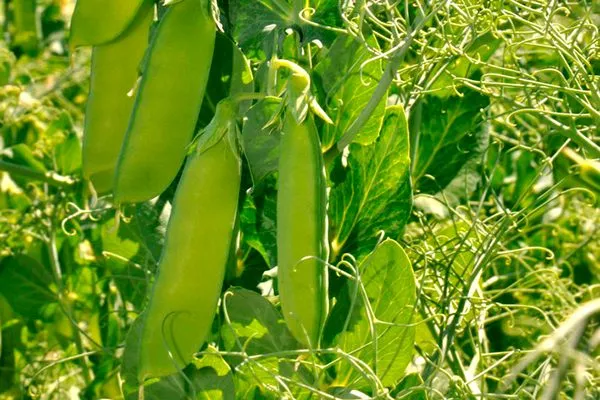
Rocket peas are a leafless, tendril-shaped variety characterized by irregularly shaped peas and yellow seeds. They are considered high-yielding and mid-season. The fruits do not crack, and the shoots do not lodge, which is a significant advantage. They are most often used in large-scale industrial cultivation.
Authors of the Rocket Pea variety
Jens Knudsen is credited with creating this pea. The varieties Bogatyr, Classic, and Solara were crossed to create it. The original name of this plant is Rocket. This variety has been included in the Russian Federation's State Register since 2010.
Information on admission from the Register of the State Commission of the Russian Federation
Information on the registration of the Rocket Pea in the Register of the State Variety Commission of the Russian Federation: application for approval with number 45009 was registered on February 1, 2006. The Rocket Pea variety was included in the register of approved varieties in 2010 and is permitted for use in the following regions: Central, Central Black Earth, Middle Volga, and Ural.
Patent information for the Rocket Pea variety
The patent holder for the Rocket variety is TOFT PLANT BREEDING APS (SWEDEVEJ 1, HARRE, DK 7870 ROSLEV, DENMARK). The application for protection of the Rocket variety 45010 was filed on February 1, 2006. Patent No. 5094 was issued on January 22, 2010. The expected expiration date of the patent is December 31, 2040.
Characteristics of the variety
The average yield in the Central Region is 27.2 centners per hectare, which is 3.8 centners per hectare higher than the established standard. Other yield indicators:
- In the Central Black Earth Region, the average yield reaches 21.9 c/ha, which also exceeds the standard by 2.2 c/ha.
- A record yield of 56.2 c/ha was recorded in the Moscow region in 2008.
- In other regions, the yield level is also impressive: 56 c/ha in the Moscow region, 55 c/ha in the Lipetsk and Oryol regions.
- In state trials, the maximum yield of 66 c/ha was achieved in Kursk.
Main characteristics:
- It easily tolerates recurrent spring frosts, but is especially sensitive to drought compared to other varieties.
- The crop's resistance to lodging is significant.
- The risk of ascospora leaf spot and powdery mildew is high. The risk of gray mold and rust is slightly lower.
Roquette is a typical mid-season variety. After emergence, the crop can be harvested in 68 days under optimal weather conditions. Even with certain challenges, the pods can be harvested between 90 and 96 days.
Growing regions
Rocket peas can be successfully grown in the Moscow, Vladimir, and Kursk regions, as well as in some southern regions. According to the Russian state registry, Rocket cultivation is also permitted in the Middle Volga, Volga-Vyatka regions, and Western Siberia.
Description of the plant and fruits
The petals are white, and two flowers are borne on a single stem. Other distinguishing features:
- The seed lobes are colored yellow, with a characteristic light scar.
- The average number of nodes is noted, including the average fertile node.
- The rocket can have different heights, from 45 to 88 cm.
- The leaves of this variety are leafless.
- The stipules are characterized by rapid growth and pronounced spotting.
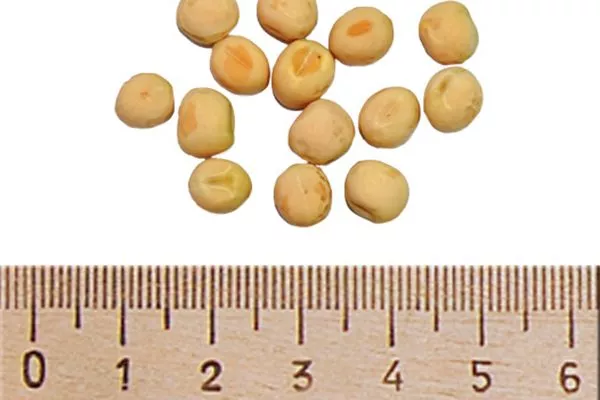
Other nuances include the slight curvature of the beans, their blunt top, the plain yellow color of the seeds, the thousand pea weight from 0.166 to 0.232 kg and the protein content from 20.8 to 22.2%.
Taste characteristics and purpose
Excellent for fresh consumption, freezing, and canning, they are a great source of protein, vitamins, and minerals. Peas can be added to salads, soups, side dishes, or mashed.
Fundamentals of agricultural technology
This pea variety should be sown as early as possible. The plant responds favorably to fertilizers containing potassium and phosphorus (40-45 and 110-120 kg per hectare, respectively). Additional nitrogen fertilization is only necessary in poor soils.
- ✓ The optimal soil temperature for sowing should not be below +5°C.
- ✓ The seed sowing depth should be 3-5 cm, depending on the soil type.
Other growing features:
- harvesting is carried out when the pea moisture content is 17-19%;
- the sowing rate varies from 75 to 85 peas per 1 sq. dm, but with delayed sowing this parameter increases to 80-100 seeds;
- When growing, it is necessary to pay attention to seed impregnation to combat ascochytosis and double treatment with preparations that destroy the pea weevil;
- cucumbers, tomatoes and potatoes are favorable predecessor plants for Rocket peas;
- Nitrogen fertilizers are usually applied in the spring during soil cultivation;
- if nodule bacteria are absent, it is necessary to use nitragin inoculation;
- Molybdenum is required for efficient nitrogen fixation;
- After the seedlings have strengthened, fertilizers are applied using potassium chloride and urea.
The Rocket pea variety is an excellent choice for those looking to grow a productive and delicious crop. By following the growing and care guidelines, you can reap a bountiful harvest of this wonderful plant. Try growing Rocket peas in your garden and enjoy fresh, nutritious beans.