
Nikitka peas are a versatile, high-yielding variety that can be grown in both gardens and greenhouses. This shelling pea appeals to gardeners with its pleasant flavor and the ability to grow without supports.
Description of Nikitka peas
The Nikitka shelling variety was developed by Russian breeders and was added to the State Register in 2013. This early-ripening, leafless pea is an early-ripening, short-growing variety. The first pod is located 7 cm above the ground.
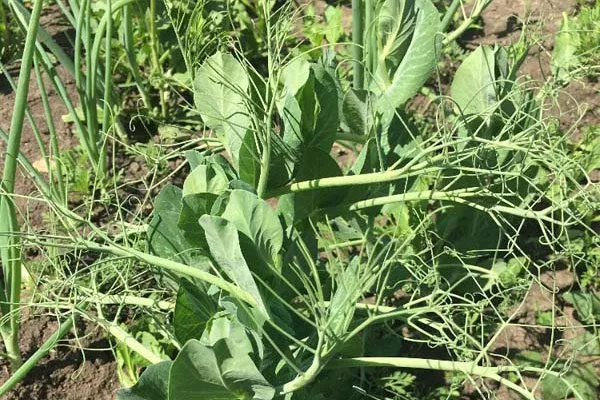
Description of the plant:
- stem length - about 70 cm;
- leaves - medium-sized, light green, grayish;
- stipules - grayish in color with a waxy coating and slight spotting;
- Flowers are small, white, with 1-2 flowers on each peduncle.
The Nikitka variety produces straight, slightly curved, medium-sized, light green fruits. Each pod contains 8-9 beans. The skin has a parchment-like layer, so peeling is required before consumption. Nikitka produces large peas; 1,000 seeds weigh an average of 200-225 g.
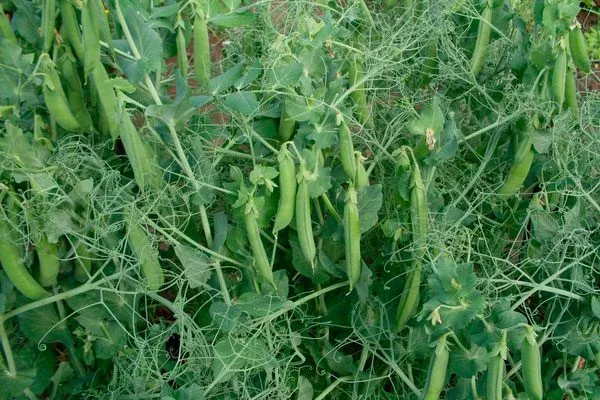
Characteristics
Nikitka peas have excellent taste and agronomic characteristics; their successful combination makes this variety very attractive for cultivation in both private gardens and on an industrial scale.
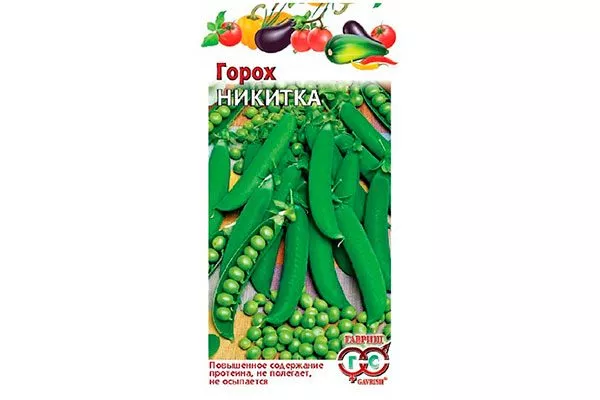
Main characteristics:
- Ripening time: ultra-early. It takes about 35 days from germination to the beans reaching technical maturity.
- Sowing time: peas are sown in open ground in April-May.
- Growing regions: zoned in the West Siberian region.
- Productivity: 65-75 c/ha.
Taste and application
Nikitka peas have a sweet, pleasant flavor, with traditional pea notes. The seeds, once they reach the milky stage of ripeness, are eaten fresh. They are also used for canning, freezing, and in home cooking—for first and second courses.
Pros and cons
The Nikitka pea variety has many advantages that make it popular among gardeners and amateur gardeners. Before deciding whether this variety is suitable for your needs, it's helpful to evaluate all its advantages and identify any shortcomings.
No deficiencies have been identified in the Nikitka pea variety.
Planting peas in the ground
To get a good pea harvest, it's important to plant it correctly. It's essential to prepare the soil and seed, and sow the seeds correctly and at the right time.
Landing site requirements
Plant peas in well-lit, open, and well-ventilated areas with a shallow water table. Nikitka peas grow best in loamy and sandy loam soils with neutral pH.
Preparing the landing site
The site for planting peas begins to be prepared in the fall. The soil is thoroughly dug, adding the necessary fertilizers and other additives to improve its quality. For example, in acidic soils, it is recommended to add 300 grams of lime or 400 grams of dolomite flour per square meter.
- ✓ The optimal depth of groundwater should not exceed 1.5 m to prevent rotting of the root system.
- ✓ The soil acidity level should be within the pH range of 6.0-7.0; the use of lime or dolomite flour to adjust the pH should be strictly dosed.
The dug soil is cleared of plant debris, rhizomes, stones, and other debris. 6 kg of organic matter (rotted manure, rotted manure, and compost) is added per square meter during digging. In the spring, before sowing the seeds, the soil is leveled with a rake and watered generously. If the soil is heavy, dig it again.
Seed preparation
Regardless of whether the sowing will take place outdoors or indoors, the seed must be prepared. All preparatory measures are aimed at increasing the germination rate, quality, and quantity of the resulting harvest.
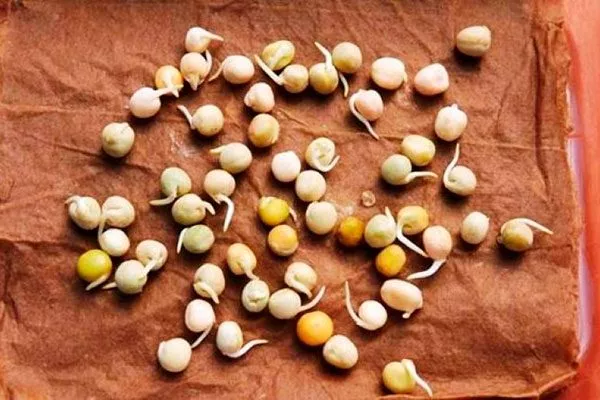
The seeds are sorted to select healthy specimens. This is typically done by soaking the peas in water, and removing any that float to the surface—they are unviable. The selected seeds are soaked in a potassium permanganate solution to disinfect them. To improve the peas' survival rate, they are additionally treated with growth stimulants.
Planting dates
Sow seeds in warm, dry weather. The best time to plant peas is late April or early May. The soil should warm to at least 8°C (46°F) for the seeds to germinate quickly. Planting in cold soil will kill the plants, while delayed planting will result in a deterioration in the peas' flavor.
Sowing in the ground
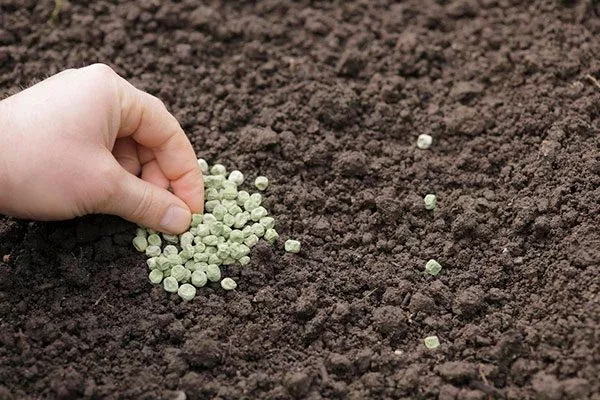
The soil is thoroughly loosened, creating aerated and aerated areas. Then, rows or planting holes are dug. The intervals between adjacent seeds should be 15 cm, and between rows, 30 cm. The peas are planted 4-6 cm deep and covered with soil.
Growing and care
To obtain large pods and a large harvest, it is necessary to care for pea crops throughout the entire growing season.
- ✓ The water temperature for irrigation should not be lower than +15°C to avoid stress on plants.
- ✓ Watering should be done early in the morning or late in the evening to minimize water evaporation.
Care features:
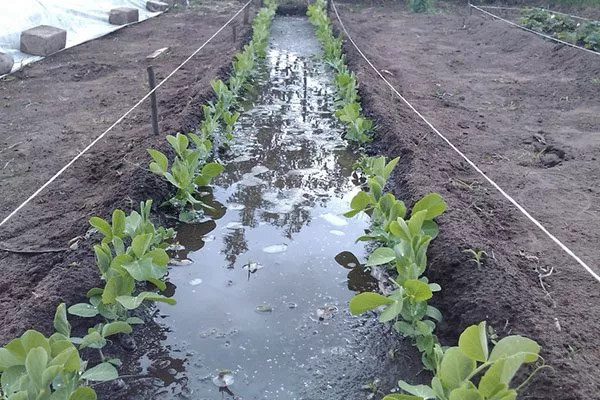
- Watering. The Nikitka variety thrives on moisture and is recommended to be watered at least once a week. The recommended watering rate is 10 liters per square meter. During flowering, increase watering frequency to two or even three times a week.
During rainy periods, stop watering the beds, and during dry periods, water the peas at least once every five days. Don't allow the soil to dry out, otherwise the yield will drop significantly. When watering, it's important not to overwater the soil to prevent rot. - Loosening. After watering, the beds are loosened, weeded, removing weeds, and then mulched.
- Top dressing. When seedlings emerge, a herbal infusion is applied to the roots. It's best made from nettles. The amount of fertilizer applied depends on the soil's nutritional value; if the soil is poor, apply 2-3 more times.
Before flowering, add mineral compounds - 10 g of potassium salt and superphosphate per 10 liters of water.
Fertilizers can be applied either with water during irrigation or by scattering dry granules (25 g per square meter). The interval between subsequent fertilizing sessions should be at least two weeks. - Pinching the tops. This simple measure allows you to increase the crop yield.
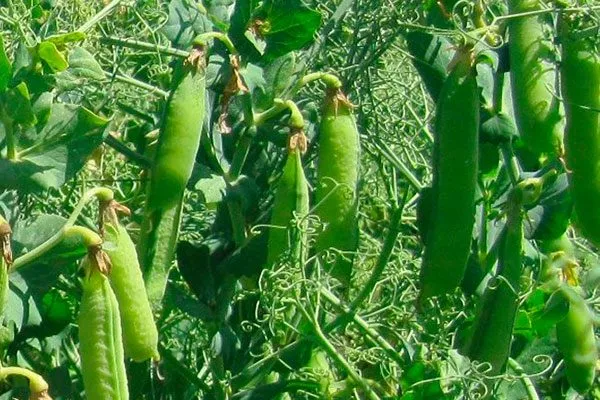
Staking Nikitka peas is not mandatory, but if desired, the plants can be tied to wooden or plastic supports with garden wire stretched across them.
Resistance to diseases and pests
Nikitka peas have a strong immune system, so they are less common. The risk of disease increases with improper care, especially when combined with unfavorable weather conditions. Insect pests can also cause significant problems, impairing the peas' flavor and reducing yield.
To reduce the risks associated with diseases and pests, it is recommended to carry out preventative treatments:
- To combat fusarium, rust, gray mold, powdery mildew and other fungal infections, Bordeaux mixture, Fundazol, Fitosporin-M, Trichophyte and other special preparations are used.
- Bacteriosis and other bacterial diseases can be controlled using Bordeaux mixture, copper sulfate, Fitolavin, Gamair and their analogues.
- Among the pests, the greatest danger to the Nikitka variety is posed by codling moths and grain beetles, which are controlled using insecticides such as Caesar, Tsunami, Zeppelin, etc.
Nikitka peas will appeal to lovers of productive, hardy, and versatile varieties. This interesting variety has excellent flavor and is suitable for any purpose, from fresh consumption to a wide variety of preserves.