
Red peas are a low-growing variety with small beans and a thin stem. They are found primarily in the wild in Asian and Eastern countries (Asia, Iran, Turkey, Israel, etc.). However, they are also grown indoors, as they are considered to be completely low-maintenance.
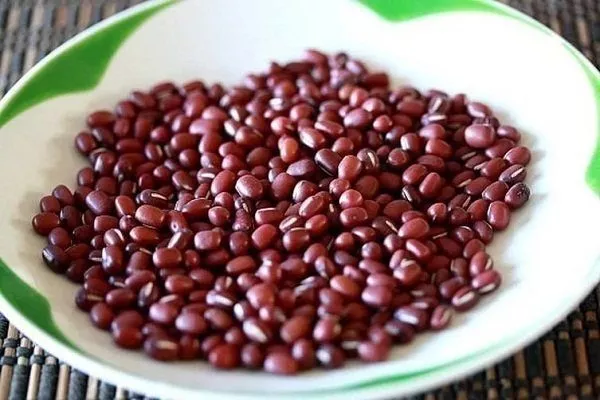
Red peas are easy to care for.
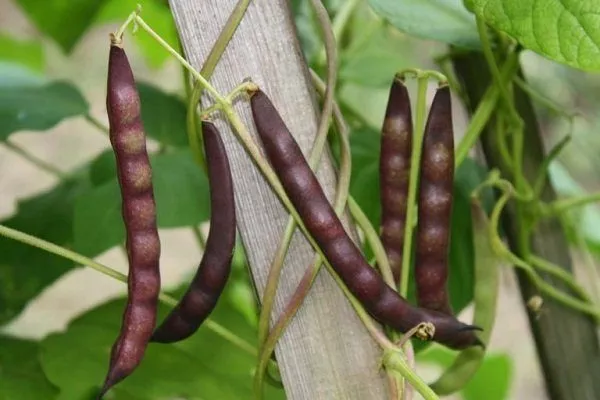
Red peas
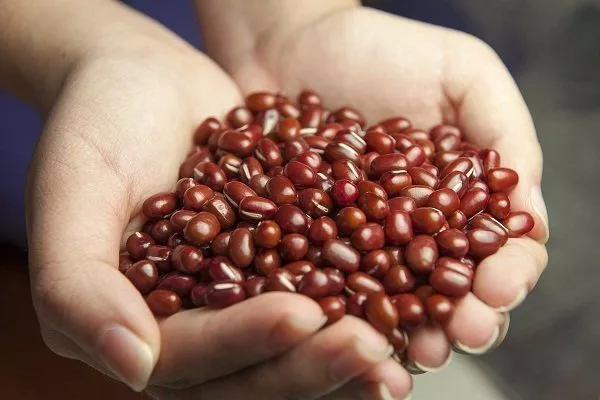
Red peas contain a large number of useful substances
Features of red peas
Red or red-yellow pea varieties exhibit sterility when crossed with other species, so scientists are unable to produce hybrids with unusual colors. The pollen produced by male flowers is incapable of fertilizing with other pea varieties.
Appearance
You can recognize wild red peas by the following external characteristics:
- pod size – maximum 4 cm;
- the seeds have a diameter of 0.4 cm;
- the shape of the beans is closer to cylindrical;
- stem - refined;
- flowers – up to 1.2 cm;
- the corolla can have different colors - lemon, orange, yellow;
- seed coat - fine-grained, thick;
- the skin is dark brown with a greenish tint (upon very careful examination, almost black speckling can be seen);
- the scar is brown, olive or black in color, the shape is ovoid and shortened (up to 1 mm);
- serrated leaves of semi-cordate configuration;
- stipules are 2 times larger than leaves;
- the peduncle has 1 or 2 flowers;
- the height of the stem is from 20 to 50 cm, but with a lack of sunlight it reaches one and a half meters;
- when technically ripe, the texture of the beans is glossy;
- When overripe, the fruits crack easily.
- ✓ The presence of dark brown speckles on the seed coat upon close examination.
- ✓ The scar shape is ovoid, shortened, up to 1 mm long.
The fruits grow not only above ground, but also underground.
Pros and cons
The red variety of peas is distinguished by the following: advantages:
- the possibility of growing without special care;
- unpretentiousness;
- good taste;
- wide range of applications – like green peas, it is used for preparing various dishes, animal feed, etc.;
- unusual shade;
- high content of nutrients.
Composition and properties
Red peas contain vitamins PP, A, C, and B, as well as numerous macro- and microelements (zinc, boron, iron, magnesium, iodine, potassium, etc.). They also contain amino acids, carbohydrates, easily digestible proteins, dietary fiber, pyridoxine, cellulose, starch, and saturated fatty acids, making this variety suitable for medicinal purposes.
How red peas affect the body:
- breaks down and removes cholesterol and harmful compounds;
- strengthens the immune system, saturating it with useful substances;
- improves general condition, increasing performance;
- restores the functionality of internal organs – the nervous and cardiovascular systems, brain, digestive tract;
- regenerates damaged cells and tissues;
- accelerates metabolism;
- improves skin color and texture;
- gives energy;
- has a positive effect on visual acuity;
- increases hemoglobin;
- normalizes blood sugar levels;
- improves sperm composition;
- It maintains a feeling of satiety for a long time, so it is used by women for dietary nutrition.
Growing red peas
Red peas are easy to grow because they grow and produce fruit in the wild. At home, following the general rules for planting and caring for legumes is sufficient.
- ✓ The soil temperature during planting should not be below +10°C to ensure optimal germination.
- ✓ The distance between plants should be at least 10 cm to prevent fungal diseases.
Since this variety is native to Asian and Eastern countries, peas are considered a heat-loving plant, so they are planted outdoors in the spring, when temperatures stabilize at 10-15 degrees Celsius. If night frosts are predicted, cover the peas with plastic film overnight.
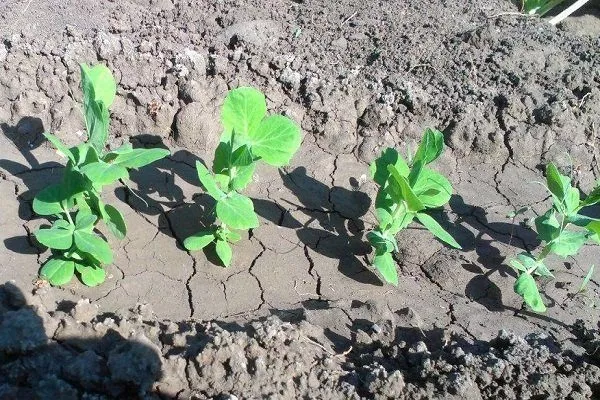
Landing
To make the crop adapt to our climate conditions more easily and germinate faster, it is correct prepare seed materialStep-by-step instructions:
- Sort the seeds manually, removing any spoiled or damaged elements.
- To increase resistance to diseases and pests, warm the peas in hot water. To do this, place them in water heated to 40 degrees Celsius for 5-7 minutes. For an even better effect, add boric acid to the water (1 g per 5 liters).
- One to three days before planting, soak the seeds in water or place them in a damp cloth placed on a saucer. In the first case, change the water once a day; in the second case, top up the saucer with fresh water. The water should be at room temperature.
Pay special attention to the site where you plan to plant, as well as the quality of the soil. Requirements:
- The beds should be sunny and well-ventilated. Strong northerly winds should be avoided, as this will kill the plant.
- It's best to plant cabbage, potatoes, cucumbers, pumpkins, or tomatoes in the area before peas. Red peas should not be planted after legumes.
- The soil shouldn't be too acidic. If so, be sure to apply lime or sprinkle wood ash on the beds.
- Red peas should not be planted near groundwater. Otherwise, the strong root system will rot. The optimal water depth is 1.2-1.5 m.
Landing features:
- In the fall, prepare your garden by digging to the depth of a spade (or more if possible), adding organic fertilizer to the beds. Slurry, chicken manure, or compost (the organic matter should be well-rotted) are all suitable.
- In the spring, before planting the sprouted seeds, loosen the soil and add superphosphate and potassium salt. 50 g of superphosphate and 20 g of potassium salt per square meter is sufficient. If the soil is depleted, add additional necessary minerals, but be careful not to add too much nitrogen, as peas accumulate it from the air and soil.
- Level the surface of the beds with a rake, making furrows up to 4 cm deep. Leave half a meter between furrows and 10-15 cm between seeds. However, the best planting scheme is a double-row planting, in which two furrows are dug 20 cm apart, leaving a 50 cm gap between the two rows.
- Water the furrows with warm, settled or rainwater.
- Lay out the planting material, sprinkle the seeds with soil, and then compact them thoroughly, otherwise birds may peck them out of the ground.
Wild red peas are not afraid of thickets of weeds, so feel free to plant green lettuce seeds, sorrel, dill, parsley, and spinach between the seedlings.
Birds love to peck legumes, so provide reliable protection immediately after planting the seeds. To do this, cover the beds with fine-grained netting. Later, you can construct a mesh structure: install stakes on all four sides and tie the net to them.
How to water red peas and when to loosen the soil?
The basis for obtaining a good harvest is timely watering peasImmediately after planting, water is added every 2-4 days, depending on climatic conditions.
Although this variety is wild, it prefers loose, oxygen-rich soil, so loosening the soil is essential. This is done after watering, but only as needed. That is, when the top layer of soil begins to crust over. Approximately two weeks after sprouting, the first loosening and hilling of the seedlings is carried out.
Red peas are watered as follows:
- Before flowering, water the beans once every 2-3 days; once the flower stalks begin to emerge, watering twice a week is sufficient. Once the pods have fully formed, water the soil once every 7-10 days. Naturally, this assumes there is no heavy rainfall.
- For 1 square meter, you need 6-9 liters of water, depending on the location of the groundwater. If the groundwater is close to the surface, use less water. Keep in mind that red pea roots are easily susceptible to rot.
- The liquid is applied directly to the root zone. To do this, gently lift the green mass and apply the liquid.
- Use only rainwater or settled water, as tap water contains many harmful substances that evaporate during the settling process.
- Make sure that there is no stagnation of liquid in the soil – peas do not like this.
- The temperature should be at least +15 degrees, but the optimal option is when the water temperature corresponds to the degrees in the air.
Do wild peas need to be fertilized?
In Spartan conditions, the soil isn't always fertile, but that doesn't mean you can do without fertilizer. The fact is, red peas grown in poor soil yield a smaller harvest, the beans grow small, and lose their juiciness.
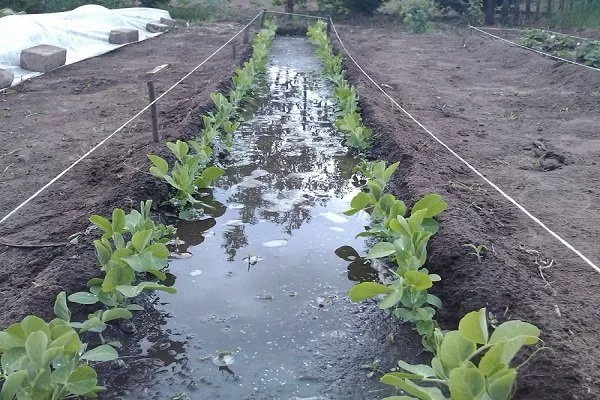
Peas require organic matter and minerals, in addition to nitrogen, so before flowering, add mullein or chicken manure (1 part manure to 10 parts water per square meter). During flowering, you can make a nettle decoction and apply it to the root zone. After flowering, organic fertilizer is necessary. Nitroammophoska (1 tablespoon per 10 liters of water) is suitable for this purpose.
To tie or not to tie?
Since red peas are a low-growing variety, they don't require staking. They spread along the ground in any direction. If you want your beds to look neat and tidy, you can attach wooden stakes to each plant and lightly tie the stems.
Pinching
Pinching, like tying, is considered optional, but pinching the top of the main stem encourages the emergence of several new shoots, which will later form pods. Consequently, the yield of beans increases.
Pests and diseases
The main diseases that red peas are susceptible to are fungal, which cause root or foliar rot. How to recognize them:
- Powdery mildew – the most common disease affecting legumes. It manifests itself as spots on the stems, foliage, and pods. Initially, these spots are light gray, but as they progress, they turn dark brown. Fungicides such as Topsin, Fundazol, Skor, Topaz, and similar products are used for control. You can also spray the plant with 1% colloidal sulfur.
- Fusarium Root rot is characterized by root rot, which ultimately kills the plant. The disease can be recognized by the presence of brown spots. There is no cure, but the rot can be prevented. To do this, monitor the humidity level and avoid overwatering. During heavy rainfall, cover the beds with plastic sheeting.
- Ascochytosis. The main symptoms are the appearance of dry spots with dark spots around the edges. Control is by treating the green foliage with a 4% copper oxychloride solution.
- Rust. The leaves are affected, developing brown spots. The disease can be treated with a 1% Bordeaux mixture solution.
Regarding pests, aphids, pea moths, and cutworms pose a particular threat to red peas. They can be controlled with specialized pesticides and folk remedies. The former can be purchased at the store, while the latter can be prepared at home. Here's what you can do:
- dilute crushed laundry (brown) soap in water, spray the bushes (a couple of bars per 5 liters of water);
- Add 3-4 kg of chopped tomato tops to a bucket of warm water, let it sit for 2-3 days, and treat the green part of the plant;
- Add 30 g of crushed garlic (peeled) to 10 liters of water, leave for 24-30 hours, spray the crop.
How to collect and store?
Red peas ripen gradually—you can harvest the pods located at the bottom of the stem first, followed by the rest. Therefore, harvesting is done over a period of 2-3 weeks, with 3-4 day breaks. To avoid damaging the plant's structure, cut the pods with scissors.
How to store:
- The best way is to dry the peas. To do this, first peel the peas, then select the undamaged peas. The next step is drying. This is done in direct sunlight or in an oven.
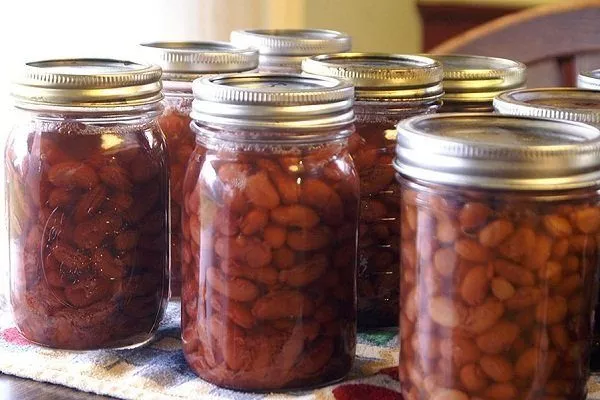
- Unusual red peas can be preserved in glass jars in the standard way.
- To enjoy fresh beans in the winter, freeze them in the freezer, after placing the dry and clean beans in a plastic bag.
Reviews
Red peas are an unusual legume variety that can be grown indoors. Remember to monitor moisture levels, remove weeds promptly, and cultivate the soil regularly. This will eliminate the risk of disease and ensure a bountiful harvest of this unusual, wild red pea.